



Edwardian Metal Wall Mirror
These edwardian metal wall mirror pieces bring tactile weight and honest metalwork to a room, offering both function and striking period design.
Edwardian Metal Wall Mirror
When you search for an edwardian metal wall mirror, you are looking at functional wall furniture shaped by the materials and aesthetics of the late nineteenth and early twentieth centuries. These pieces reflect the shift towards handcrafted forms and decorative metalwork that defined interior spaces during the period.
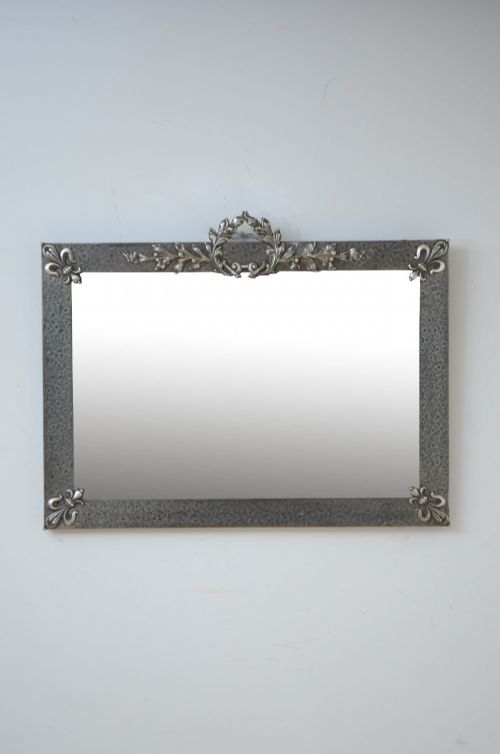
The versions you are most likely to meet on this page belong predominantly to the Arts and Crafts movement, alongside select Neoclassical Revival and Victorian Decorative examples. They combine practical mirror glass with robust metal frames, spanning rectangular and oval shapes.
Materials and construction
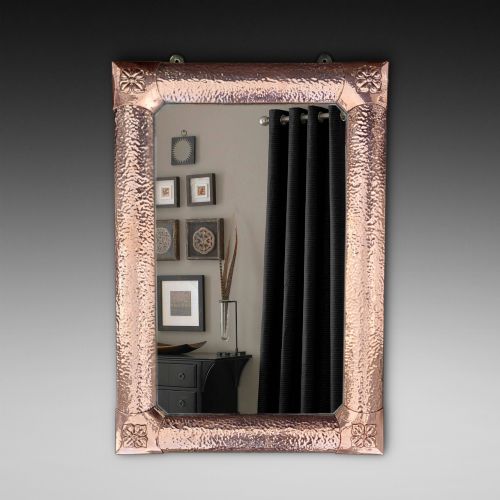
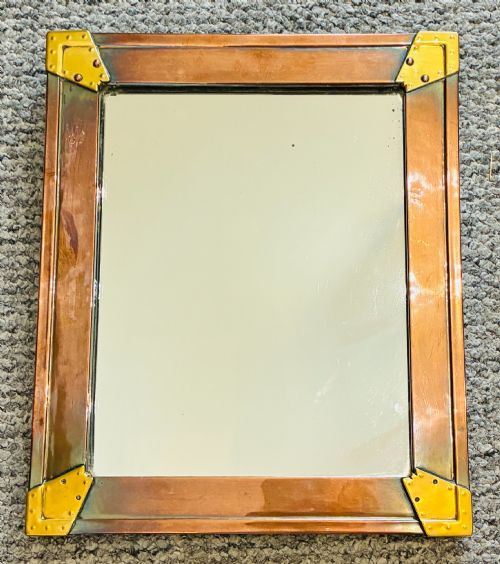
Makers shaped these frames primarily from copper and brass, often utilising sheet metal mounted onto supportive wooden backs. Pewter and ceramic cabochons also appear as supplementary decorative elements within the designs.
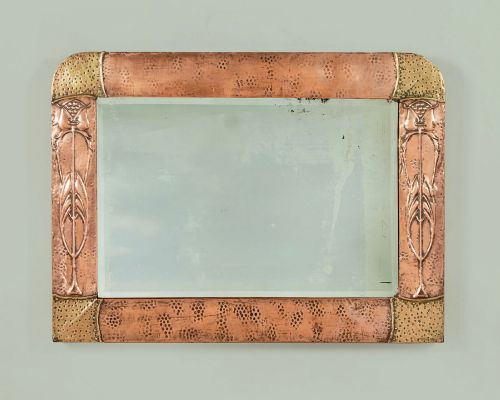
Surface decoration relied on hand-working techniques such as beating, hammering, repoussé, and hand embossing. Artisans worked the metal surface directly to create textured patterns, stylised motifs, and relief details before securing the mirror glass within.
Some copper frames hide hardworking wooden backs that have quietly held mirrors in place for over a century.
Assessing quality and execution
The distinction between standard examples and superior pieces rests upon the depth and precision of the metalwork itself. Skilled hand-hammering and detailed repoussé work demand greater artisan control than simpler, flatter pressed metal frames.
Design integration also sets finer pieces apart, particularly where makers incorporate specific decorative details like ceramic cabochons or stylised tree motifs into the overall composition rather than relying on generic borders.
Liberty & Company·Ruskin
The Edwardian Metal Wall Mirror Glossary
- Repoussé
- A metalworking technique where the artisan hammers the metal from the reverse side to form a raised design in relief on the front. This method creates tactile, three-dimensional surface patterns.
- Cabochon
- A gemstone or ceramic piece shaped and polished round rather than faceted. These often serve as colourful focal points set directly into the metal frames.
- Arts and Crafts
- A design movement spanning the late nineteenth and early twentieth centuries that prioritised traditional craftsmanship and honest materials over mass production. It heavily influences the copper and brass mirrors found here.
- Neoclassical Revival
- A style drawing inspiration from the classical art and architecture of ancient Greece and Rome. Mirrors in this style utilise formal symmetry and traditional classical motifs.
Edwardian Metal Wall Mirror: Frequently Asked Questions
What periods do these metal mirrors span?
The listings encompass items produced during the late nineteenth and early twentieth centuries, specifically spanning the Edwardian era, the 1900s, 1910s, 1920s, and 1930s.
You will also find pieces identified more broadly as nineteenth century, reflecting the transitional design styles leading into the Edwardian period.
Which metals were used for these frames?
Makers predominantly worked with copper and brass to construct these mirror frames. Pewter and mirror glass complete the primary material palette.
Wooden structures frequently support the metal elements from behind, while ceramic cabochons occasionally provide decorative accents.
How do Arts and Crafts mirrors differ?
Arts and Crafts examples showcase visible hand-working techniques like hammering, beating, and repoussé. They often feature stylised natural motifs such as trees.
Other styles available include Neoclassical Revival and Victorian Decorative, which follow more formal historical ornament rather than craft-led design.
Are these mirrors suitable for daily use?
These mirrors function effectively as wall-mounted pieces for domestic interiors. Their robust metal frames provide sturdy enclosures for the reflective glass.
They bring both practical reflection and strong decorative character to hallways, living spaces, and bedrooms.