

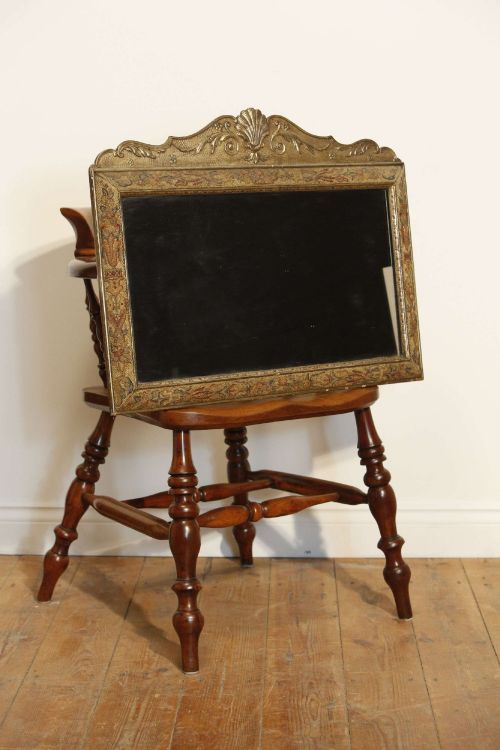
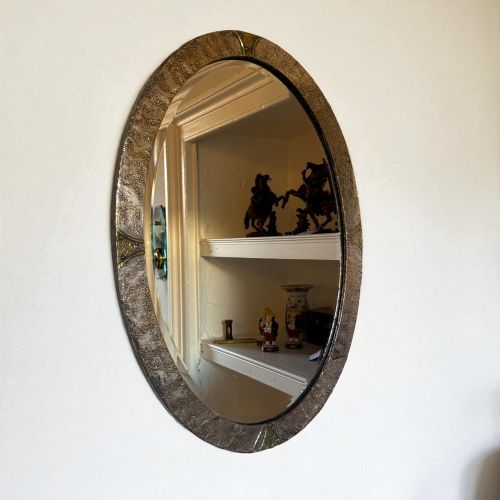
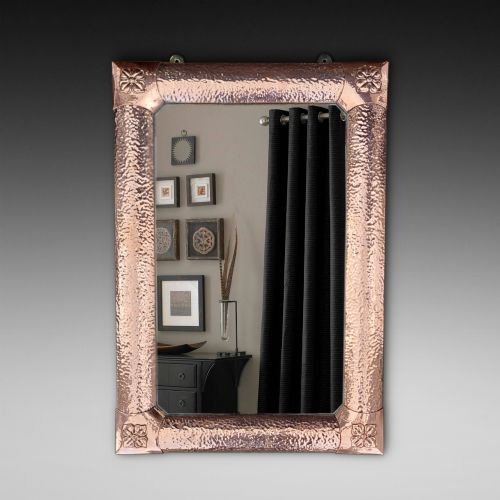
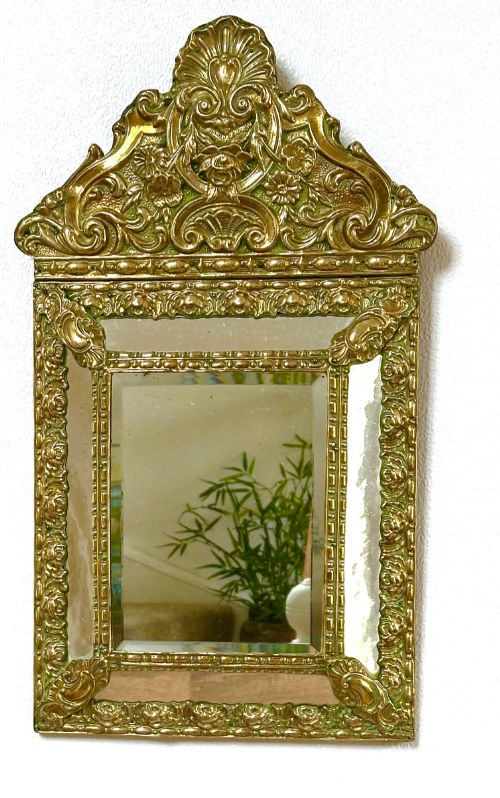






Repousse Wall Mirror
A repousse wall mirror brings tactile depth to a hallway through hand-hammered metalwork framing silvered glass.
Repousse Wall Mirror
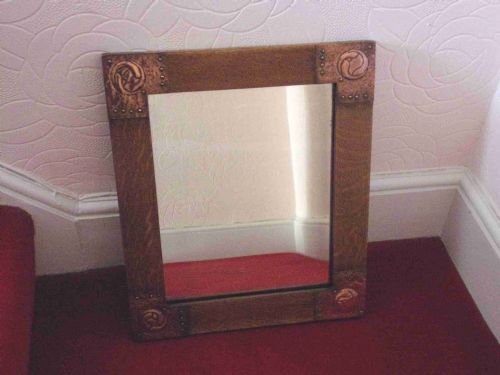
When you search for a repousse wall mirror, you find reflective glass set into frames shaped by hammering from the reverse. The selection centres heavily on Arts and Crafts designs alongside Victorian, Edwardian, and nineteenth-century Continental examples.
Most pieces you meet on this page utilise copper or brass as their primary framing material. Forms range from simple circles and ovals to large rectangular plates and cushion frames.
The aesthetic draws on historical revivals, featuring stylistic motifs from Flemish Renaissance to Chinoiserie and Celtic knots. Scottish and English workshops dominate the output, particularly from around nineteen hundred.
How they were made
Craftsmen shaped the frames of a repousse wall mirror by hammering sheet metal from the back into a soft yielding bed such as pitch. This technique raised low relief designs on the front surface.
Detail work was finished from the front using small punches and chisels to sharpen lines and flatten background areas. The metal plates were then mounted onto wooden carcases or secured with metal brackets to hold the mirror glass.
Repousse Wall Mirror Retail Price Guide 2026
Typical asking prices for repousse wall mirror among the pieces listed under this phrase on Sellingantiques today, from the lower quarter to the upper quarter. They describe what is for sale here now, not the wider market.
Listings feature brass, copper, and pewter frames combined with wood and mirror glass across nineteenth and twentieth-century periods.
What varies in quality
Quality in a repousse wall mirror rests on the crispness and depth of the hand-hammered relief. Stronger pieces show deliberate control in the metalwork rather than shallow mechanical stamping.
The substance of the metal plate itself dictates durability, with heavier gauge copper or brass holding sharper details over time. Secondary construction, such as sturdy wooden backing boards and original mirror glass, completes the measure of quality.
Liberty and Company
The Repousse Wall Mirror Glossary
- Repousse
- Metalworking technique where the design is hammered into relief from the reverse side. This process creates tactile three-dimensional patterns across copper and brass frames.
- Cushion mirror
- A frame style with a rounded, padded profile that slopes inward toward the glass. These were popular in Victorian and Continental designs.
- Marginal mirror
- A looking glass surrounded by smaller segments of mirrored glass within the main border. These pieces often feature bevelled edges and decorative metal joints.
- Girandole
- A decorative wall bracket combining a mirror with candle sconces. The reflective surface helps amplify the light from the candles.
Repousse Wall Mirror: Frequently Asked Questions
How do I hang a heavy metal mirror?
Check the weight of the metal frame and wooden backing before choosing your fixings. Use heavy-duty wall anchors or screw directly into wall studs to support the weight securely.
Ensure the hanging wire or integrated brackets on the back are strong enough to bear the load. Hang the piece at eye level to get the best reflection and light bounce in your room.
How do I clean brass and copper frames?
Dust the metal gently with a soft dry cloth to remove surface particles. Avoid harsh chemical polishes that can strip away the natural patination built up over decades.
Keep moisture away from the mirror glass edges when cleaning the metal. Gentle cleaning preserves the historic character of the hand-hammered surface.
Are these mirrors suitable for bathrooms?
High humidity rooms can damage the wooden backing boards and cause the silvering on old mirror glass to degrade. Placing them in dry hallways or reception rooms is much safer.
Condensation can also accelerate corrosion on exposed copper and brass. Keep these pieces in well-ventilated spaces to protect the metalwork.
How do I date a brass mirror?
Look at the construction of the wooden backing and the type of fixings holding the glass. Hand-beaten metalwork combined with specific revival styles often points to the late nineteenth or early twentieth century.
Examine the mirror glass for minor imperfections or bevel styles typical of older manufacturing methods. Comparing the decorative motifs to known period design movements helps narrow down the decade.