

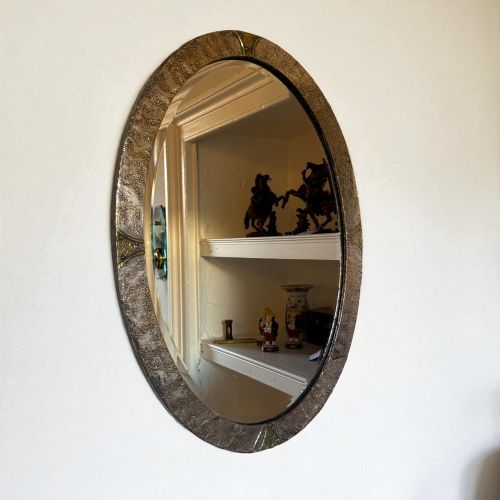
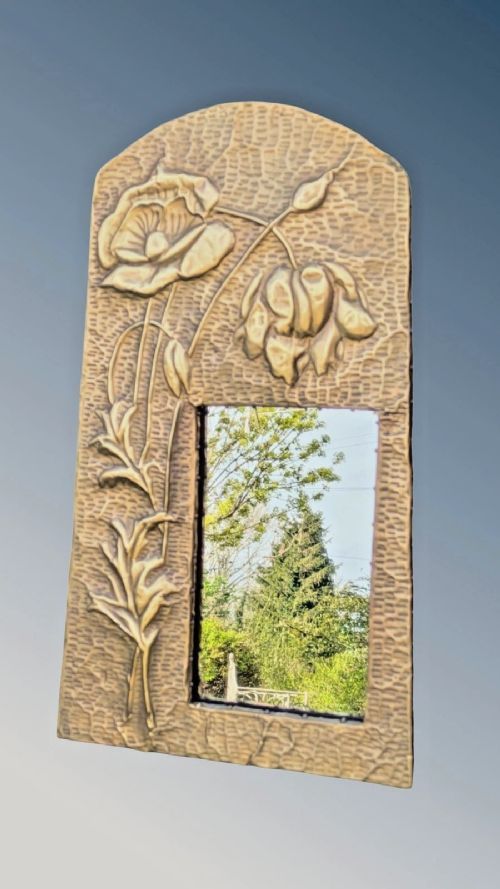


Hammered Brass Mirror
These hammered brass mirror examples bring tactile warmth to an interior through worked metal and glass.
Hammered Brass Mirror
A hammered brass mirror offers reflective utility framed in hand-worked metal characteristic of the Arts and Crafts movement and the early twentieth century. Pieces on this page span the nineteenth century, nineteen hundred, the Edwardian era, and nineteen twenty.
Most examples appear in oval wall formats, alongside easel designs and larger scaled wall mirrors. The aesthetic draws heavily from Arts and Crafts, Art Nouveau, and Glasgow Style traditions, sometimes featuring decorative motifs such as peacocks flanking the glass.
Makers and designers of this period utilised brass frames mounted on wood backings to hold mirror glass securely. The surviving inventory reflects both domestic wall hangings and tabletop accessories produced during this prolific design era.
How They Were Made
Artisans hammered sheet brass by hand to create textured surfaces that catch the light from various angles. This manipulation of the metal required skill with hammers and punches to achieve consistent patterns around the glass aperture.
Frames were constructed by securing the worked brass sheets onto wooden backings to provide structural rigidity. Selected pieces also incorporate enamel details alongside the primary metalwork and glass components.
Hammered Brass Mirror Retail Price Guide 2026
Typical asking prices for hammered brass mirror among the pieces listed under this phrase on Sellingantiques today, from the lower quarter to the upper quarter. They describe what is for sale here now, not the wider market.
Peacocks stand guard beside the glass on Glasgow School mirrors, watching whoever checks their reflection.
What Varies in Quality
The distinction between standard production and exceptional work lies in the depth and complexity of the hand-hammered detail on the brass frame. Finer examples display deliberate craftsmanship in repoussé or chased motifs rather than simple mechanical stamping.
Design ambition separates basic rectangular or oval frames from distinctive regional interpretations like the Glasgow Style. Pieces featuring sculptural elements or specialised ornamentation such as flanking peacocks command greater visual presence.
The Hammered Brass Mirror Glossary
- Arts and Crafts
- A design movement valuing handcraftsmanship and traditional materials over mass production. This style influences the construction of these metal frames.
- Glasgow Style
- A distinctive regional offshoot of the Arts and Crafts movement known for stylized motifs and linear forms. Examples often feature symbolic or avian ornamentation.
- Repoussé
- A metalworking technique where the artisan hammers the metal from the reverse side to form a raised design in relief. This method creates the tactile texture on the frame surface.
- Easel Mirror
- A freestanding mirror supported by a hinged back prop for tabletop display. These pieces combine functional reflection with portable decorative presence.
- Bevelled Glass
- Mirror glass with angled edges cut and polished to a thinner width around the perimeter. This treatment adds depth and refracts light distinctively.
Hammered Brass Mirror: Frequently Asked Questions
How do I hang a heavy brass wall mirror safely?
Wall mirrors require secure fixings anchored directly into wall studs or suitable masonry plugs rather than simple plaster hooks. The weight of the wood backing and brass frame demands robust hardware.
Check the integrity of the original hanging loops or chains on the reverse before installation. Older wire or cord often benefits from replacement with modern braided steel wire for security.
What is the best way to clean hammered brass frames?
Dust the textured brass surface gently with a soft, dry brush to remove particles settled in the hammered indentations. Avoid aggressive metal polishes that strip away the aged patina accumulated over decades.
Keep moisture away from the edge where the brass meets the mirror glass to prevent silvering damage. A soft cloth is usually sufficient for routine maintenance.
How can I tell an Edwardian piece from a later one?
Edwardian examples typically align with the height of the Arts and Crafts movement during the early twentieth century. Construction methods on the wooden backs often provide clues through screw types and timber ageing.
Stylistic markers also help distinguish periods, with distinct Art Nouveau curves giving way to simpler geometric forms in the nineteen twenties.
Can these mirrors be used in bathrooms?
High humidity rooms can accelerate corrosion on both the exposed brass and the silvered backing of antique mirror glass. Moisture penetrates behind the frame edges and causes dark spots on the reflection.
Dry environments like hallways, living rooms, or bedrooms better preserve the original materials and finishes. Placing them away from direct water sources ensures longevity.