


Brass Frame Mirror
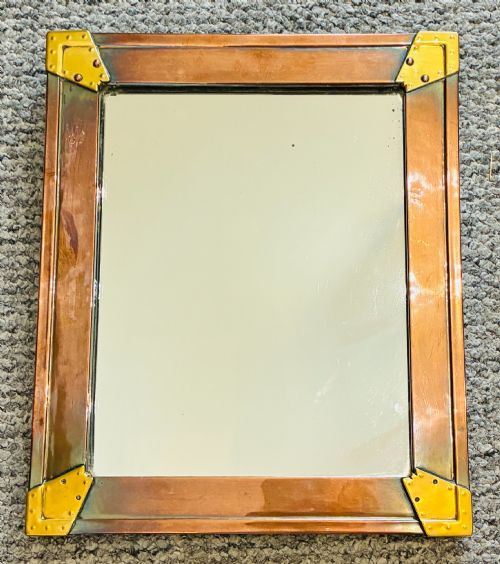
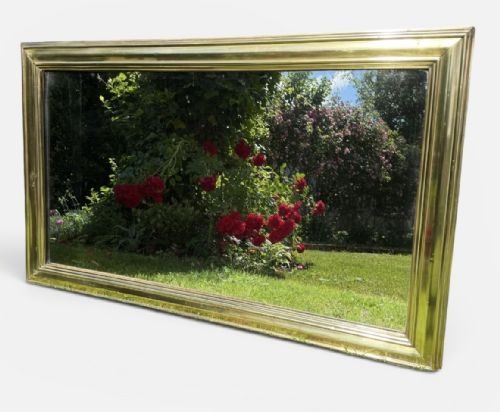
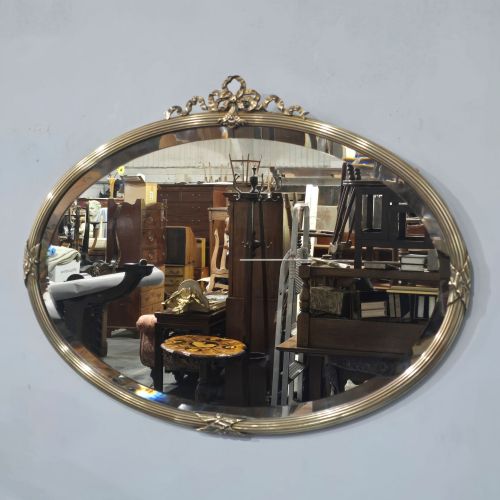
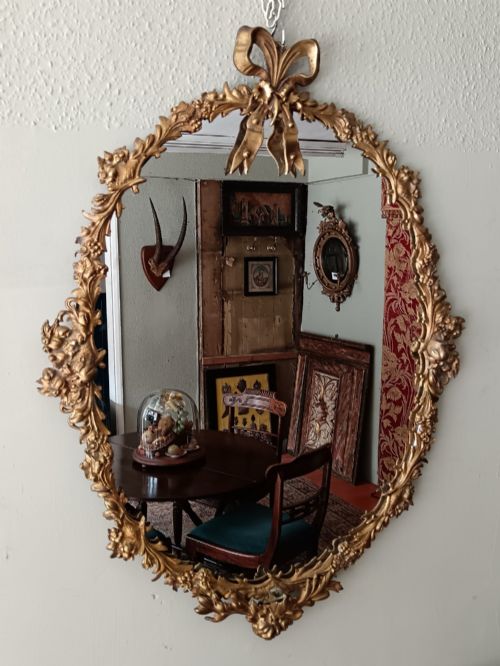
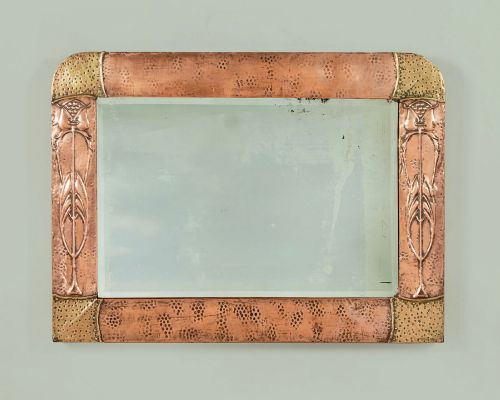
A brass frame mirror brings reflective warmth and architectural depth to a room, ranging from robust Victorian cushion designs to delicate Arts and Crafts repoussé work.
Brass Frame Mirror
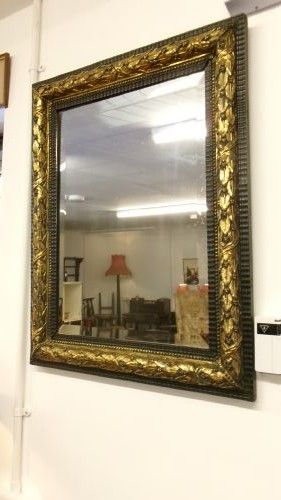
A brass frame mirror comprises reflective glass secured within a metal housing, appearing across forms such as wall mirrors, dressing table mirrors, cheval mirrors, and fire screens. The pieces originate primarily from the nineteenth and early twentieth centuries, spanning Victorian, Edwardian, and Art Deco periods alongside distinct regional traditions like Dutch, Flemish, and French Bistro styles.
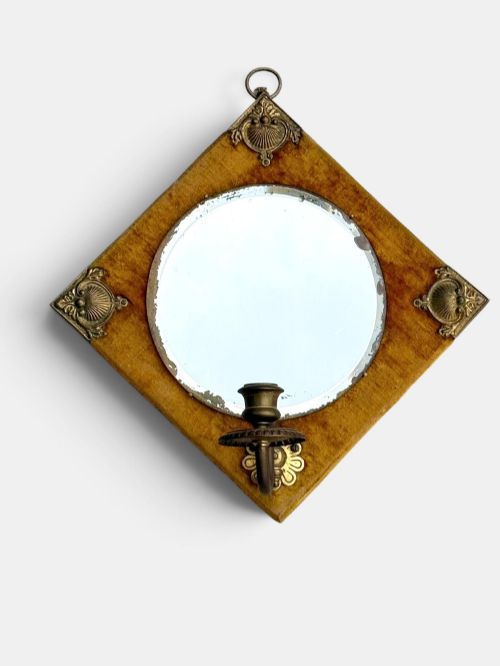
Buyers will frequently encounter Victorian cast or embossed brass wall mirrors and Arts and Crafts examples featuring hammered or repoussé metalwork. These domestic objects served both functional and decorative purposes in hallways, dressing rooms, and parlours, often incorporating wooden secondary elements or velvet mounts.
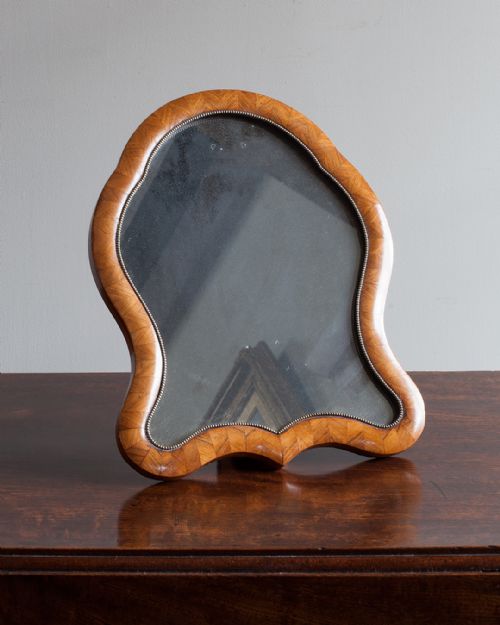
Beyond standard wall-hanging formats, the selections include table mirrors, folding dressing mirrors, and specialised items such as pocket watch style mirrors and mirror fire screens. Regional workshops from Glasgow to Kashmir contribute specialised inlaid, pierced, and Glasgow School designs to the available variety.
Materials and technique
Makers constructed these pieces using sheet or cast brass combined with mirror glass, frequently supporting the metal framework on timber substrates such as oak, mahogany, ebonised wood, or kingwood. Repoussé and beaten brass techniques allowed artisans to hammer floral, geometric, and figural motifs directly into the metal surface from the reverse.
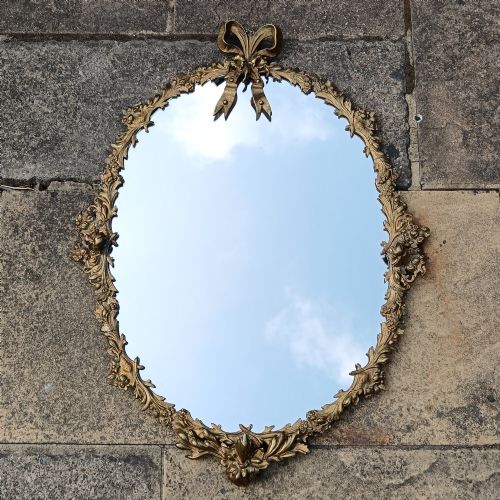
Casting provided heavier, more sculptural frames featuring cherubs, masks, or crests, particularly prominent in Victorian and Flemish revival pieces. Bevelled glass plates were secured into rebated frames, sometimes accompanied by gilt bronze, copper mounts, or leather trims.
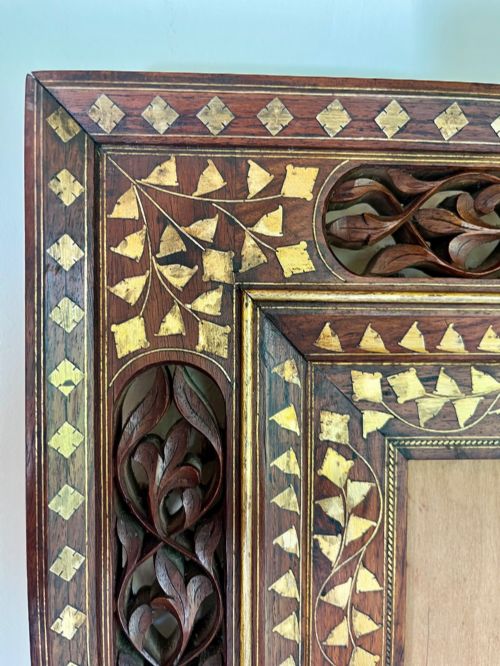
Inlaid and pierced variations utilised woodworking and metalworking traditions together, integrating brass wire and sheet into wooden grounds as seen in Hoshiarpur and Kashmiri examples.
Peacocks flank a Glasgow School brass mirror, watching whoever checks their reflection.
What varies in quality
The integrity of the original mirror plate influences the character of the object, where slight ageing or foxing on original glass distinguishes period pieces from later replacements. The harmony between the brass housing and secondary materials, such as well-figured oak or mahogany backboards, further separates standard production from finer workshop output.
The Brass Frame Mirror Glossary
- Repoussé
- Metalworking technique where the metal is hammered from the reverse side to create a raised design on the front. This method defines many Arts and Crafts and Flemish mirror frames.
- Cushion frame
- A convex, rounded frame profile that swells outwards towards the outer edge. These frames often wrap the mirror plate in embossed or plain brass.
- Bevelled glass
- Mirror glass with an angled edge ground down to a thinner profile near the perimeter. This treatment catches the light and adds depth to the reflection.
- Cheval mirror
- A full-length floor mirror suspended on a vertical swivelling frame between two pillars. They frequently appear in nineteenth-century bedroom furnishings.
- Glasgow School
- An influential circle of artists and designers active in Scotland during the late nineteenth and early twentieth centuries. Their metalwork often incorporates stylised natural forms like peacocks and organic motifs.
Brass Frame Mirror: Frequently Asked Questions
How do I date a brass mirror?
Dating relies on stylistic clues, construction methods, and the type of mirror plate used. Victorian examples often feature heavy cast brass or cushion frames with deep floral embossing.
Later Edwardian and Arts and Crafts pieces tend to show hand-beaten surfaces, distinctive School motifs, or integrated copper elements characteristic of the early twentieth century.
Are these mirrors heavy to hang?
Many period pieces possess substantial weight due to the combination of cast brass, wooden backing boards, and thick glass plates. Wall-mounted versions require secure fixings into solid masonry or proper wall studs.
Checking the stability of the hanging loops or chains on the reverse is essential before installation.
Where were these mirrors used originally?
These items served functional and decorative roles throughout the home, from hallway wall displays to dressing tables and fireplace hearths. Smaller table mirrors and shaving mirrors stood on surfaces for personal grooming.
Larger wall mirrors anchored formal reception rooms, while specialised pieces like mirror fire screens decorated inactive hearths during warmer months.