



Vintage Metal Wall Mirror
These vintage metal wall mirrors bring character and reflection into a room, forged from brass, copper, and iron across the nineteenth and twentieth centuries.
Vintage Metal Wall Mirror
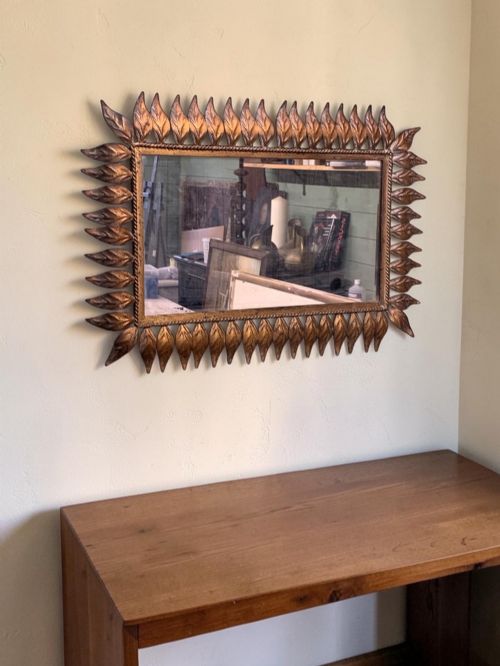
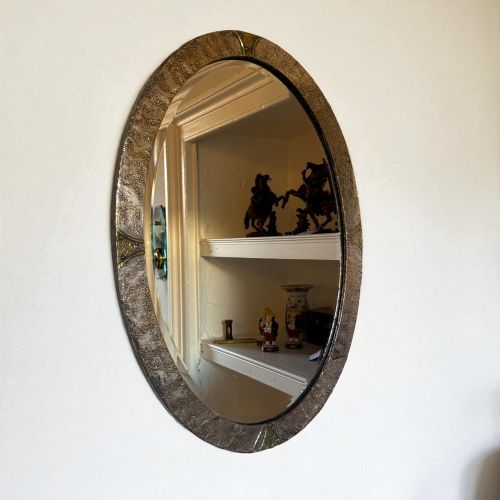
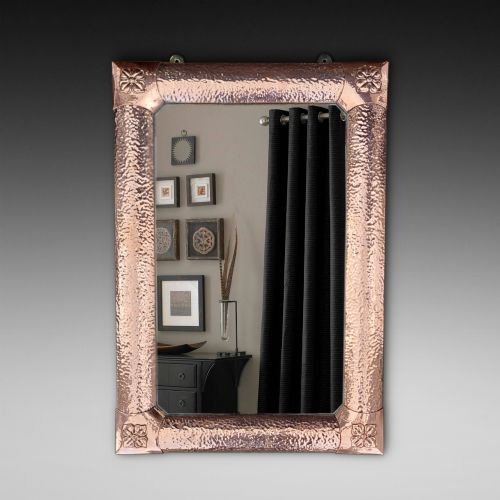
A vintage metal wall mirror is a reflective glass panel set within a metallic frame, originating from periods such as the Victorian era, the Edwardian years, and the early twentieth century. Buyers encounter forms ranging from simple oval frames to elaborate Arts and Crafts designs bearing hammered textures and decorative motifs.
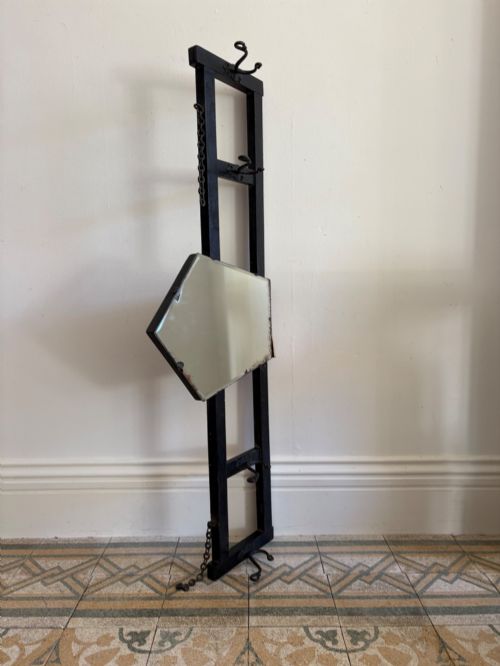
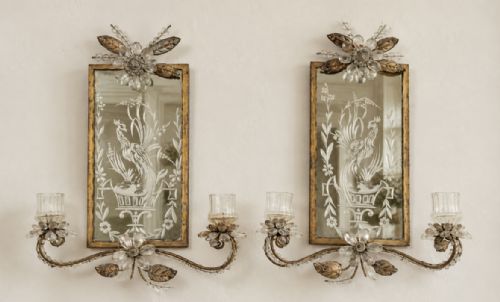
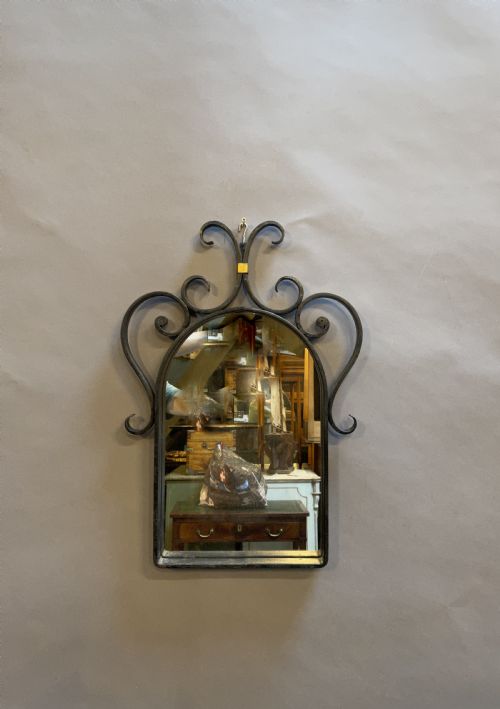
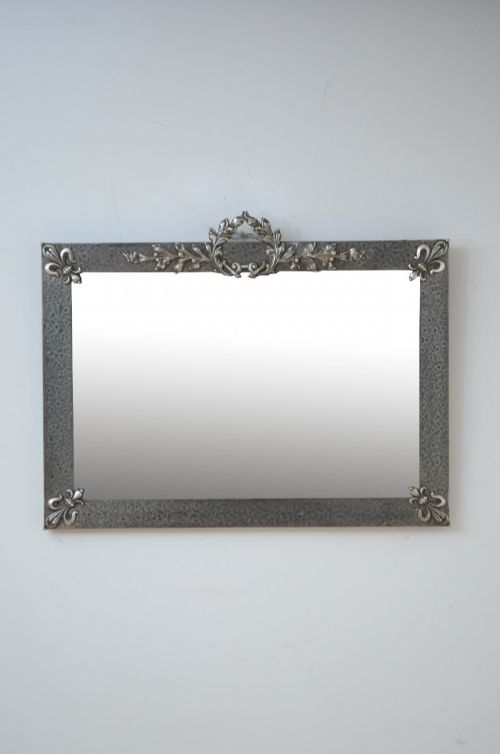
The selection on this page spans several distinct styles, including French scrollwork, Industrial iron, and Neoclassical revival brass. Wall sconces, hall stands, and panel mirrors also appear, demonstrating how metal framing was applied to various functional wall fixtures.
Many of these pieces draw inspiration from specific movements, most notably Arts and Crafts workshops that favoured hand-worked metals. Others reflect continental tastes, such as French cushion mirrors and Dutch-style brass frames from the late nineteenth century onwards.
Materials and construction methods
Makers utilised durable base metals including brass, copper, cast iron, and wrought iron to construct the structural frames and decorative mounts. Gilt metal and silver borders also appear, adding distinct surface finishes that catch the light.
Techniques varied from heavy casting and intricate moulding to hand-beating, repoussé work, and embossing. Artisans hammered copper sheets by hand and cast brass details to create relief patterns, occasionally incorporating ceramic cabochons or mottoes into the metalwork.
Vintage Metal Wall Mirror Retail Price Guide 2026
Typical asking prices for vintage metal wall mirror among the pieces listed under this phrase on Sellingantiques today, from the lower quarter to the upper quarter. They describe what is for sale here now, not the wider market.
The listings span from the late nineteenth century through the Edwardian period and into the Art Deco era, encompassing brass, copper, and cast iron.
Assessing quality in metal mirrors
Quality rests upon the depth of hand-working in the metal and the integrity of the casting. Crisp relief work on a brass crest or deeply hammered copper panels indicate a higher standard of craftsmanship than stamped or pressed sheet metal.
The relationship between the glass and the metal frame reveals much about the piece. Secure mounting, well-fitted mirror glass, and substantial weight in the brass or iron components mark out superior examples from lighter, purely decorative productions.
Liberty & Company·Coalbrookdale·Ruskin
The Vintage Metal Wall Mirror Glossary
- Repoussé
- Metalworking technique where the metal is hammered from the reverse side to form a raised design in relief on the front. This method is prominent in Arts and Crafts copper frames.
- Girandole
- A branched wall mirror designed to hold candles alongside the reflective glass. These pieces often feature gilded metal mounts and twin arms.
- Cabochon
- A polished gemstone or ceramic piece cut in a convex form without facets. Ruskin pottery cabochons frequently adorn the corners of period copper frames.
- Cushion mirror
- A mirror featuring a wide, outward-curving frame, often covered in metal mounts or velvet. This style gained popularity in nineteenth-century French interiors.
Vintage Metal Wall Mirror: Frequently Asked Questions
How do I hang a heavy cast iron mirror safely?
Heavy cast iron and brass frames require fixings secured directly into wall studs or masonry rather than standard plasterboard hooks. Distributing the weight evenly across two sturdy brackets ensures the mirror remains secure.
Take time to check the hanging loops or chains on the reverse of the frame before installation. Older wire or fixings may need upgrading to modern braided steel to support the weight safely.
How should I clean antique brass and copper frames?
Dust the metal gently with a dry, soft cloth to remove surface particles without disturbing the aged patina. Avoid harsh chemical cleaners that strip away the historical character built up over decades.
If polishing is necessary, use a mild, non-abrasive metal cleaner applied sparingly with a cotton bud. Keep all polishes away from the mirror glass to prevent staining the silvering behind.
How can I tell an Arts and Crafts mirror apart from a Victorian one?
Arts and Crafts mirrors display hand-beaten copper surfaces, stylised plant motifs, and visible rivet details that celebrate manual labour. They reject mass-produced uniformity in favour of artisanal expression.
Victorian mirrors tend to rely on cast brass, ornate scrollwork, crests, and formal revival styles. Their ornamentation is typically symmetrical and machine-finished compared to the handcrafted nature of later movement pieces.
What rooms suit a French cushion mirror best?
French cushion mirrors work well in living rooms, hallways, and bedrooms where their reflecting bevels bounce ambient light around the space. Their curved frames soften rigid architectural lines.
Placing one above a mantelpiece or a console table creates a traditional focal point. The metal mounts catch light from windows and lamps throughout the day.