

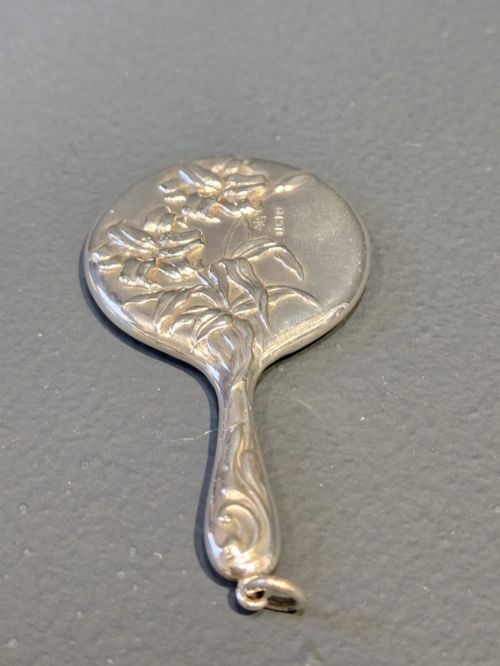
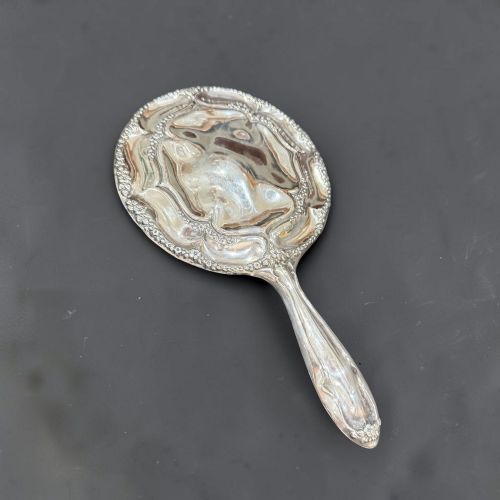
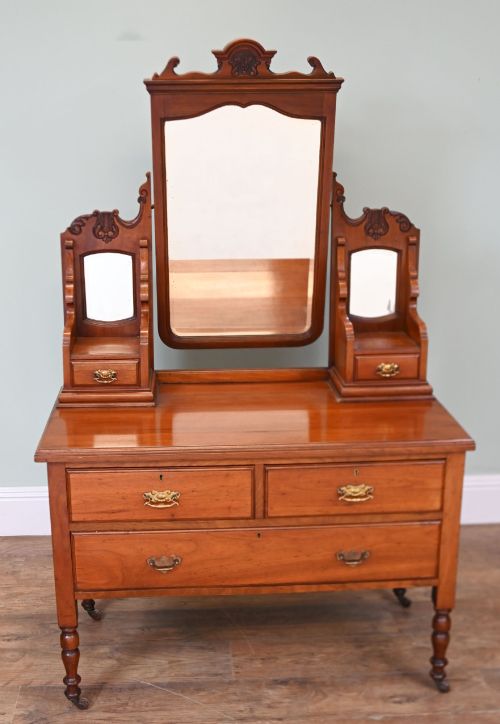
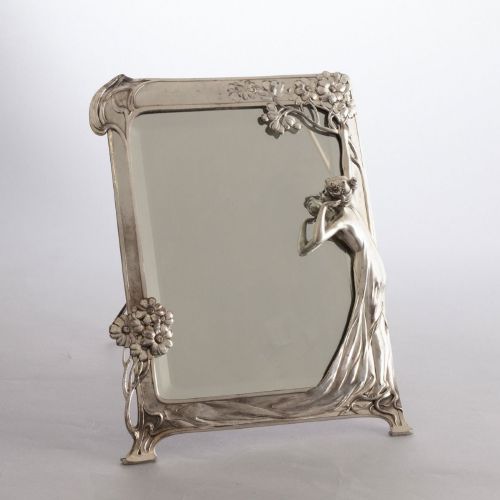


Art Nouveau Table Mirror
An art nouveau table mirror brings sinuous organic lines and naturalist motifs to a dressing surface, offering practical reflection through distinctive period craftsmanship.
Art Nouveau Table Mirror
An art nouveau table mirror is a vanity or dressing accessory designed to stand on a chest, table or washstand, appearing across the late nineteenth and early twentieth centuries. These pieces combine functional glass with frames shaped by the fluid curves and floral influences of the movement.
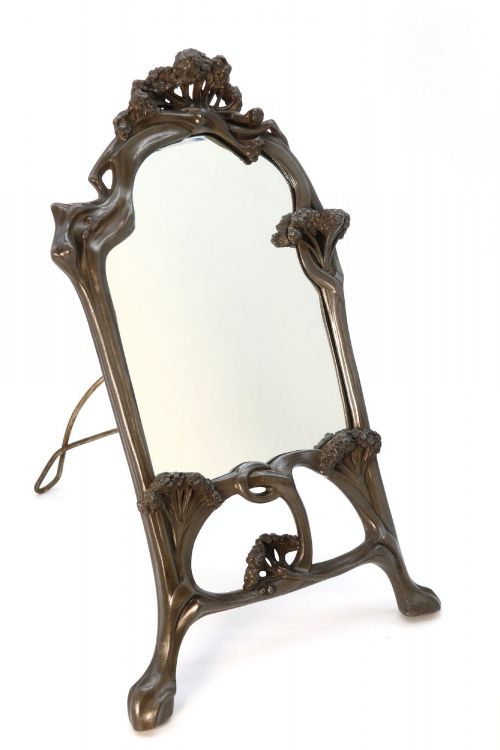
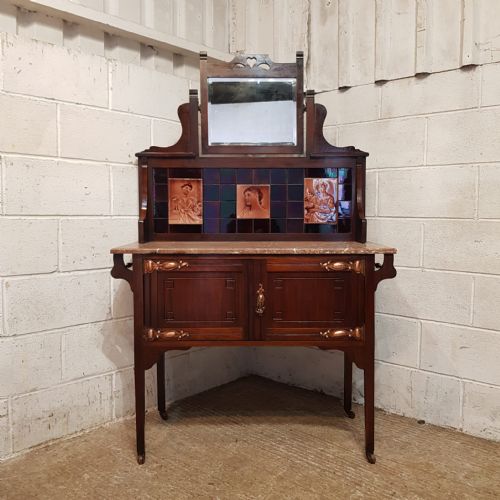
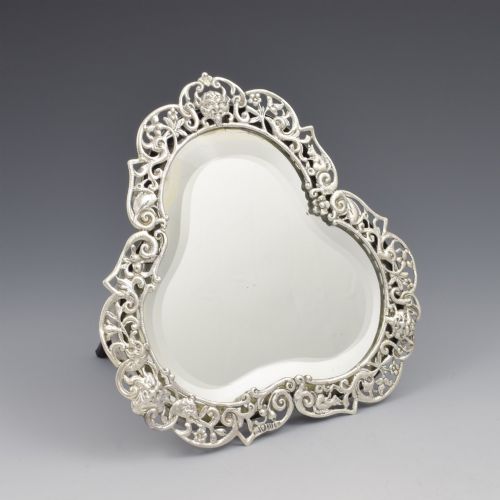
Most examples encountered on this page function as easel mirrors supported by a folding strut at the back, or form part of larger dressing tables and washstands. The form ranges from small portable vanity glasses to substantial console mirrors meant to anchor a room.
Originating across Britain, France, Germany and the wider European continent, these mirrors reflect diverse regional interpretations of the style. German metalwork firms and English silversmiths contributed heavily to the surviving pool of tabletop and dressing mirror designs.
Materials and construction
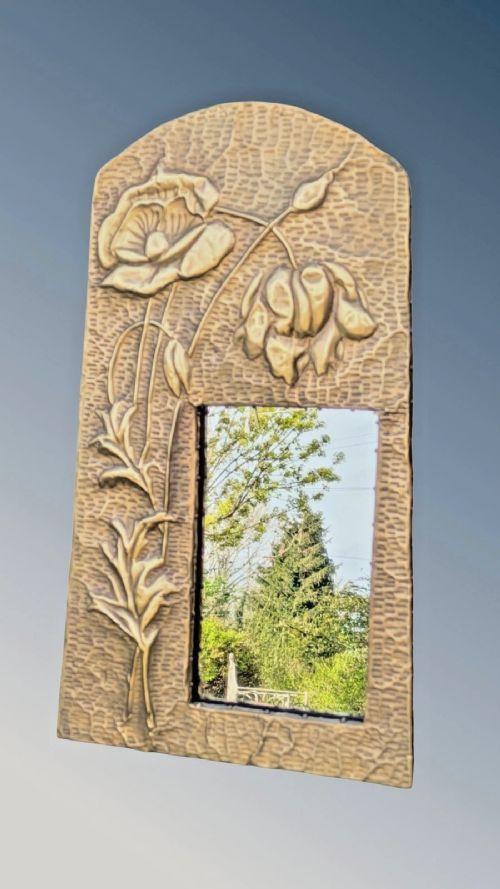
Makers utilised a range of metals including brass, pewter, sterling silver, silver-plated alloys, bronze and spelter to cast and hammer complex frames. Pewter and brass allowed workshops to achieve deep, sculptural relief work depicting maidens, birds, animals and stylised seed pods.
Wood varieties such as mahogany and satinwood provide structural frames and backing for larger dressing mirrors and washstands. Glass surfaces are bevelled or flat, secured behind metal bezels or wooden mouldings designed to hold the plate firmly.
Art Nouveau Table Mirror Retail Price Guide 2026
Typical asking prices for art nouveau table mirror among the pieces listed under this phrase on Sellingantiques today, from the lower quarter to the upper quarter. They describe what is for sale here now, not the wider market.
Listings demonstrate a strong representation of German metalwork alongside English silver-mounted vanity pieces from the Edwardian and Victorian eras.
Judging quality and execution
The distinction between tiers of quality rests upon the depth of hand-chasing and the crispness of the cast metal relief. Superior pieces display finely detailed figures and botanical motifs with clean undercuts, whereas lesser examples rely on shallow stamping and blurred ornament.
The choice of primary material dictates the tier, with solid sterling silver and heavy cast pewter or bronze sitting above light-gauge plated brass and spelter. Maker attribution also elevates a piece, particularly when bearing authentic stamps from known German or English metalwork studios.
WMF·Louis Auguste Moreau·Saunders and Shepherd·Henry Matthews
The Art Nouveau Table Mirror Glossary
- Easel back
- A hinged folding strut attached to the rear of a mirror frame that allows the piece to stand unsupported at an angle.
- Spelter
- An alloy of zinc and lead cast into decorative shapes and typically painted or plated to imitate bronze or brass.
- Bevel
- An angled edge cut around the perimeter of the mirror glass to catch the light and add depth.
- Chasing
- A metalworking technique where details are hammered into the front surface of the metal to sharpen relief ornament.
- Secessionist
- A Central European offshoot of the broader design movement that favoured geometric austerity alongside organic curves.
Art Nouveau Table Mirror: Frequently Asked Questions
How do I clean the metal frame?
Silver and brass frames require appropriate metal polishes applied sparingly with a soft cloth to avoid touching the mirror glass.
Pewter needs only gentle dusting or wiping with a damp cloth, as harsh chemical cleaners strip the historic patina from the surface.
Are these mirrors heavy to move?
Metal framed easel mirrors cast in solid brass or pewter possess substantial weight to counterbalance the heavy glass plate.
Wooden dressing table mirrors and smaller vanity pieces remain light enough to lift and reposition across different surfaces with ease.
How can I tell the period?
Hallmarks on silver frames provide exact assay office dates, while stamped maker marks point to specific manufacturing decades.
Stylistic cues such as floral whiplash lines indicate turn-of-the-century production, whereas cleaner geometric lines suggest later influences.
Where should I place the mirror?
Table mirrors sit securely on dressing chests, console tables or washstands where the easel back rests firmly against a wall.
Placing the glass opposite a light source maximises the reflective utility and highlights the decorative metalwork details of the frame.