

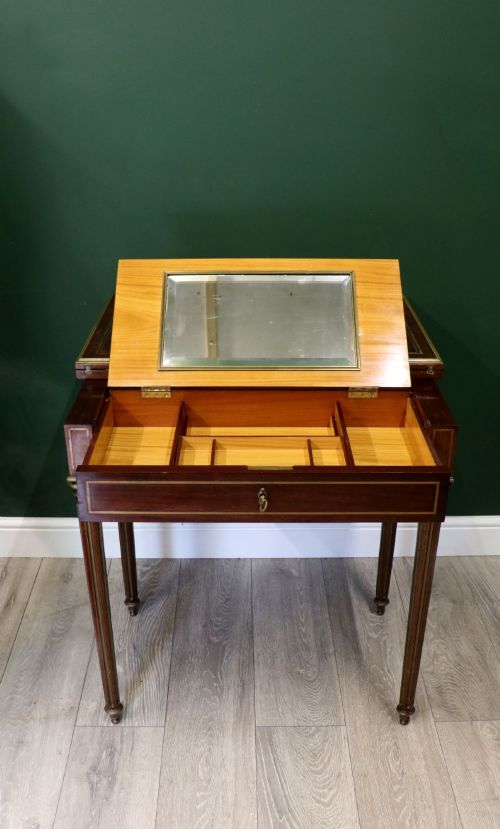
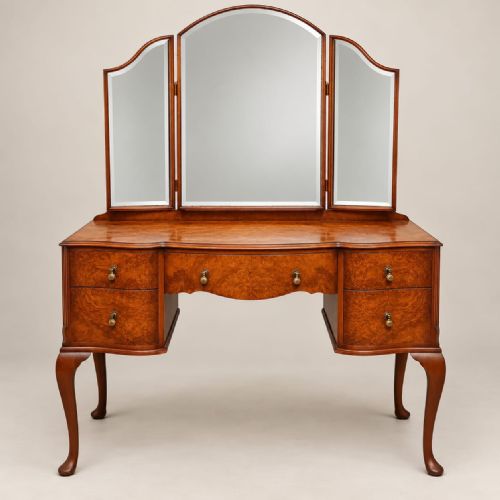
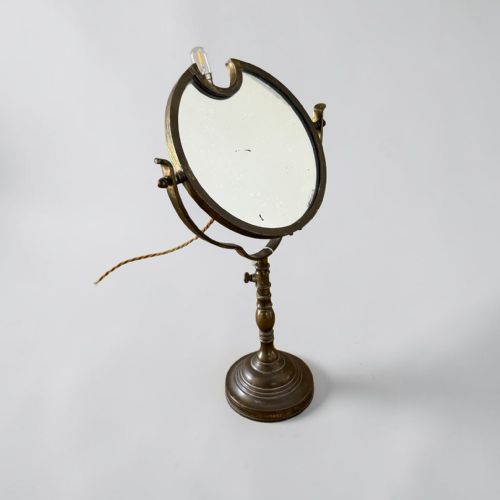
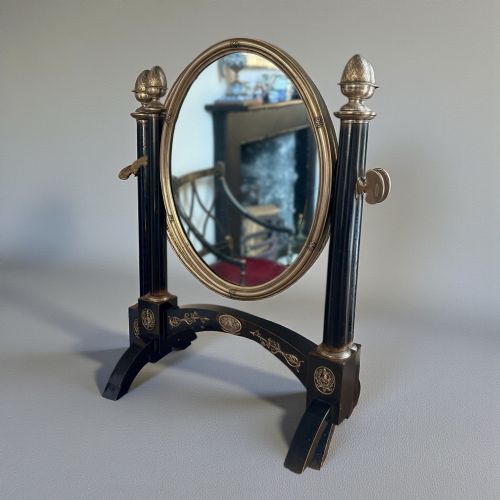


Vintage Brass Table Mirror
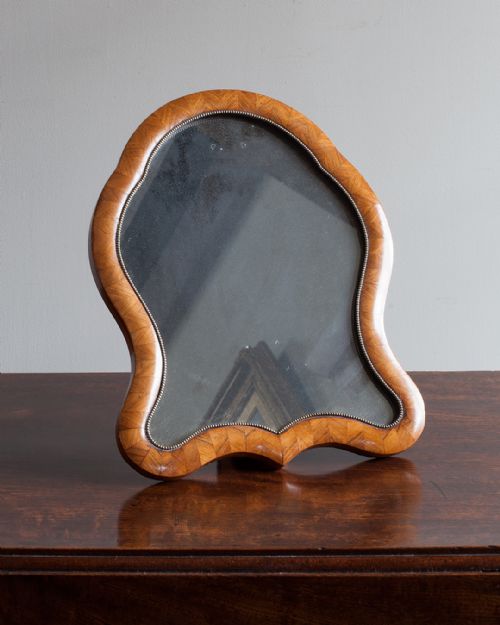
A vintage brass table mirror brings functional reflection and decorative metalwork to a dressing chest, drawing on styles from the nineteenth century to the art deco era.
Vintage Brass Table Mirror
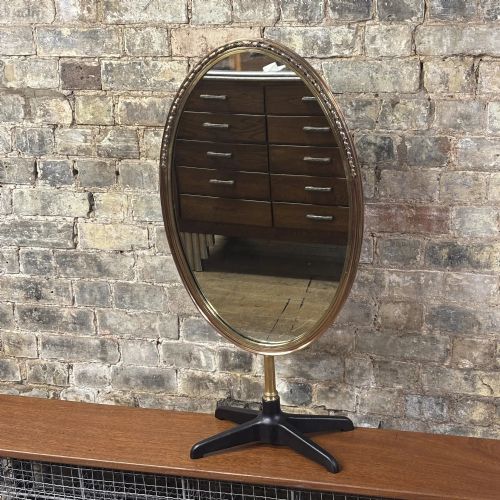
A vintage brass table mirror serves as a tabletop accessory for dressing rooms and bedrooms, utilising adjustable frames and tilting mechanisms. Buyers seeking a vintage brass table mirror encounter items spanning the Victorian, Edwardian, and Art Deco periods, alongside French revival designs.
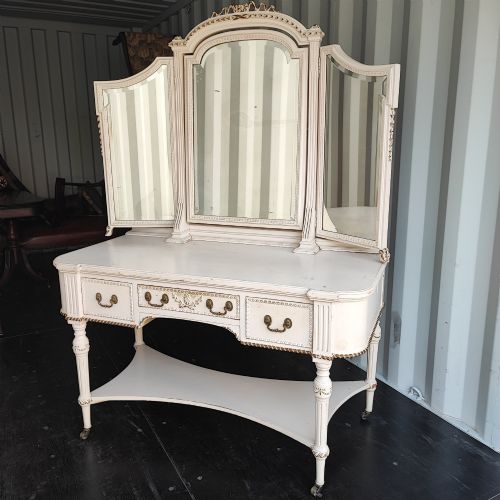
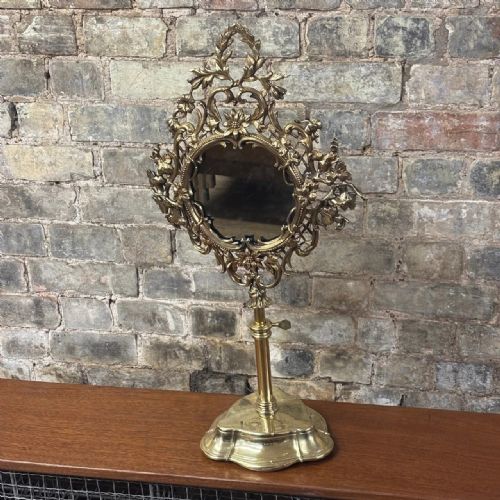
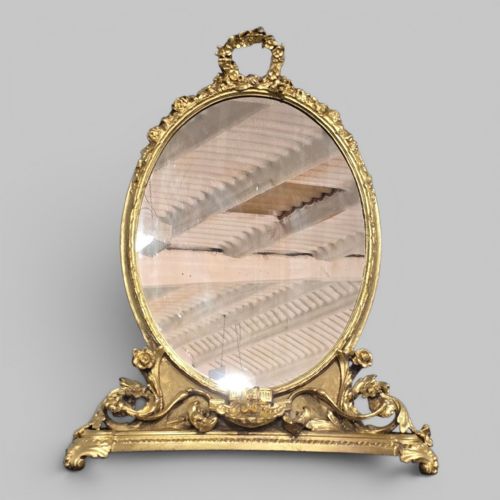
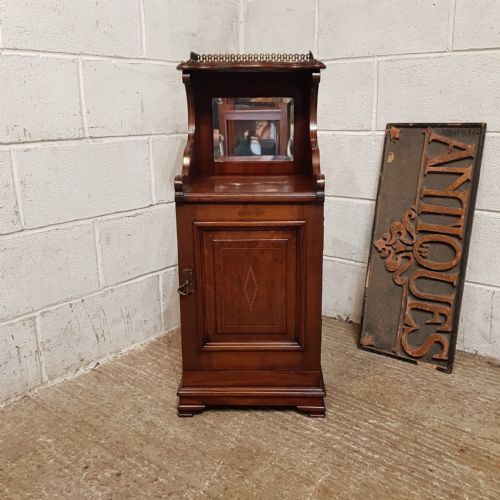
The objects take several forms, including oval dressing mirrors, easel mirrors, and combination pieces incorporating green onyx or polished oak stands. Many examples emerge from the late nineteenth century and the early decades of the twentieth century, reflecting varied stylistic revivals from French Rococo to Louis XV.
While some pieces function as standalone dressing mirrors, others form part of larger suites or incorporate mechanical elements like clocks. The selection balances utilitarian glass surfaces with decorative metal surrounds, resting securely on tables or chests.
Materials and construction
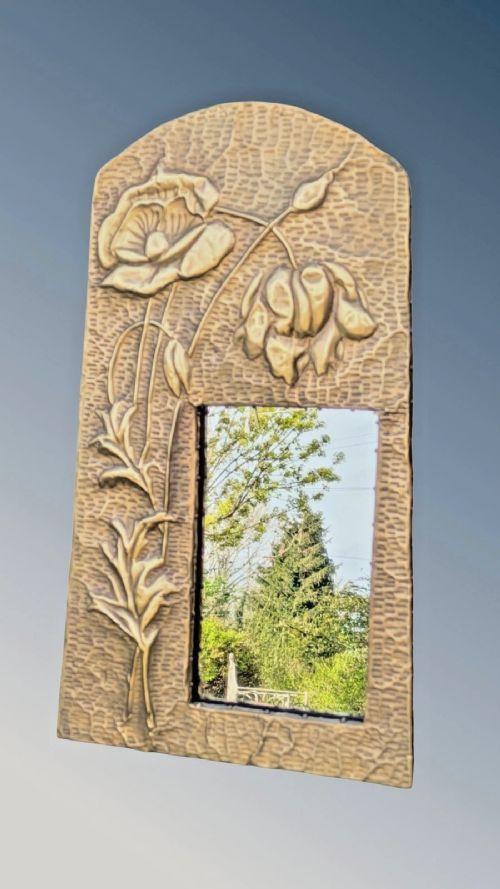
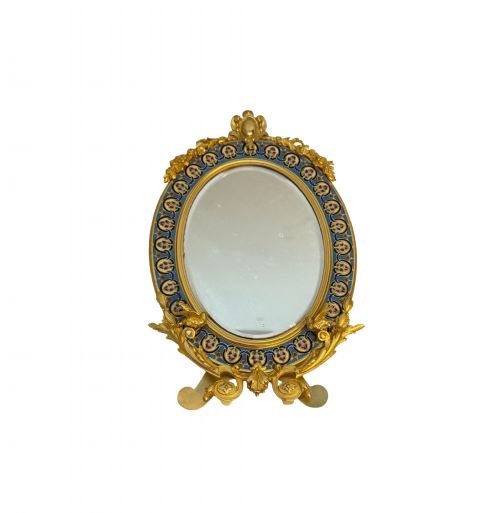
Makers constructed these mirrors primarily using cast or sheet brass frames, paired with clear or bevelled mirror glass and supporting stands of mahogany, oak, kingwood, or painted wood. Metal components often received decorative surface treatments such as repoussé work, champlevé enamelling, or gilt finishes.
Structural integrity relied on secure backing boards, hinged easel supports, or weighted bases of green onyx and cast iron to keep the pivoting mirror plate balanced. Joinery in the accompanying wooden stands utilises period techniques appropriate to Victorian and Edwardian cabinetmaking.
Vintage Brass Table Mirror Retail Price Guide 2026
Typical asking prices for vintage brass table mirror among the pieces listed under this phrase on Sellingantiques today, from the lower quarter to the upper quarter. They describe what is for sale here now, not the wider market.
Current listings demonstrate a strong representation of brass, mahogany, and mirror glass across Victorian, Edwardian, and Art Deco periods.
Judging the work
Quality rests in the crispness of the brass casting, the depth and detail of repoussé ornamentation, and the substantial weight of the supporting base. Superior examples maintain firm tension in their adjustable pivots and integrate secondary materials like onyx or exotic woods with precision.
The grade of the mirror glass and the refinement of the frame's corner joints separate standard production pieces from finer studio or revival work. Pieces retaining original patination on the metal and intact backing materials demonstrate better preservation over time.
Thomas Rubergall·Smiths·Rowley Gallery·Maples of London and Paris
The Vintage Brass Table Mirror Glossary
- Repoussé
- Metalworking technique where the metal is hammered from the reverse side to form a raised design on the front. This method appears frequently on Edwardian frames.
- Easel mirror
- A freestanding mirror supported by a hinged leg attached to the back of the frame. It allows the glass to be angled on a tabletop.
- Champlevé
- Enamelling technique where troughs or cells are sunken into the metal surface and filled with vitreous enamel before firing. It adds colourful detail to late nineteenth-century French pieces.
- Louis XV Revival
- Design style drawing on eighteenth-century French rococo motifs, characterised by asymmetrical curves and naturalistic scrollwork. It influenced several Edwardian and early twentieth-century dressing mirrors.
- Bevelled glass
- Mirror glass with edges cut and polished at an angle to create a framed border effect. This treatment indicates finer finishing on period plates.
Vintage Brass Table Mirror: Frequently Asked Questions
Are these mirrors adjustable?
Many table mirrors feature pivoting frames mounted on side screws or upright standards, allowing the user to tilt the glass angle. Easel mirrors use a hinged rear leg to adjust the viewing position on a dressing table.
Heavier models rely on weighted bases or mechanical joints to maintain stability at different angles. This adjustability was a key functional requirement for Victorian and Edwardian dressing accessories.
What surfaces work best for display?
These mirrors suit placement on dressing chests, sideboards, mantelpieces, or dedicated dressing tables where the reflective glass can bounce light around a room. Their compact size allows them to sit securely on wooden, marble, or upholstered surfaces.
Pairing a brass frame with matching wood tones like mahogany, oak, or kingwood creates a cohesive display. Ensure the supporting surface is level to keep pivoting frames balanced.
How do I care for vintage brass and glass?
Clean the brass frame gently with a dry or slightly damp microfiber cloth to remove dust without stripping the aged patina. Avoid harsh chemical polishes that can damage surrounding wood, enamel, or original surface treatments.
Use standard glass cleaner applied to a cloth rather than directly onto the mirror surface to prevent moisture seeping behind the plate. Regular light maintenance preserves both the reflective silvering and the metalwork.