

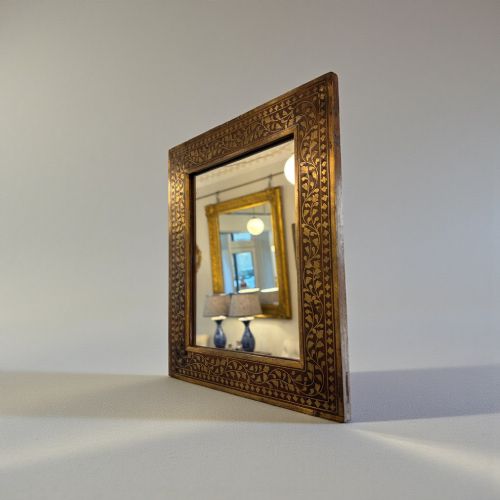
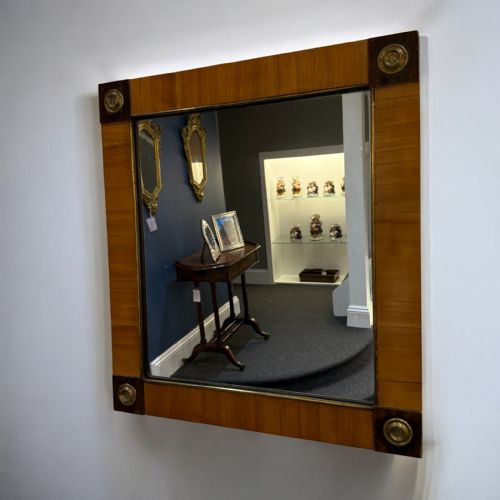
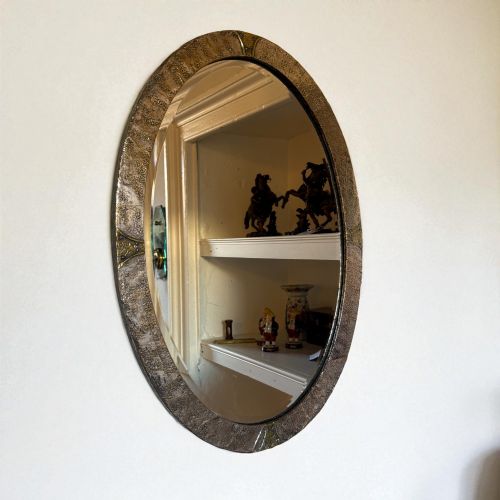
Brass Mirror
A brass mirror brings warmth and sharp reflection to a room, shifting from compact dressing pieces to large wall designs across multiple eras.
Brass Mirror
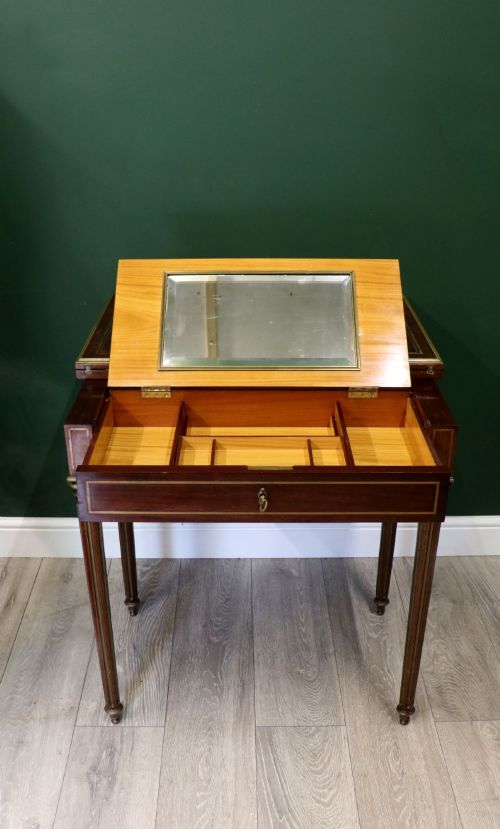
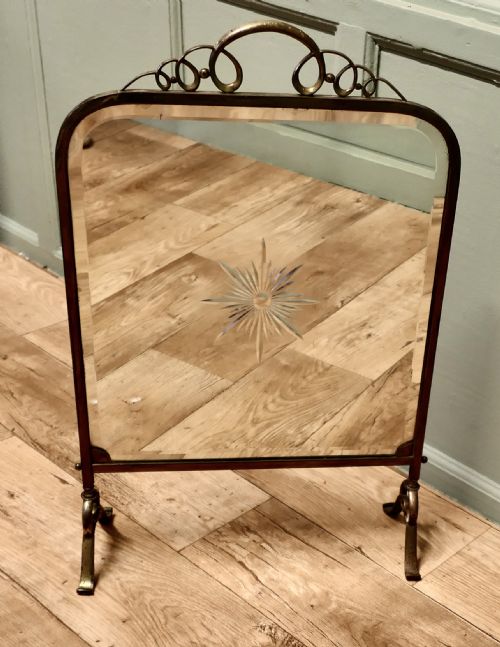
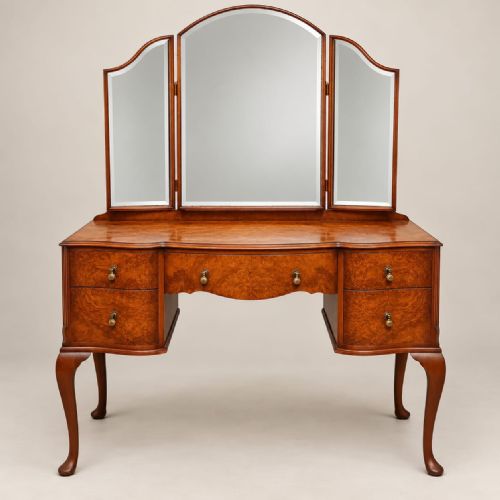
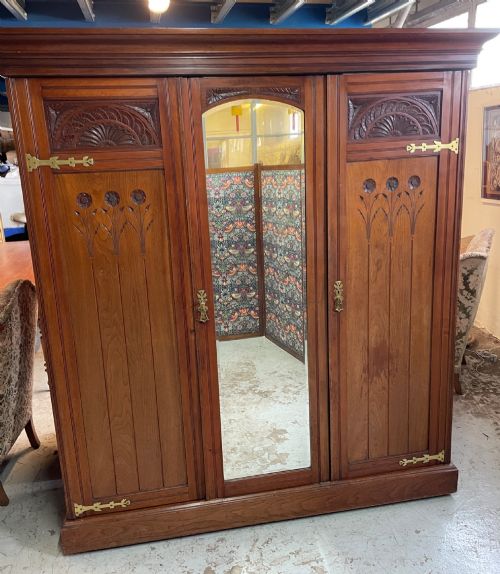
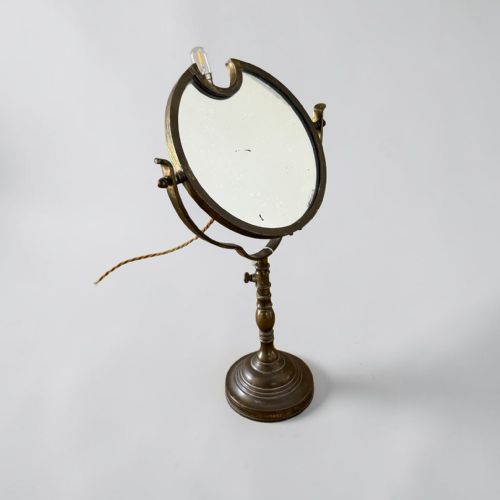
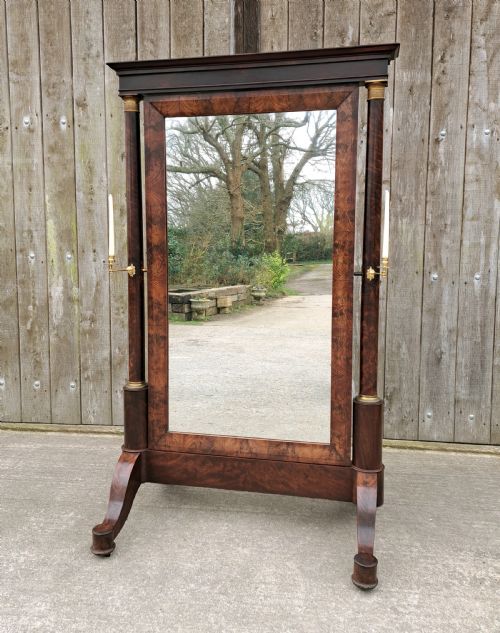
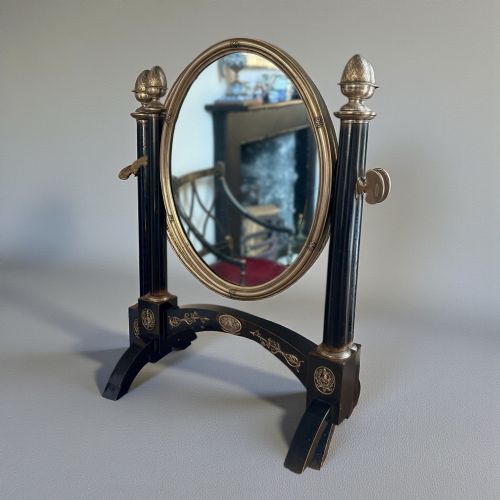
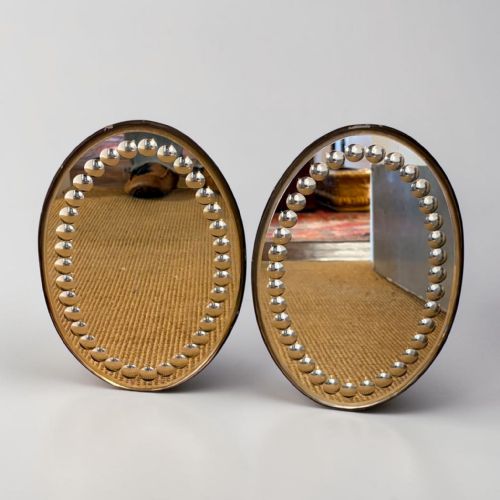
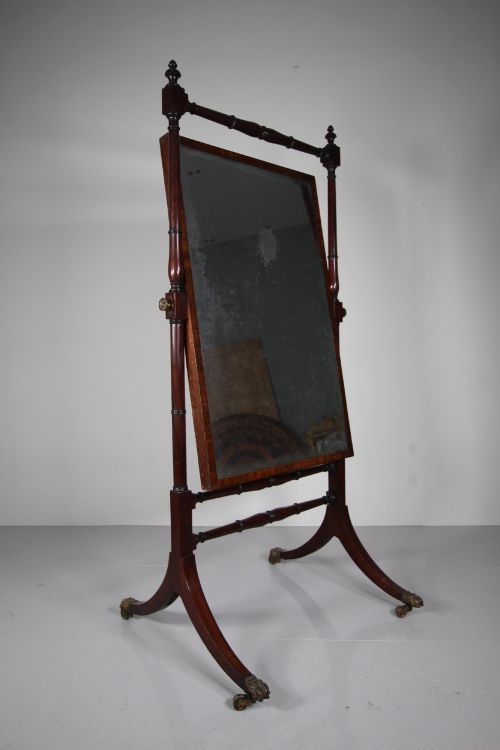
When you search for a brass mirror, you encounter a varied assortment of domestic objects spanning the nineteenth and early twentieth centuries. The selection ranges from portable toilet and shaving mirrors to substantial wall-hanging pieces and adjustable cheval frames.
You are most likely to meet Victorian and Edwardian examples on this page, alongside specific interpretations from the Regency era and the Arts and Crafts movement. These items appear in domestic spaces as functional dressing accessories or decorative wall accents.
Makers utilised brass mounts, frames, and castors to complement woods such as mahogany, walnut, and rosewood, or cast the metal entirely to form ornate profiles.
Materials and Construction
Makers combined brass with glass and various timbers, employing techniques like hammering, casting, and gilt bronze work. Frames incorporate solid brass, gilt metal, and ormolu alongside secondary woods such as mahogany, oak, and walnut.
Artisans of the Arts and Crafts period applied hammered textures to metal surrounds, while earlier Regency and Victorian workshops focused on precision casting and fire gilding. Mirror glass is set securely into wooden backboards or held by robust brass mounts and hinges.
Listings feature brass mirrors paired with mahogany, rosewood, walnut, and gilt bronze across Victorian, Edwardian, and Regency periods.
Distinctions in Quality
Quality in these items rests on the crispness of metal casting, the weight of the frame, and the integrity of the joinery. Superior pieces show deliberate detailing in chased or engraved brass work rather than generic stamped decoration.
The choice of primary timber and the clarity of the original mirror glass further separate standard production from exceptional examples. Balance and proportion in pivoting cheval and table frames dictate how well a piece functions in daily use.
Shoolbred and Co.·Maples of London and Paris
The Brass Mirror Glossary
- Cheval mirror
- A full-length plate glass mirror suspended on a vertical frame with a pivoting stand. This allows the glass to tilt at various angles for dressing.
- Girandole
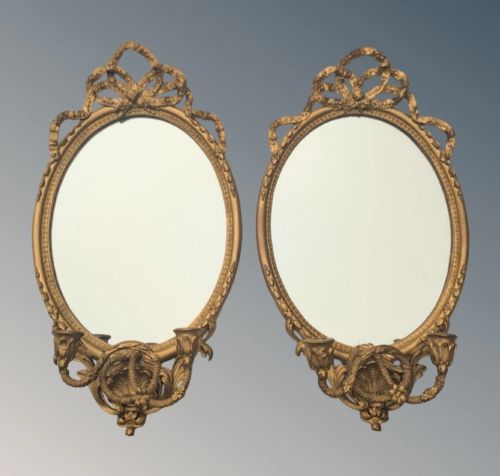
- A decorative wall mirror fitted with one or more candle branches attached to the frame. The polished brass or gilt surfaces reflect the candle flame to amplify light.
- Ormolu
- Finely ground high-carat gold-copper mercury gilding applied to bronze or brass metalwork. It gives a rich golden finish seen on decorative French revival pieces.
- Toilet mirror
- A smaller dressing table mirror designed to sit on top of a chest of drawers or a dedicated vanity table. They often feature small storage drawers in the base.
- Sunburst mirror
- A decorative wall mirror featuring radiating rays or segments surrounding the central glass plate. This style gained popularity during the Art Deco period.
Brass Mirror: Frequently Asked Questions
How do I clean a brass frame?
Dust the metal gently with a dry microfibre cloth to remove surface particles.
Avoid abrasive polishes that strip away historical patina and finish from antique metalwork.
Can I replace the mirror glass?
Original mirror glass often shows foxing and age spots that confirm its period authenticity.
Retaining the original plate is usually preferred by collectors unless the damage obstructs reflection entirely.
Where should I hang a wall mirror?
Position wall-mounted pieces at eye level to maximise light distribution across the room.
Ensure the wall fixings match the considerable weight of cast brass and wooden frames.
How do I date a brass mirror?
Examine the construction methods of the wooden backboards and the composition of the metal frame.
Stylistic cues from Victorian, Edwardian, and Regency periods help narrow down the decade of manufacture.