

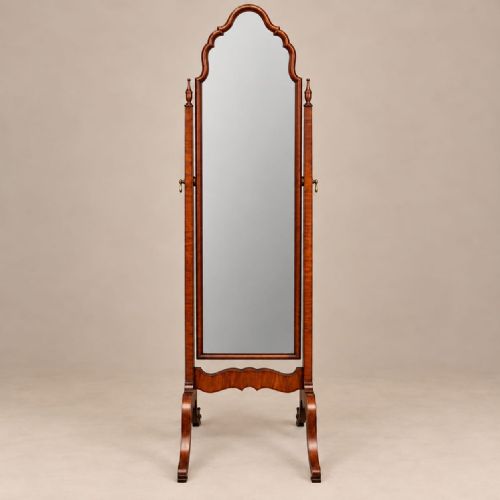
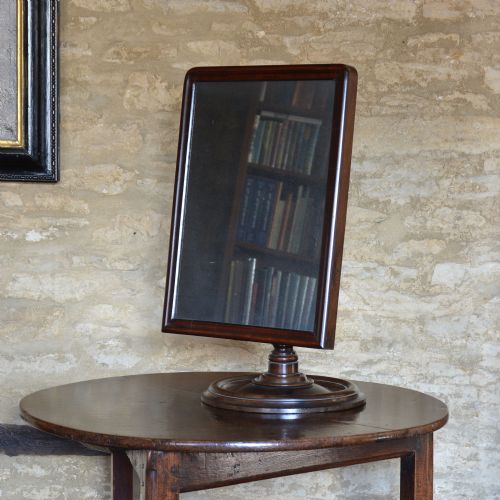
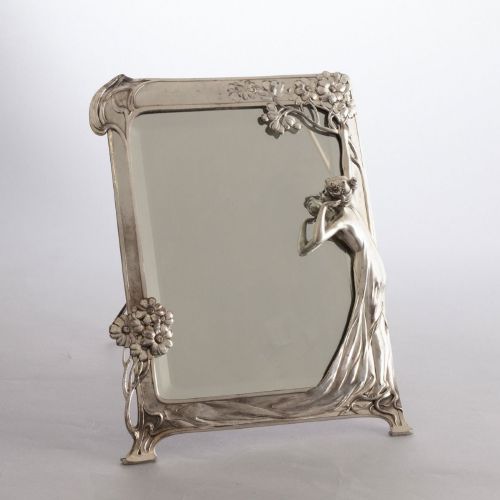
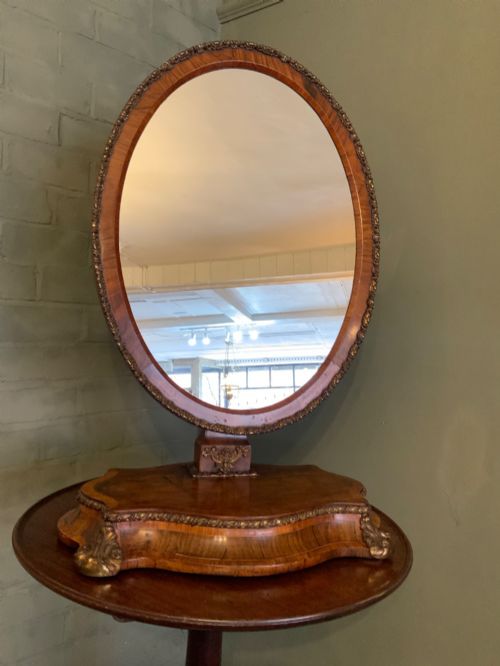
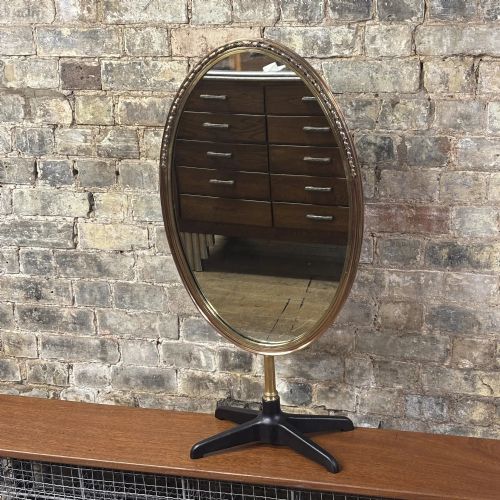

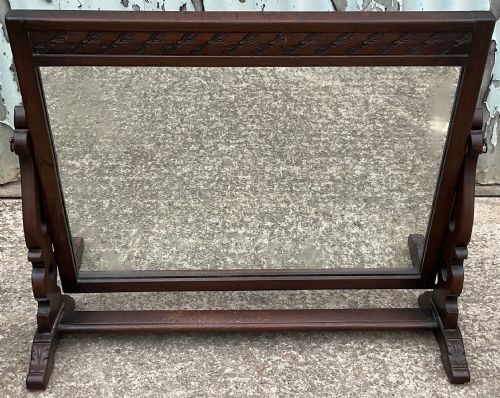


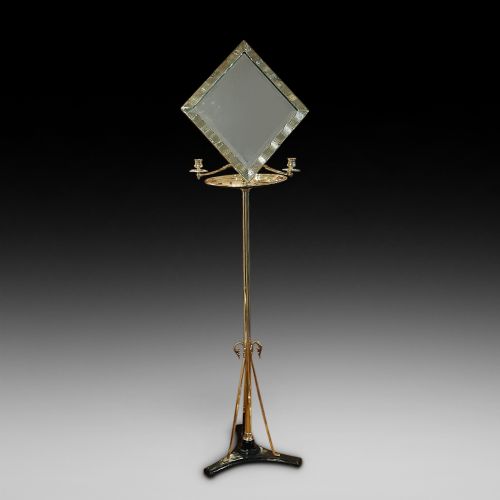


Free Standing Table Mirror
These free standing table mirror examples offer compact reflection and adjustable angles, bringing period craftsmanship straight to your dressing room.
Free Standing Table Mirror
A free standing table mirror sits upon a chest, table, or vanity, providing a movable surface for grooming and dressing. The pieces appearing here span centuries of domestic use, ranging from compact shaving stands to large dressing mirrors.
The form adapts across periods from simple swivel frames on rectangular boxes to elaborate cheval and tri-fold designs. Mahogany, walnut, and oak form the structural base of many examples, accompanied by brass, pewter, and boxwood details.
Victorian and early twentieth century examples dominate the selection, showing shifts in domestic furniture from heavy carved timber to polished brass and adjustable stands. Collectors encounter dressing table mirrors, shaving stands, and toilet mirrors designed for practical daily use.
How They Were Made
Cabinetmakers constructed these frames using solid hardwoods like mahogany, walnut, and oak, often incorporating boxwood stringing and ormolu mounts for decoration. Metal versions utilise cast brass, stamped pewter, and iron frameworks to support the tilting glass.
The mirror plates pivot between upright standards using screw pins, brass pivots, or telescopic mechanisms that allow height and angle adjustment. Joinery methods include dovetailing on small drawer bases and secure tenon joints within the upright supports.
Free Standing Table Mirror Retail Price Guide 2026
Typical asking prices for free standing table mirror among the pieces listed under this phrase on Sellingantiques today, from the lower quarter to the upper quarter. They describe what is for sale here now, not the wider market.
Listings feature woods including mahogany, walnut, oak, and boxwood alongside metals such as brass, pewter, and cast iron.
What Varies in Quality
Quality rests in the weight of the timber, the crispness of carved details like Rococo Revival scrolls, and the durability of the adjusting mechanisms. Superior pieces feature well-figured flame mahogany or rich walnut paired with heavy, cast brass fittings that hold their position without slipping.
Secondary woods, simpler box construction, and stamped metal components rather than heavy brass indicate standard domestic production. The clarity of the glass and the integration of small trinket drawers or serpentine fronts distinguish utilitarian items from finer dressing furniture.
Gillows·WMF
The Free Standing Table Mirror Glossary
- Toilet mirror
- A small mirror mounted on a miniature chest of drawers or a box frame, designed to sit on a larger piece of furniture. These items appeared frequently in eighteenth and nineteenth century bedrooms.
- Shaving stand
- A specialised adjustable mirror paired with a small stand or shelf, historically utilised by gentlemen for morning shaving. They often feature telescopic brass stems or tilting frames.
- Cheval mirror
- A large, full-length freestanding mirror supported on four legs and a vertical frame, allowing the entire plate to swing. The name derives from the French word for horse.
- Ormolu
- Gilt bronze ornamentation applied to furniture and mirror frames, providing a rich golden contrast to dark woods like walnut. Makers cast and chased the metal by hand.
- Boxwood
- A dense, pale yellow timber frequently utilised for stringing, inlay, and fine decorative banding on mahogany and walnut mirror frames.
Free Standing Table Mirror: Frequently Asked Questions
What is a free standing table mirror?
A free standing table mirror is a portable looking glass mounted on a frame or small base, designed to rest on a chest of drawers, dressing table, or desk. These pieces allow users to adjust the angle of reflection without mounting hardware to a wall.
They serve as both practical grooming accessories and decorative furniture items, appearing in various woods and metals across multiple design periods.
How do I date an antique table mirror?
Dating relies on observing the timber species, the style of the frame carving, and the mechanics of the pivot hardware. Earlier pieces utilise dense native hardwoods like walnut and oak, while later Victorian examples frequently feature flame mahogany or brass.
Examination of the mirror plate edge, assembly fixings, and secondary woods inside any attached drawers also helps determine the period of manufacture.
Where were these mirrors used?
These mirrors found placement primarily in bedrooms, dressing rooms, and hallways on top of dressing tables, washstands, or chests of drawers. Shaving stands specifically served gentlemen in dressing areas for morning routines.
Their portable nature allowed owners to move them around the home to follow natural window light.
How do I care for antique wood and brass?
Maintenance involves dusting timber frames with a soft cloth and occasionally applying traditional beeswax to nourish the wood grain. Brass components benefit from gentle cleaning without harsh chemical polishes to preserve their natural age patina.
Keeping the pieces away from direct sunlight and damp environments prevents warping in the timber and silvering degradation on the glass.