
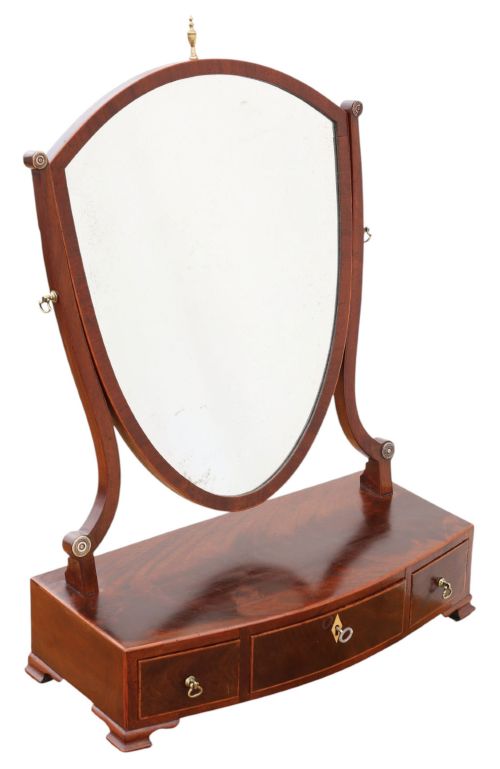
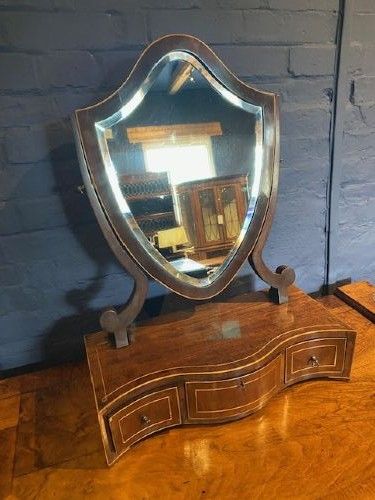

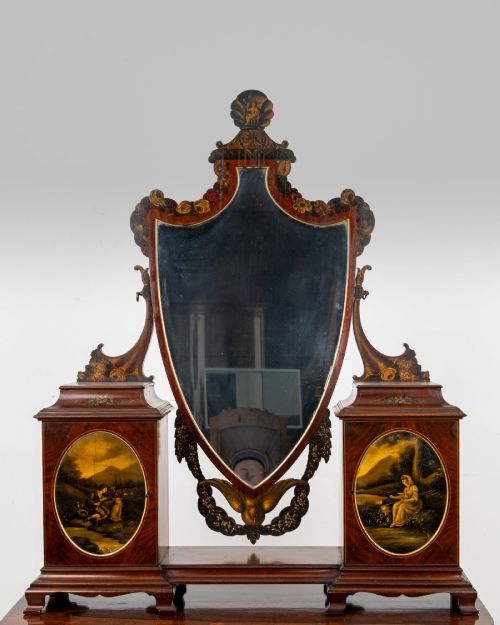
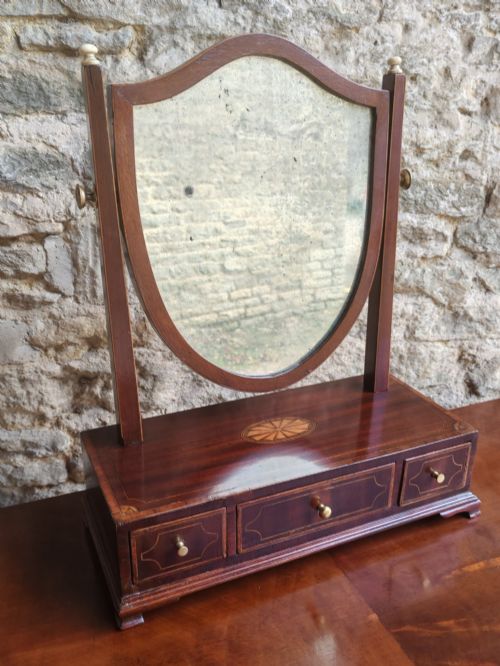


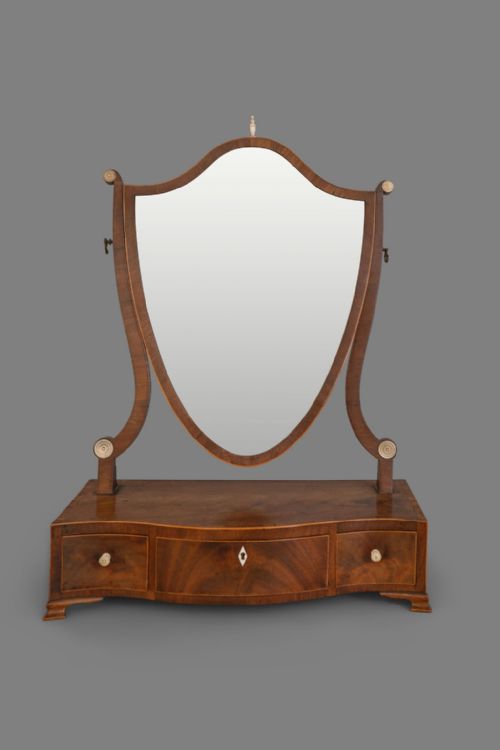


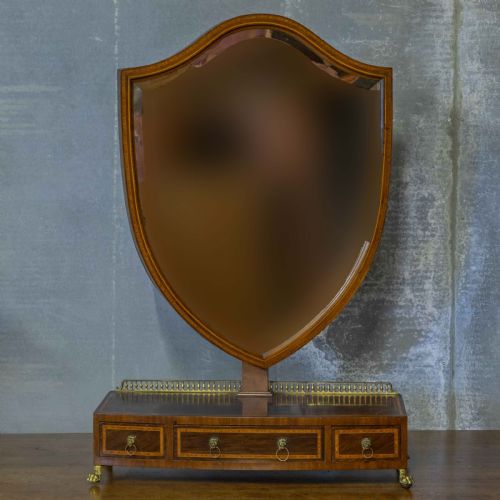
Shield Shaped Mirror
These shield shaped mirror examples bring heraldic form and rich timber frames to a room, offering both practical reflection and distinctive period character.
What a shield shaped mirror is
A shield shaped mirror takes its distinctive pointed outline from heraldic designs, appearing across several distinct eras in British domestic interiors. The examples documented here span Victorian, Edwardian, and earlier nineteenth-century periods, showing how cabinetmakers adapted the silhouette for different domestic uses.
You will encounter these pieces primarily as table top or dressing table mirrors on stands, alongside wall-hanging variants framed in materials ranging from carved timber to beaten metal. The scale shifts from compact toilet mirrors designed for chests of drawers to larger cheval and wall-mounted versions.
The form draws on Neoclassical and Baroque revivals as well as Arts and Crafts ideals, meaning the surrounding frame dictates the overall aesthetic. Whether executed in inlaid mahogany or hammered copper, the characteristic outline remains the unifying feature of these decorative items.
Materials and construction
Makers constructed the frames of these pieces using native and imported hardwoods like mahogany, walnut, and boxwood, frequently incorporating decorative stringing or inlay. Other versions utilise metals such as brass and copper, or employ gilded plaster and giltwood to achieve richer surface textures.
Table and dressing mirrors typically feature swinging glass plates mounted between upright supports, sometimes incorporating small jewellery cabinets or drawer bases. Wall-hanging examples rely on secure timber backboards or wrought iron brackets to support the weight of the bevelled or flat mirror glass.
Retail Price Guide 2026
Typical UK retail prices for shield shaped mirror, calculated from the Sellingantiques database of over a million retail prices indexed since 2003. This retail price guide relies exclusively on Sellingantiques data; no external sources or auction records are used, so the figures do not describe the wider market.
Distinctions in quality
Quality rests in the precision of the frame's joinery and the subtlety of any inlay work, such as delicate boxwood stringing on mahogany surfaces. Finer examples display harmonious proportions where the curve of the wooden shield complements the bevel and thickness of the glass.
The choice of secondary woods and the weight of the brass or copper fittings also distinguish standard production from superior pieces. Original mirror glass with natural ageing and silvering oxidation commands particular appreciation among collectors of period furnishings.
The Shield Shaped Mirror Glossary
- Cheval mirror
- A freestanding full-length mirror supported on a frame with four feet and vertical pivots. This allows the glass plate to tilt freely to any desired angle.
- Toilet mirror
- A smaller mirror designed to sit on a dressing table or chest of drawers. These often incorporate small drawers or jewellery compartments in their bases.
- Girandole
- A decorative wall mirror featuring attached candle sconces or branch holders. The reflective glass amplifies the candlelight in the room.
- Inlay
- A decorative technique where contrasting woods or materials are set into recesses flush with the surface of the main timber. Boxwood stringing is a common example found on mahogany frames.
Frequently Asked Questions
Where should I hang a shield shaped mirror?
These mirrors suit spaces where their distinct vertical silhouette can draw the eye, such as above a mantelpiece or on a narrow hallway wall. Ensure the fixings match the weight of the timber and glass.
Tabletop versions sit comfortably on chests of drawers or dressing tables in bedrooms. They add period character without requiring permanent wall installation.
How do I date an antique shield shaped mirror?
Examine the timber species, construction joints, and the characteristics of the mirror glass itself. Nineteenth-century pieces often display hand-bevelled edges and older backboards secured with traditional fixings.
Stylistic cues also help narrow the period, as Edwardian interpretations differ noticeably from heavy Victorian giltwood or Georgian mahogany designs.
Can I replace the mirror glass?
Original mirror glass with minor foxing and age spots is generally preferred by collectors as proof of authenticity. Replacing it alters the historic integrity of the piece.
If the glass is broken beyond repair, a professional restorer can source period-appropriate replacement glass. This preserves the visual balance of the original frame.
How do I care for wooden frames?
Dust the timber and frame regularly with a soft, dry cloth to prevent dirt accumulation in carved details or inlay work. Avoid commercial aerosol polishes that leave residue.
Apply a quality beeswax sparingly once or twice a year to nourish the mahogany or walnut. Keep the piece away from direct sunlight and damp conditions.