
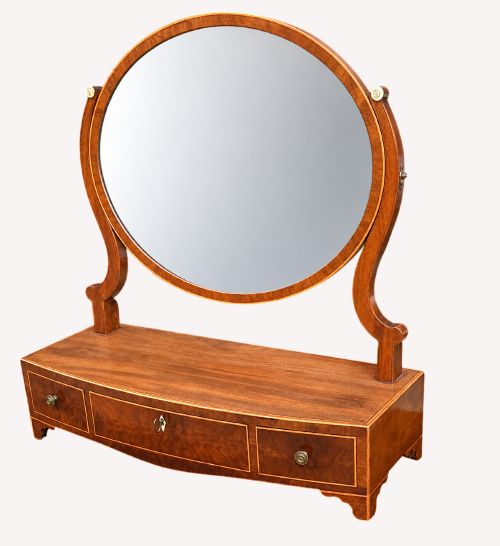
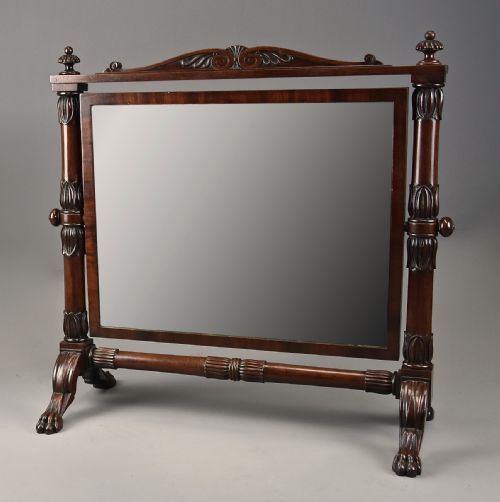
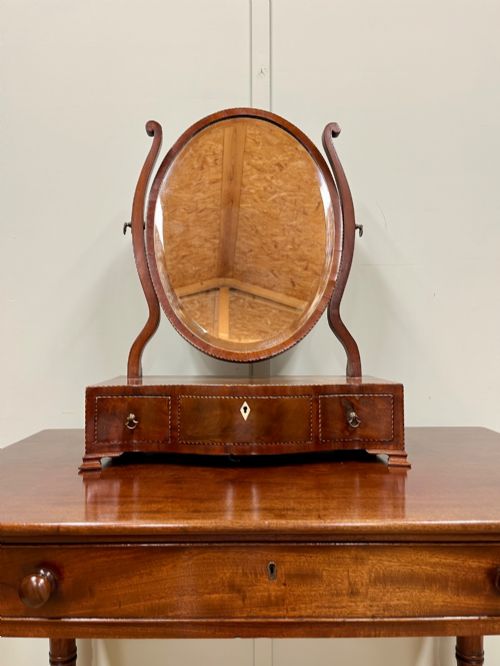
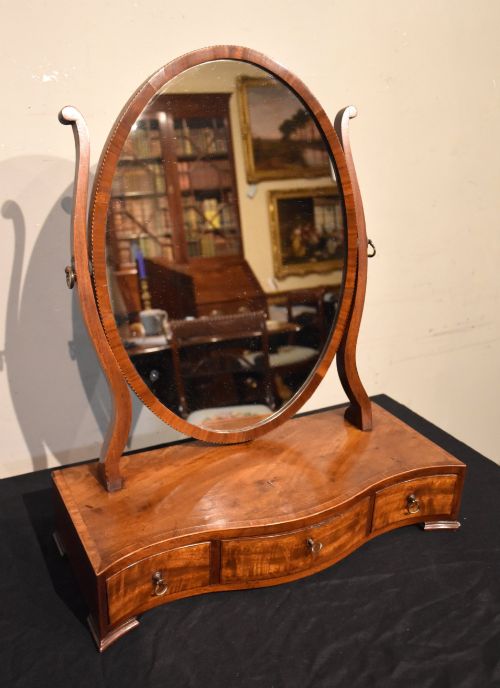


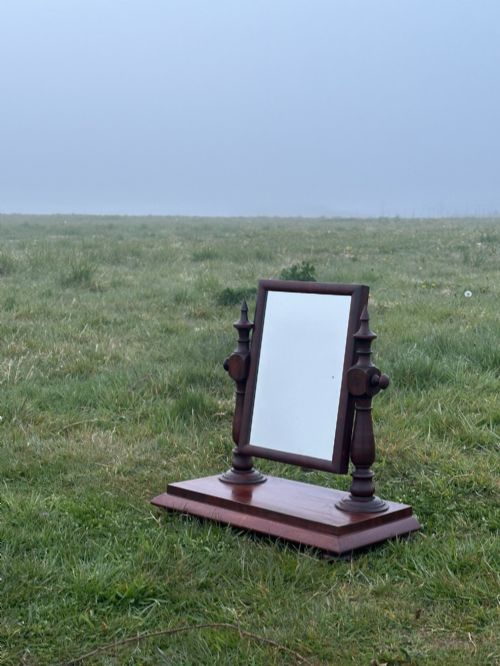

Tabletop Cheval Mirror
A tabletop cheval mirror brings adjustable reflection and compact elegance to a dressing surface, offering practical refinement for daily grooming.
Tabletop Cheval Mirror
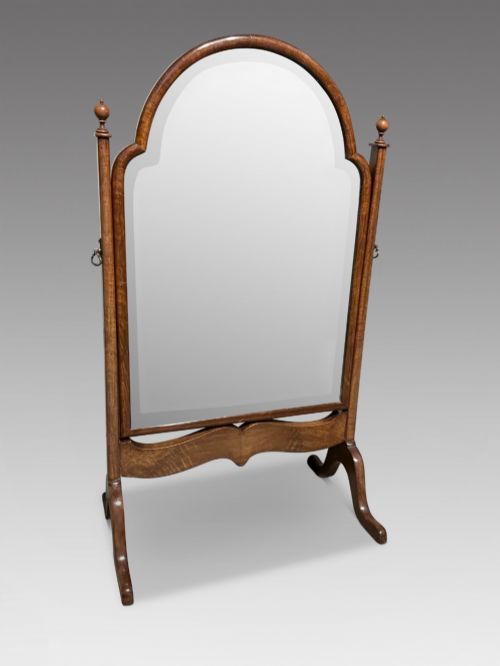
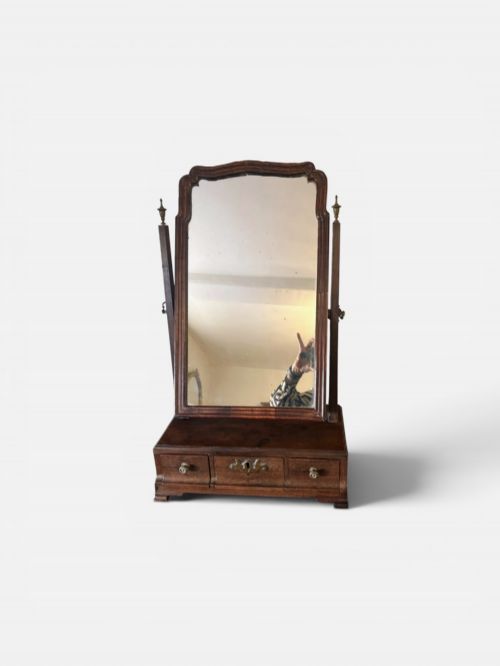
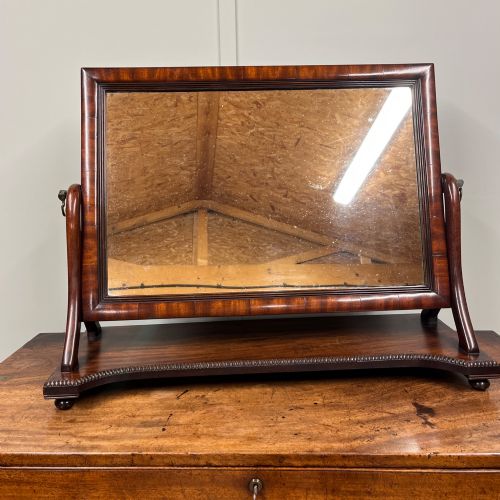
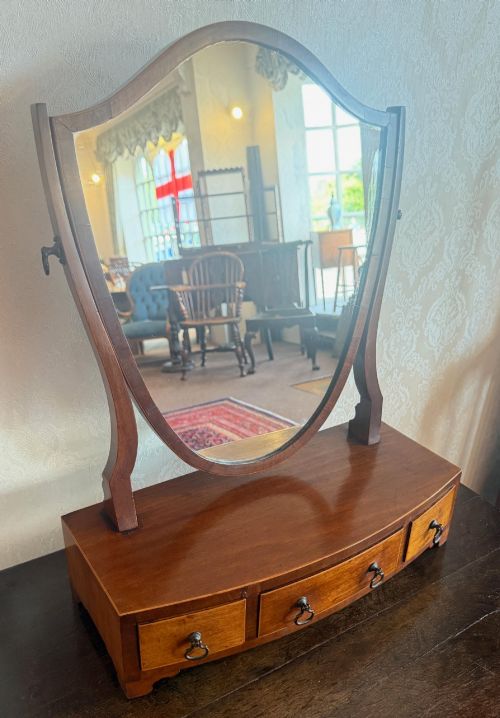
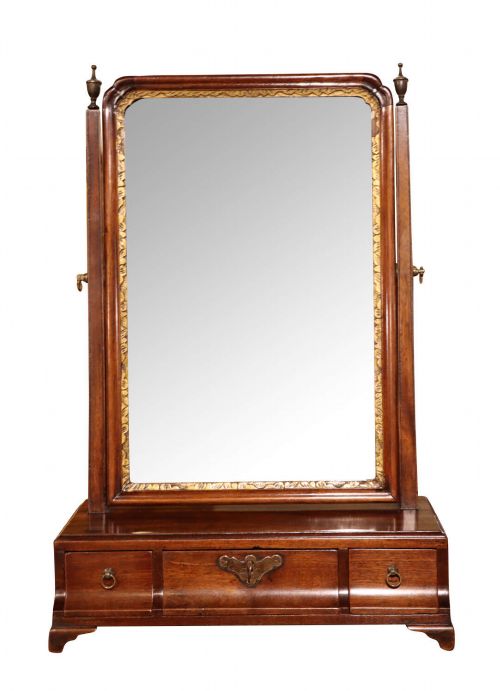
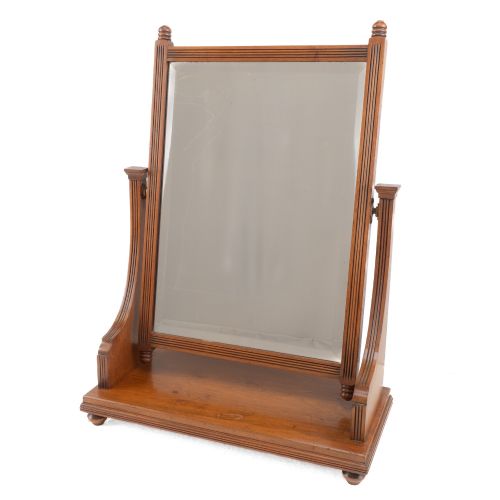
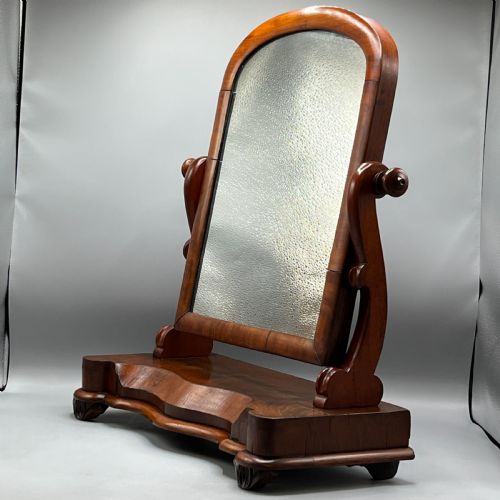
A tabletop cheval mirror stands on a small base or platform rather than the floor, designed specifically for placement on a dressing table or chest. When searching for a tabletop cheval mirror, buyers most frequently encounter mahogany examples dating from the Georgian, Regency, and Victorian periods.
These pieces function primarily as adjustable swing mirrors, often mounted on pivots between upright supports. Many incorporate small drawers, compartments, or bureau fitments within their bases to hold personal items.
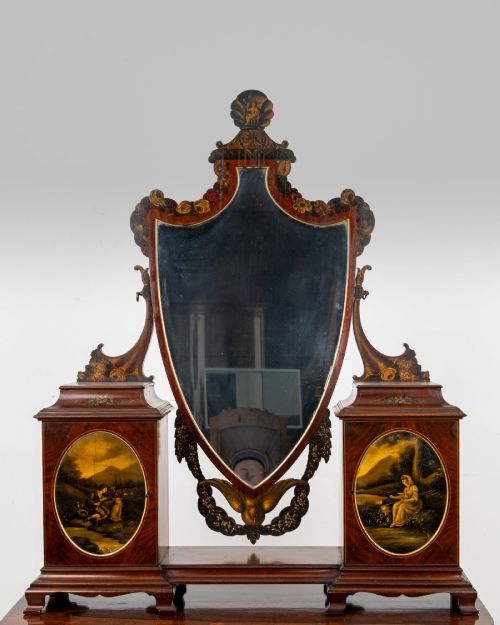
The form spans various historical eras, appearing in simple utilitarian designs as well as elaborate formats featuring boxwood inlay, marquetry, or marble tops.
Materials and construction methods
Makers predominantly utilised solid and veneered mahogany, along with walnut, burr walnut, and satinwood, frequently enhanced by contrasting boxwood inlay or bone details. Structural elements rely on traditional cabinet-making joins to support the swinging glass frame securely between upright pillars.
Mirrors utilise standard glass plates mounted within shaped wooden frames, suspended on brass or wooden pivot screws that allow the glass to tilt at various angles. Metal components such as brass brackets and candle sconces occasionally appear on period examples, alongside secondary woods used for drawer linings.
Tabletop Cheval Mirror Retail Price Guide 2026
Typical asking prices for tabletop cheval mirror among the pieces listed under this phrase on Sellingantiques today, from the lower quarter to the upper quarter. They describe what is for sale here now, not the wider market.
Some tabletop mirrors double as miniature bureaus, letting you check your reflection while writing secret letters.
Distinguishing quality across examples
Quality rests upon the selection of timber figures, such as highly grained Cuban mahogany or burr walnut, and the crispness of inlaid decoration. Finer examples display meticulous hand-cut dovetails within the base drawers and well-proportioned architectural framing.
The sophistication of the pivoting mechanism and the integration of fitted compartments, such as jewellery drawers or bureau writing spaces, separate standard utilitarian mirrors from superior cabinet work.
Gillows·Jean Gille·P and MA Nicholson
The Tabletop Cheval Mirror Glossary
- Cheval mirror
- A freestanding mirror designed to swing vertically within a frame, adapted in smaller proportions for tabletop use.
- Toilet mirror
- A traditional term for a small dressing mirror placed on a table or chest, frequently fitted with base drawers.
- Swing mirror
- A glass plate hung on lateral pivots allowing the angle of reflection to be adjusted.
- Marquetry
- Decorative woodwork where pieces of veneer are fitted into a ground to form geometric or pictorial designs.
Tabletop Cheval Mirror: Frequently Asked Questions
What is a tabletop cheval mirror?
A tabletop cheval mirror is a miniature version of a full-length floor mirror, designed to sit securely on top of a dressing table or chest of drawers.
These pieces provide an adjustable reflective surface combined with a stable base structure, often featuring small storage drawers for accessories.
How were these mirrors used historically?
Historically, these mirrors served as essential furnishings in bedrooms and dressing rooms for personal grooming and styling.
The tilting glass allowed the user to adjust their view, while the base drawers held small valuables, cosmetics, or letters.
How do I date a mahogany mirror?
Dating relies upon examining the timber species, construction techniques, and stylistic traits associated with specific historical periods such as the Georgian or Victorian eras.
Earlier examples often feature simpler lines and hand-cut joinery, whereas later Victorian pieces may incorporate heavier proportions or more ornate carved details.
Are these mirrors stable on furniture?
These mirrors utilise weighted wooden bases and secure side supports designed to balance the pivoting weight of the glass frame.
Properly constructed stands rest evenly on flat surfaces without requiring permanent wall fixings.