



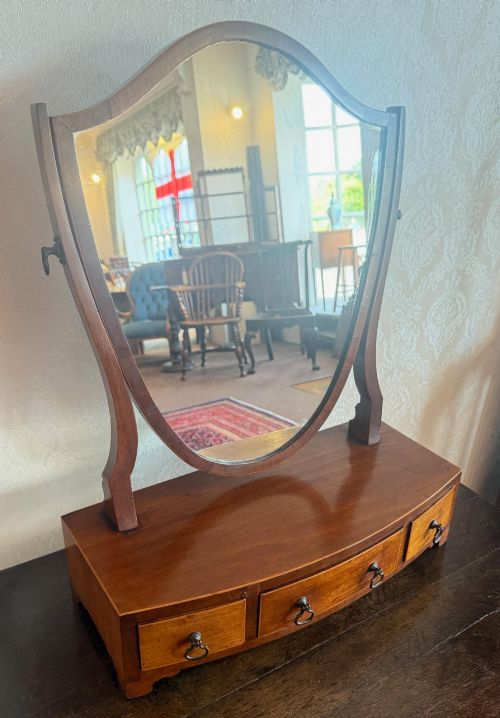
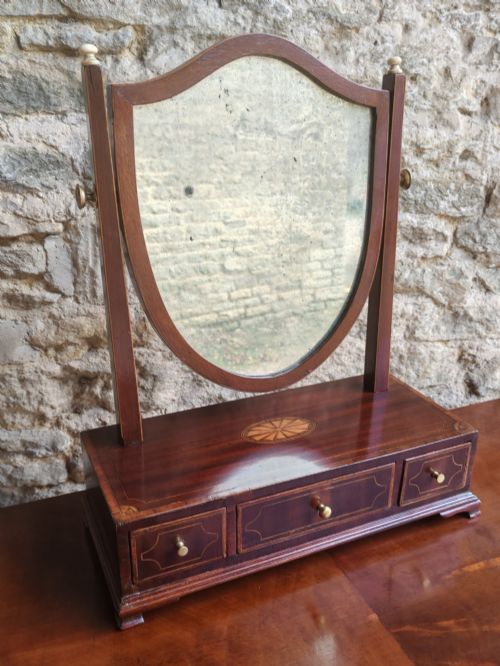
Mahogany Box Mirror
When you search for a mahogany box mirror, you are looking at centuries of dressing table design built around timber and swing glass.
Mahogany Box Mirror
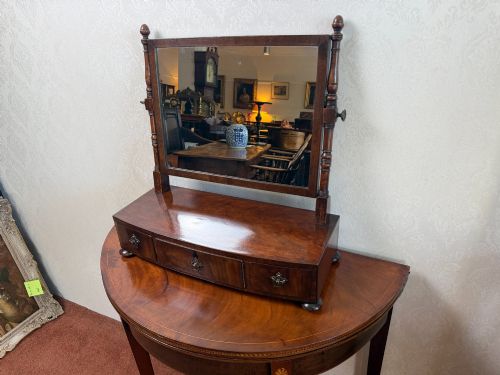
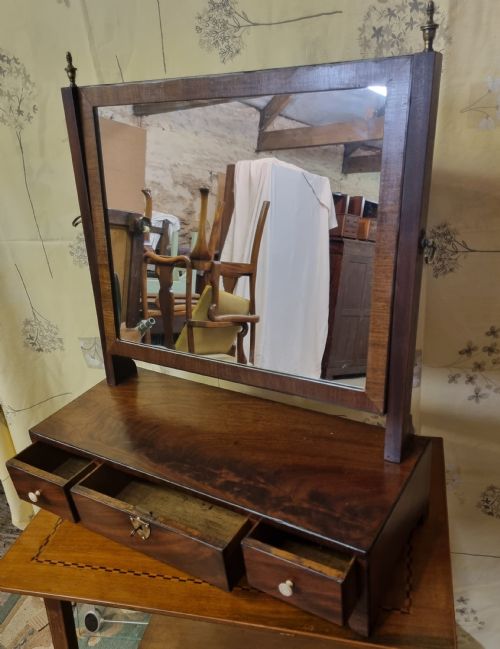
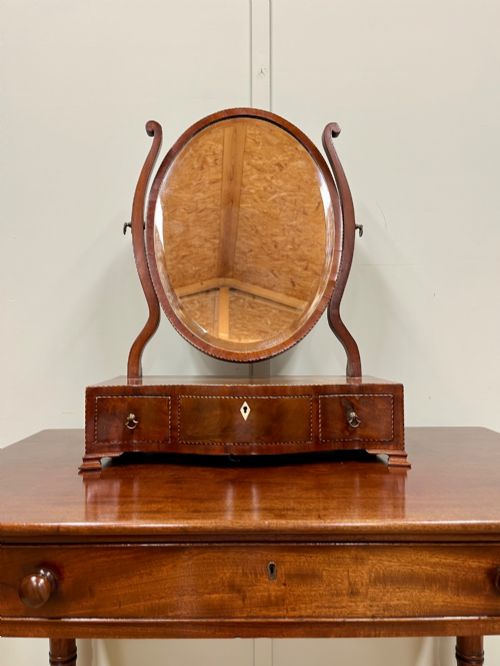
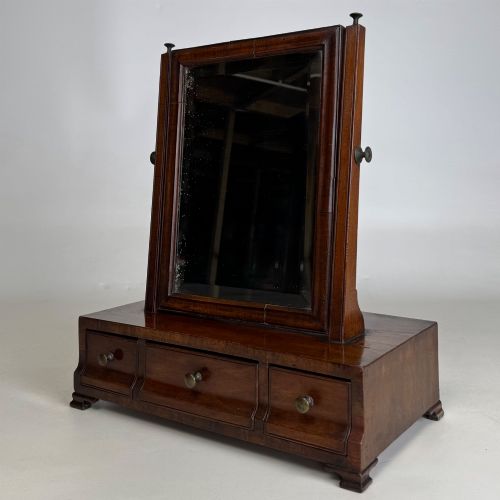
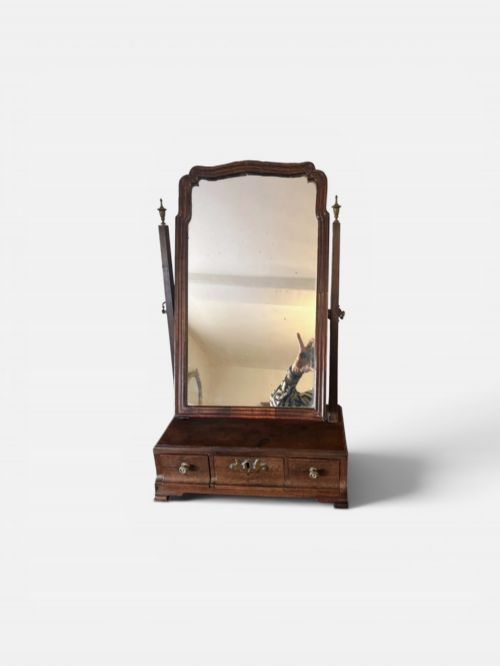
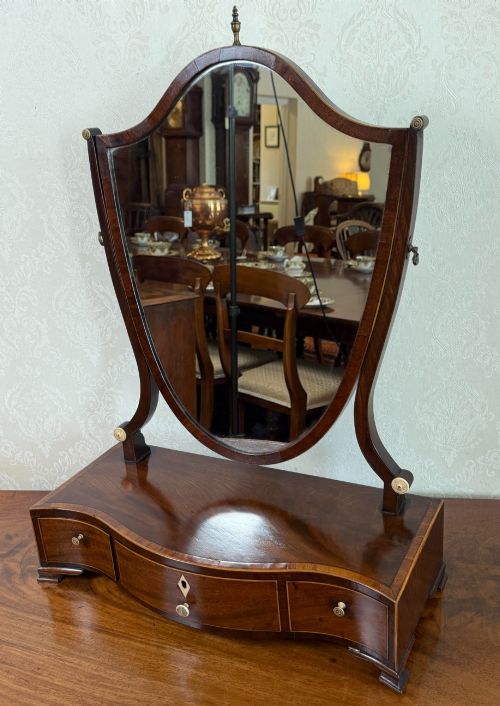
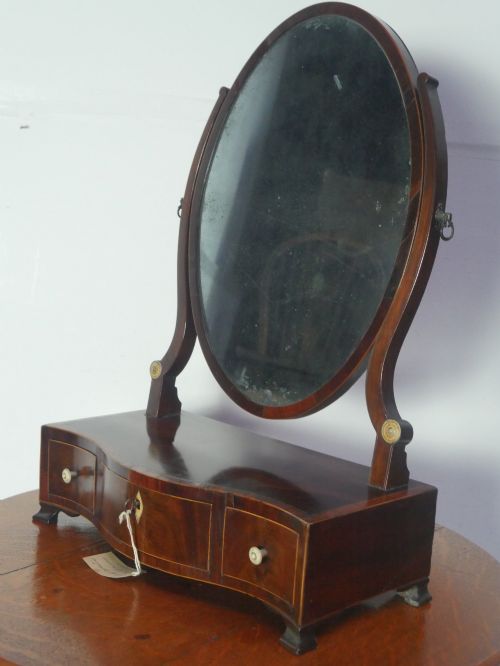
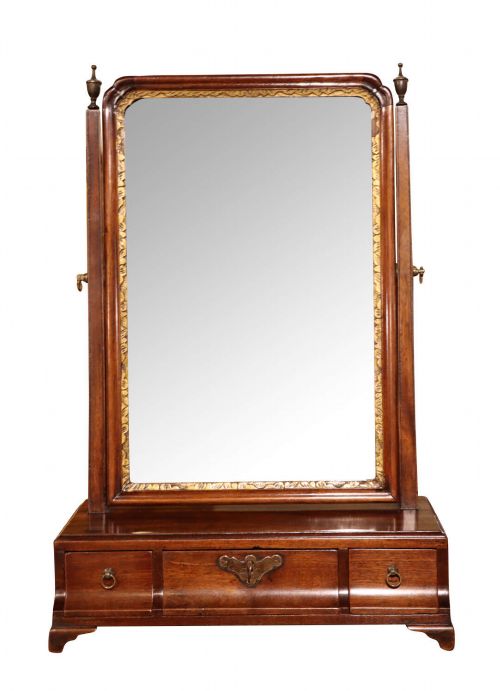
A mahogany box mirror sits upon a small compartmented base containing drawers, resting on small bracket feet upon a dressing table or chest. You will most frequently meet Georgian and Regency examples on this page, alongside later Victorian and Edwardian iterations.
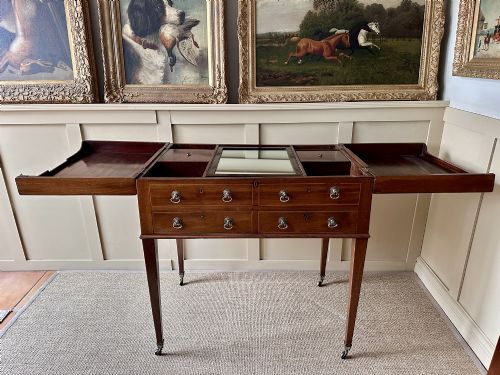
The primary forms vary from simple rectangular upright frames to elegant shield, oval and serpentine profiles. Many incorporate small drawer arrangements in the box base for rings, documents or shaving gear.
Makers designed these dressing and toilet mirrors for personal grooming in bedrooms and dressing rooms. The surviving inventory spans standard rectangular bureau mirrors through to crossbanded campaign variants.
How they were made
Cabinet makers built the structural carcasses from solid mahogany, frequently selecting stock with pronounced figure or flame patterns. They integrated secondary timbers such as oak for drawer linings within the box base.
Craftsmen enriched the exterior surfaces using contrasting veneers, notably boxwood inlay, tulipwood crossbanding and delicate stringing lines. They mounted the adjustable mirror plates into pivoting arms secured by brass screw knobs.
Glass plates were silvered by hand in early periods, producing a softer reflection than modern float glass. Small brass or bone escutcheons and drawer pulls completed the functional hardware.
Mahogany Box Mirror Retail Price Guide 2026
Typical asking prices for mahogany box mirror among the pieces listed under this phrase on Sellingantiques today, from the lower quarter to the upper quarter. They describe what is for sale here now, not the wider market.
Many surviving gentlemen's box mirrors retain hidden compartments beneath the tiny drawers for secret currency.
What varies in quality
Quality rests heavily upon the selection of timber figure, where richly grained flame mahogany and tight symmetrical crossbanding elevate a piece significantly above plain stock. The crispness of the boxwood stringing and the proportion of the base to the mirror frame dictate visual balance.
Construction methods reveal the standard of workshop output, seen in hand-cut dovetails on the internal drawers and the thickness of the original mirror glass. Pieces retaining their original brass hardware, backboards and pivoting screws command greater regard from collectors.
The Mahogany Box Mirror Glossary
- Crossbanding
- A border veneer applied perpendicularly to the grain of the main surface. It frames the edges of the box base or mirror frame.
- Serpentine
- A front contour curving inward centrally and outward at the ends. This undulating profile appears frequently on finer 18th-century dressing mirrors.
- Swing mirror
- An adjustable glass plate pivoted between two upright arms. This arrangement allows the user to alter the angle of reflection.
- Stringing
- Thin inlaid lines of contrasting timber such as boxwood. Craftsmen used them to outline drawer fronts and perimeters.
Mahogany Box Mirror: Frequently Asked Questions
What is a box mirror?
A box mirror is a tabletop dressing glass mounted above a shallow wooden plinth containing small drawers. These pieces sat upon tables to aid with shaving and personal grooming.
They combine a functional pivoting mirror with enclosed storage for small valuables and trinkets. The form evolved through the Georgian and Regency periods into various serpentine and shield shapes.
How do I date a mahogany mirror?
Dating relies on observing structural characteristics, timber choices, and inlay styles. Georgian pieces often display fine hand-cut dovetails and subtle boxwood stringing.
Victorian and Edwardian examples typically show heavier proportions, machine-sawn elements, or different secondary woods. Comparing the mirror plate type and brass hardware provides further clues to the decade of manufacture.
Were these mirrors made for men or women?
Historic records and period descriptions often designate certain variants as gentleman's shaving or campaign mirrors. Their internal layouts frequently accommodated razors, powders and small personal items.
Other configurations served general dressing and toilet duties in domestic bedchambers. Both sexes utilised these versatile tabletop pieces daily.
How do I care for antique mahogany?
Protect the timber by keeping mirrors away from direct sunlight and steady heat sources to prevent veneer lifting. Dust regularly with a dry cloth and apply occasional high-grade wax.
Avoid liquid polishes containing silicones or harsh chemicals. Ensure the brass pivot screws are not overtightened when adjusting the glass.