

Georgian Swing Mirror
A georgian swing mirror brings focused light and quiet proportion to a dressing surface.
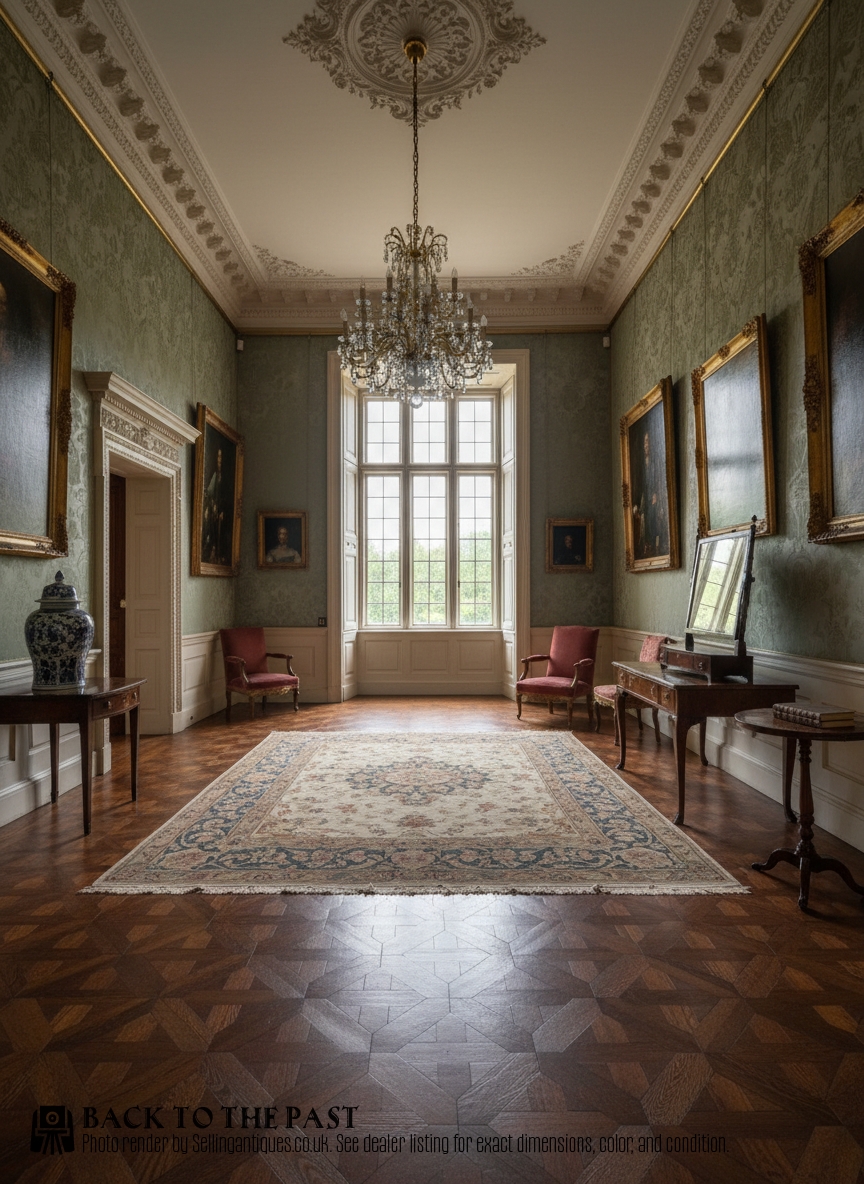
Georgian Swing Mirror
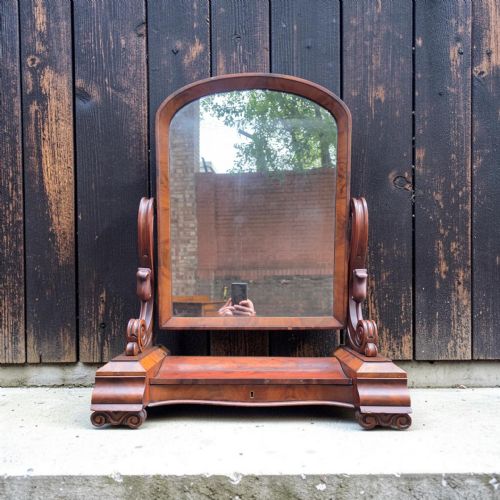
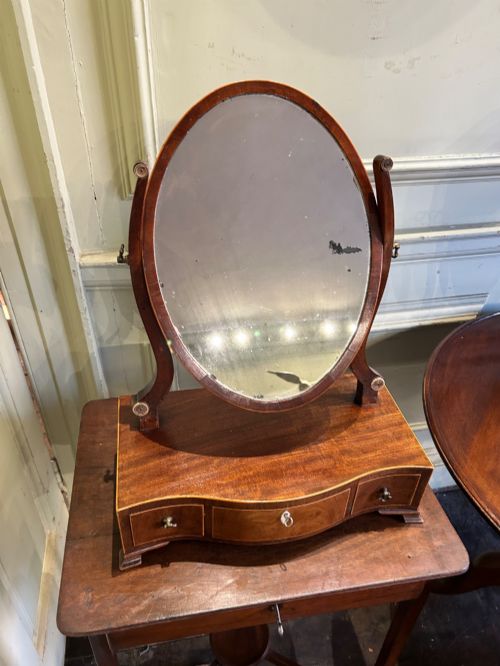
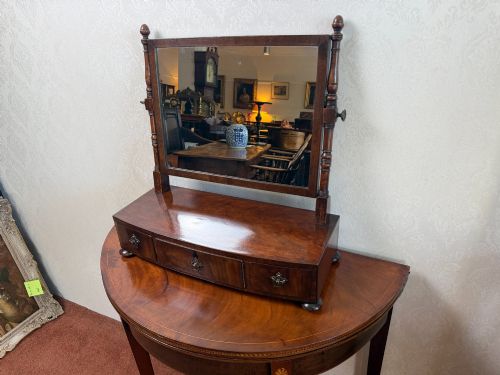
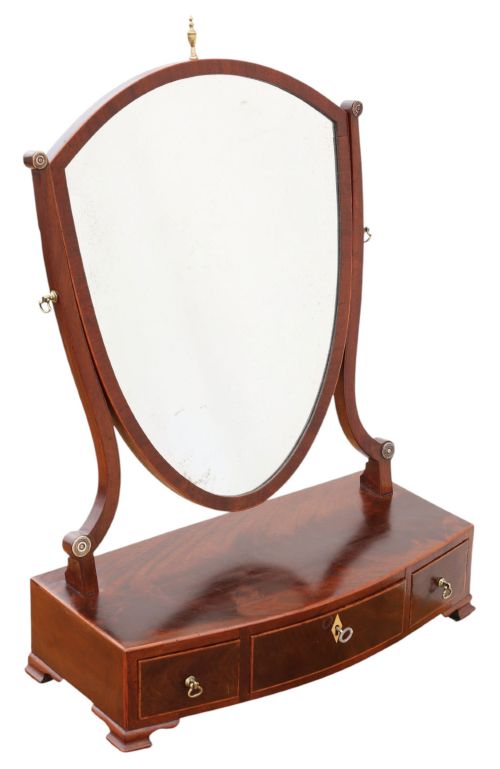
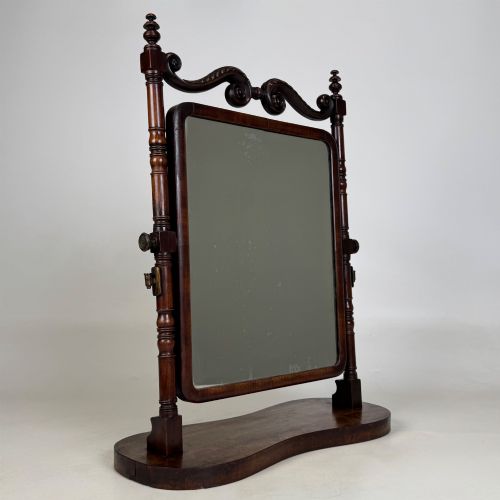
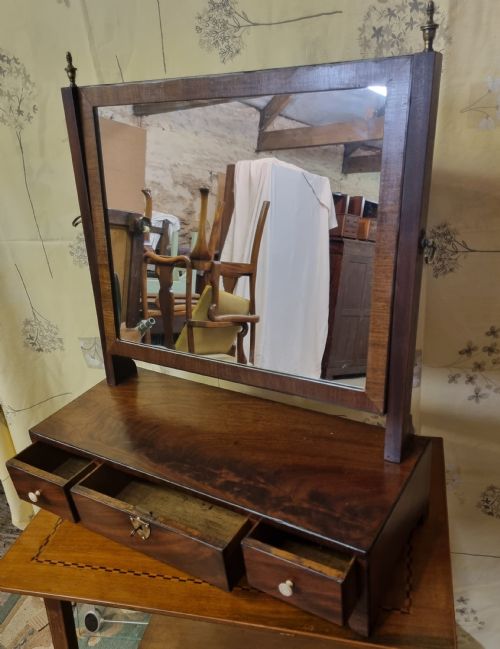
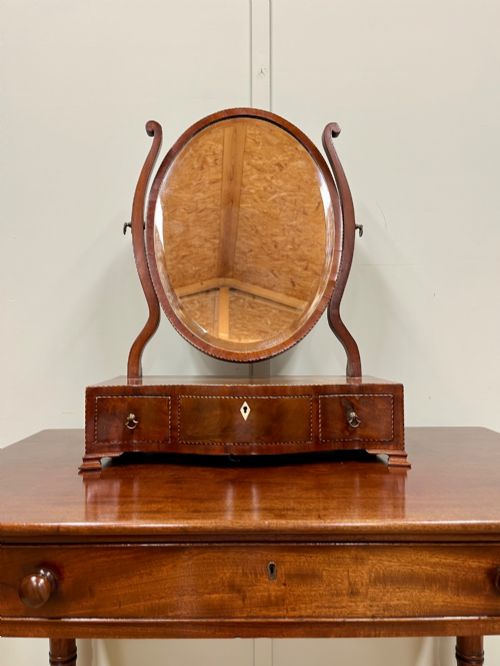
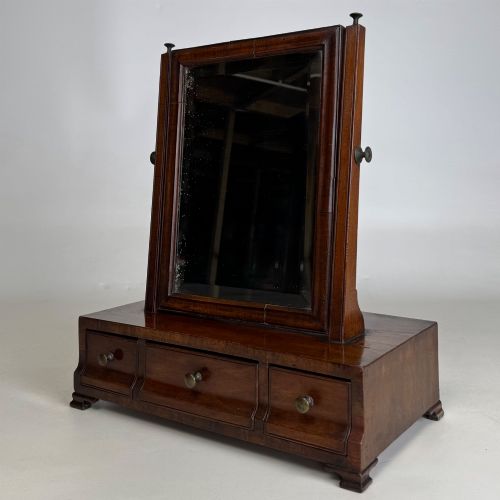
When you look for a georgian swing mirror, you encounter small-scale looking glasses designed to tilt upon upright supports mounted to a weighted base or a small box fitted with drawers. These pieces served centuries of grooming needs on dressing tables, chests, and stands in domestic bedchambers.
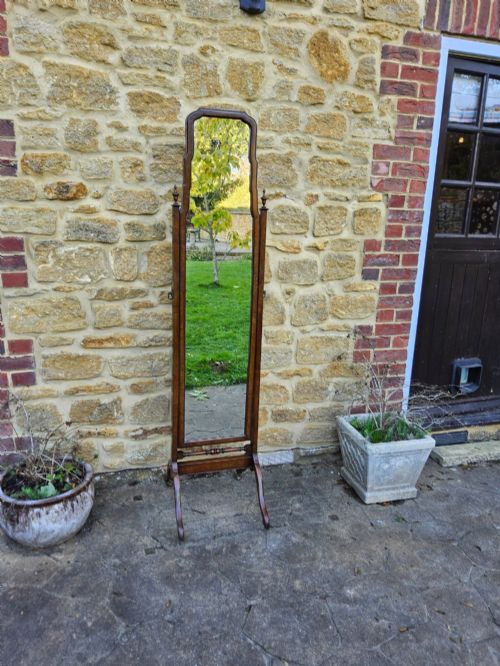
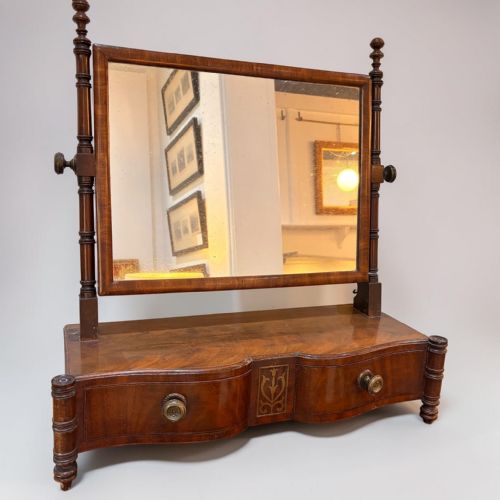
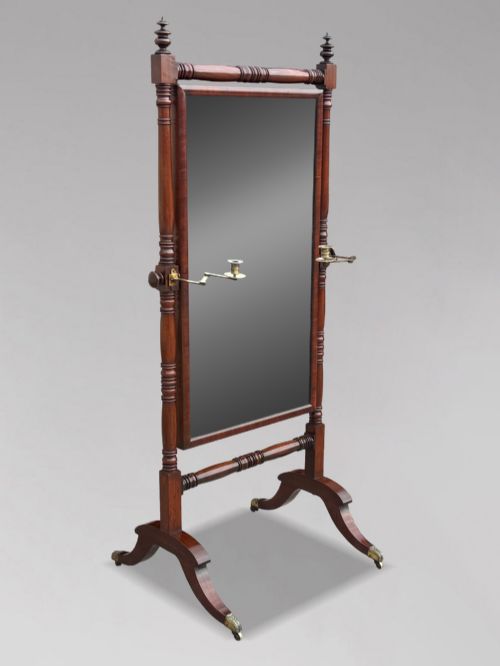
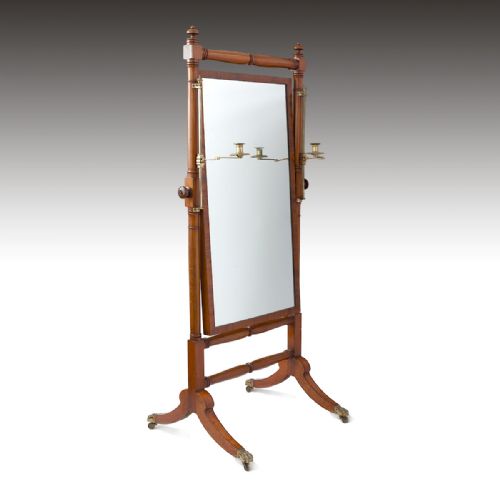
The versions most common on this page date from the eighteenth and nineteenth centuries, appearing in forms such as dressing table mirrors, toilet mirrors, and larger cheval mirrors that stand upon the floor. Mahogany and walnut dominate the surviving examples, often housing small compartments or jewellery drawers beneath the glass frame.
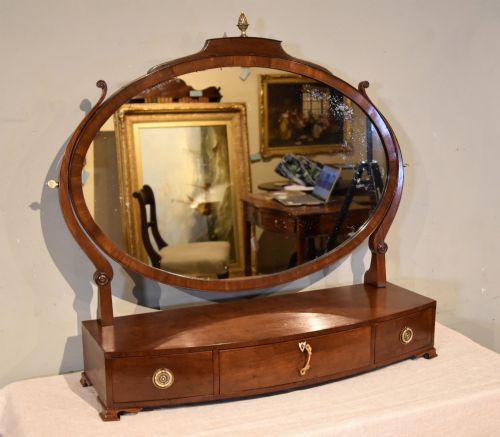
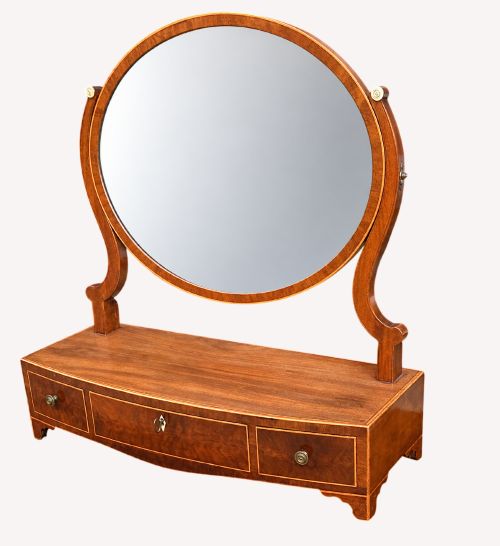
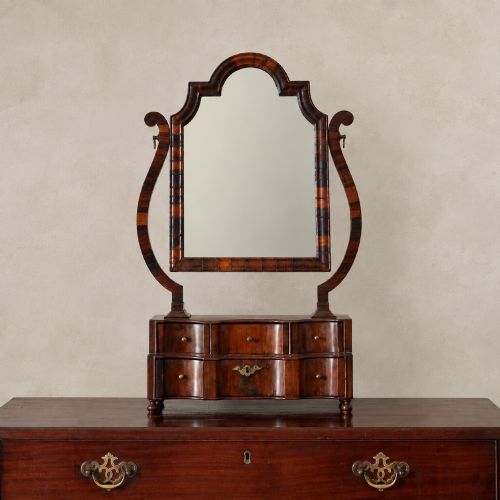
Makers adapted these mirrors through distinct regional and period styles, ranging from plain rectangular plates to shield and oval shapes framed in crossbanded veneers. Whether described as dressing glasses or swing mirrors, they remain practical furniture that reflects both period cabinet-making and daily interior life.
How they were made
Cabinet-makers constructed these looking glasses primarily using dense timbers such as mahogany and walnut, frequently applying fine crossbanding, veneer, and marquetry inlays to enhance the frame and base. Secondary woods like pine or oak appear internally within the drawer linings and backing boards.
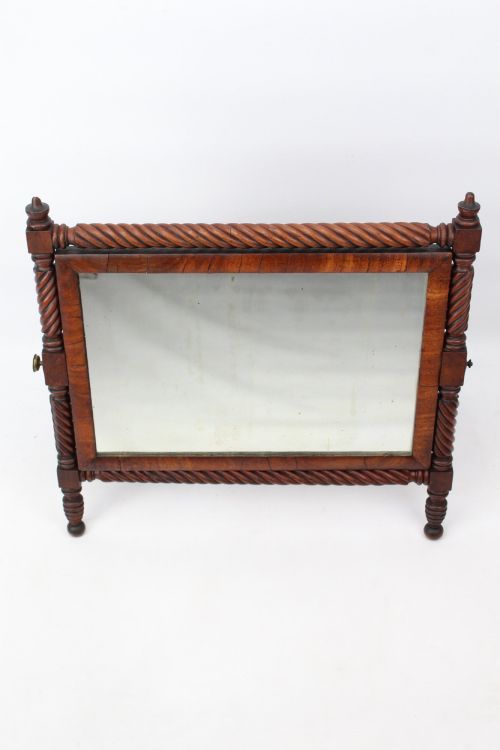
The tilting mechanism relies upon brass pivots, screws, and side arms fitted into the upright posts, allowing the mirror plate to angle precisely as needed. Glass plates were silvered by hand in the early periods, set within rebated frames and held securely by thin wooden slips.
Georgian Swing Mirror Retail Price Guide 2026
Typical asking prices for georgian swing mirror among the pieces listed under this phrase on Sellingantiques today, from the lower quarter to the upper quarter. They describe what is for sale here now, not the wider market.
Listings feature walnut, mahogany, satinwood, and giltwood frames across Georgian, Regency, and Victorian periods.
What varies in quality
Quality rests heavily on the selection of timber figures and the crispness of the cabinet work, particularly around the dovetailing of the miniature drawers in the base. Finer examples display harmonious proportions where the weight of the base balances the height of the mirror frame.
The refinement of the brass hardware and the delicacy of any inlay or crossbanding separate standard utility pieces from high-status examples. Original glass plates, intact pivot screws, and minimal restoration to the wooden frames elevate a piece within its period.
The Georgian Swing Mirror Glossary
- Cheval mirror
- A tall, freestanding swing mirror supported by four legs and two upright posts, designed for full-length viewing.
- Toilet mirror
- A smaller tabletop mirror fitted with a box base containing small drawers, historically used for cosmetics and grooming.
- Crossbanding
- A decorative border of veneer laid perpendicularly to the surrounding grain, often seen on fine Georgian frames.
- Shield mirror
- A dressing glass featuring an upright plate shaped like a heraldic shield, popular during the later eighteenth century.
- Swing mirror
- Any looking glass mounted on pivots between two upright supports, allowing the angle of the glass to tilt.
Georgian Swing Mirror: Frequently Asked Questions
Where were these mirrors placed?
These mirrors sat upon dressing tables, chests of drawers, or dedicated washstands within private bedchambers and dressing rooms.
Their compact footprints allowed them to be moved easily to catch the best morning light near a window.
How do I distinguish walnut from mahogany pieces?
Walnut frames typically exhibit rich, figured grain patterns with warmer, honey-brown tones and date more frequently to the early eighteenth century.
Mahogany alternatives display darker, reddish-brown hues and smooth linear grains that became the dominant choice for cabinet-makers later in the Georgian period.
What is the purpose of the drawers in the base?
The small drawers beneath the mirror plate provided secure storage for personal items, pins, cosmetics, and jewellery.
In many surviving pieces, these compartments were partitioned specifically to keep small grooming tools organised.
Are the mirror plates usually original?
Many pieces retain their original mercury or silvered glass, which often exhibits gentle foxing, speckling, and light distortion.
Replacement glass is also common in mirrors of this age, chosen to restore clarity while keeping the antique frame intact.