


Walnut Box Mirror
A walnut box mirror is a dressing glass set on a small drawer base, prized for its deep timber grain and tidy proportions.
Walnut Box Mirror
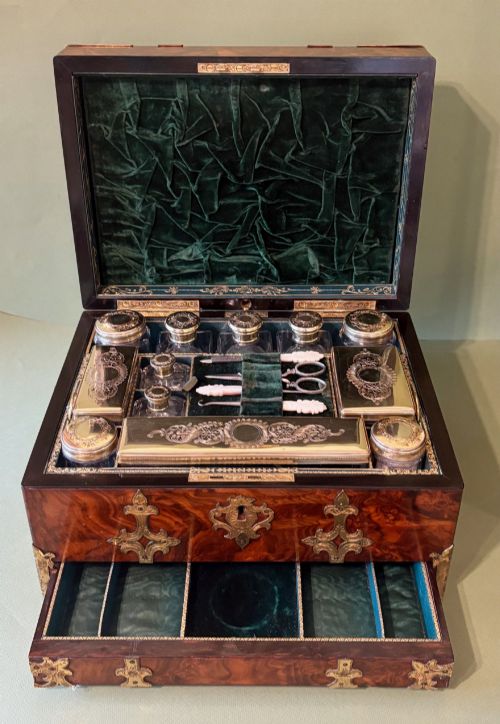
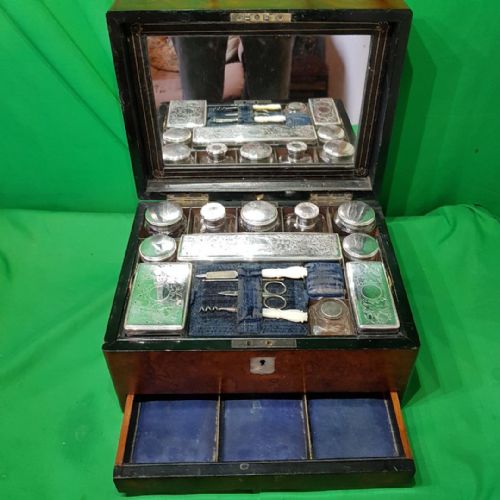
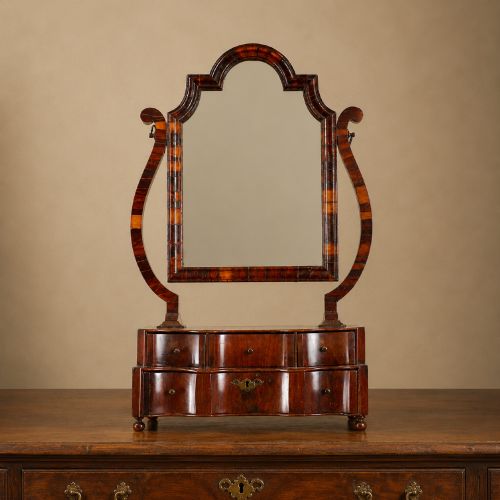
A walnut box mirror combines a swing glass with a shallow drawer base, designed to sit atop a dressing table or chest. When buyers search for a walnut box mirror, they encounter forms that evolved from the early 18th century through the Victorian era.
The most common examples on this page date to the 18th century, particularly the Georgian and Queen Anne periods, alongside later Victorian interpretations. These pieces function as both tabletop dressing mirrors and compact storage units for small valuables.
Formations range from plain architectural toilet mirrors to those featuring marquetry inlay, giltwood accents, or fitted interiors with small drawers. Surviving examples demonstrate how dressing habits shifted from standing dressing glasses to intimate tabletop arrangements.
Materials and Construction
Cabinet makers constructed these mirrors using solid walnut, burr walnut veneers, and secondary timbers like laburnum or maple. Timber selection defined the visual weight, with figured burr veneers reserved for the prominent surfaces of the box base and frame.
Joinery relied on fine dovetails for the small drawer boxes and pegged tenons for the mirror frames. Glass plates were typically silvered and held within rebated frames, supported by brass pivoting arms that allowed the angle of the mirror to adjust.
Several examples include hidden compartments inside the box base for concealing love letters and secret trinkets.
Distinguishing Quality in Walnut Box Mirrors
Quality rests in the depth of the timber grain, the crispness of the veneer work, and the integrity of the original plate glass. Pieces featuring figured burr walnut or intricate marquetry display a higher level of cabinet maker skill than plain variants.
Proportion and foot style dictate the sophistication of the piece, from simple bracket feet to shaped ogee bases. Original brass hardware, unreplaced mirror glass, and retained drawer linings elevate the standing of a mirror significantly.
The Walnut Box Mirror Glossary
- Toilet mirror
- A small mirror designed to stand on a dressing table or chest, usually incorporating a box base with small drawers.
- Swing mirror
- A glass plate hung on pivots between upright arms, allowing the user to tilt the reflection.
- Burr walnut
- A prized timber harvested from the irregular growth knots of the walnut tree, showing intricate swirling grain patterns.
- Marquetry
- Decorative patterns formed by fitting together thin veneers of various wood types onto a carcass.
- Bracket foot
- A simple architectural foot supporting the corner of a cabinet or box base, often shaped with a curve.
Walnut Box Mirror: Frequently Asked Questions
What is a walnut box mirror used for?
These pieces served as personal dressing glasses for grooming and applying cosmetics in bedrooms and dressing rooms. The integrated box base provided secure storage for small personal items, jewellery, and letters.
Today, they function as decorative tabletop mirrors on chests of drawers or dressing tables in domestic interiors.
How do I tell an 18th century mirror from a Victorian copy?
Early 18th century mirrors display hand-cut dovetails, older secondary woods, and subtle variations in timber colour and wear. The construction methods of the jointing and the thickness of the walnut veneers reveal the period of manufacture.
Victorian interpretations often utilise machine-cut elements, different interior fittings, and brighter satin-finished timbers characteristic of 19th century workshop practices.
Are the mirror plates usually original?
Many surviving mirrors have replacement glass plates because historic silvering degraded or the original glass broke over centuries of use. Replacement mirror glass is common and accepted in antiques of this age.
Mirrors retaining their original wavy, distorted old glass plate are less common and valued by collectors for their untouched state.
Where should I place a box mirror in my home?
A box mirror requires a sturdy surface at an appropriate height, such as a chest of drawers, sideboard, or dedicated dressing table. Positioning near natural light improves the reflection for daily use while highlighting the timber grain.
Keep these mirrors away from direct sunlight and damp environments to protect the walnut veneer and the old silvering on the glass.