




George III Dressing Mirror
A george iii dressing mirror brings Georgian proportion and polished mahogany to the table, offering a functional glass set upon a fitted base.
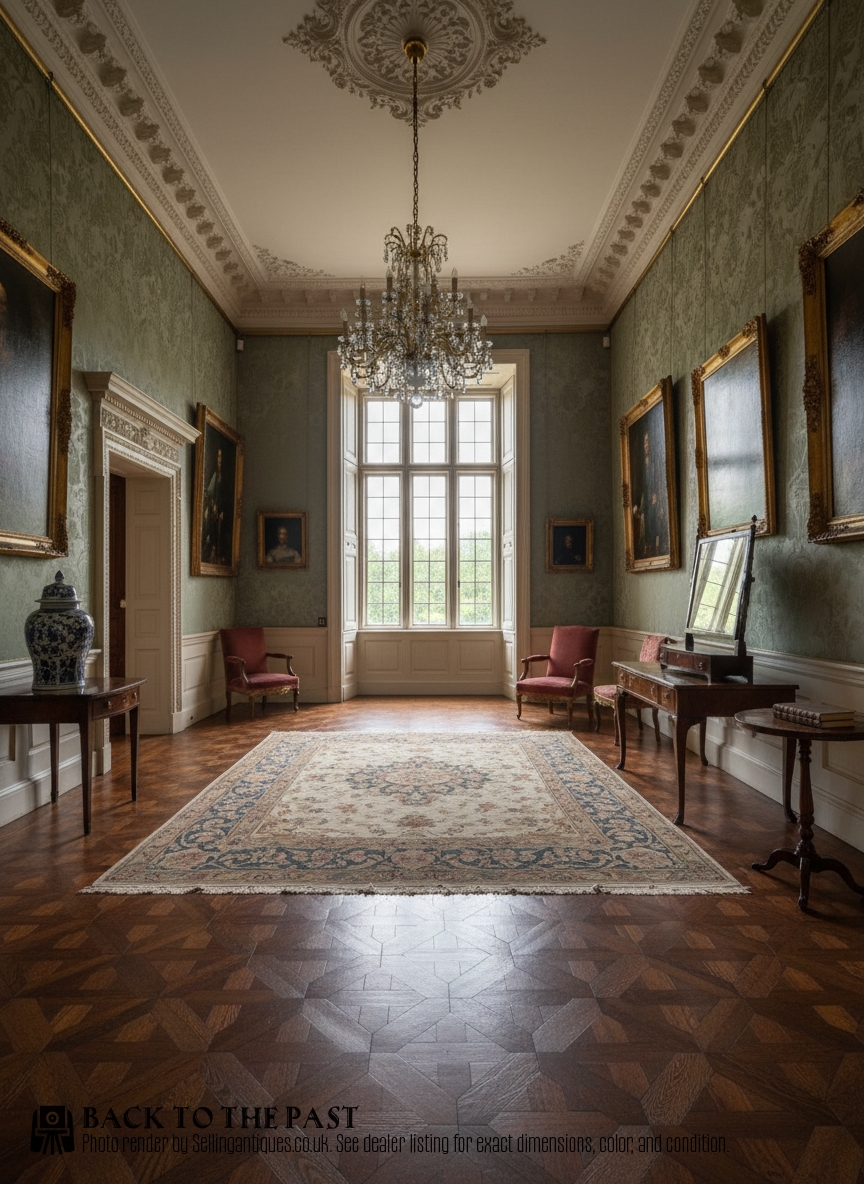
George III Dressing Mirror
When buyers search for a george iii dressing mirror, they encounter a focused form designed for personal grooming on a chest or table. The evidence shows these pieces span the Georgian period into the nineteenth century, taking the form of toilet mirrors, swing mirrors, and cheval mirrors.
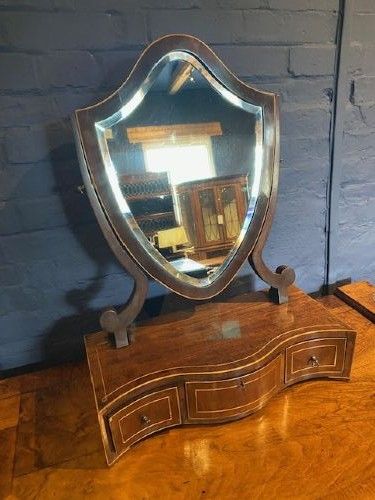
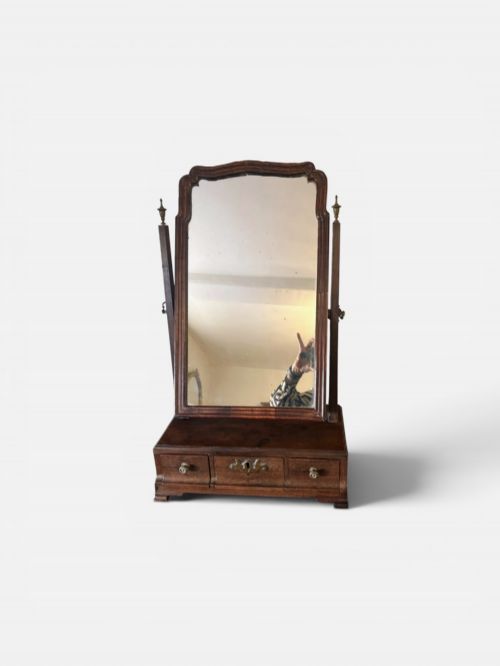
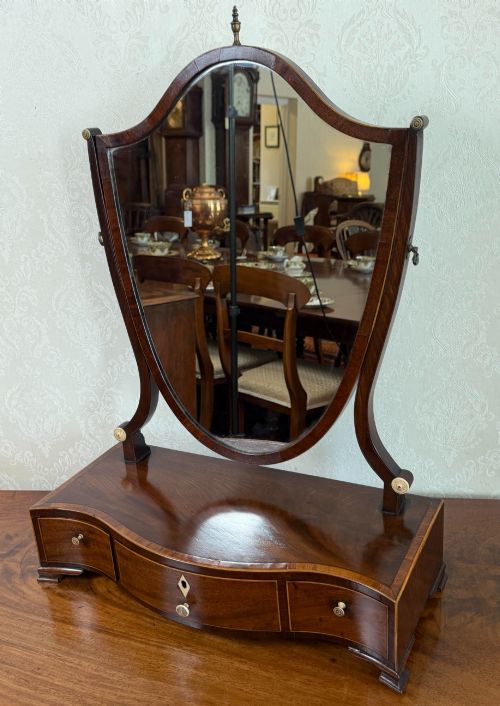
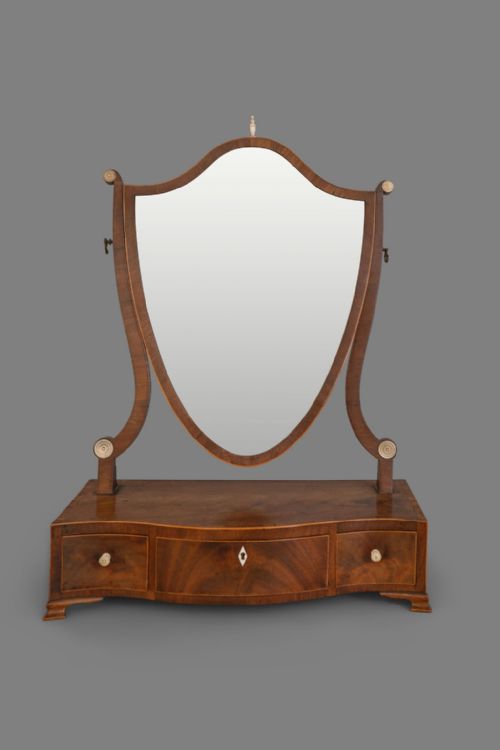
The most common survival on this page is the table-standing mirror with a box base containing small drawers. These range from simple rectangular frames to serpentine fronts and oval glass plates supported by upright arms.
Larger floor-standing cheval mirrors also appear, alongside related pieces such as wash stands, work tables, and dressing chests. The primary styles recorded are George III, Georgian, and Regency, crossing the eighteenth and nineteenth centuries.
How they were made
Cabinet makers built these frames primarily in mahogany, often selecting figured veneers such as flame mahogany, burr maple, or plum pudding mahogany to catch the light. Secondary woods support the internal structure of the box bases and drawer linings.
Inlay and stringing in satinwood, boxwood, and bone provide subtle linear contrast around the drawer fronts and mirror frames. Original mirror glass is set within pivoting wooden frames controlled by side screw pins or swing-locks.
Brass fittings, including delicate knobs and adjustable brackets, secure the pivoting glass and accent the polished timber surfaces.
George III Dressing Mirror Retail Price Guide 2026
Typical asking prices for george iii dressing mirror among the pieces listed under this phrase on Sellingantiques today, from the lower quarter to the upper quarter. They describe what is for sale here now, not the wider market.
Listings feature mahogany, satinwood, burr maple, and harewood, combined with boxwood inlay, brass fittings, and bone accents across multiple forms.
What varies in quality
Quality rests in the selection of the timber veneer and the architectural restraint of the base. Plain mahogany surfaces sit at one end, while burr maple, harewood, and figured plum pudding veneers represent more ambitious cabinet work.
The sophistication of the base dictates the standing of the piece, moving from simple rectangular boxes to complex serpentine fronts with multiple graduated drawers. Delicate boxwood inlay and retained original brass hardware elevate the overall execution.
The George III Dressing Mirror Glossary
- Toilet mirror
- A small mirror designed to stand on a dressing table or chest of drawers. These portable looking glasses usually feature an integrated box base fitted with small compartments.
- Cheval mirror
- A full-length swing mirror supported on four freestanding legs or upright pillars. They allow the viewer to see their entire outfit rather than just the upper body.
- Serpentine
- A curved shape featuring a convex centre flanked by concave sides. This flowing line appears frequently on the front edges of high-end mirror box bases.
- Flame mahogany
- A veneer cut from the fork of the mahogany tree where the branch meets the trunk. The resulting grain creates a distinctive flickering flame pattern across the mirror frame.
- Boxwood inlay
- Contrasting light-coloured wood strips embedded into the darker mahogany surface. It creates geometric borders and decorative stringing lines around drawers and panels.
George III Dressing Mirror: Frequently Asked Questions
How do I use a dressing mirror today?
Place the mirror on top of a suitable chest of drawers or a dressing table to use it for daily grooming. The pivoting frame allows you to tilt the glass angle to suit your height.
The small drawers in the box base provide practical storage for jewellery, cufflinks, and small daily accessories. Ensure the surface is level and stable to protect the antique wood and glass.
What is the difference between a toilet mirror and a cheval mirror?
A toilet mirror is a compact, tabletop object designed to sit on top of furniture. It is portable and focuses on the upper body and face.
A cheval mirror is a much larger, floor-standing piece that shows the full length of the figure. It stands on its own four legs rather than resting on a chest or table.
How can I tell a Georgian mirror from a later copy?
Examine the construction methods of the box base, looking at the dovetail joints on the drawers and the type of secondary wood used inside. Older pieces display hand-cut joinery and timber movement appropriate to the eighteenth century.
Check the glass itself, as older mirror plates often show slight distortion, bevelling, or silvering wear consistent with age. Modern reproductions tend to use uniform plate glass and machine-made fixings.
What woods were used to make these mirrors?
Mahogany serves as the primary structural and visual timber for the vast majority of these frames and bases. Cabinet makers also utilised specialised veneers like satinwood, burr maple, harewood, and plum pudding mahogany for decorative effect.
Inlays commonly incorporate lighter woods such as boxwood, alongside bone elements for contrast. Secondary timbers inside the drawers often include pine or oak.