





Georgian Mahogany Toilet Glass
A georgian mahogany toilet glass is a compact dressing mirror designed for the top of a chest or table, bringing warmth and polished reflection to a room.
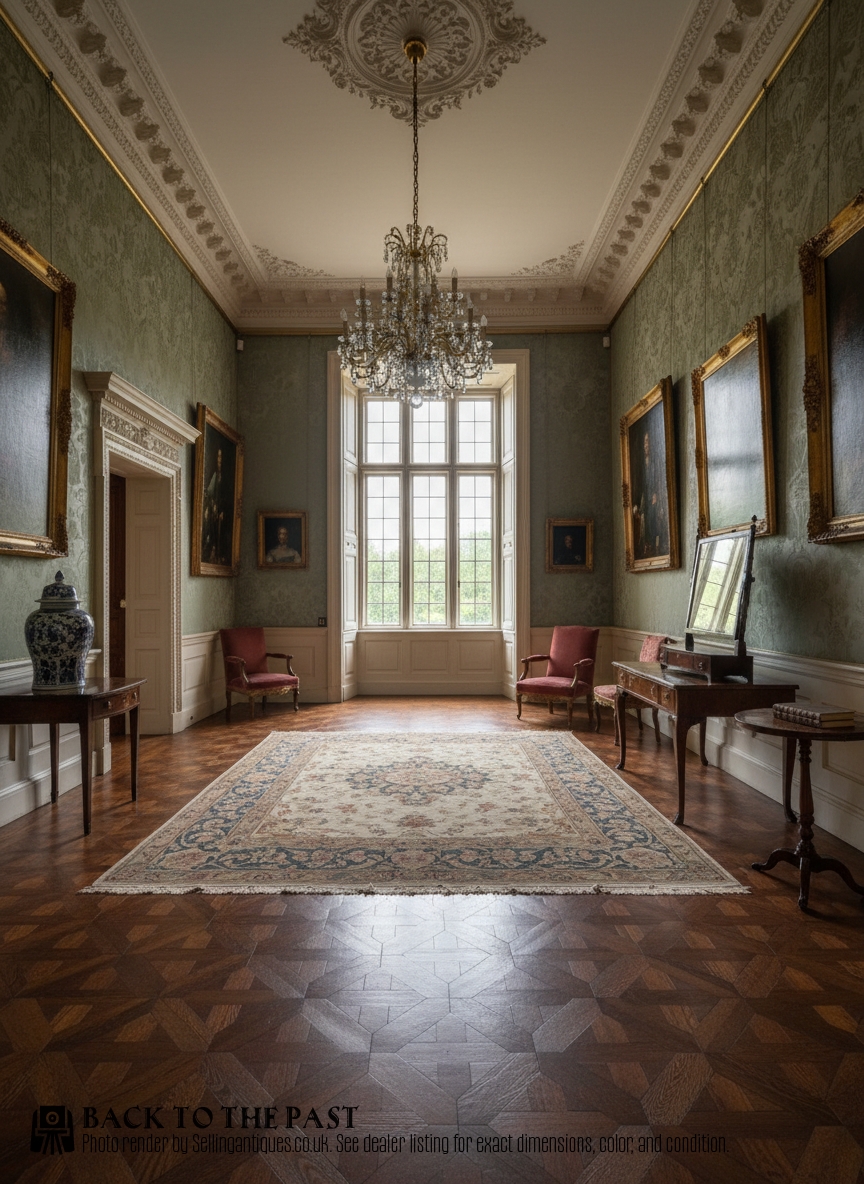
Georgian Mahogany Toilet Glass
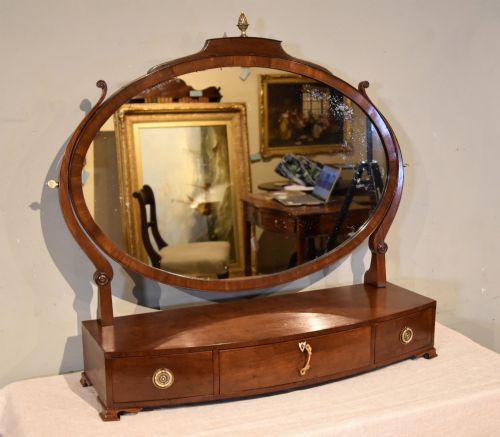
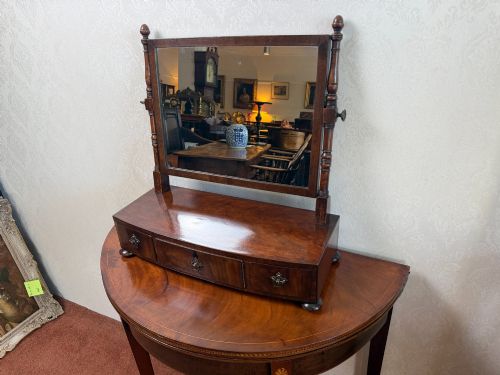
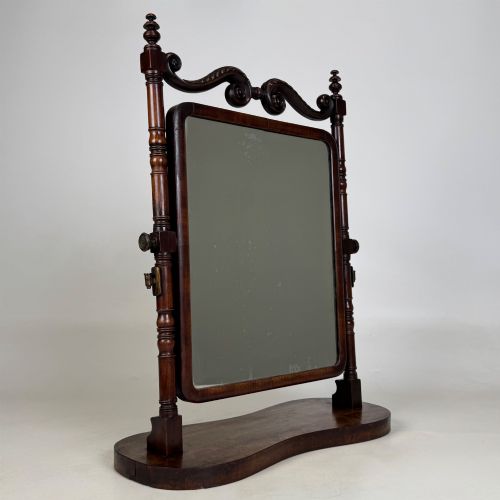
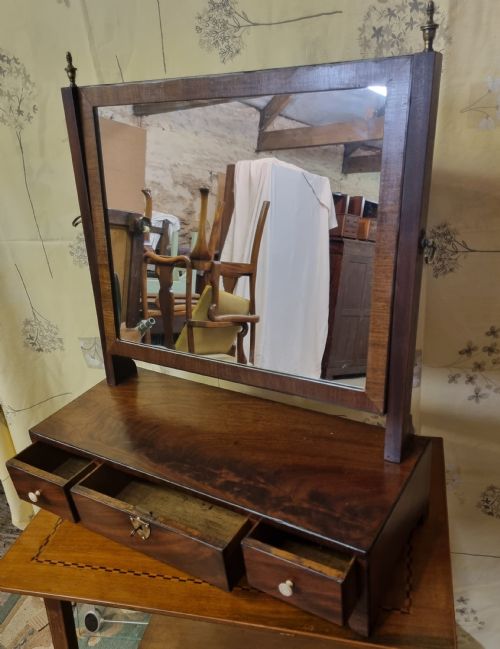
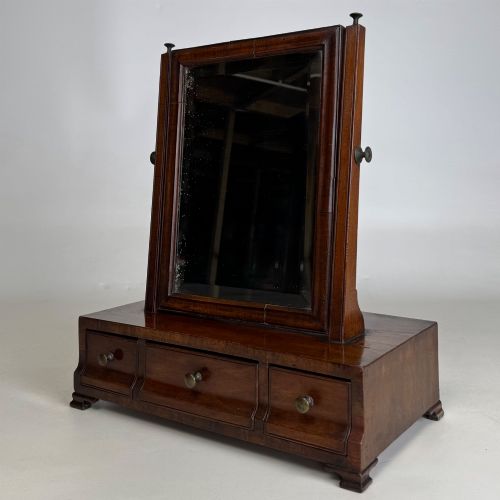
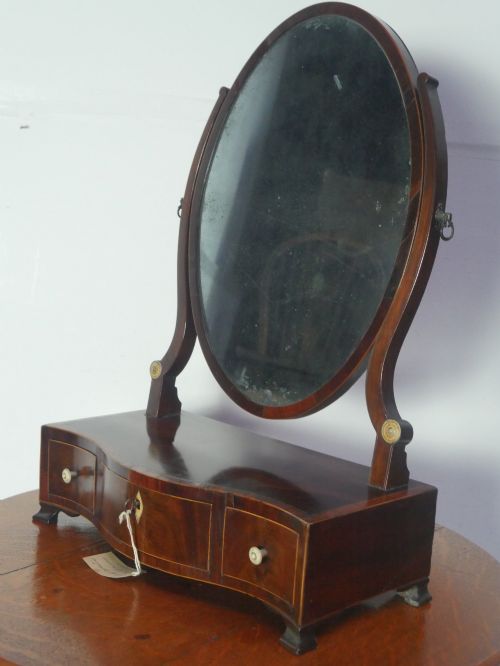
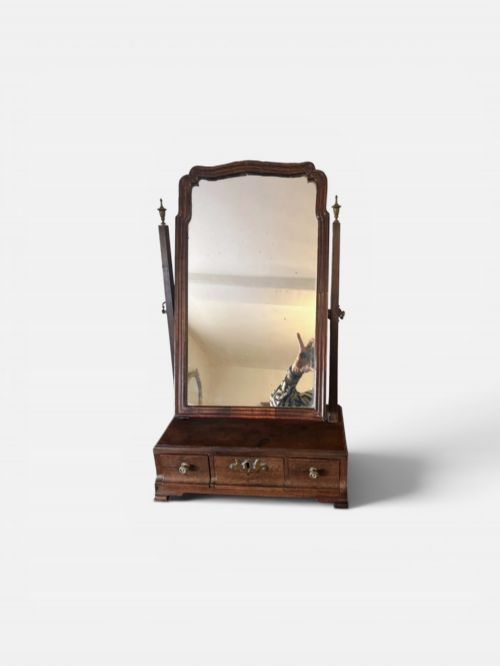
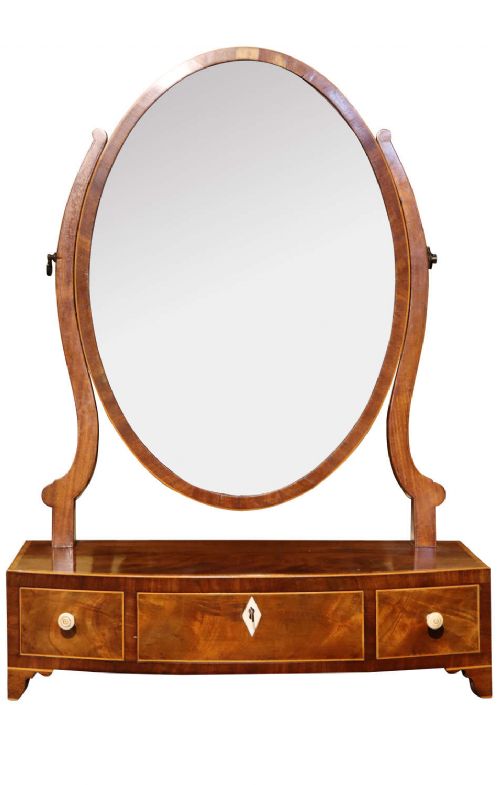
A georgian mahogany toilet glass sits upon a small box base fitted with drawers, offering a convenient spot for small trinkets and grooming items. These mirrors belong to the eighteenth and nineteenth centuries, spanning eras from George II and George III through the Sheraton style.
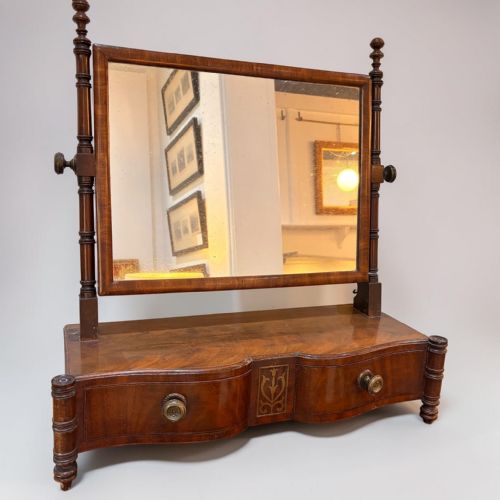
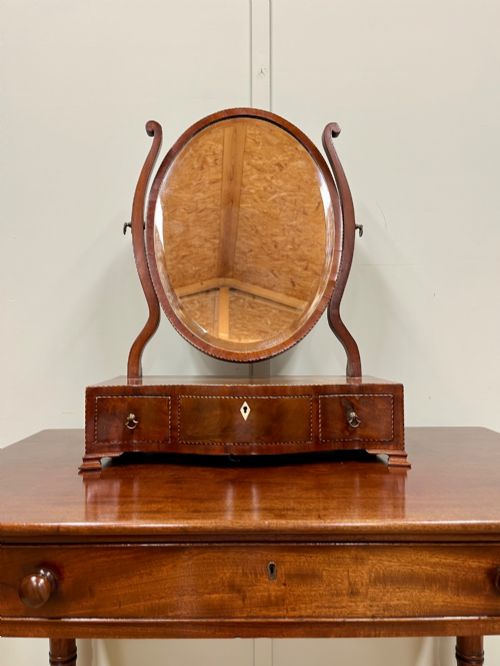
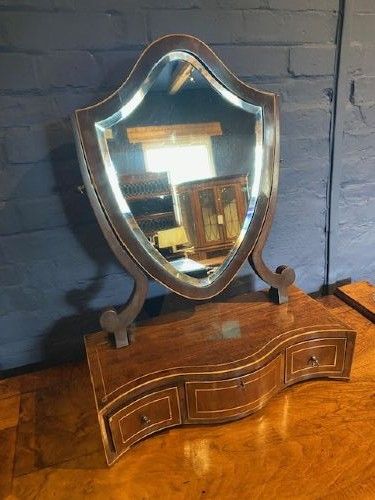
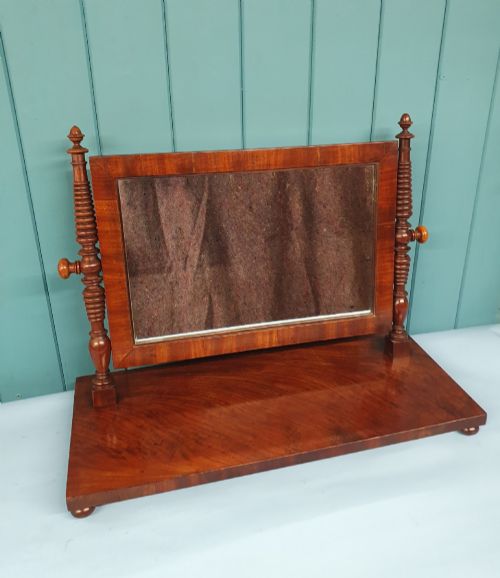
The forms vary from simple rectangular plates to graceful oval and shield shapes, sometimes mounted on bow-front or serpentine bases. Most examples function as dressing table mirrors or smaller table mirrors intended for daily use in bedrooms.
Regional variations appear occasionally, including pieces attributed to Scottish workshops alongside English examples. The survival of these mirrors depends heavily on the robustness of their upright frame supports and base drawers.
How they were made
Reflecting plates are traditionally silvered glass held within wooden frames, whilst small bone escutcheons often surround the keyholes on the drawer fronts. Gilded wood accents also appear on specific stylistic variants from the period.
Georgian Mahogany Toilet Glass Retail Price Guide 2026
Typical asking prices for georgian mahogany toilet glass among the pieces listed under this phrase on Sellingantiques today, from the lower quarter to the upper quarter. They describe what is for sale here now, not the wider market.
A tiny bone escutcheon guards every keyhole, ready for a key that vanished centuries ago.
What varies in quality
The refinement of the timber and the subtlety of the base outline dictate the standing of a piece, with serpentine and bow-front shapes demanding greater carpentry skill. Figured mahogany grain and delicate satinwood inlay elevate the visual weight of the base.
Proportion remains vital, where the height of the frame balances harmoniously against the proportions of the drawer box below. Original brasswork and intact secondary woods preserve the integrity of the piece far better than replaced components.
The Georgian Mahogany Toilet Glass Glossary
- Toilet glass
- A portable mirror with a small drawer base, historically placed on a dressing table or chest for grooming.
- Serpentine
- A gently undulating front line found on drawer boxes, curving inward then outward to create a flowing silhouette.
- Shield glass plate
- A mirror glass cut into the shape of a heraldic shield, popular during the Sheraton period.
- Satinwood inlay
- Contrasting pale exotic wood inserted into the mahogany surface in geometric or linear patterns.
- Escutcheon
- A small protective plate surrounding a keyhole, frequently fashioned from bone or brass on these mirrors.
Georgian Mahogany Toilet Glass: Frequently Asked Questions
What is a toilet glass?
A toilet glass is a small table mirror equipped with a base containing one or more small drawers for storage. They were essential dressing items in period bedchambers.
Unlike full-length standing mirrors, these compact pieces sat upon chests of drawers or dedicated dressing tables to provide a close reflection for shaving or styling hair.
How do I date a mirror?
Dating relies upon examining the timber, construction methods, hardware, and overall outline style. Pieces associated with George II or George III exhibit distinct proportions.
Cabinet construction details, such as hand-cut dovetails on the internal drawers and the presence of original glass plates, help confirm the eighteenth or nineteenth century origin.
Where were they placed?
These mirrors sat securely upon dressing tables, sideboards, or tall chests of drawers within private bedchambers and dressing rooms.
Because they were portable, owners could move them around the house to catch the best natural daylight near a window.
What styles are common?
Common styles include Sheraton designs, serpentine fronts, and bow-front bases paired with rectangular, oval, or shield-shaped mirror frames.
Mahogany is the dominant wood, occasionally embellished with satinwood inlay or small brass and bone details reflecting the tastes of the eighteenth century.