


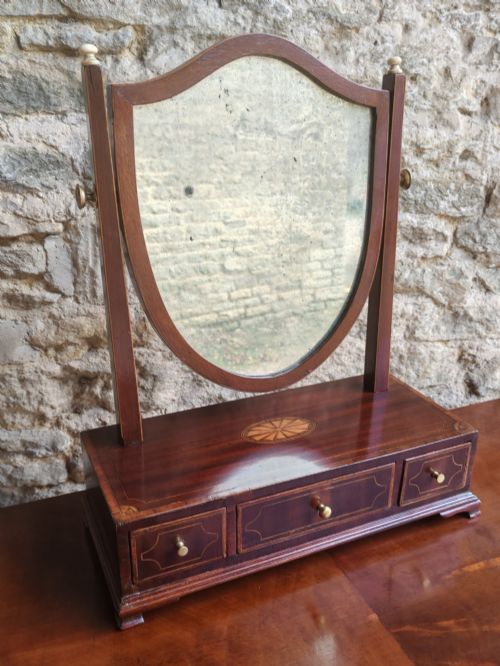
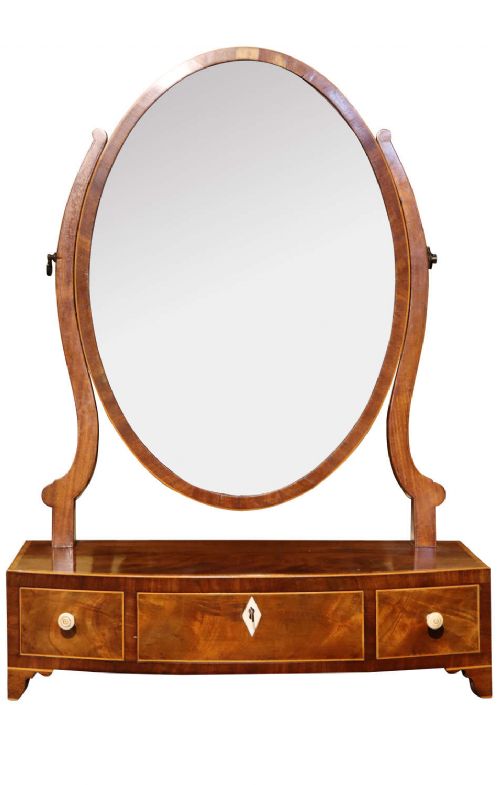

Antique Box Toilet Mirror
These antique box toilet mirrors bring purposeful height and polished reflection to a dressing surface, offering fitted drawers and swivelling plates.
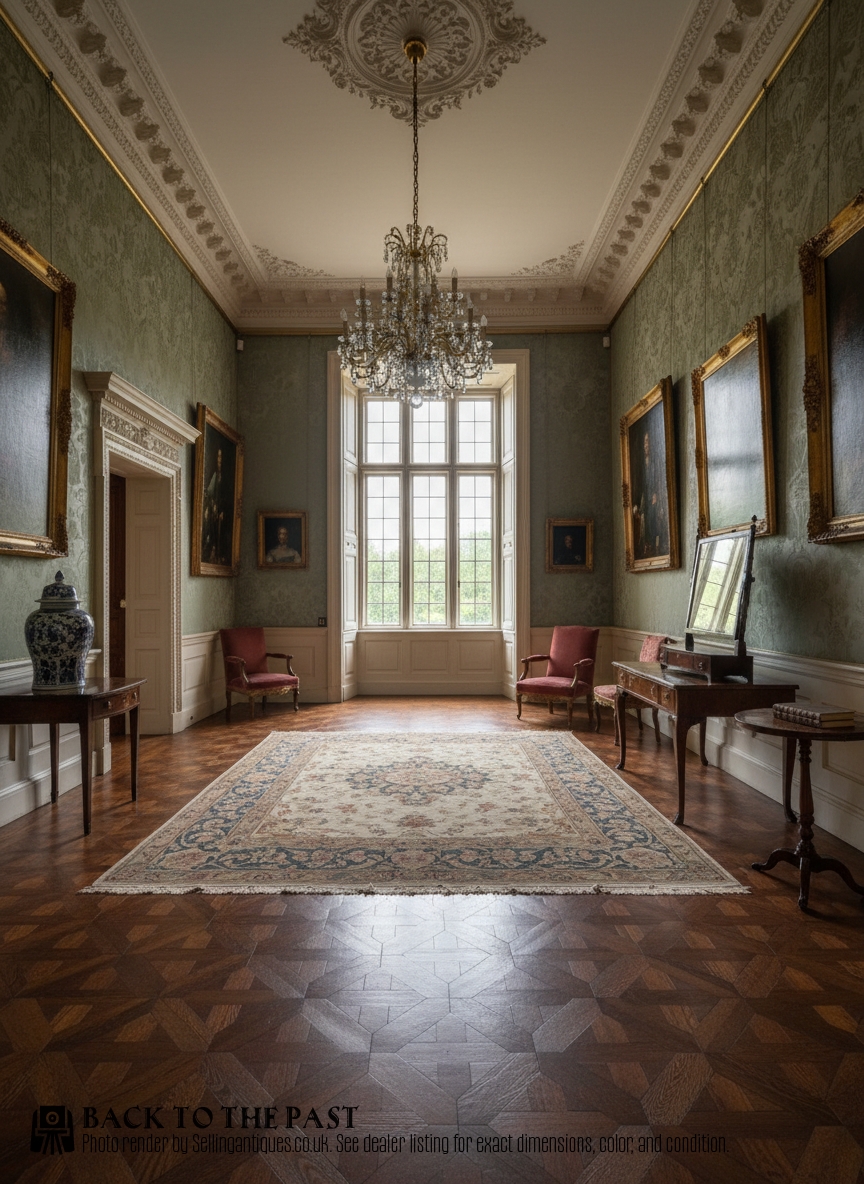
Antique Box Toilet Mirror
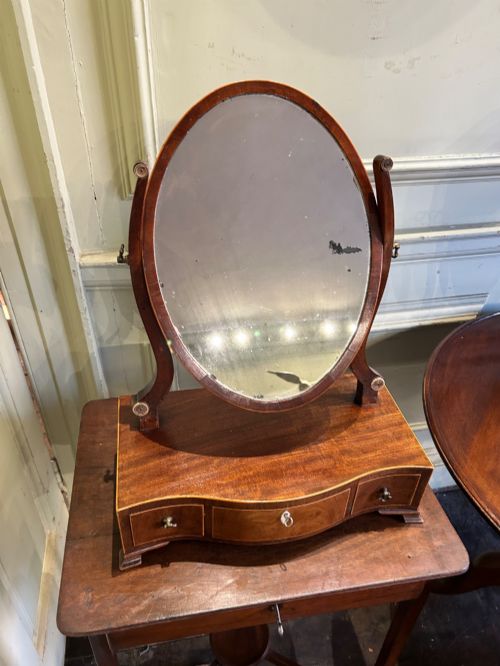
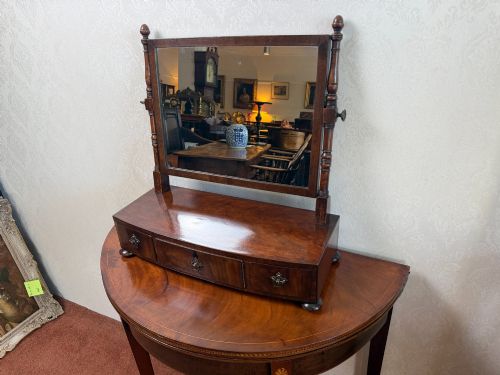
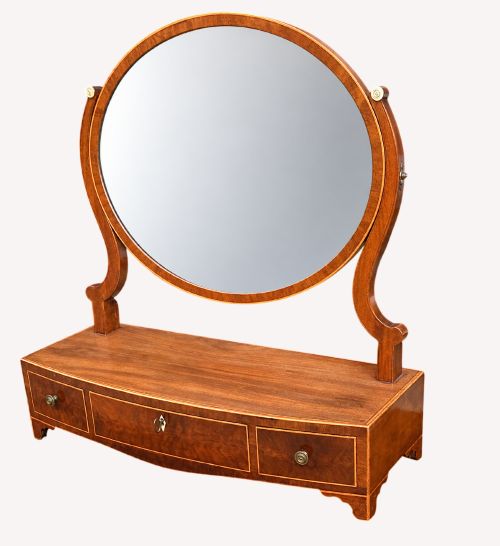
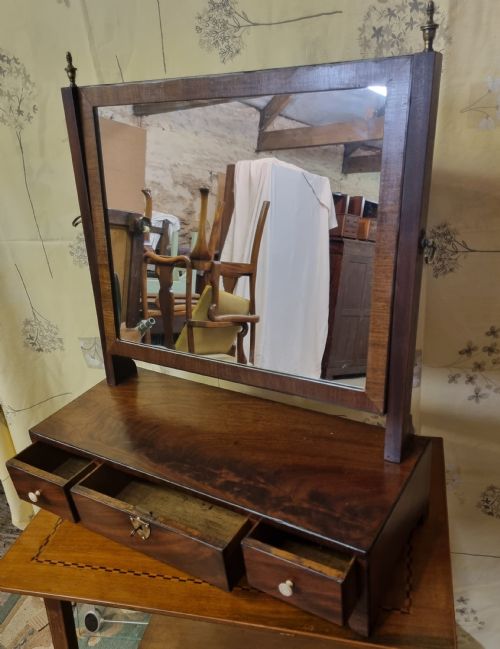
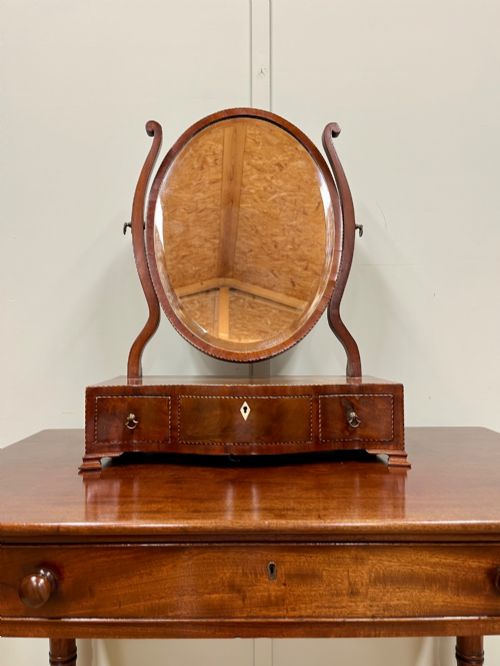
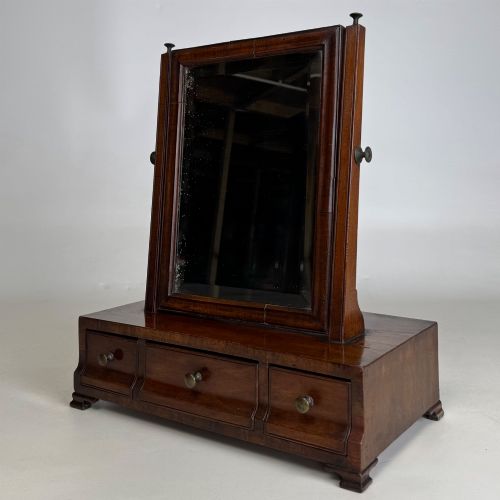
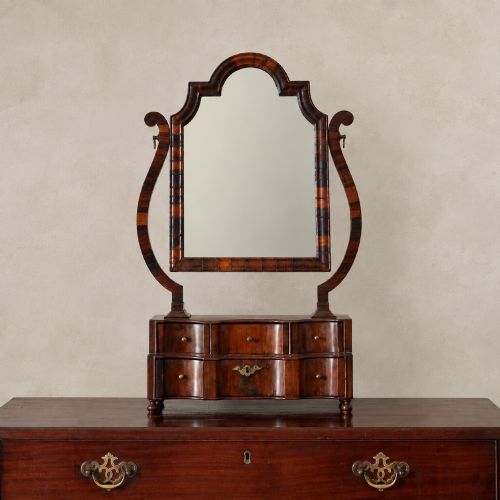
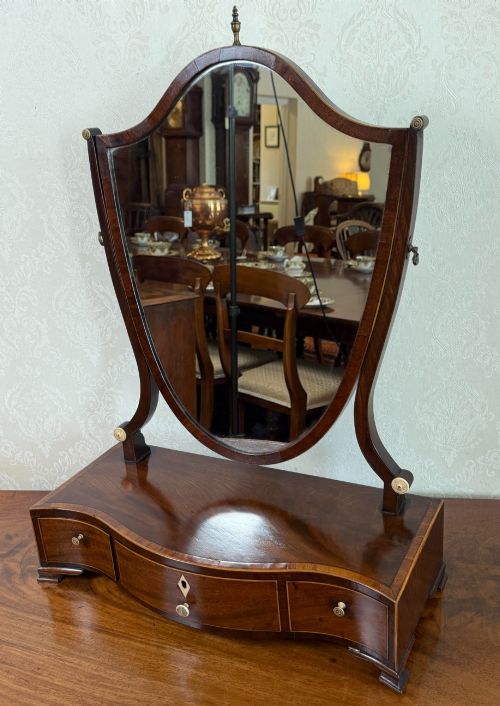
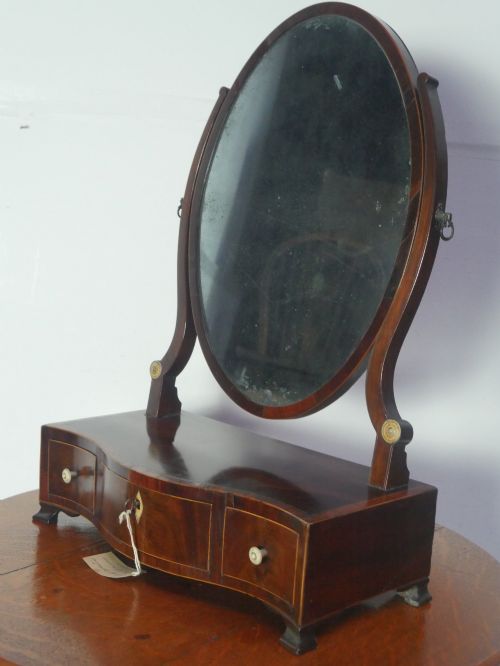
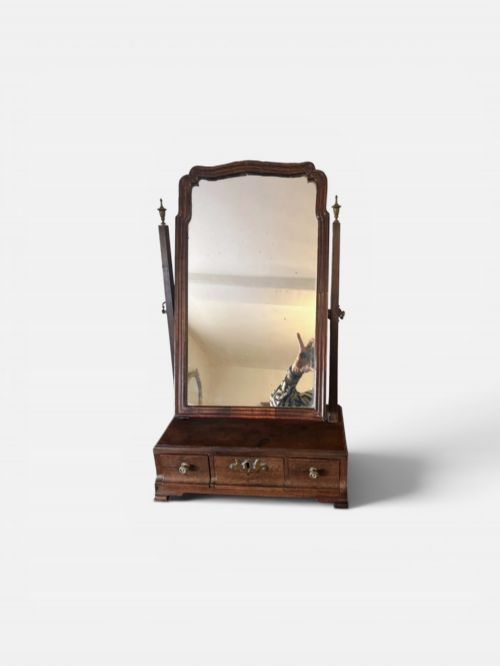
When you search for an antique box toilet mirror, you encounter pieces designed to sit upon a chest or dressing table, providing a glass supported by upright arms above a small plinth base. These objects served generations for morning grooming and personal dressing, combining a functioning swing mirror with integrated storage.
The versions most commonly met span the eighteenth and nineteenth centuries, taking forms defined by Georgian, Regency and Victorian periods. Mahogany and walnut dominate these pieces, frequently accompanied by brass fittings, bone details and mirror glass.
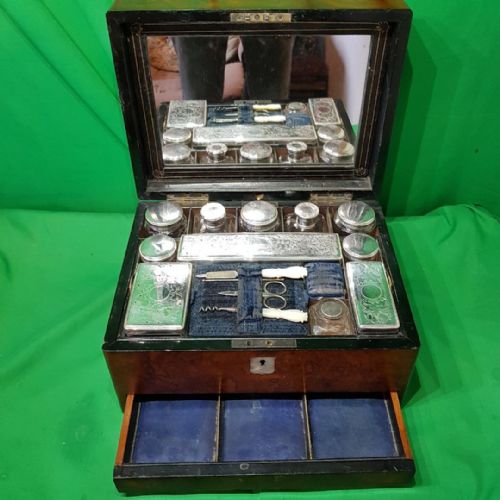
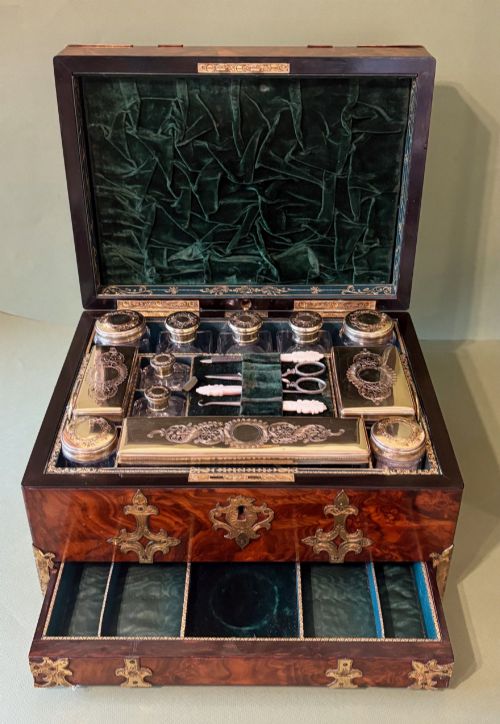
The underlying box section often incorporates small drawers for personal items, constructed with serpentine, bowfront or straight facades. Pieces range from simple upright table mirrors to elaborate travelling sets housing fitted compartments.
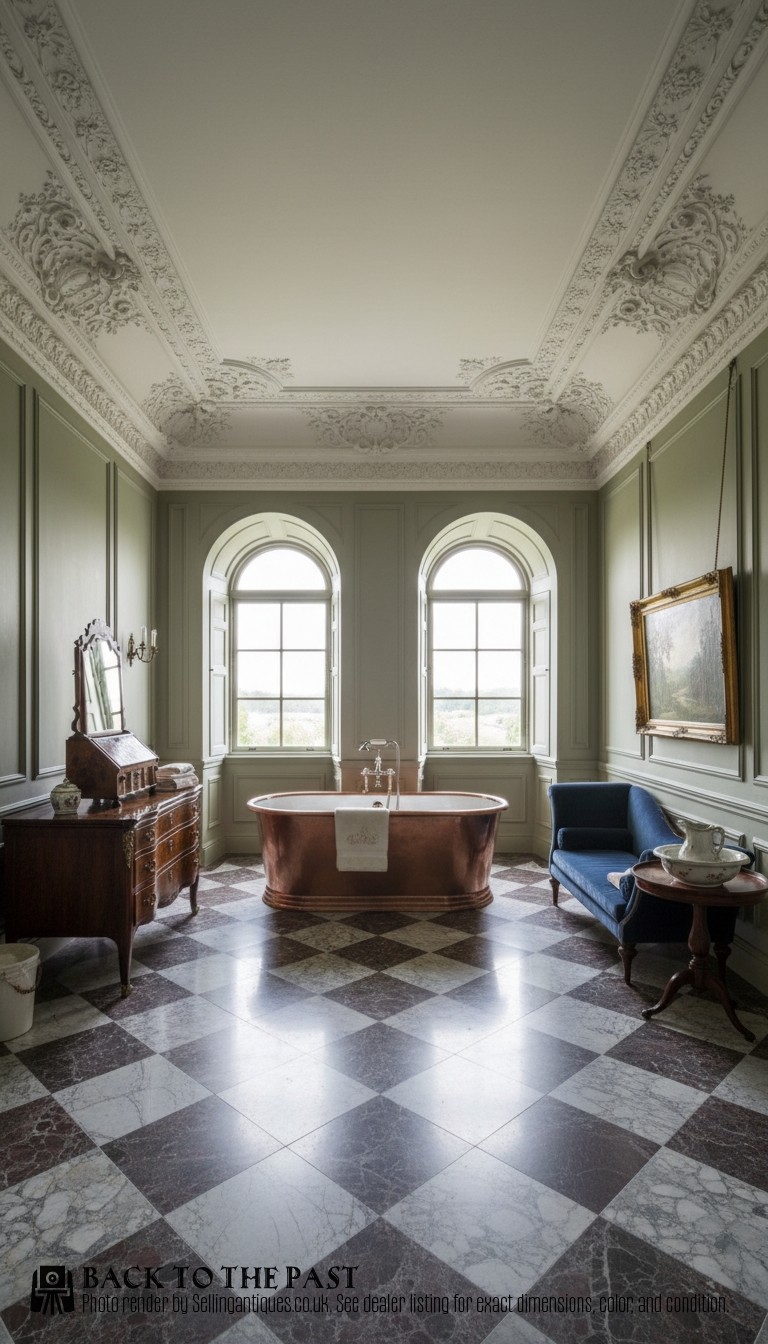
How they were made
Cabinet makers constructed the foundational boxes using solid timbers and veneers of mahogany and walnut, occasionally incorporating laburnum, harewood and satinwood for decorative contrast. These woods were shaped into serpentine fronts, shield outlines and rectangular frames.
Metal components played a structural and decorative role, with brass brackets, hinges and adjustment screws securing the swing glass between upright arms. Glass plates were silvered and set within rebated frames to withstand daily tilting.
Antique Box Toilet Mirror Retail Price Guide 2026
Typical asking prices for box toilet mirror among the pieces listed under this phrase on Sellingantiques today, from the lower quarter to the upper quarter. They describe what is for sale here now, not the wider market.
Listings demonstrate a strong prevalence of mahogany across Georgian and nineteenth-century examples, complemented by walnut pieces dating back to the Queen Anne period.
What varies in quality
The standard of timber selection and cabinet work separates examples, particularly where crossbanding, fine inlay and figured grain are applied to the box base. Secondary woods and the precision of dovetail joints within the internal drawers reveal the care taken during construction.
Proportion and the retention of original mirror glass and brass hardware determine the integrity of a piece. Finer examples maintain balanced dimensions between the swing frame and the supporting box drawers, with minimal replacement to structural components.
The Antique Box Toilet Mirror Glossary
- Swing mirror
- A glass plate hung on pivots between two upright arms, allowing the user to adjust the angle of reflection. This mechanism sits directly on the box base.
- Serpentine
- A curved line or front featuring a convex centre flanked by concave curves. This shaping appears on the drawer fronts of finer box mirrors.
- Crossbanding
- A strip of veneer applied across the grain of the primary surface to form a border. It provides decorative contrast on the edges of tops and drawer fronts.
- Parcel-gilt
- Partially gilded with gold leaf or paint, usually highlighting carved wooden details or mouldings. This finish appears on certain eighteenth-century frames.
Antique Box Toilet Mirror: Frequently Asked Questions
Where should I place a toilet mirror?
These mirrors suit placement on top of a chest of drawers, sideboard or dedicated dressing table where the height allows comfortable use.
Ensure the surface is stable and deep enough to support the footprint of the box base without overhang.
How do I adjust the mirror plate?
Most pieces utilise brass screw caps or side pins set into the upright arms to control the tension of the swing frame.
Turning these fittings gently allows the glass to tilt to the desired angle without putting strain on the wooden frame.
What is stored in the box base?
The small drawers and compartments were historically used for jewellery, cosmetics, hair pins and personal grooming items.
Modern owners utilise these spaces in much the same way for small daily accessories.
How do I clean the wood and glass?
Dust the mahogany or walnut surfaces gently with a dry cloth and maintain timber moisture using a traditional wax polish applied sparingly.
Clean the mirror glass with a soft cloth and a neutral cleaner, taking care to avoid letting moisture seep behind the plate.