



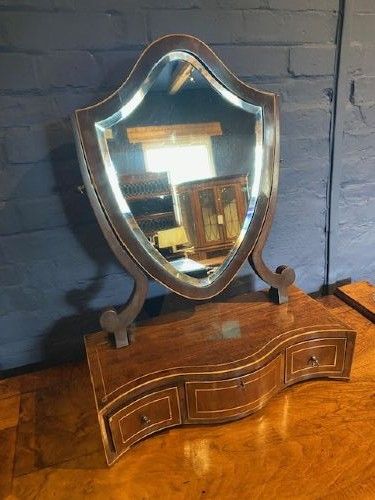
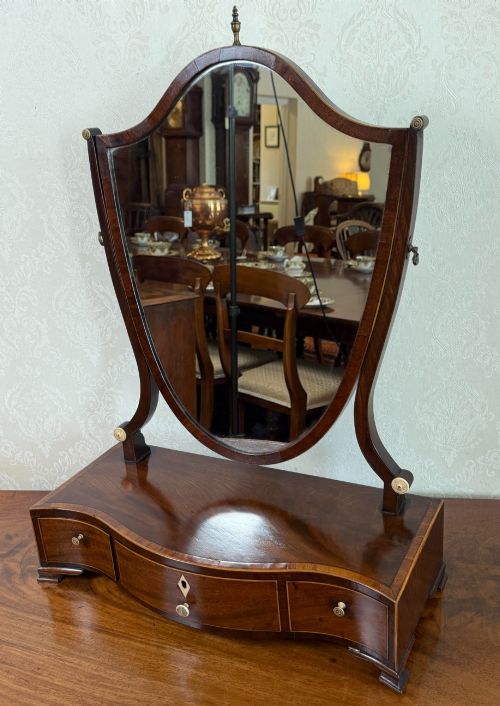
Georgian Mahogany Toilet Mirror
A georgian mahogany toilet mirror brings practical refinement to a dressing surface, combining adjustable glass with compact storage.
Georgian Mahogany Toilet Mirror
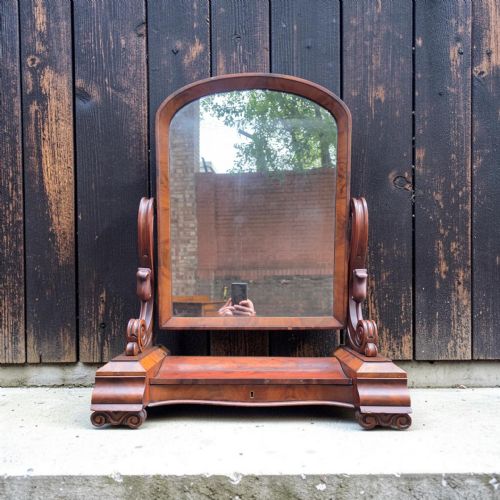
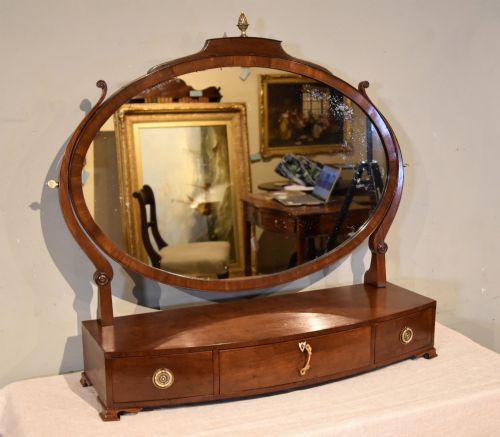
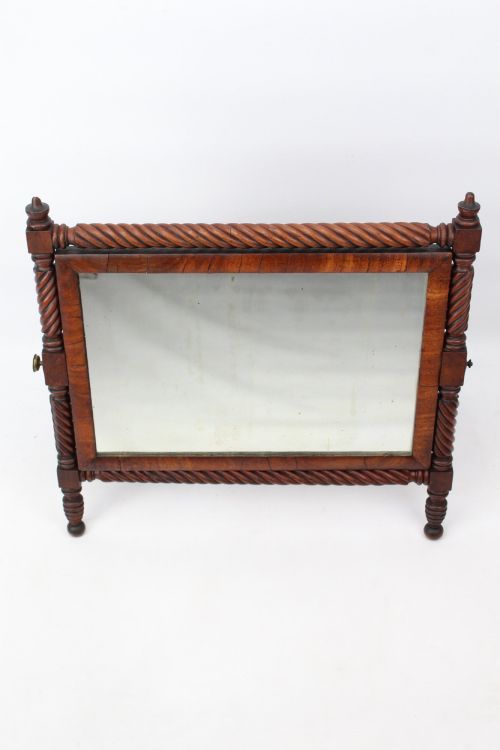
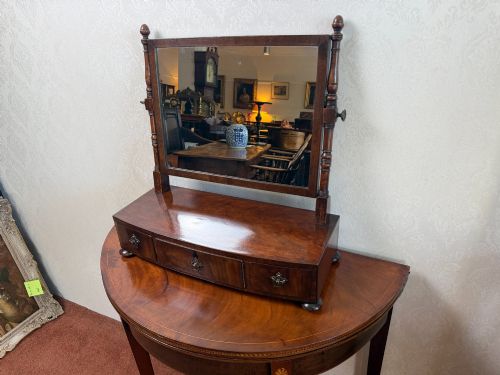
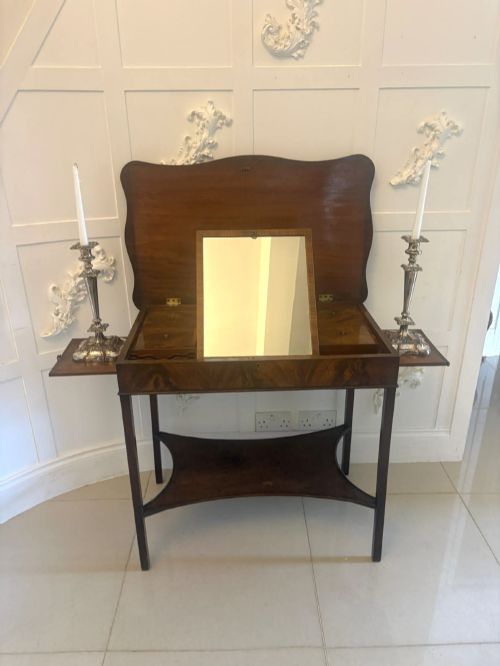
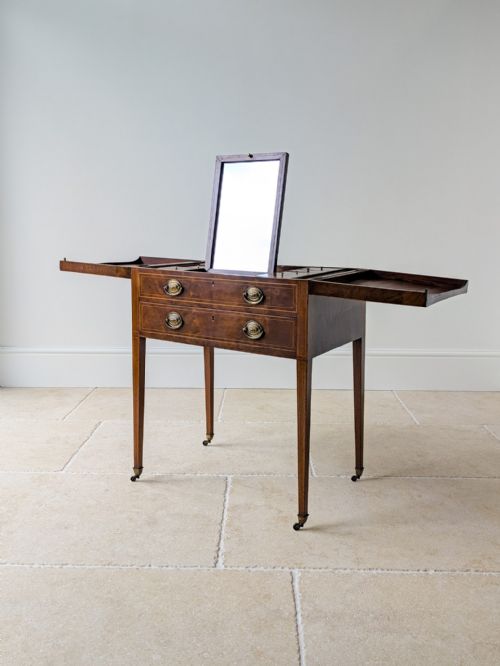
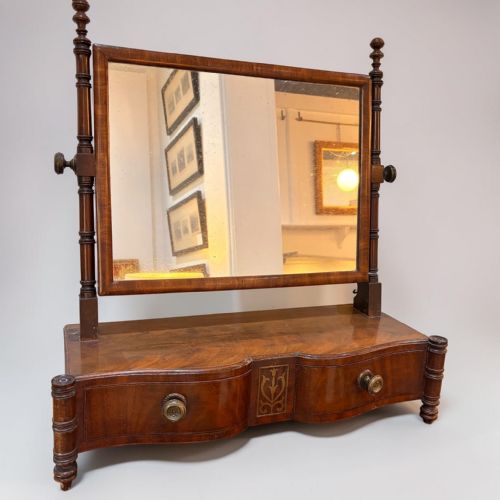
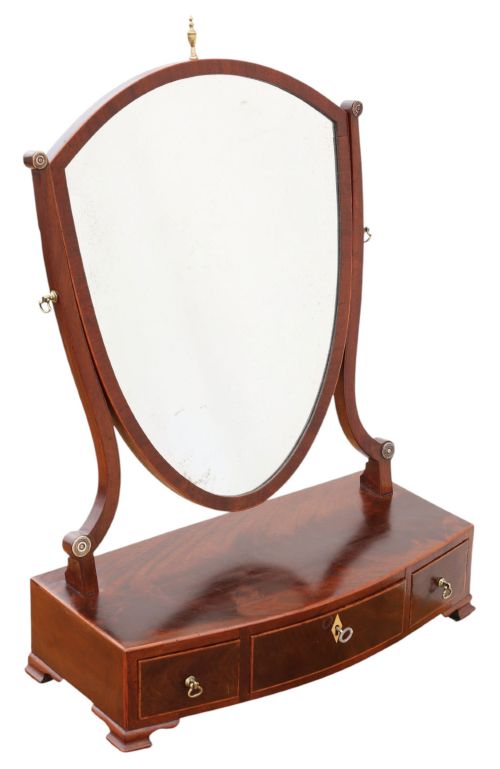
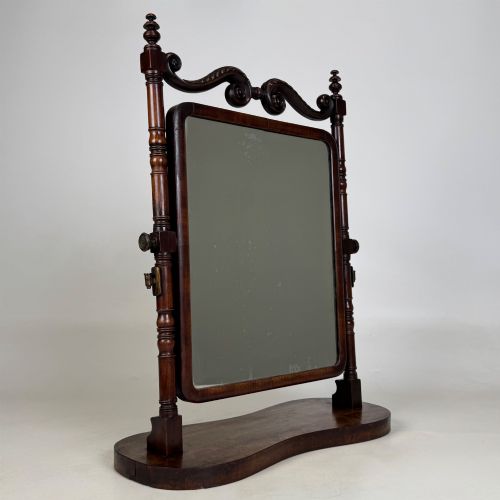
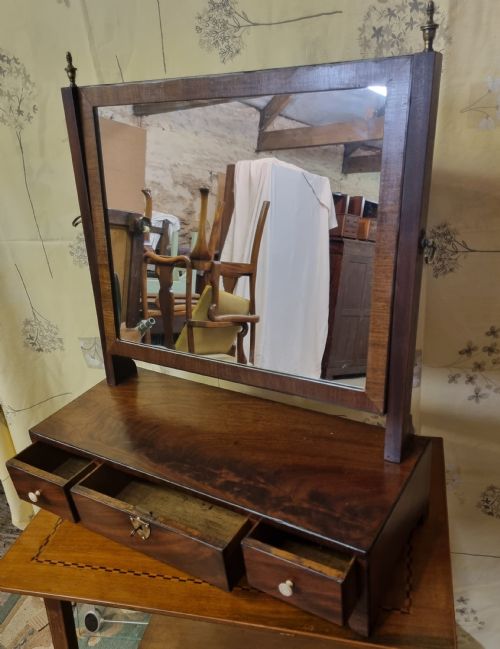
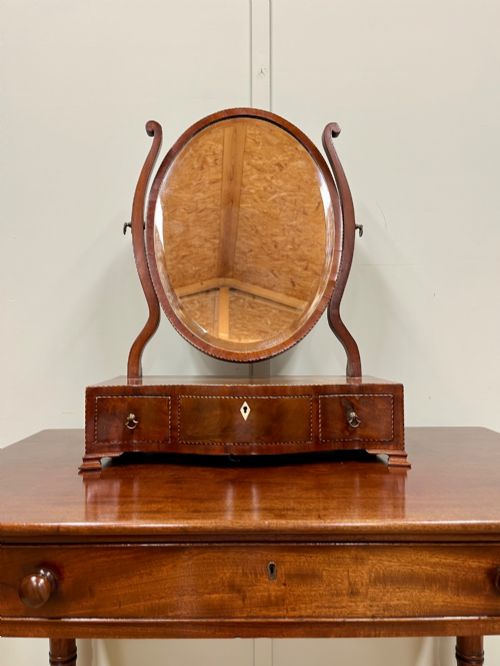
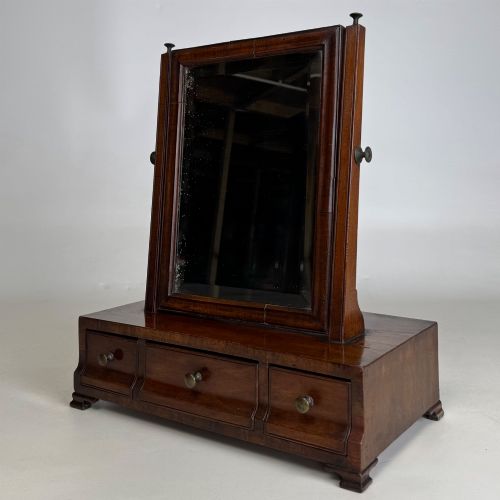
A georgian mahogany toilet mirror serves as a tabletop dressing glass, designed to pivot between upright supports mounted on a small box or chest base. These pieces appear frequently in rectangular, shield, and oval plate shapes, often incorporating drawers within the base for small personal items.
The pieces listed span the Georgian period, the Regency era, and later interpretations, constructed primarily to sit upon a dressing table or chest. Variations include bow-fronted and serpentine shapes, alongside simpler rectangular box mirrors intended for everyday grooming.
How They Were Made
Cabinet makers built these frames using solid mahogany and mahogany veneers, frequently pairing the dark timber with contrasting boxwood inlay or satinwood stringing. Brass fixtures such as adjustable side screw knobs and small drawer pulls secured the pivoting glass and accented the polished wood.
The upright arms and base structures relied on traditional joinery, housing small drawers with fine dovetail joints. Mirror plates were held within shaped wooden frames, suspended on pivots to allow the glass to tilt at various angles.
Georgian Mahogany Toilet Mirror Retail Price Guide 2026
Typical asking prices for georgian mahogany toilet mirror among the pieces listed under this phrase on Sellingantiques today, from the lower quarter to the upper quarter. They describe what is for sale here now, not the wider market.
Listings feature mahogany, glass, brass, bone, satinwood, and boxwood inlay across Georgian, Regency, and Victorian periods.
What Varies in Quality
The distinction between standard examples and finer pieces rests upon the selection of timber figures and the precision of decorative inlays. Mahogany with pronounced flame patterns or well-matched crossbanding indicates a higher tier of craftsmanship than plain, unfigured boards.
Proportion and execution define the overall standard, seen in the curve of a serpentine base or the delicate shaping of upright scroll arms. Finer examples maintain crisp edges on mouldings and balanced proportions between the mirror frame and the storage base.
The Georgian Mahogany Toilet Mirror Glossary
- Toilet mirror
- A small tabletop dressing glass mounted on a stand or storage base, designed for personal grooming. These items sat on chests of drawers or dedicated dressing tables.
- Shield mirror
- A glass plate cut into the shape of a heraldic shield, held within a matching wooden frame. This form gained popularity during the late eighteenth century.
- Serpentine
- A front contour curving outward at the centre and inward at the sides, often found on the drawer bases of dressing mirrors. This shape required precise woodworking skill to execute.
- Crossbanding
- A strip of veneer applied across the grain of the primary wood to form a decorative border along the edge of a top or drawer front. It provides a neat, framed appearance to mahogany surfaces.
- Swing glass
- A mirror plate hung on horizontal pivots between two upright posts, allowing the user to adjust the viewing angle. The mechanism relies on brass screw caps or threaded pins.
Georgian Mahogany Toilet Mirror: Frequently Asked Questions
Where were toilet mirrors placed?
These mirrors sat atop existing furniture such as chests of drawers, side tables, or specialised dressing surfaces in bedrooms and dressing rooms. Their compact footprints allowed them to utilise surface space without requiring a dedicated floor standing piece.
Because they were portable, owners moved them between rooms to catch optimal natural light during morning routines.
What are the drawer boxes used for?
The small drawers built into the base held personal accessories, jewellery, coins, and grooming items used during daily preparation. Compartments within campaign or box variants sometimes organised shaving equipment.
These concealed spaces kept the dressing surface tidy while maintaining quick access to daily essentials.
How do you adjust the mirror glass?
The glass frame pivots on threaded brass screws or pins set into the upright support arms on either side. Tightening or loosening these side fixtures holds the mirror at the desired angle for the user.
Original brass hardware moves smoothly through the wooden blocks without straining the side posts.