

Antique Swivel Mirror
An antique swivel mirror stands ready to anchor a dressing table or reflect a room with pivot grace.
Antique Swivel Mirror
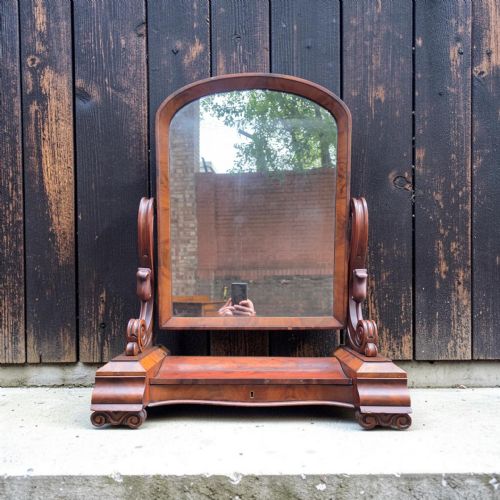
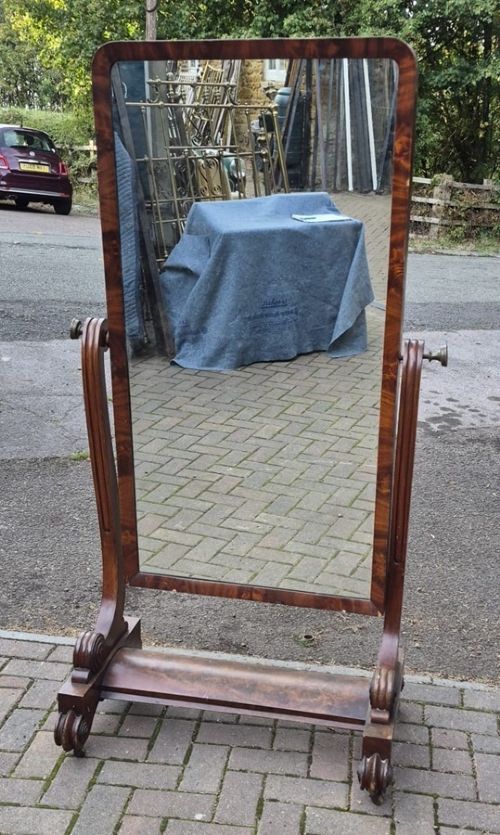
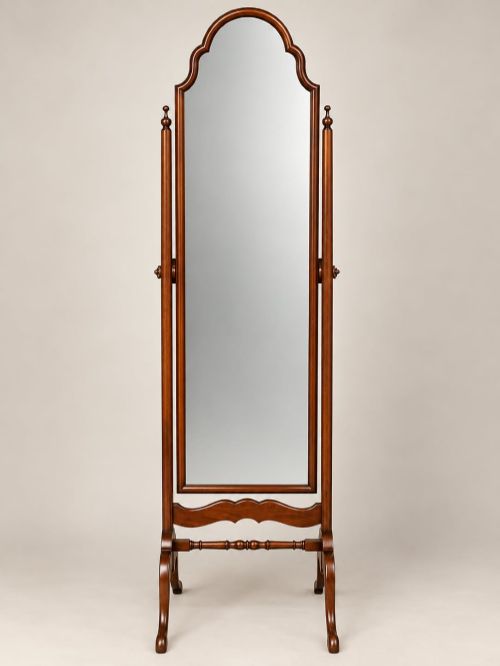
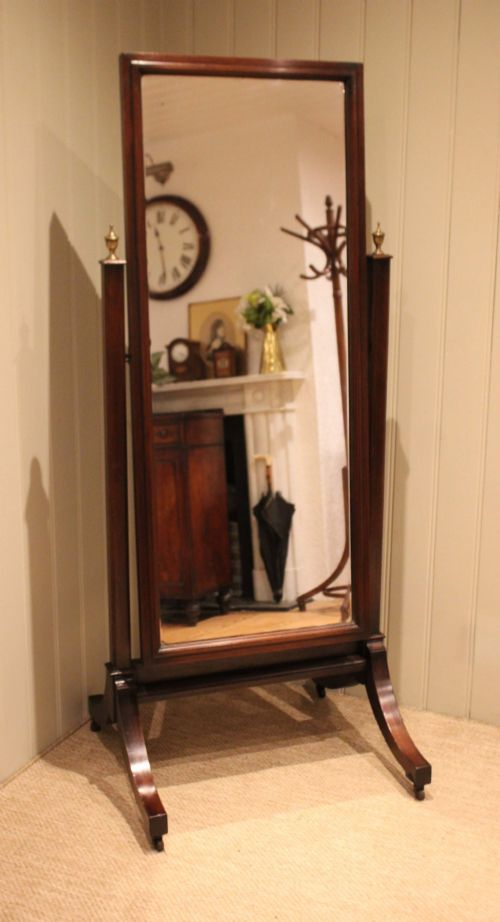
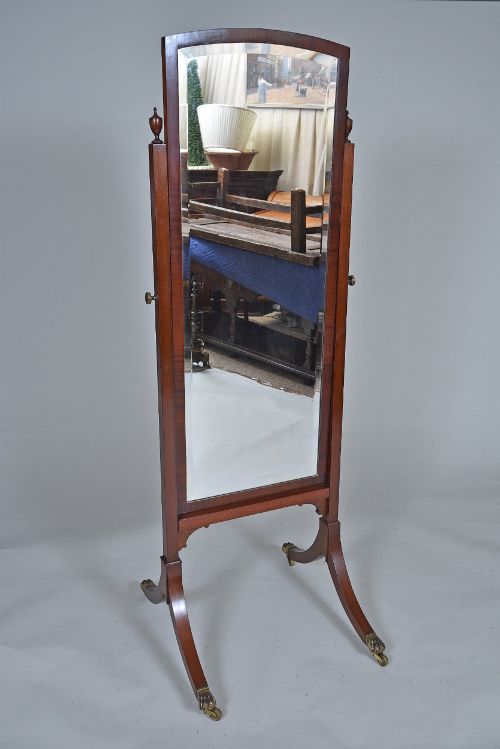
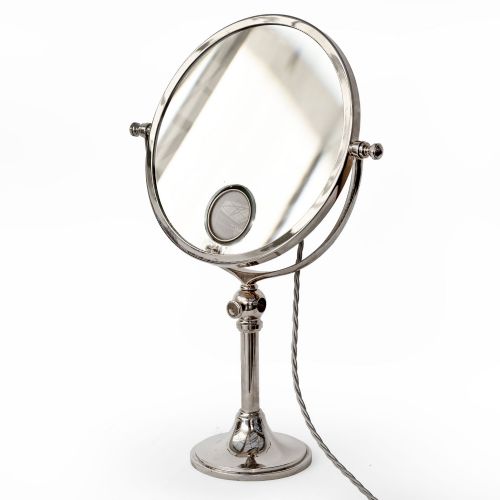
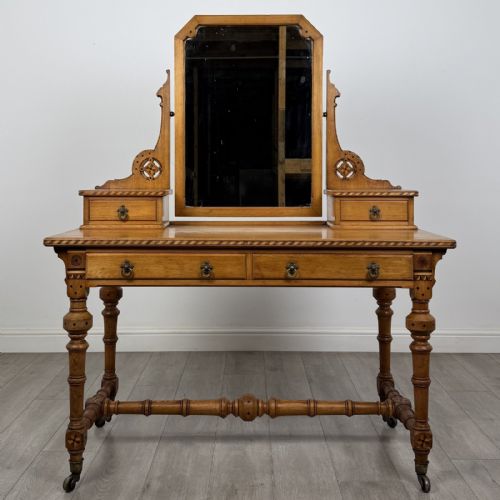
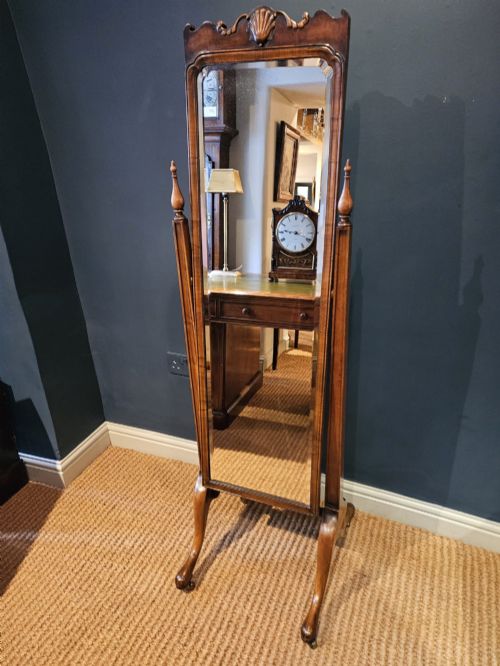
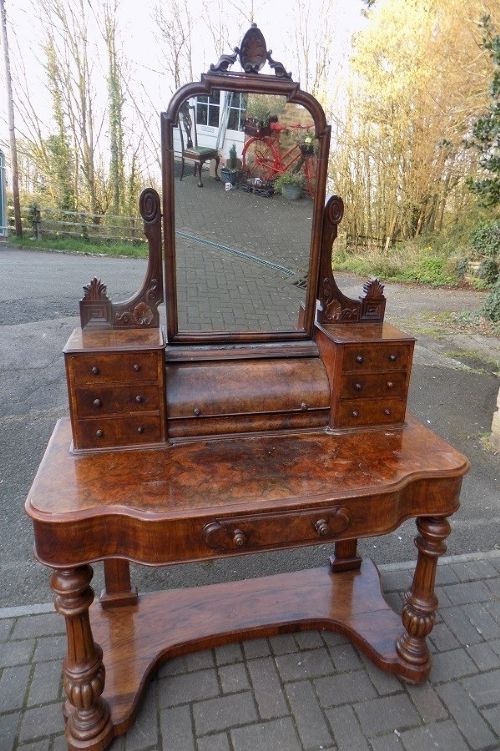
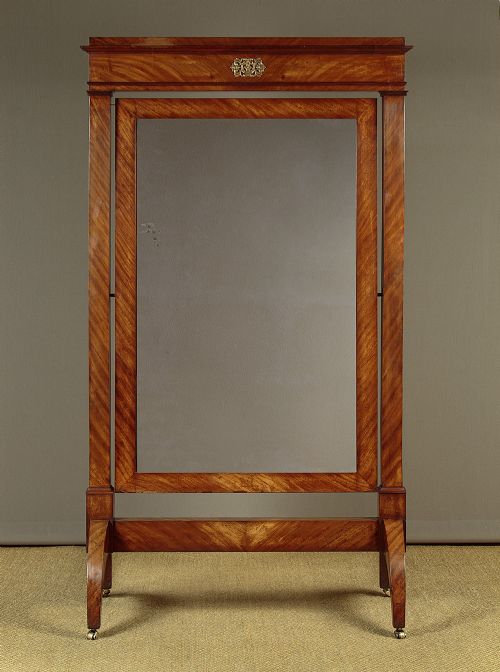
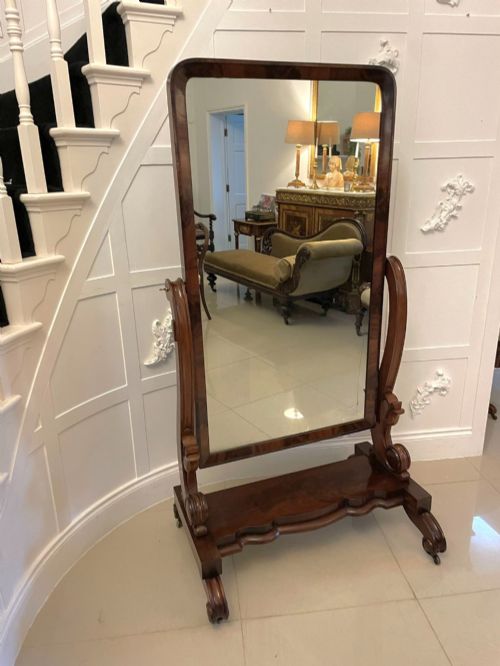
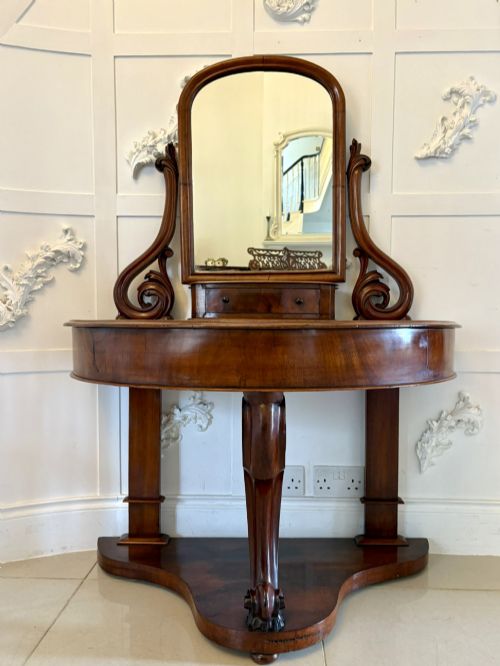
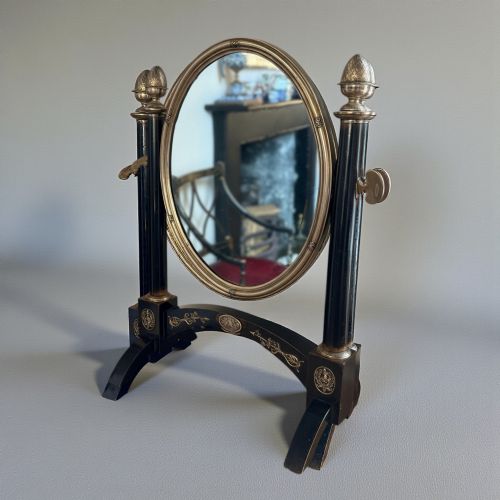
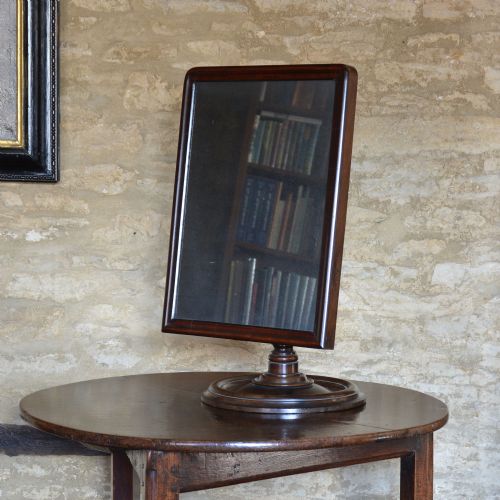
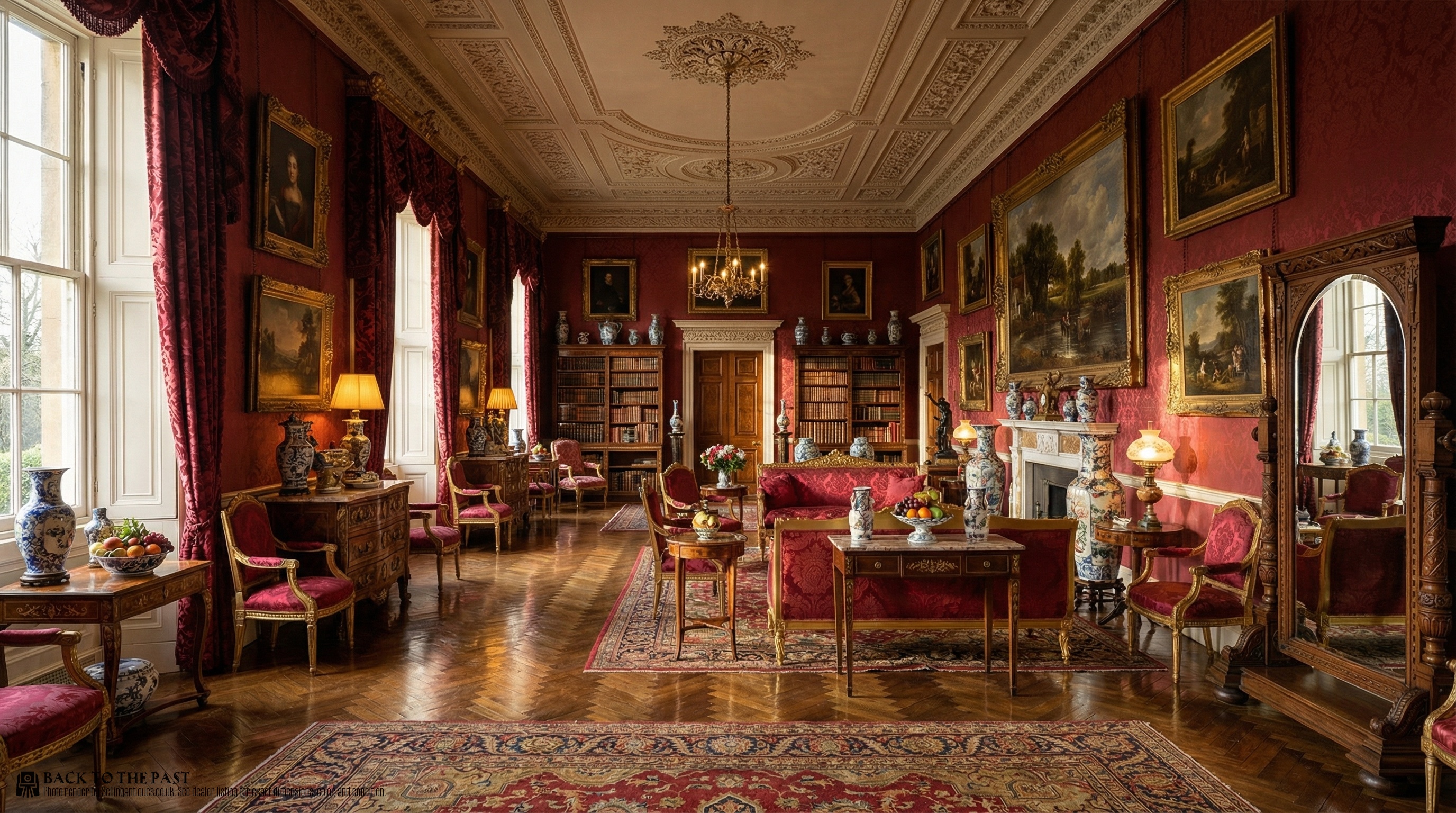
An antique swivel mirror serves as the defining glass upon a dressing surface or stands independently as a full-length cheval glass. Buyers seeking this phrase encounter formats ranging from compact table-top toilet mirrors to large floor-standing cheval versions.
The material record spans mahogany, walnut, burr walnut, oak, satin birch, and giltwood, accompanied by glass, mirror glass, bone, and brass. These pieces appear across Georgian, Victorian, Edwardian, Regency, and early twentieth-century periods.
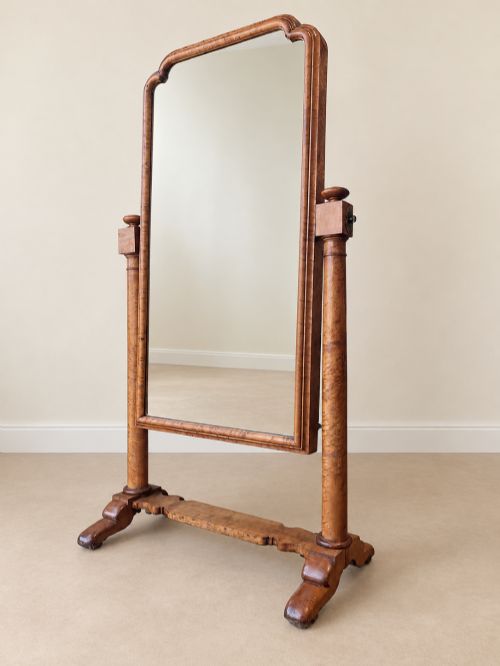
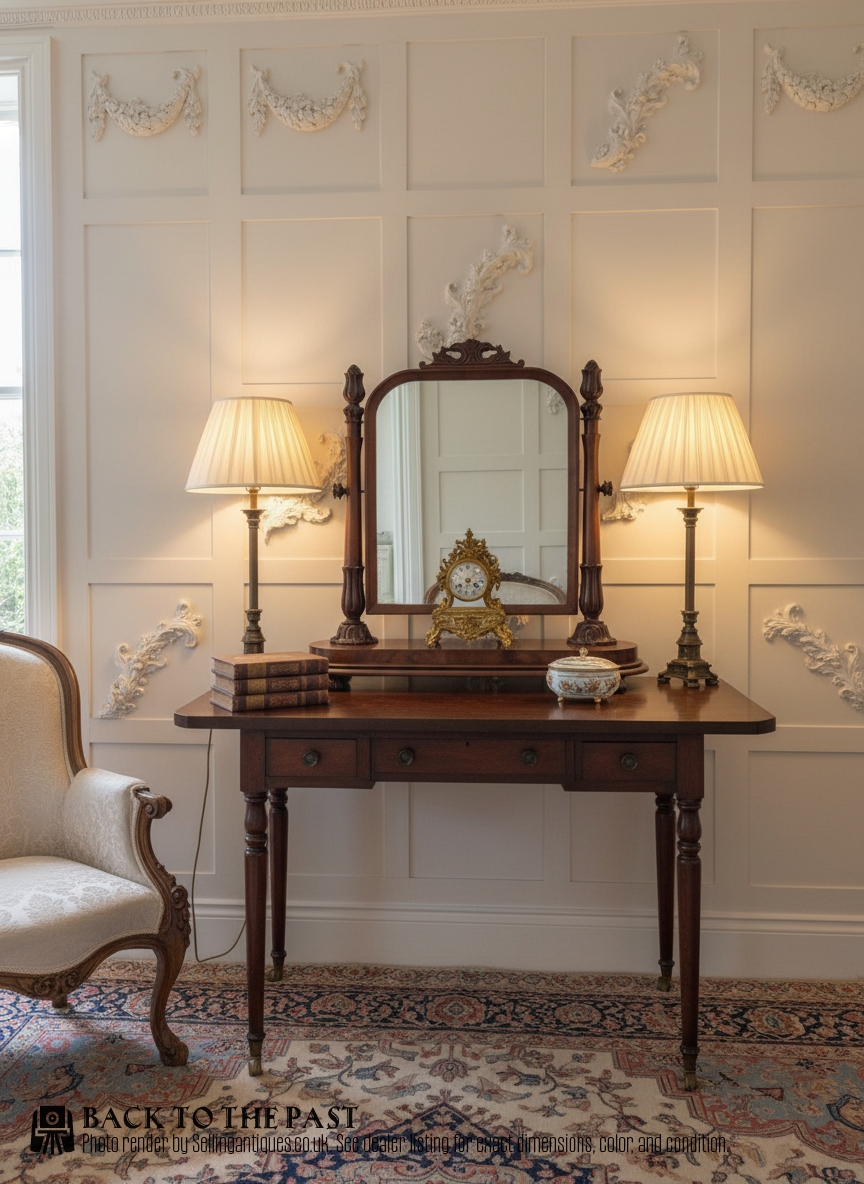
Table mirrors and dressing mirrors dominate the smaller scale, featuring swing plates suspended between upright supports. Larger cheval mirrors provide full-length reflection, often supported by stout frames or barley twist uprights.
Materials and Construction
Cabinetmakers constructed the frames primarily from dense hardwoods like mahogany and walnut, frequently selecting figured veneers such as burr walnut for decorative impact. Brass fittings, including pivot screws and candle arms, secure the glass plates and allow smooth tilting action.
Mirror glass rests within shaped wooden frames, sometimes accented with parcel-gilt or boxwood stringing. Heavier floor-standing cheval mirrors utilise sturdy timber chassis to balance the weight of the pivoting plate.
Antique Swivel Mirror Retail Price Guide 2026
Typical asking prices for swivel mirror among the pieces listed under this phrase on Sellingantiques today, from the lower quarter to the upper quarter. They describe what is for sale here now, not the wider market.
Listings span the eighteenth, nineteenth, and early twentieth centuries, featuring woods from mahogany and walnut to satin birch and oak.
Assessing Quality in Swivel Mirrors
Superior examples display crisp timber figure, precise cabinet joints, and original brass hardware that matches the period of the frame. The proportion between the mirror plate and its supporting uprights dictates the visual balance of the piece.
Heal & Sons·Thomas Rubergall
The Antique Swivel Mirror Glossary
- Cheval mirror
- A large floor-standing dressing mirror supported by a frame with vertical pivots allowing the glass to tilt fully.
- Toilet mirror
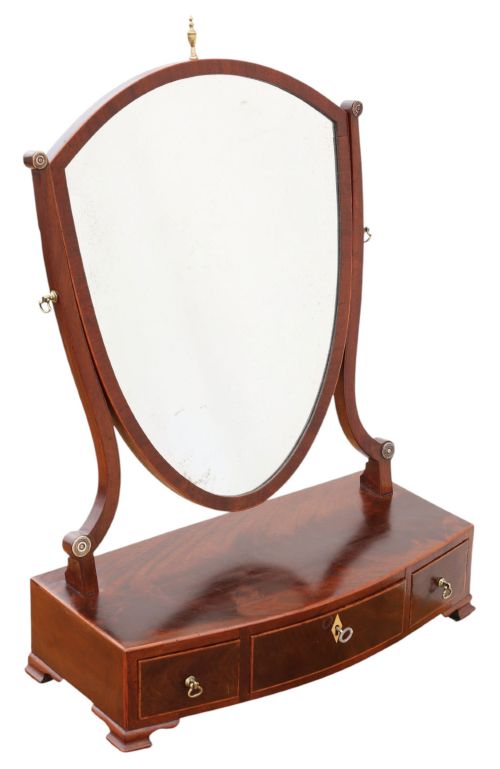
- A smaller dressing table mirror designed to sit atop a chest or table, also known as a swing mirror.
- Shield mirror
- A dressing glass shaped like an heraldic shield, popular in Georgian cabinet making.
- Parcel-gilt
- Woodwork partially decorated with gold leaf or gilt, often highlighting carved mouldings on Georgian and Victorian frames.
- Barley twist
- A turned wooden column resembling a twisted rope, seen on Victorian and seventeenth-century supports.
Antique Swivel Mirror: Frequently Asked Questions
What is the difference between a toilet mirror and a cheval mirror?
A toilet mirror sits on top of a dressing table or chest of drawers to show the upper body. A cheval mirror stands directly on the floor to provide a full-length view.
Both utilise pivoting frames, but their scale and placement in a room differ entirely.
How do I date an antique swivel mirror?
Dating relies on timber selection, frame style, and hardware construction. Georgian pieces often feature mahogany with shield or oval plates, while Victorian examples introduce burr walnut and heavier proportions.
Examine the backboards, screw types, and construction methods to confirm the period.
Can the mirror glass be replaced?
Original mirror glass often shows foxing and grey spots due to age. Many collectors accept this patina as proof of authenticity.
Replacing the glass is possible, but retaining the original plate preserves the historical integrity of the piece.
How do I maintain the swivel mechanism?
The pivot screws on the sides of the frame control the tension that holds the glass in place. Adjust them gently with a suitable screwdriver if the mirror tilts too loosely.
Avoid over-tightening to protect the wooden threads and brass fittings from stripping.