

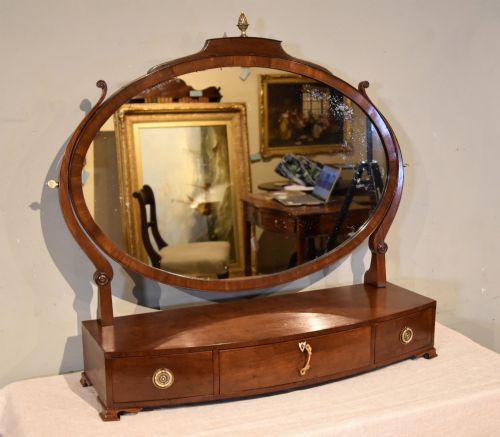
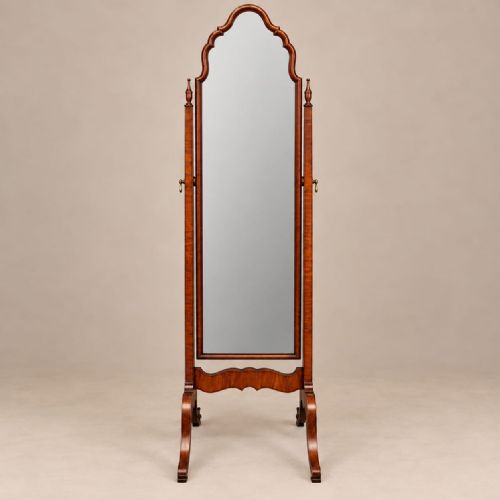
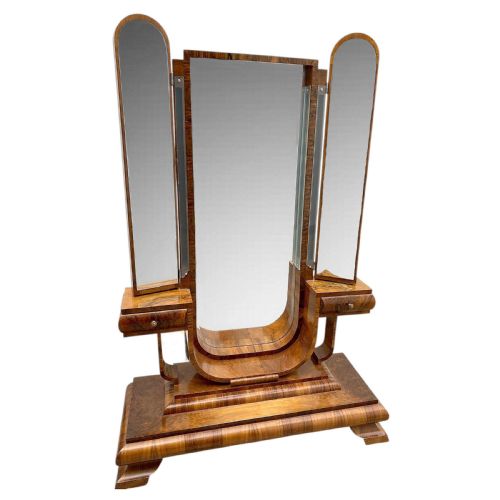
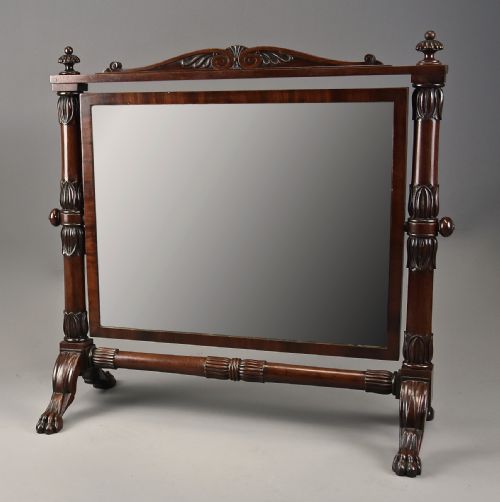
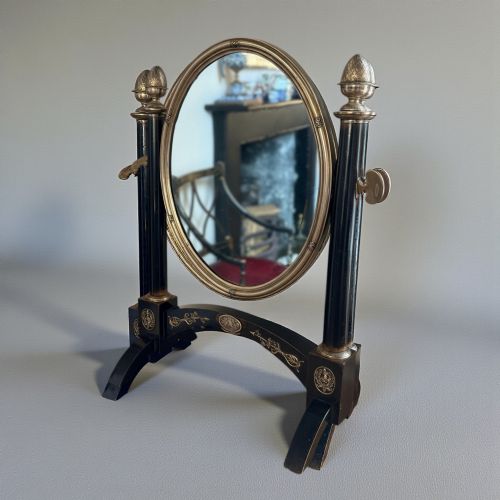
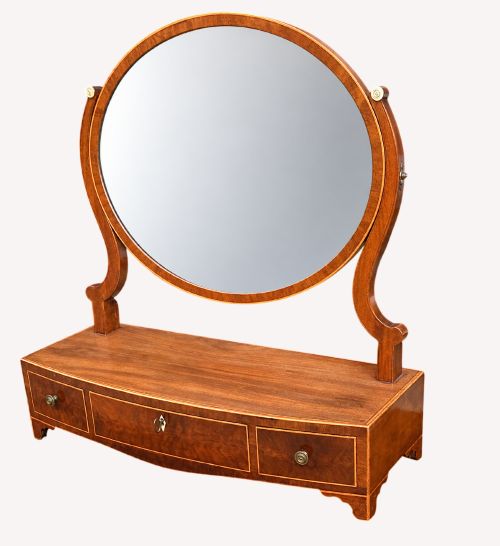
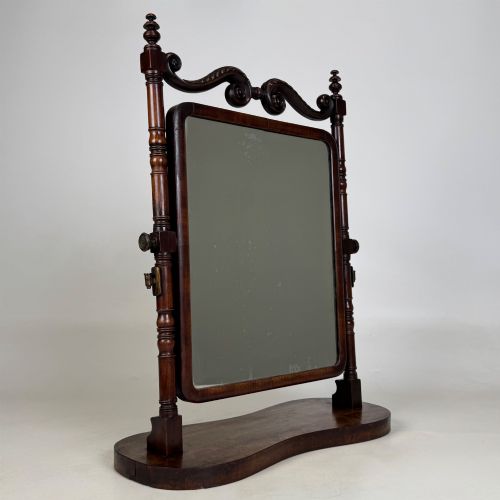
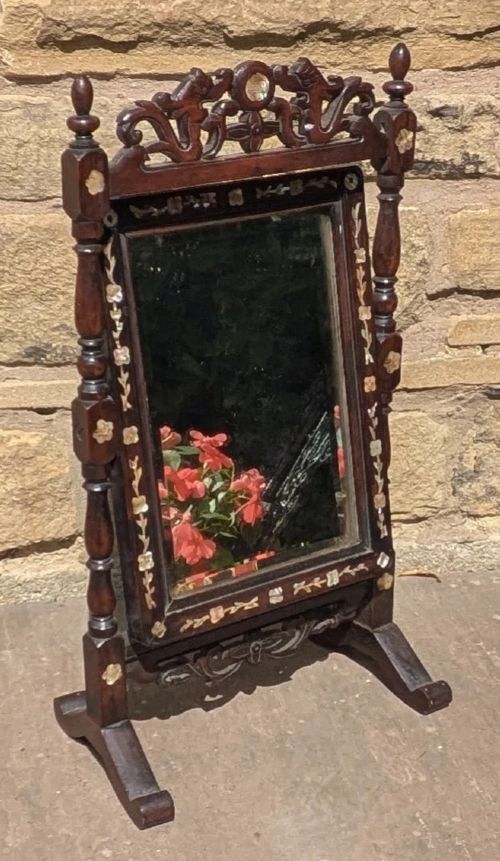
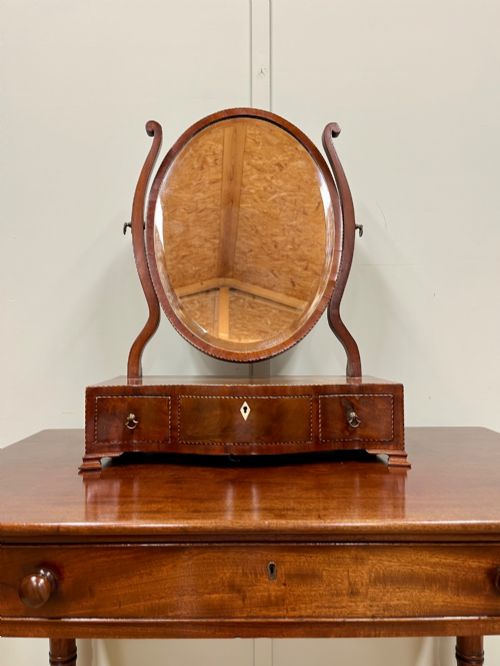
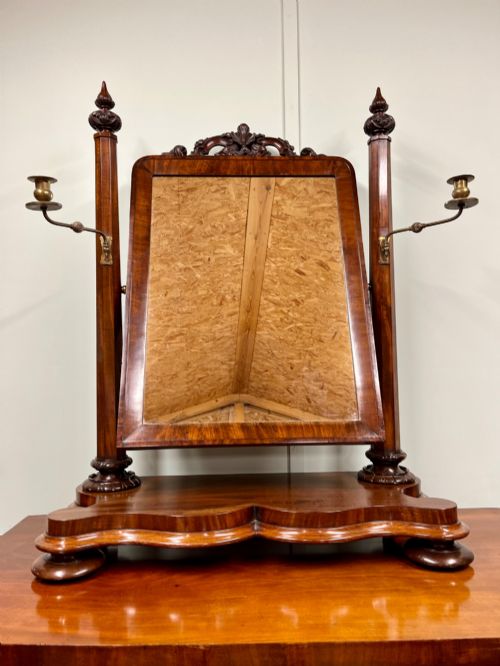
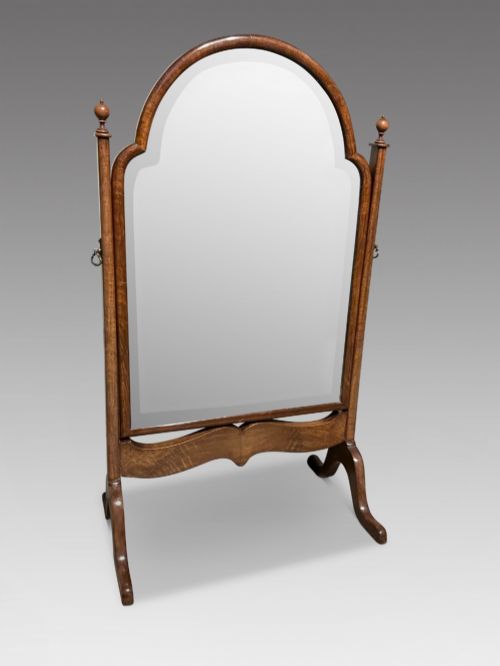
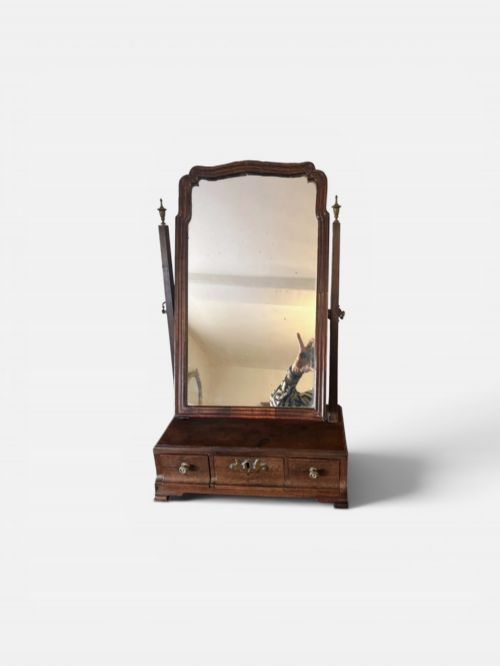
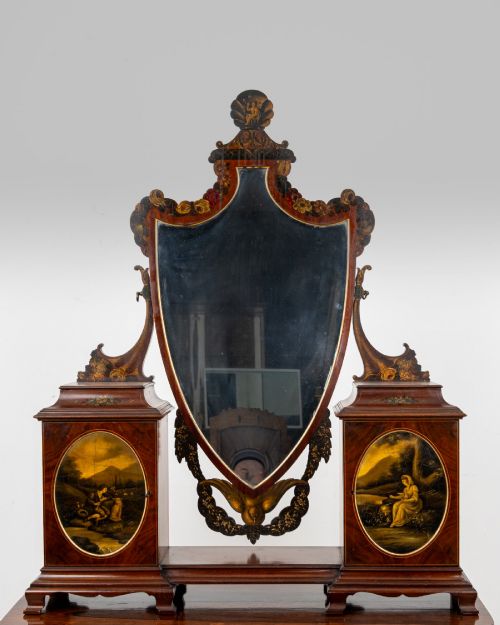
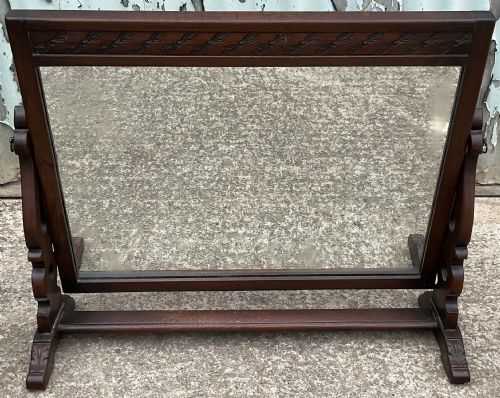
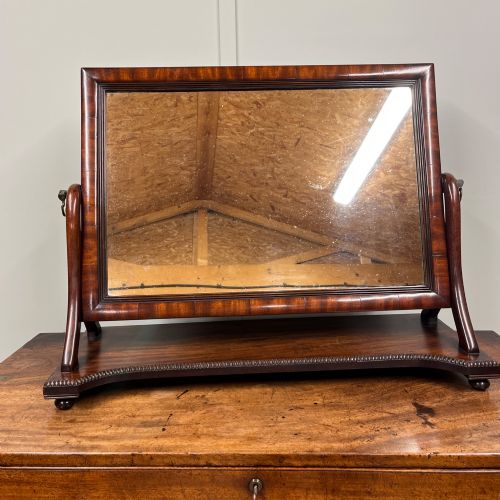

Cheval Table Mirror
A cheval table mirror sits on a dressing surface, offering a full upper-body reflection through an adjustable swivelling plate.
Cheval Table Mirror
When you search for cheval table mirror, you encounter a selection of portable dressing glasses and small-scale pivoted mirrors designed for tabletops and chests. These pieces appear in forms ranging from compact Victorian mahogany swing mirrors to larger adjustable table versions.
The evidence shows periods spanning the Regency era, the nineteenth century, and the early decades of the twentieth century, alongside specific revivals like French Rococo and Arts and Crafts. Walnut, oak, and mahogany form the primary structural timbers for these desktop looking glasses.
Makers and workshops utilised brass hardware to mount the swing frames securely between upright supports or pillars. Most examples function as dressing table mirrors or toilet mirrors intended to assist with personal grooming.
How they were made
Cabinet makers constructed the frames using solid hardwoods such as mahogany, walnut, and oak, often incorporating brass pivots, adjustable arms, and metal candle sconces. Selected pieces feature marquetry inlay, giltwood carving, or porcelain mounts set into the wooden structure.
The glass plates are mounted into swing frames that tilt on horizontal axes, supported by desktop plinths, box bases fitted with drawers, or small marble slabs. Joinery techniques from the nineteenth and early twentieth centuries ensure the upright pillars support the weight of the pivoting mirror.
Cheval Table Mirror Retail Price Guide 2026
Typical asking prices for cheval table mirror among the pieces listed under this phrase on Sellingantiques today, from the lower quarter to the upper quarter. They describe what is for sale here now, not the wider market.
Listings feature woods such as mahogany, walnut, oak, and satinwood, alongside materials like brass, glass, marble, and porcelain.
What varies in quality
The refinement of the timber selection and the precision of the brass pivoting mechanism determine the standing of an individual piece. Examples featuring figured mahogany, detailed carving, or integrated drawer bases demonstrate higher levels of workshop execution.
Proportion and stability separate standard utility mirrors from exhibition quality items. The integration of materials such as marble tops or silver deposit porcelain elements indicates the ambition of the original maker.
Jean Gille·Gillows
The Cheval Table Mirror Glossary
- Cheval mirror
- A freestanding or tabletop mirror suspended on a frame with side pivots that allow the glass to tilt. This form permits the user to adjust the angle of reflection easily.
- Swing mirror
- A glass plate hung within a moveable frame that pivots between two vertical uprights. These units commonly sit upon dressing tables or chests of drawers.
- Toilet mirror
- A historical term for a small dressing table mirror designed for personal grooming. They frequently incorporate small drawers in the base for storage.
- Marquetry
- Decorative woodwork in which pieces of veneer are fitted into a ground material to form geometric or pictorial designs. This technique appears on selected period frames.
- Pivots
- The metal pins or screws set into the sides of the frame that secure the mirror plate to its upright supports. They allow the glass to maintain its tilted position.
Cheval Table Mirror: Frequently Asked Questions
What is a cheval table mirror?
A cheval table mirror is a small dressing glass mounted on pivots within a frame, designed to sit on top of a table or chest rather than stand on the floor.
These pieces allow the user to adjust the tilt of the glass for grooming and dressing purposes.
How do you date a antique mirror?
Dating relies on examining the timber species, construction methods, hardware materials, and stylistic details associated with periods like the Regency era or the Victorian age.
Changes in cabinet-making techniques and brass fittings across the nineteenth and early twentieth centuries provide clear chronological indicators.
Were these mirrors used on dressing tables?
These mirrors were primarily placed on dressing tables, chests of drawers, and washstands in bedrooms and dressing rooms.
Many examples feature small drawers in their base structures to hold small personal items.
What woods were used for frames?
Cabinet makers utilised dense hardwoods including mahogany, walnut, and oak for the structural frames of these pieces.
Selected items also incorporate satinwood, rosewood, or giltwood depending on the prevailing style of the period.