



Adjustable Table Mirror
An adjustable table mirror gives you precise control over reflection and angle, combining period timber work with functional pivoting glass.
Adjustable Table Mirror
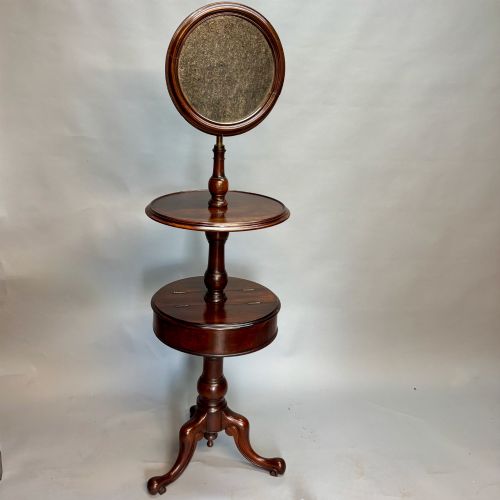
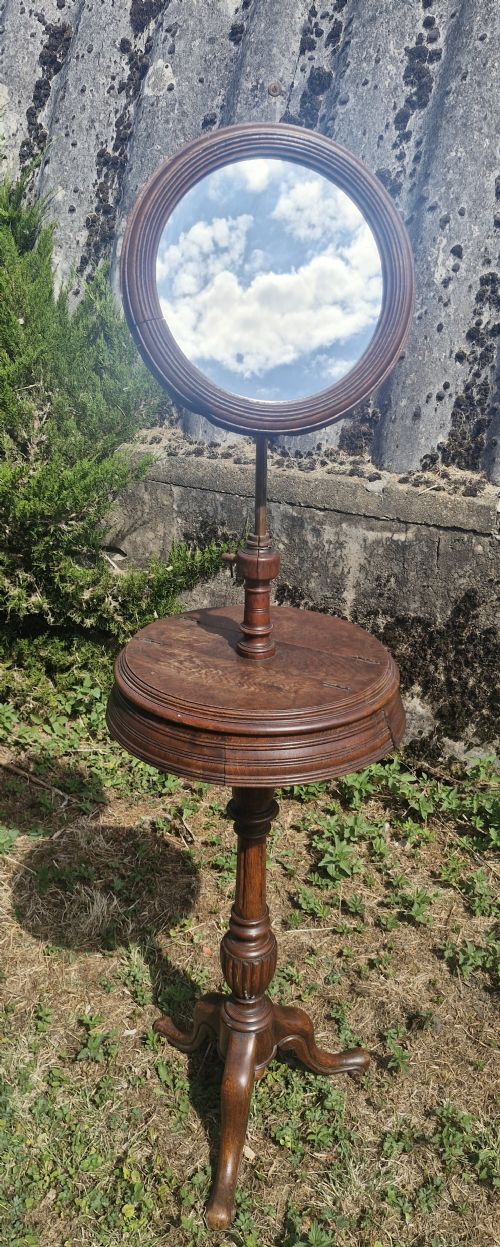
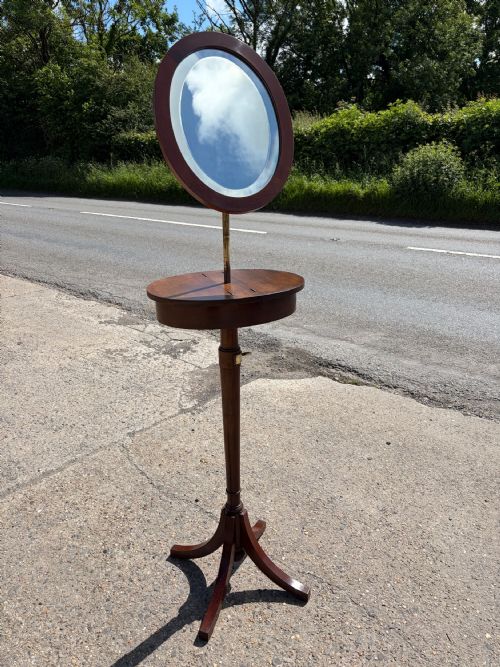
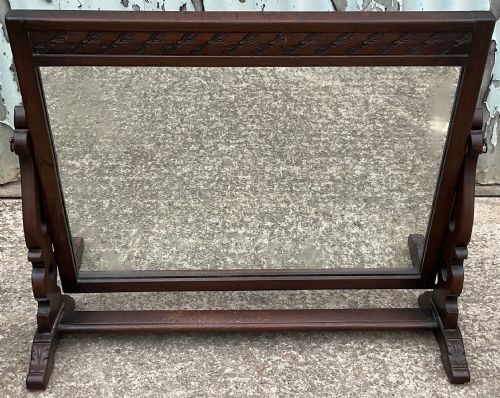
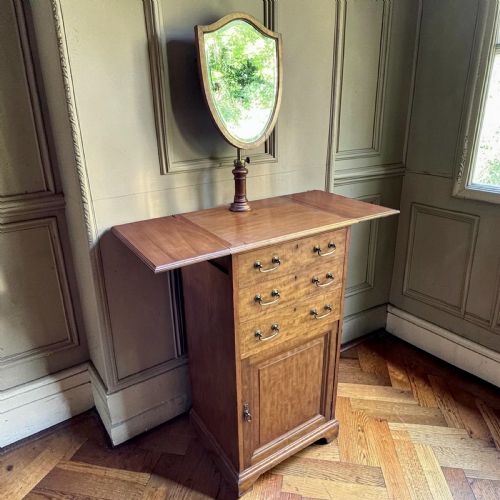
An adjustable table mirror is primarily encountered in forms such as shaving stands, toilet mirrors, and dressing table mirrors dating from the Victorian and Edwardian eras. These pieces range from simple swing frames on small stands to complex telescopic tripod bases designed for the dressing room or bedroom.
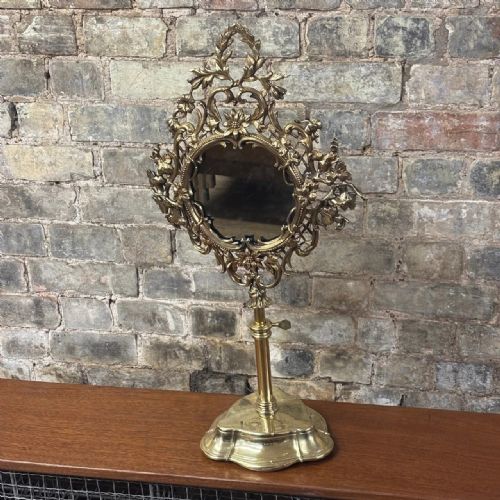
The materials span traditional hardwoods like mahogany, walnut, and oak, alongside brass, chrome, and occasional painted finishes. You will frequently find them paired with specific period details, including boxwood inlay, turned columns, and shield-shaped or oval plates.
Materials and construction methods
Cabinet makers utilised solid timbers and veneers like mahogany, walnut, and oak to build the frames and support structures, often incorporating boxwood inlay for decorative contrast. The glass plates are supported by pivoting pins or telescopic brass and bronze mechanisms that permit vertical height adjustment and tilt.
Support systems vary from tripod bases and pedestal columns to table-top swing frames fitted with brass screws and brackets. The combination of turned woodwork and metal fittings allows the mirror plate to hold its angle securely during daily grooming.
Listings feature adjustable table mirrors spanning the Georgian, Regency, Victorian, and Edwardian periods, constructed in mahogany, walnut, oak, brass, and chrome.
Distinctions in build and finish
Quality in these pieces is dictated by the selection of timber figures, such as burr maple or figured mahogany, and the precision of the brass or bronze adjustment mechanisms. Superior examples feature integrated drawers with dovetail joints, crisp boxwood stringing, and heavy, stable tripod bases that prevent tipping.
Construction methods also separate utilitarian items from exhibition pieces, with finer stands displaying hand-turned columns, detailed marquetry, and maker stamps. The original mirror glass plate, where retained, often shows subtle bevelling and age characteristics that distinguish high-end workshops from standard production.
J. Shoolbred·Gillows of Lancaster·Mirror Brot
The Adjustable Table Mirror Glossary
- Telescopic
- A mechanism allowing the height of the mirror to be extended or retracted along a central vertical rod. This feature is particularly common on nineteenth-century gentleman's shaving stands.
- Swing frame
- A mirror plate hung on pivots between two upright posts, allowing it to tilt back and forth. The tension is typically managed by thumb screws or slotted nuts.
- Cheval mirror
- A full-length or large standing mirror supported in a frame that allows it to swing entirely. The evidence records several variations mounted on tables or floors.
- Toilet mirror
- A smaller mirror designed to sit upon a dressing chest, table, or washstand. These often incorporate small trinket drawers in the base.
- Sorrento ware
- Woodwork decorated with micro-mosaic marquetry, originating from Italy. It appears on specialist portable dressing and looking glasses.
Adjustable Table Mirror: Frequently Asked Questions
How do I adjust the height on a telescopic mirror?
Telescopic mirrors rely on a central brass or metal column with an internal or external locking screw. Loosening the thumb screw allows you to raise or lower the mirror to the desired eye level before tightening it back into place.
Older mechanisms require steady handling to avoid binding the metal sliding rod. Ensure you support the weight of the frame with one hand while adjusting the collar with the other.
Where were these mirrors typically used in the home?
These pieces were standard fixtures in nineteenth and early twentieth-century bedrooms, dressing rooms, and gentleman's morning rooms. They provided targeted reflection for shaving, hair styling, and applying cosmetics before electric lighting became common.
Smaller examples sat directly on dressing chests or tables, while freestanding tripod and pedestal versions stood beside washstands or near windows to catch natural light.
How do I date an adjustable table mirror?
Dating relies on identifying the prevailing furniture styles, timber choices, and hardware construction methods present in the piece. For example, Regency and George III examples often display cleaner neoclassical lines and inlay, whereas Victorian and Edwardian models frequently utilise heavier mahogany or oak with turned columns.
Secondary clues include the type of screw threads, the bevel and thickness of the mirror glass, and any maker stamps or retailer labels found on the drawers or backing boards.
Can I replace the mirror glass if it is damaged?
Replacing the glass plate is possible, but collectors generally prefer to retain original mercury or silvered glass where possible. Original plates often exhibit characteristic foxing and silver degradation that confirm the age of the piece.
If replacement is necessary for functional use, a restorer can cut a new silvered plate to fit the existing wooden rebate without altering the vintage frame or pivoting hardware.