
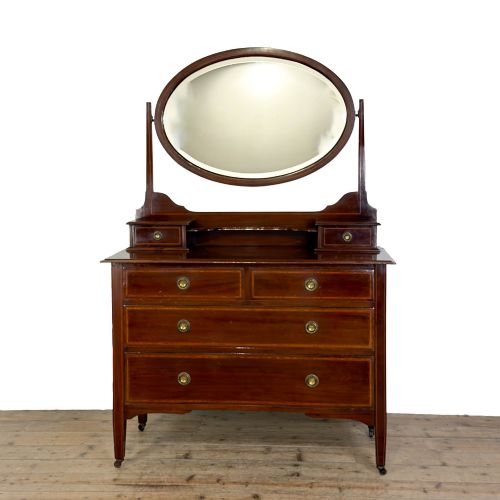


Edwardian Swivel Mirror
An Edwardian swivel mirror brings practical elegance and warm timber tones to a bedroom, offering a tilted reflection framed in polished mahogany, satinwood or walnut.
Edwardian Swivel Mirror
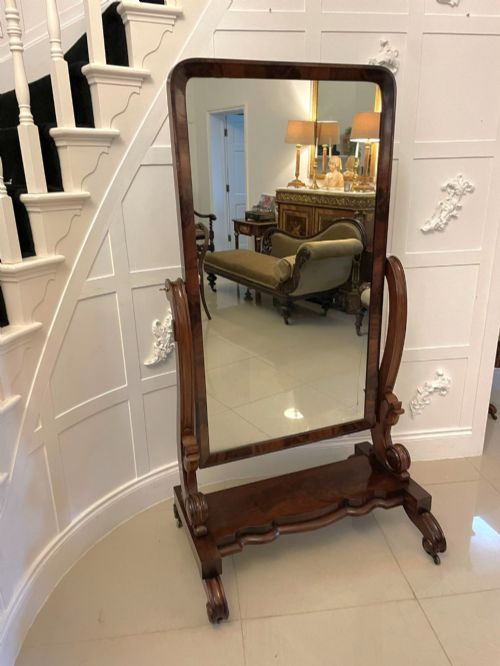
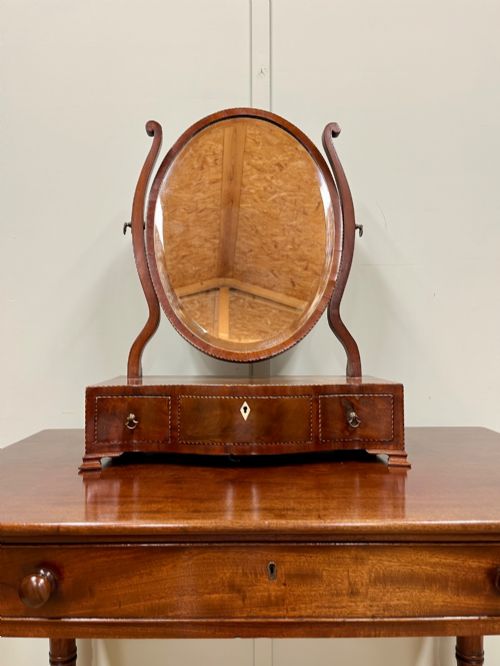
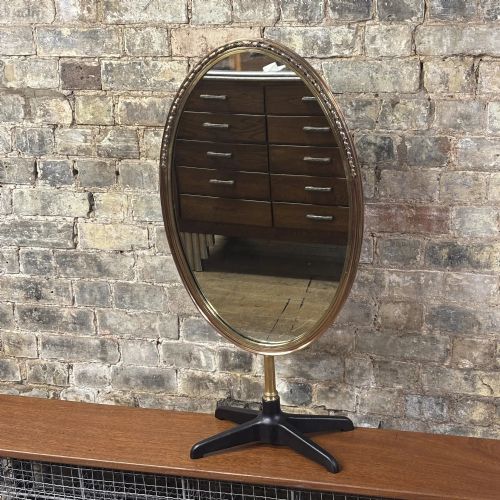
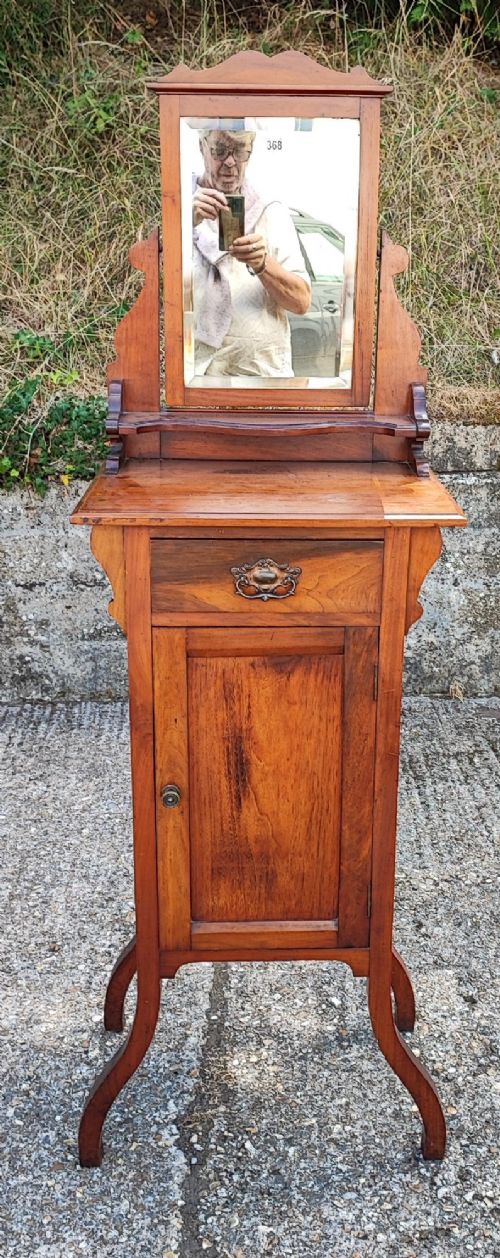
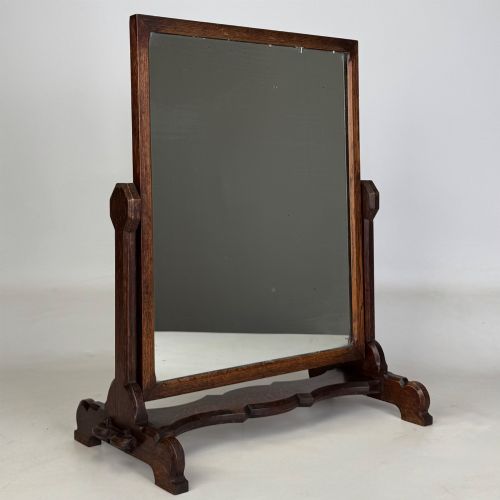
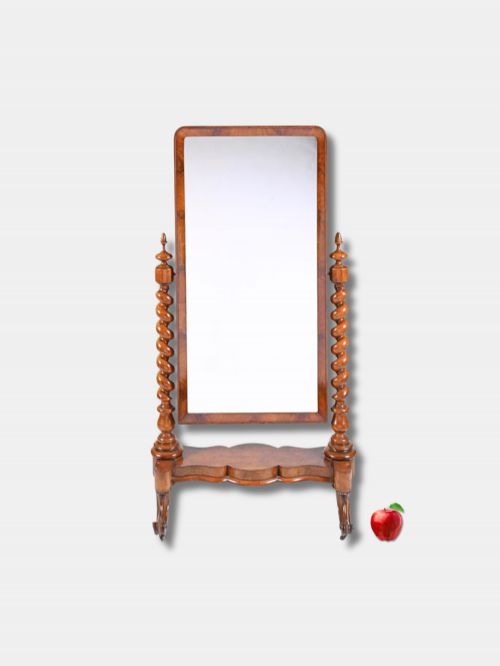
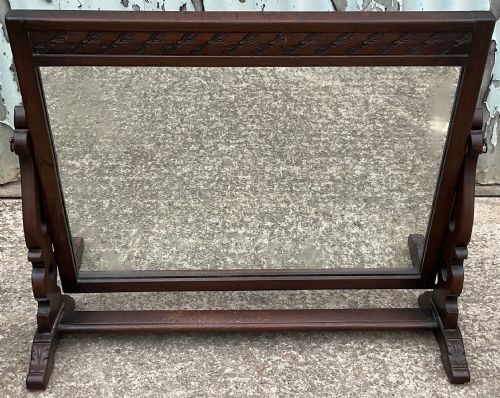
An edwardian swivel mirror is a functional piece of bedroom furniture designed to pivot within a supportive frame for personal grooming. These mirrors appear as compact table-top versions meant for dressing tables and chests of drawers, or as larger cheval mirrors that stand independently upon the floor.
The selections encountered here span across the Edwardian period into related Victorian and early twentieth century examples. While many pieces date directly to the Edwardian era, collectors also find earlier nineteenth century Georgian and Regency styles alongside later Arts and Crafts interpretations.
Makers and retailers such as Heal and Sons or Harrods sometimes provided these mirrors as part of larger dressing suites or as standalone accessories. Timber frames dominate the offerings, utilising rich mahogany, figured walnut and pale satinwood alongside sturdier oak.
How they were made
Cabinet makers constructed these frames predominantly from solid hardwoods like mahogany and oak, often applying decorative veneers of satinwood or burr walnut to the visible surfaces. Brass fittings served a functional and decorative purpose, forming the pivot pins, adjustable screws and sometimes subtle ornamentation.
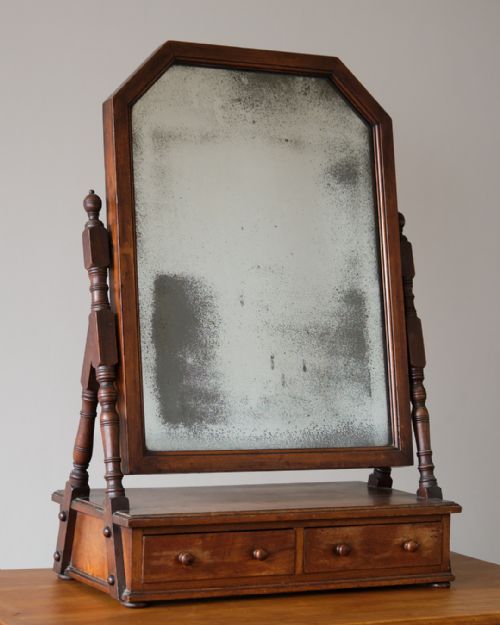
The mirror glass itself was set into pivoting frames supported by upright arms, mounted either to small drawer boxes or directly onto floor-standing trestles. Barley twist supports or carved wooden brackets provided the structural integrity needed to hold the heavy glass steady at various angles.
Periods represented range from Georgian and Regency through Victorian to Edwardian.
What varies in quality
The distinction between standard utility items and superior examples lies primarily in the selection of timbers and the finesse of the joinery. Finer pieces display carefully matched grain patterns, delicate marquetry inlay and substantial brass hardware rather than plated base metals.
Proportion and stability dictate the usefulness of a swivel mirror, where well-balanced side supports prevent the glass frame from slipping out of position. The depth and clarity of the original mirror glass, along with the retention of fitted base drawers, further separate ordinary mirrors from exceptional ones.
Heal & Sons·Harrods
The Edwardian Swivel Mirror Glossary
- Cheval mirror
- A full-length plate glass mirror suspended on a floor-standing frame that allows the entire assembly to tilt. This larger format became popular for dressing rooms during the nineteenth century.
- Toilet mirror
- A smaller glass frame designed to sit atop a dressing table, chest or pedestal. They often incorporate small drawers beneath the pivot supports for storage.
- Marquetry
- The art of applying decorative veneer pieces in various woods to form geometric or pictorial designs. This technique frequently graces the surfaces of Edwardian satinwood pieces.
- Barley twist
- A carved spiral column style popular on support pillars and uprights. It adds textural depth to the wooden frames of Victorian and Edwardian stands.
- Swivel frame
- The pivoting mechanism connecting the mirror glass to its supporting arms. It relies on tension screws or side pins to hold the glass at the desired viewing angle.
Edwardian Swivel Mirror: Frequently Asked Questions
Where should I place a cheval mirror?
These tall floor-standing mirrors suit bedrooms and dressing areas where full-length reflections are useful. Their pivoting design means you can angle the glass to capture light from nearby windows.
Position the heavy base securely on level flooring to ensure the frame remains stable when adjusted. Avoid damp locations that might affect the wooden joints or silvering on the mirror plate.
How do table top mirrors attach?
Table top versions generally mount between two upright wooden arms using threaded brass pivot screws or pins. This allows the user to tilt the glass forward or backward.
The supporting arms typically fix into a small box base or a set of miniature drawers that sit directly upon a dressing chest.
What woods were used for Edwardian frames?
Mahogany remained the primary timber choice, prized for its deep reddish-brown tone and durability. Cabinet makers also utilised walnut, oak and satinwood for different aesthetic effects.
Many pieces incorporated lighter decorative inlays of contrasting woods, a technique that defined the refined taste of the Edwardian period.
How do I date an antique swivel mirror?
Dating relies on examining the timber species, construction methods, and hardware styles. Edwardian pieces often feature lighter woods and inlaid details, whereas Victorian examples tend to be heavier and carved from solid mahogany or oak.
Original mirror glass may show subtle signs of age such as minor foxing, which helps confirm the period of manufacture alongside any maker labels or retailer stamps.