
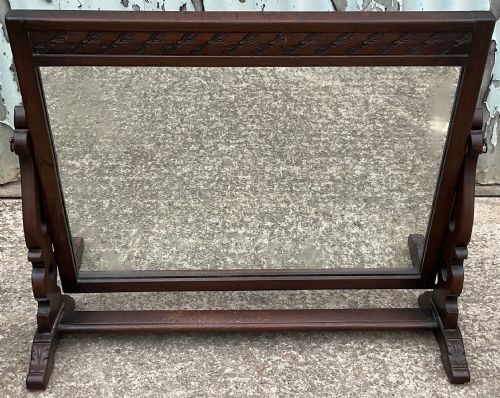


Dark Oak Dressing Mirror
A dark oak dressing mirror brings rich grain and practical reflection to a room, ranging from compact toilet glasses to tall cheval frames.
Dark Oak Dressing Mirror
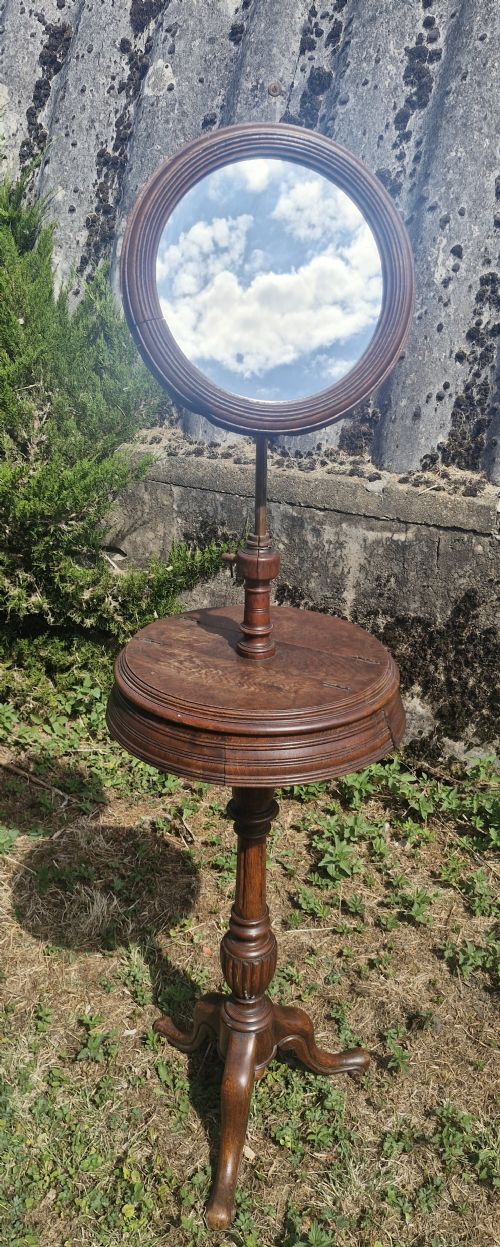
When you search for a dark oak dressing mirror, you encounter pieces spanning the Victorian era through the 1930s. The selection includes simple table mirrors, adjustable toilet glasses, and larger floor-standing cheval frames.
Many examples emerge from the Edwardian period and the 1920s, often reflecting Arts and Crafts or Jacobean Revival styles. These objects serve as functional dressing table accessories or standalone vanity pieces.
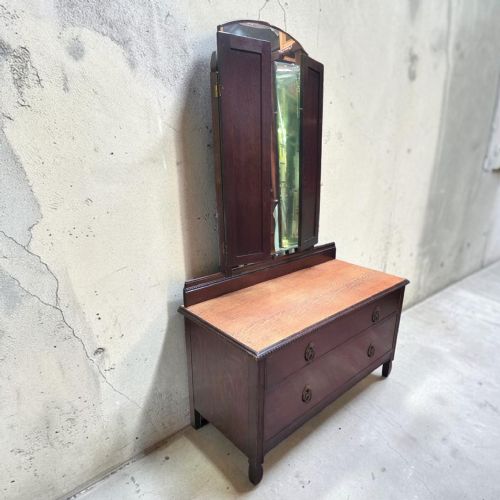
The materials combine solid oak and ebonised wood with glass, brass, and occasional fabric elements. Forms range from compact swing mirrors to grand dressing chests with triple glass configurations.
Materials and construction
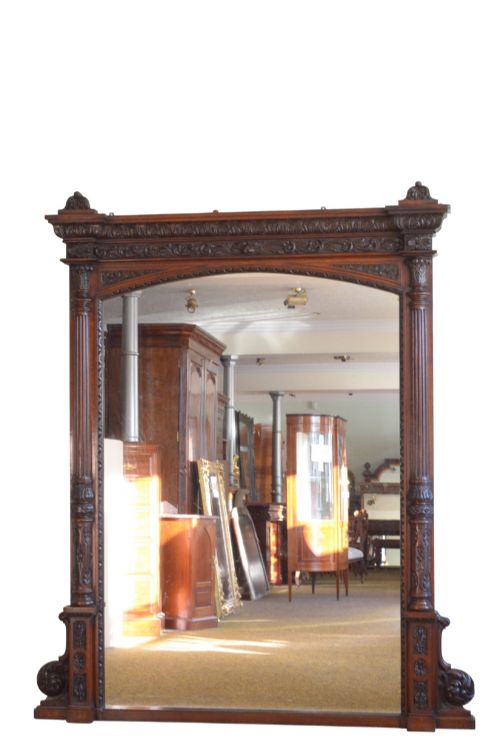
Makers utilised solid oak to build sturdy frames, sometimes incorporating carved details, barley twist supports, or ebonised wood accents. Brass fittings often secure the adjustable mirror plates.
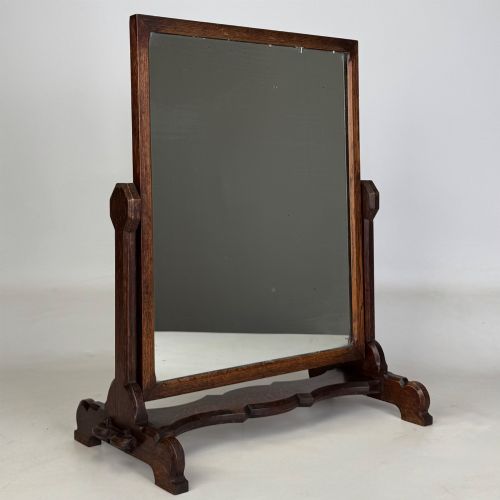
Glass plates, occasionally featuring bevel edges, sit within sturdy wooden surrounds designed to tilt or swing on pivots. Larger floor mirrors and cheval stands rely on substantial timber framing to support their height and weight.
The listings span the Victorian period, Edwardian era, and the 1920s to 1930s, utilising oak, brass, and ebonised wood.
Judging quality in oak mirrors
Quality rests upon the depth of the timber grain, the crispness of any carved decoration, and the substance of the brass hardware. Superior pieces display thoughtful joinery and balanced proportions.
The integration of the mirror plate within the frame also dictates merit, particularly where bevel edges and secure backing boards show careful craftsmanship.
Waring and Gillow
The Dark Oak Dressing Mirror Glossary
- Cheval mirror
- A freestanding full-length mirror hung on a vertical frame that allows it to swing. This design permits a person to view their entire outfit.
- Toilet mirror
- A smaller mirror designed to sit atop a dressing table, chest of drawers, or washstand. These pieces often feature an adjustable swing mechanism.
- Bevel edge
- An angled edge ground and polished around the perimeter of the glass plate. This technique adds a decorative finish to the reflection.
- Barley twist
- A carved wooden column resembling a twisted rope or barley stalk. It appears frequently on supports and uprights during revival periods.
Dark Oak Dressing Mirror: Frequently Asked Questions
Where should I place a dark oak dressing mirror?
These mirrors suit dressing tables, chest tops, or bedroom floors depending on the scale of the frame. Their dark wood tones anchor nicely against neutral or patterned walls.
Position them near natural light sources to maximise reflection and highlight the grain of the oak.
How do I adjust a swing mirror?
Most table and toilet mirrors use side screws or pivot pins to hold the glass at a preferred angle. Tightening these fittings gently maintains the desired tilt.
Take care not to over-tighten the hardware against the wooden frame to preserve the integrity of the joints.
What styles are common in these mirrors?
The selection includes Victorian Gothic Revival, Arts and Crafts, Edwardian, and Rococo Revival designs. Each style brings distinct decorative elements to the oak framing.
Some pieces feature plain timber surfaces, while others display elaborate carving or twisted wooden supports.
Are these mirrors heavy?
Solid oak construction and glass plates make larger dressing and cheval mirrors substantial objects. Floor-standing versions require stable placement to balance their weight safely.
Table models remain portable but still possess the heft associated with genuine period timber.