

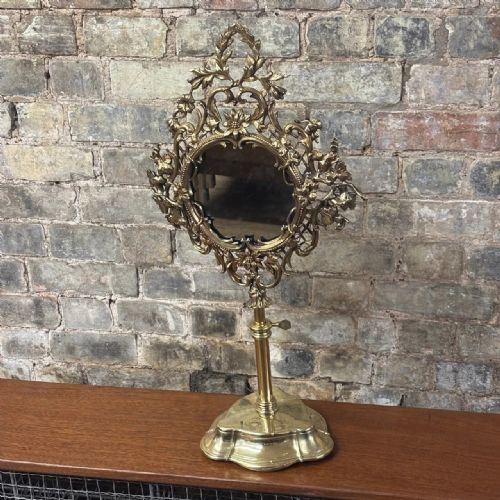
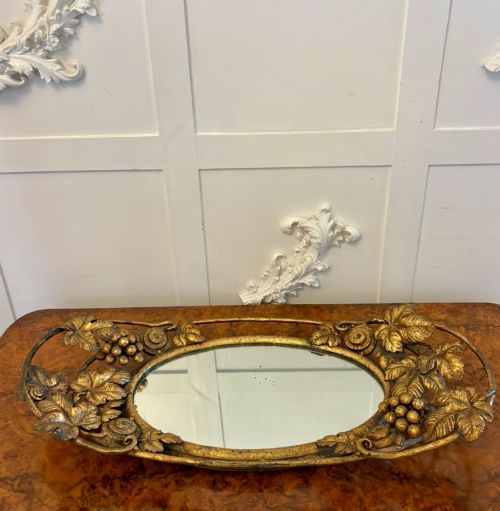


Ornate Brass Vanity Mirror
An ornate brass vanity mirror brings tactile French Rococo charm and heavy bevelled glass to a dressing table or wall.
Ornate Brass Vanity Mirror
An ornate brass vanity mirror sits on a dressing table or hangs on a wall, designed to catch the light in a bedroom or boudoir. These pieces appear in styles such as Victorian, Edwardian, and French Rococo Revival, spanning from the late nineteenth century into the nineteen-thirties.
The form shifts between table mirrors with easel backs and wall-hanging frames adorned with crests or cherubs. Buyers encounter solid brass, cast brass, and pressed brass constructions alongside related dressing mirrors and small trays.
Materials and construction methods
Frames take shape through casting or pressing brass, gilt bronze, or ormolu, sometimes accented with champleve enamel or mounted on wood backing. Skilled metalworkers chased the surfaces by hand to deepen the scrolls and floral motifs characteristic of Louis XV and Rococo revivals.
Mirrors utilise bevelled glass plates held securely within the metal frames, frequently retaining their original backing plates and hanging chains. Bronze and gilt metal additions provide contrasting textures and heavier structural weight to the ornate borders.
Ornate Brass Vanity Mirror Retail Price Guide 2026
Typical asking prices for ornate brass vanity mirror among the pieces listed under this phrase on Sellingantiques today, from the lower quarter to the upper quarter. They describe what is for sale here now, not the wider market.
Some ornate vanity frames peer back at you flanked by mischievous brass cherubs and clinging grape vines.
Judging quality in brass mirrors
Quality rests in the crispness of the cast or pressed detail, where sharply defined masks, cherubs, and grape vines distinguish superior work from softer, mass-produced castings. Heavier gauge brass and solid bronze foundations offer durability and a deeper richness of metal tone.
The presence of original bevelled glass plates and intact champleve enamel adds considerable merit over replacement mirror glass. Finer examples display meticulous hand-finishing on the reverse and secure, original easel stands or structural hanging mounts.
Thiebaut Freres
The Ornate Brass Vanity Mirror Glossary
- Champleve
- An enamelling technique where troughs are sunk into the metal surface and filled with vitreous enamel before firing. This adds vibrant colour to the ornate brass frames.
- Ormolu
- Gilded bronze used extensively in French decorative arts to create bright, gold-coloured mounts. It provides a luxurious finish on revival vanity mirrors.
- Bevelled glass
- Mirror glass with edges cut and polished at an angle to create a framed, prismatic effect. It reflects light more dynamically than flat glass.
- Rococo Revival
- A nineteenth-century design movement favouring asymmetrical scrolls, asymmetrical plant forms, and shell motifs. This style dominates many French vanity frames.
Ornate Brass Vanity Mirror: Frequently Asked Questions
How do I clean an antique brass mirror?
Dust the metal gently with a soft, dry cloth to preserve any patination and protect the underlying brass or gilt surface. Avoid harsh chemical polishes that strip away the aged character accumulated over the centuries.
Take care not to let cleaning liquids seep behind the bevelled glass plate where moisture can damage the silvered backing. A mild soap solution on a damp cloth is sufficient for the glass itself.
Are these mirrors meant for walls or tables?
Many examples feature sturdy easel backs designed for placement on dressing tables, chests of drawers, or vanity surfaces. These allow the angle of the glass to be adjusted for daily use.
Other pieces are built with integrated hanging loops or chains for mounting securely on bedroom or hallway walls. The presence of a heavy cast crest often indicates a wall-hanging orientation.
How can I tell a Victorian mirror from a later piece?
Victorian and late nineteenth-century pieces typically exhibit heavier cast brass frames with deep relief work, often featuring cherubs, masks, or floral scrolls. The construction of the backplates and screws tends to show older hand-crafting methods.
Nineteen-thirties examples and later revivals often feature simpler pressed metal construction with lighter overall weight. Examining the fasteners and the composition of the glass helps confirm the period.
What is champleve enamel on a mirror?
Champleve is a decorative technique where recessed cells are carved directly into the brass or bronze frame and filled with coloured glass paste. The piece is then fired to create smooth, durable enamel panels integrated into the metalwork.
This intricate ornamentation signals a finer French luxury piece from the late nineteenth century. The enamel adds striking colour contrasts against the polished gilt bronze.