


Brass Toilet Mirror
A brass toilet mirror is a dressing table essential that brings polished metallic sheen and adjustable reflection to a bedroom.
Brass Toilet Mirror
A brass toilet mirror is designed to sit upon a chest of drawers or a dressing table for daily grooming and reflection. These pieces span the nineteenth and early twentieth centuries, encompassing Victorian, Edwardian, and earlier revival styles.
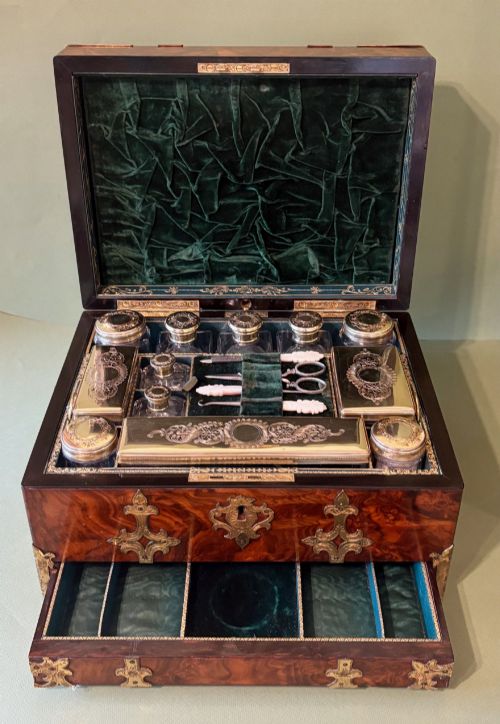
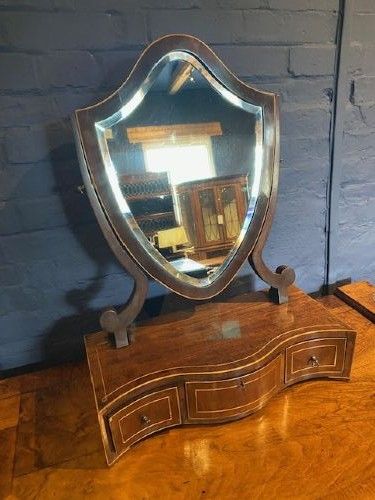
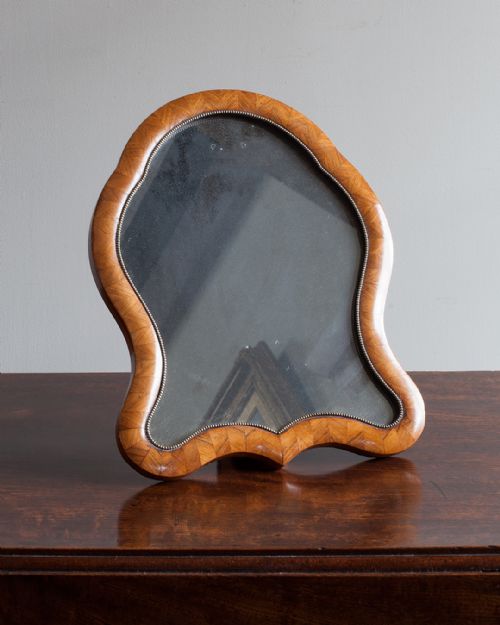
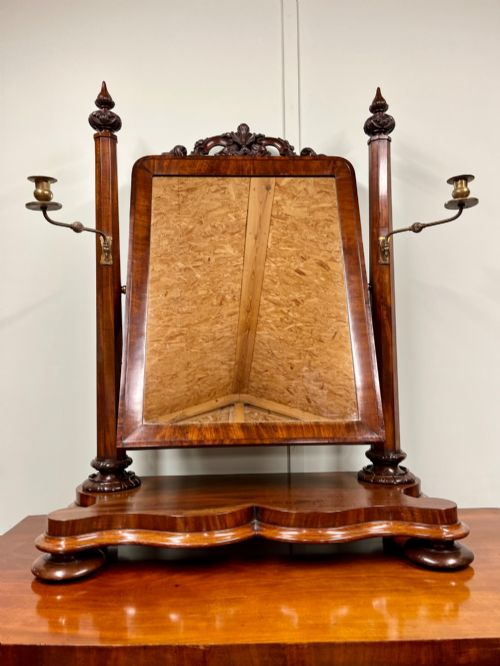
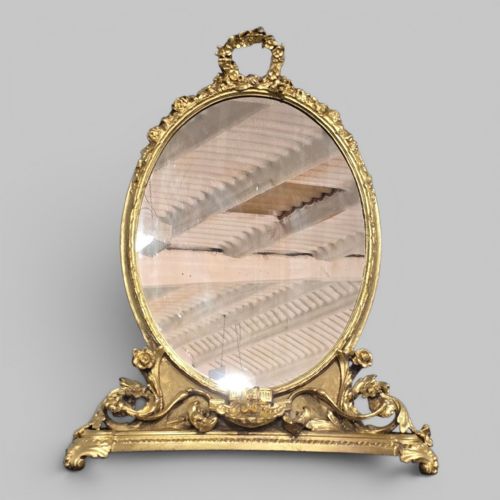
The objects take several forms on this page, including swing mirrors, adjustable shaving mirrors, and vanity glasses mounted on stands. Many examples incorporate wooden frames in mahogany, walnut, or kingwood alongside their metallic fittings.
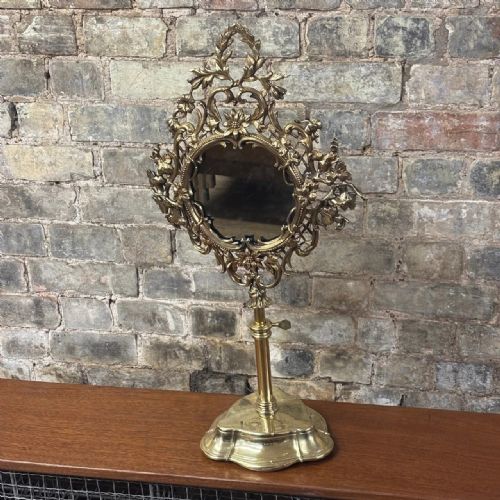
Originating from periods such as the Regency and Victorian eras, these tabletop items serve both a functional purpose and a decorative role in interior spaces. The visitor will encounter solid brass frames, gilded metal work, and combination pieces featuring oak or onyx.
How they were made
Construction relies upon combining cast or sheet brass with timber frames of mahogany, walnut, or burr walnut. Artisans utilised adjustable hinges, swing pivots, and telescopic mechanisms to allow the glass to tilt at various angles.
Many variants integrate secondary materials such as mirror glass, velvet linings, and polished oak or green onyx stands. Gilded metal and bronze also appear, alongside fitted drawers incorporated into the wooden bases.
Certain Victorian shaving mirrors include integrated candle holders to illuminate the face before electricity reached the dressing room.
What varies in quality
Quality differentiates simple utility items from pieces displaying superior cabinetmaking and heavier cast brass mounts. The thickness of the brass, the figuration of the mahogany or burr walnut veneers, and the smoothness of the adjustment mechanism determine the standard of the piece.
Refinement in the casting of revival styles, such as Louis XV or French Rococo motifs, marks out superior examples. The integrity of the original mirror glass and the precision of the joinery on the supporting stands also influence the standing of an object.
The Brass Toilet Mirror Glossary
- Swing mirror
- A glass plate hung on pivots between upright posts, allowing it to tilt back and forth.
- Cheval mirror
- A full-length standing mirror supported by a frame with four legs.
- Telescopic mirror
- A glass fitted to an extendable stem that adjusts in height for the user.
- Shaving mirror
- A compact adjustable mirror traditionally utilised for grooming and personal care.
- Burr walnut
- Timber harvested from walnut tree growths, valued for its complex and swirling grain patterns.
Brass Toilet Mirror: Frequently Asked Questions
Where should I place a brass toilet mirror?
These mirrors suit placement on top of a dressing chest, chest of drawers, or vanity table where they provide a functional reflective surface.
They also sit comfortably on sideboards or console tables as decorative objects that catch the light within a room.
How do adjustable mirror mechanisms work?
Most examples utilise side pivots or screws that tighten to hold the glass frame at a preferred angle.
Telescopic versions feature a vertical sliding rod secured with a thumbscrew to alter the overall height of the mirror.
What woods are commonly found with brass mirrors?
Mahogany and walnut appear frequently in the frames and supporting bases of these pieces, often dating from the Victorian and Edwardian eras.
Other materials include kingwood, oak, and green onyx, frequently paired with cast brass mounts and hinges.
How do I date a Victorian mirror?
Dating relies upon observing the style of the wooden frame, the thickness and bevel of the mirror glass, and the construction methods used in the base.
Victorian pieces often display heavier mahogany or burr walnut structures alongside characteristic brass pivoting hardware.