


Ornate Standing Mirror
An ornate standing mirror brings elaborate framework and reflective depth to a room, ranging from small dressing table items to tall floor pieces.
Ornate Standing Mirror
An ornate standing mirror encompasses various forms designed to rest on surfaces or stand directly upon the floor. These items emerge primarily from the nineteenth century and early twentieth century, spanning Victorian, Edwardian, and revivalist aesthetics.
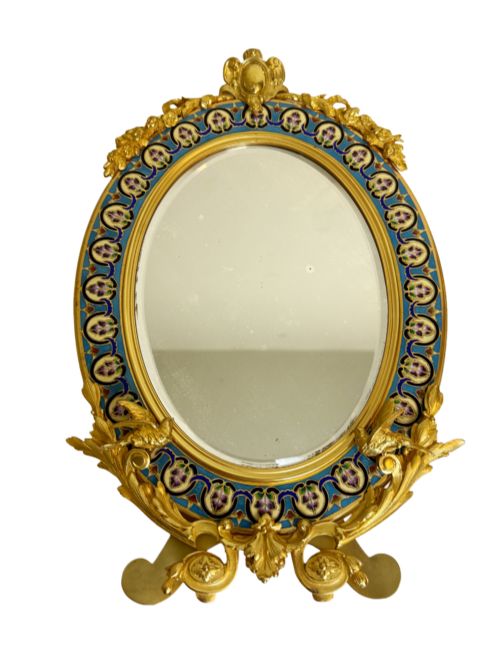
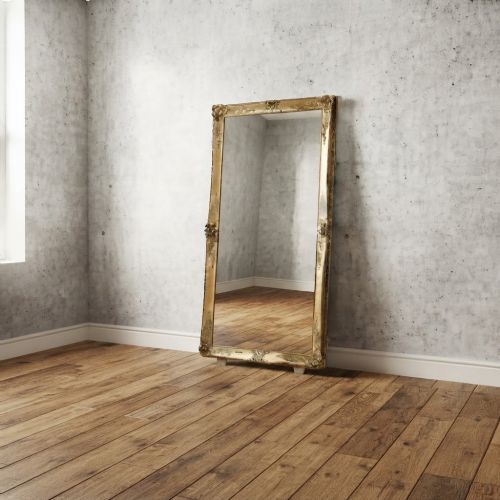
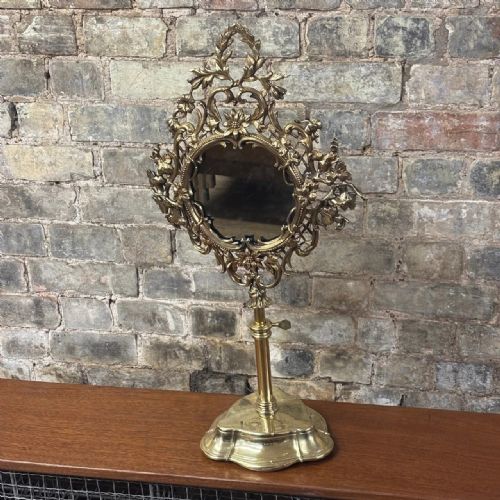
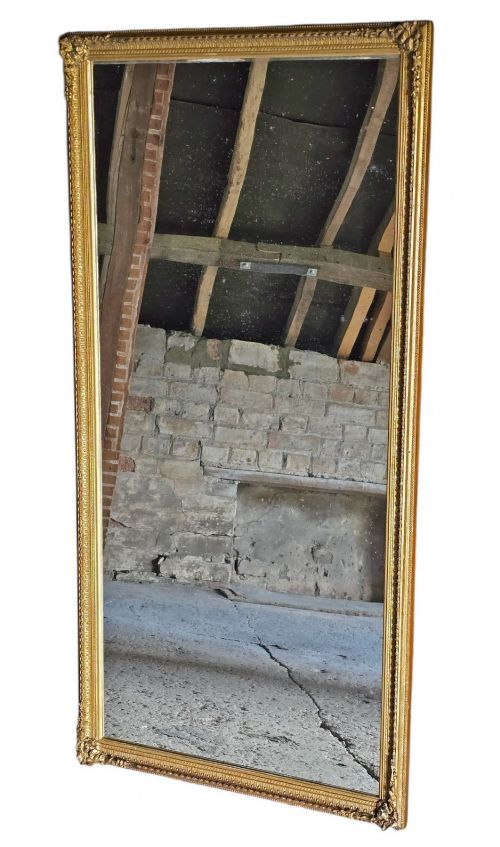
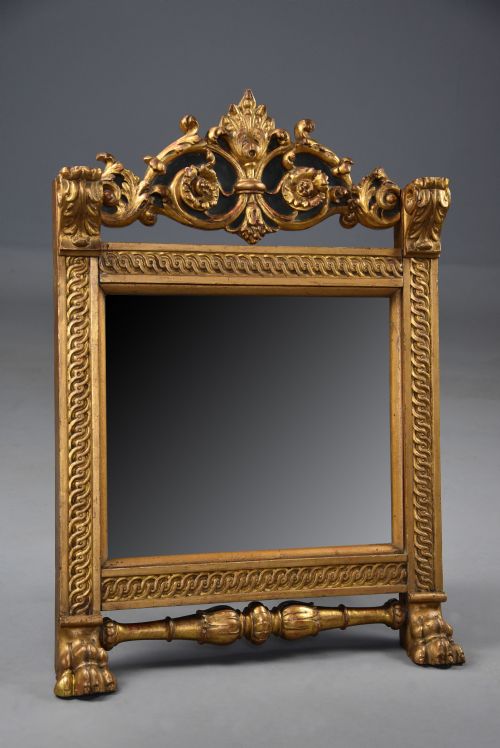
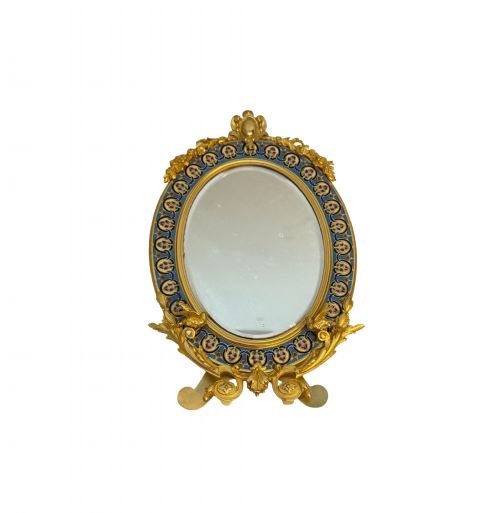
Buyers encounter smaller brass, champleve, and gilt bronze table mirrors alongside larger carved giltwood and gesso floor pieces. Each format serves both a practical reflective purpose and a decorative architectural function within an interior.
How they were made
Maker construction relies on carved wood, gesso, cast iron, and solid brass, often finished with gilt or paint. Artisans shaped intricate frames using carved wood and applied gesso layers to build up high-relief scrollwork and floral motifs.
Metals such as gilt bronze and brass receive detailed casting and champleve enamel work, particularly on smaller dressing table examples. Mirror glass is set within these heavy frames, frequently featuring bevelled edges that catch the light.
Surface treatments combine original silver or gold leaf gilding with painted finishes, creating the characteristic sheen seen on French and Italian revival pieces from the period.
Several mirrors incorporate tiny easel stands, proving that even the Victorians appreciated the convenience of a portable reflection.
What varies in quality
Quality rests upon the crispness of the carved detail in the wood and gesso frames, where deeper and more sharply defined foliage indicates skilled handwork. Heavy cast brass and gilt bronze components demonstrate superior weight and refined chasing compared to lighter alternative castings.
The integrity of the original gilding or silvering shapes the overall character, with intact leaf showing superior preservation. Structural stability in larger floor-standing cheval frames and full-length leaner mirrors ensures the heavy glass remains properly supported.
The Ornate Standing Mirror Glossary
- Giltwood
- Wood that has been coated with gold leaf or a gold-coloured finish. This technique creates a bright, reflective surface characteristic of many formal frames.
- Gesso
- A plaster-like mixture applied to wood surfaces and carved once dry. It provides the raised detail found on ornate nineteenth-century frames.
- Cheval mirror
- A freestanding full-length mirror hung on a vertical frame with pivots. This design allows the glass to tilt to various angles.
- Champleve
- An enamelling technique where troughs are carved into metal and filled with vitreous enamel. It appears on decorative mounts of late nineteenth-century dressing table items.
- Leaner mirror
- A large floor mirror designed to lean against a wall rather than hang from brackets. These pieces offer substantial height and decorative presence.
Ornate Standing Mirror: Frequently Asked Questions
How do I clean an antique frame?
Dust gently with a dry, soft brush to protect delicate gesso and gilt surfaces from damage.
Avoid commercial liquid cleaners and water, which can strip historic finishes and lift the gold leaf.
Where should I place a floor mirror?
Position the piece opposite a window to maximise natural light distribution and create a sense of expanded space.
Ensure the floor surface is level and use appropriate wall anchors if the frame lacks stability.
Are these mirrors original?
The listings comprise items produced during the nineteenth and early twentieth centuries, featuring period materials such as cast brass, carved wood, and original glass.
Examination of the backing boards, frame construction, and wear patterns helps identify the period origin of each piece.
What is the difference between a cheval and a leaner mirror?
A cheval mirror operates on a pivoting frame supported by its own legs, allowing the glass angle to adjust.
A leaner mirror rests directly against a vertical wall surface without independent supporting legs.