



Antique Desk Mirror
An antique desk mirror brings useful reflection and polished timber to a writing surface, combining everyday practicality with period craftsmanship.
Antique Desk Mirror
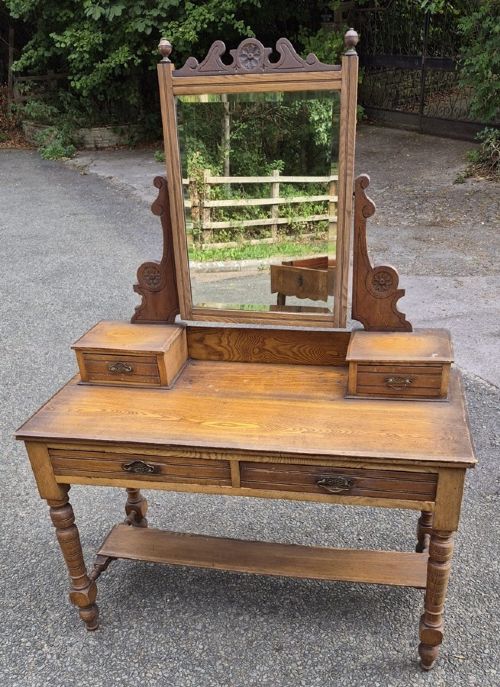
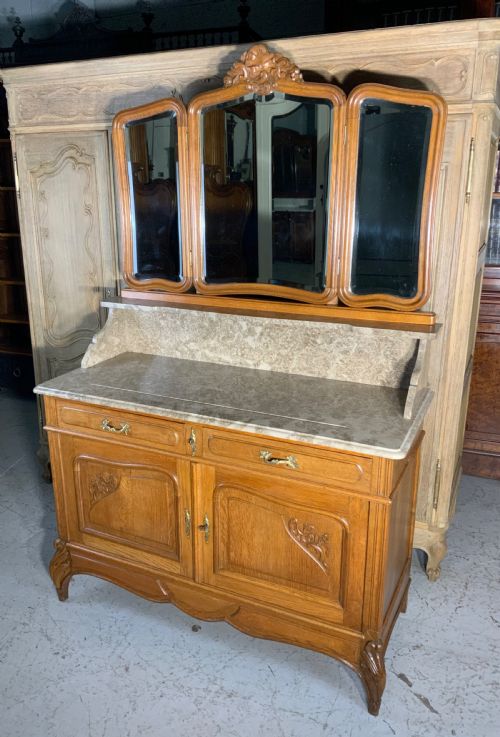
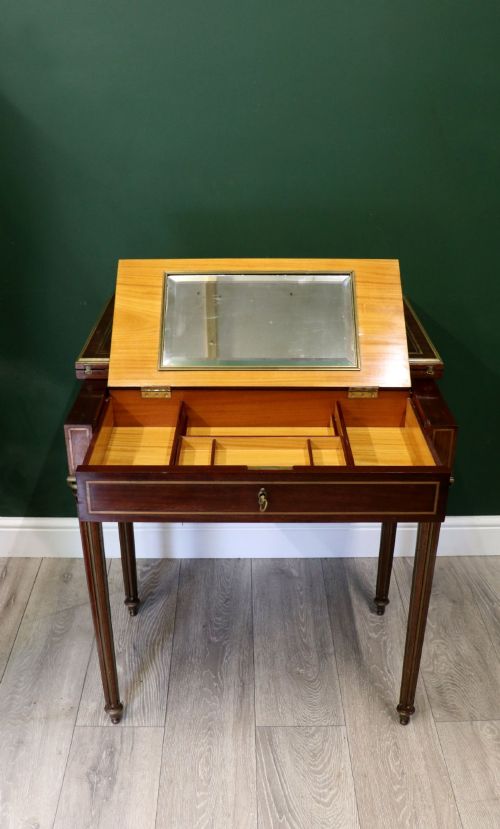
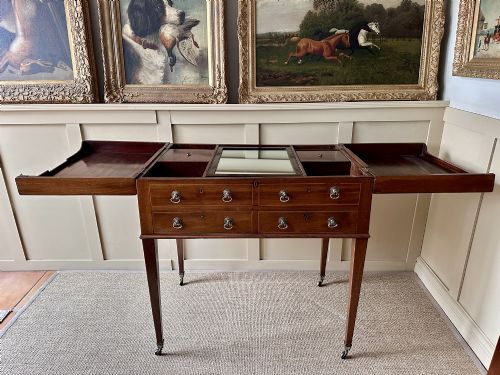
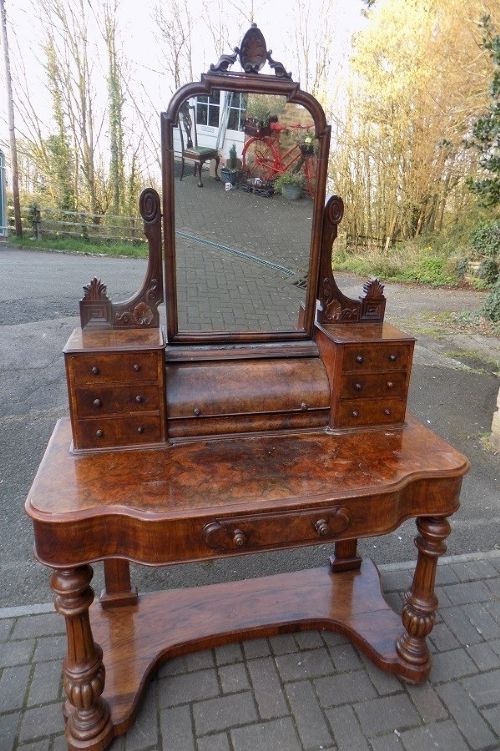
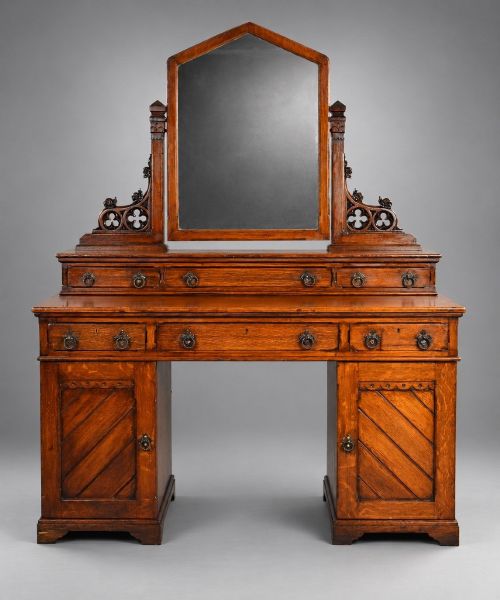
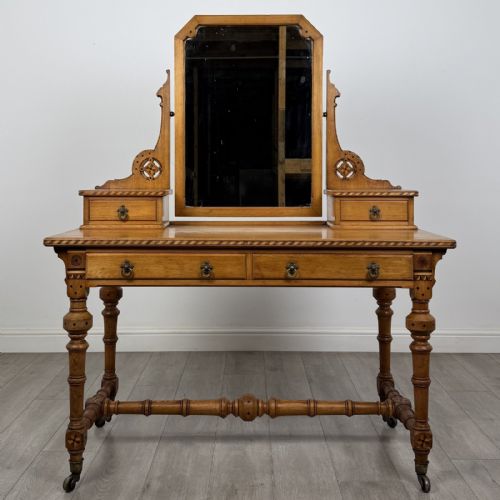
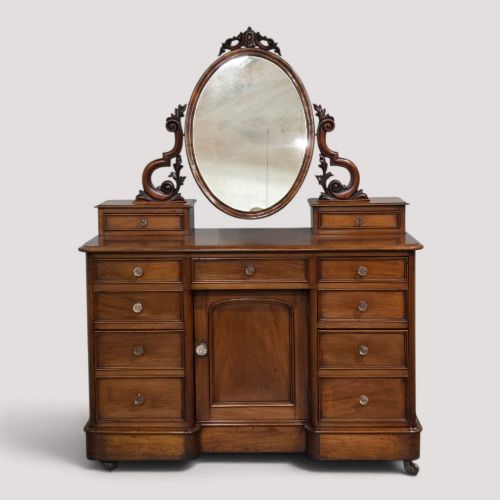
An antique desk mirror serves as a tabletop looking glass, often integrated into dressing furniture or fitted to bureau writing surfaces from the Georgian, Victorian, and Edwardian periods. These pieces range from simple pivoting frames on miniature box bases to elaborate table-top bureaus equipped with small drawers and adjustable plates.
The versions most frequently encountered on this page combine mahogany, walnut, or oak structures with tilting mirror glass held by brass side screws. Makers often incorporated small compartments or compartments with sloped writing lids beneath the glass, uniting personal grooming with correspondence.
Originating across English and continental workshops, these mirrors reflect the dominant decorative shifts from Queen Anne burr walnut through to Art Deco maple and 1930s limed oak. They sit securely upon desks, chests, and dressing tables to provide a functional focal point.
Materials and construction
Cabinetmakers constructed the frames and stands of these mirrors using dense hardwoods such as mahogany, walnut, and oak, frequently enhancing plain surfaces with figured veneer, featherbanding, or burr walnut figure. Secondary timbers like boxwood or maple provided subtle inlay contrast.
Joinery relied on traditional dovetailed joints for the small drawers housed in the box bases, whilst turned pillars or shaped uprights supported the pivoting mirror frames. Brass brackets, screws, and hinges allowed the glass to tilt at various angles without slipping.
Antique Desk Mirror Retail Price Guide 2026
Typical asking prices for desk mirror among the pieces listed under this phrase on Sellingantiques today, from the lower quarter to the upper quarter. They describe what is for sale here now, not the wider market.
Listings feature walnut, mahogany, oak, and satinwood, spanning the Georgian, Victorian, and Art Deco periods.
What separates the finer examples
Quality rests in the selection of timber figures and the crispness of the cabinet work, where finely matched burr walnut or Cuban mahogany elevates a simple tabletop glass into a notable piece. The depth and clarity of the original mirror plate, alongside the integrity of the brass adjusting hardware, mark the difference between standard production and superior craftsmanship.
Proportion and restrained detail separate better workshops from ordinary makers, visible in the delicate sweep of shaped uprights and the tight dovetailing of internal stationery drawers. Retaining original surfaces, uncompromised backing boards, and matching hardware preserves the integrity sought by collectors.
Maples of London and Paris·Heals·Gillows·Louis Auguste Moreau
The Antique Desk Mirror Glossary
- Featherbanding
- A form of inlay where thin strips of veneer are cut and laid at an angle to form a herringbone pattern around a central panel. This technique frequently frames the drawer fronts and borders of walnut bureau bookcases.
- Bureau Bookcase
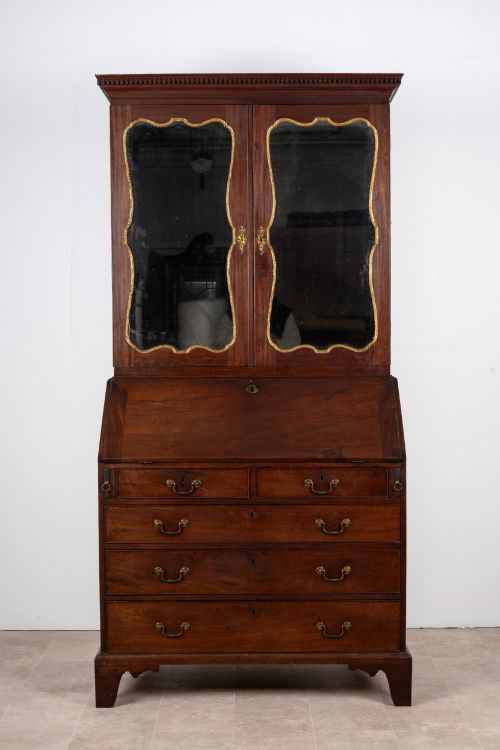
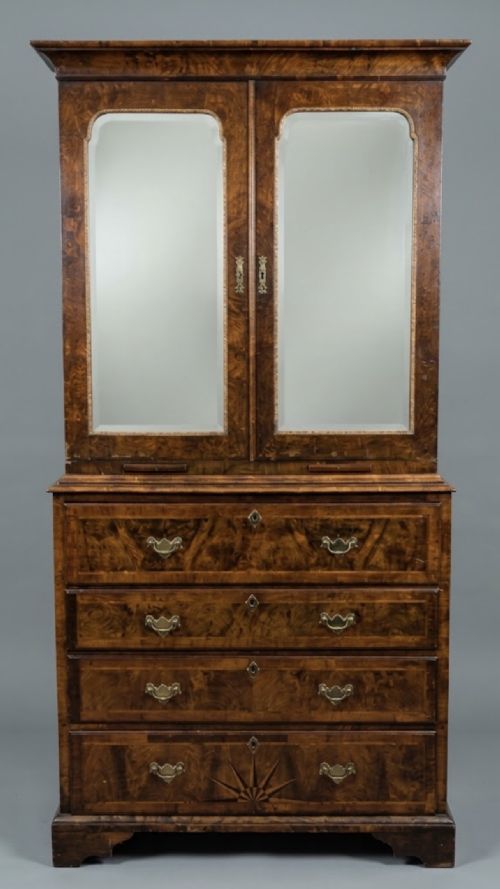
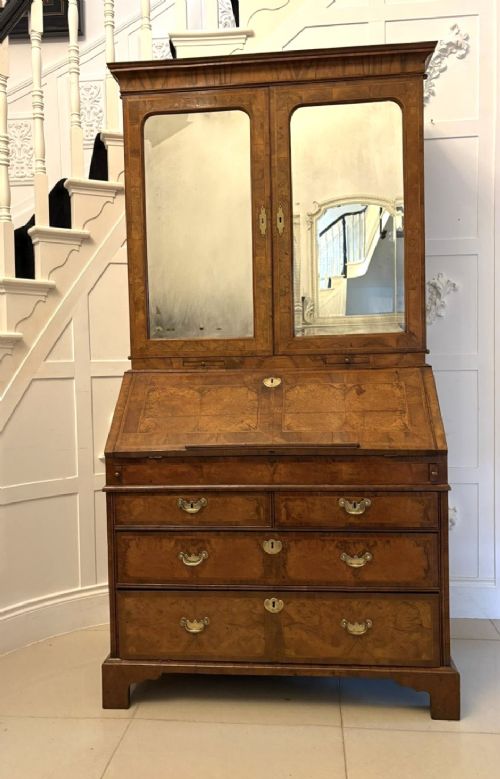
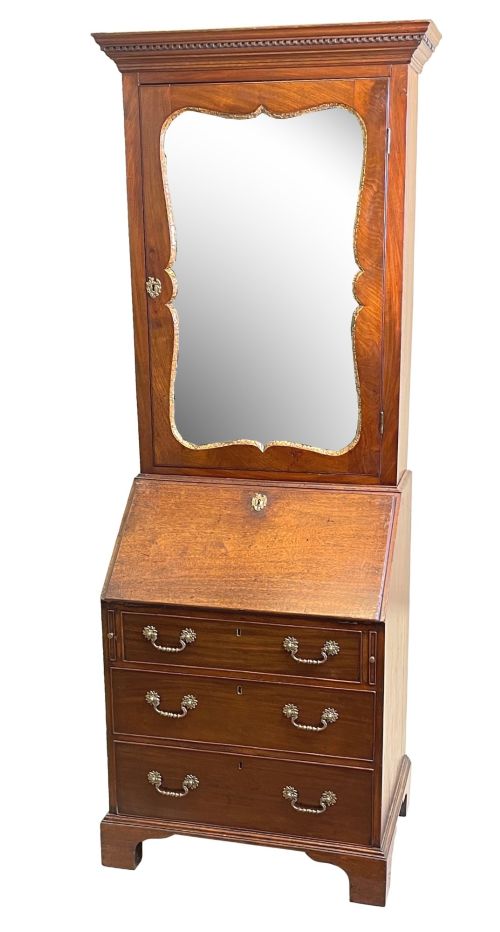
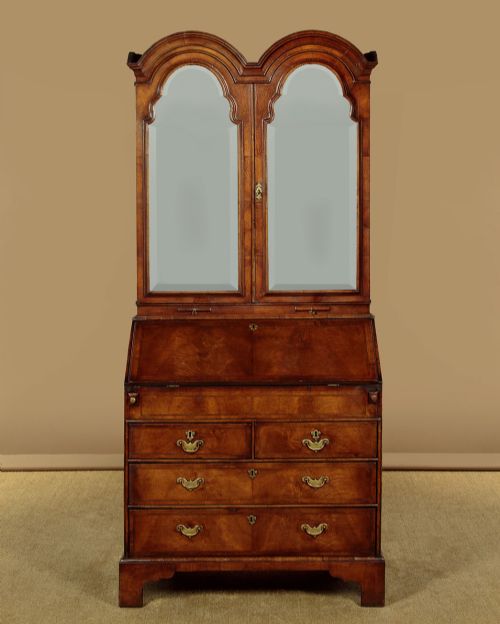
- A dual-purpose case furniture form featuring a sloping desk flap above lower drawers and an enclosed shelving section above. Examples often incorporate mirror panels or sit alongside matching dressing mirrors.
- Pivoting Frame
- A mirror held between two upright posts by threaded brass screws or pins that allow the glass to tilt. This mechanism is central to the function of table and dressing mirrors.
- Secretaire
- A desk or cabinet fitted with a pull-down writing flap concealing small drawers and pigeonholes. Some iterations include integrated mirror backs or compartments.
- Burr Walnut
- Timber taken from the gnarled growth of a walnut tree, prized for its swirling, highly figured grain patterns. It appears prominently on high-status Georgian and Victorian pieces.
Antique Desk Mirror: Frequently Asked Questions
Where should I place an antique desk mirror?
These mirrors suit stable surfaces such as chests of drawers, writing desks, and dressing tables where their proportions can be appreciated without risk of falling. Positioning them near natural light enhances their reflective quality.
Ensure the weight rests evenly across the base, and avoid placing them in damp areas or in direct sunlight that might dry out the antique timber and crack original mirror plates.
Are the mirror plates original?
Many mirrors retain their original glass, which often exhibits minor foxing, dark spots, or slight distortion due to age. Replacements are common in pieces of this age.
Examining the silvering on the reverse and checking how the glass is secured into the rebate helps determine whether the plate dates to the original period of manufacture.
How do I care for the wood finish?
Maintain polished hardwood surfaces by dusting with a soft, dry cloth and applying traditional beeswax sparingly to nourish the timber. Avoid modern silicone sprays that build up and attract dust.
Keep the mirrors away from extreme temperature fluctuations and radiators to prevent the veneers from lifting or warping over time.