

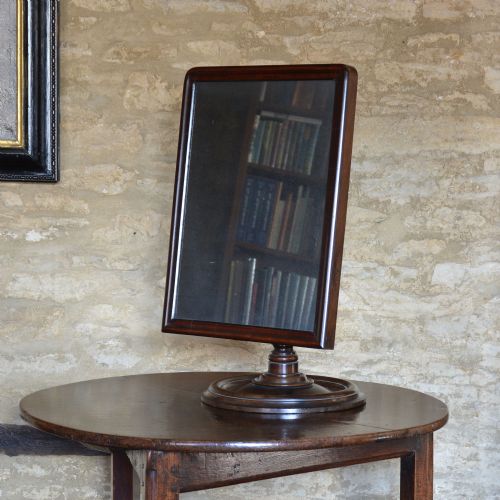


Walnut Shaving Mirror
These walnut shaving mirror pieces are compact, adjustable looking glasses designed for daily grooming, offering rich timber grain and period charm for a dressing table.
Walnut Shaving Mirror
A walnut shaving mirror provides a focused reflection for morning routines, typically sitting on a table, chest, or dressing surface with an adjustable glass plate. You are most likely to encounter Victorian and Edwardian examples on this page, alongside earlier seventeenth, eighteenth, and Regency period specimens.
The primary forms range from simple table top swing mirrors and portable campaign kits to more elaborate dressing table mirrors and upright shaving stands. Many pieces incorporate pivoting frames supported by upright arms, while others feature small drawer bases or integrated wall cabinets.
Makers utilised rich walnut veneers and solid timbers across centuries of production, sometimes embellishing the surfaces with boxwood stringing or fruitwood marquetry. These utilitarian objects bridge the gap between functional furniture and decorative woodwork.
How makers built a walnut shaving mirror
Cabinet makers constructed the frames using solid walnut and applied fine veneers over secondary timbers, occasionally adding boxwood or fruitwood marquetry details for visual contrast. The timber was selected for its deep grain patterns and polished to a warm lustre.
Brass fittings and hardware provide the adjustable mechanism for the pivoting glass frames, allowing the user to tilt the mirror plate to the desired angle. The glass itself is held securely within rebated wooden frames, sometimes supported by telescopic or brass-pinned arms.
Walnut Shaving Mirror Retail Price Guide 2026
Typical asking prices for walnut shaving mirror among the pieces listed under this phrase on Sellingantiques today, from the lower quarter to the upper quarter. They describe what is for sale here now, not the wider market.
Listings feature periods spanning from the seventeenth century through to the Edwardian era, utilising walnut, brass, boxwood, and mahogany.
What separates the finest walnut shaving mirror examples
The quality of a walnut shaving mirror rests in the crispness of the cabinet work, the depth of the timber figuring, and the preservation of the original glass and brass hardware. Superior pieces display seamless veneer matching and tightly fitted drawer construction.
Proportion and stability dictate the overall merit of the object, ensuring the upright arms support the swinging frame without sagging. Finer examples retain their original surface patination rather than enduring heavy modern refinishing.
The Walnut Shaving Mirror Glossary
- Toilet mirror
- A smaller tabletop glass designed for personal grooming, typically sitting atop a chest of drawers or dressing table.
- Swing mirror
- A looking glass mounted on pivots between two upright posts, allowing the user to tilt the angle of reflection.
- Marquetry
- Decorative inlay work using various coloured woods to create pictorial or geometric patterns on the surface.
- Campaign kit
- Portable furniture designed for travel, featuring compact folding elements or specialised storage compartments.
Walnut Shaving Mirror: Frequently Asked Questions
Where did people place a walnut shaving mirror?
These mirrors typically sat upon a dressing table, chest of drawers, or dedicated washstand in a bedroom or dressing room. They provided a convenient, movable surface for close-up personal grooming before wall-mounted bathroom mirrors became common.
Some portable versions were packed into travel kits for use on the move, while others hung securely on walls or rested atop specialised shaving stands.
How do I adjust the glass?
Most period examples utilise brass screw pins, side knobs, or tension arms fitted to the upright supports. Turning or loosening these fixings allows the frame to tilt freely to your preferred angle.
Once positioned, tightening the hardware secures the glass in place. Older mechanisms rely on friction and well-fitted wooden pivots rather than mechanical gears.
Are these mirrors suitable for daily use?
These pieces function well for modern daily routines, provided you handle the antique glass and wooden frames with reasonable care. Their compact footprint makes them practical additions to contemporary dressing tables or mantelpieces.
Ensure the adjusting hardware is handled gently to preserve the original timber threads and brass components.
How can I tell the period?
Dating relies on examining the construction methods, secondary woods, hardware styles, and veneer thickness. Seventeenth and eighteenth-century examples often feature simpler plank construction and walnut graining, while Victorian and Edwardian pieces show machine-sawn elements and varied brass work.
Decorative touches like boxwood stringing or Dutch marquetry provide further clues to the prevailing style of the era.