



17th Century Mirror
A 17th century mirror brings deep walnut tones and tactile cushion moulding to a room, offering historic character that modern glass simply cannot replicate.
17th Century Mirror
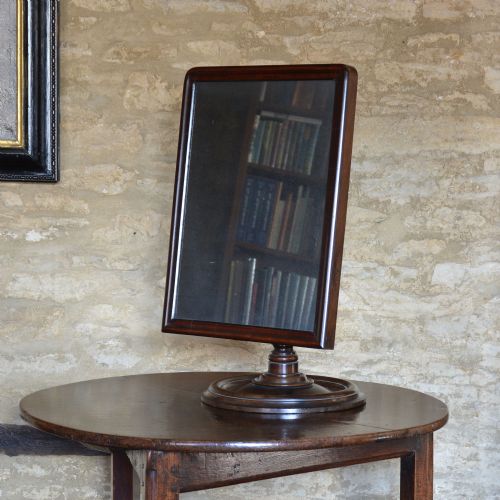
When you search for a 17th century mirror, you enter a field defined by rich timber surfaces, deep frames, and early glass plates. The pieces meeting you here include wall mirrors, table mirrors, and cushion frames, alongside occasional bureau cabinets and paintings housed in period frames.
The dominant forms span the William and Mary period, Spanish and Italian Baroque styles, and later revivals from the 19th century. Walnut, burr walnut, and olive wood frequently anchor these designs, often paired with marquetry inlay or boxwood stringing.
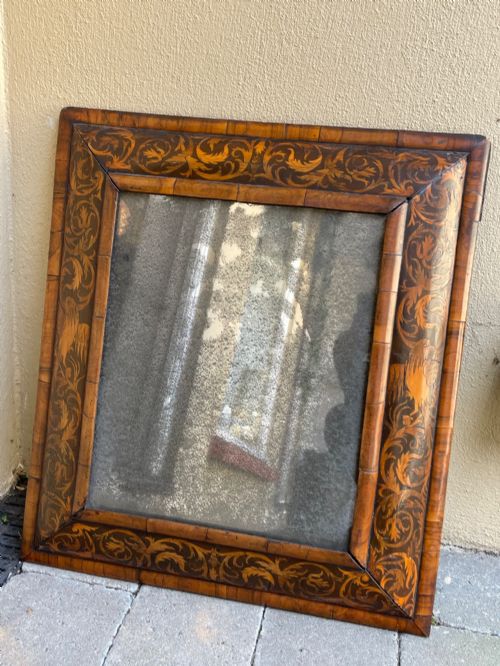
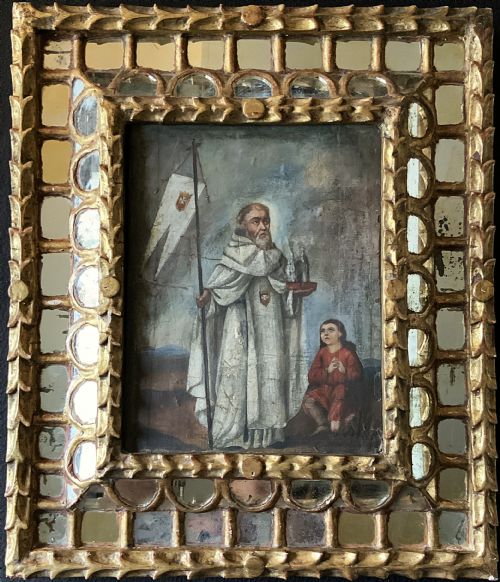
Most examples you will encounter adhere to the cushion moulding style, where the frame swells outwards towards the edge. This period also yields ripple moulded frames and carved giltwood constructions from Venetian and Tuscan workshops.
Materials and construction methods
Cabinet makers built these frames using dense timbers like oak, walnut, laburnum, and olive wood over softwood carcases. To achieve the distinctive decorative surfaces, craftsmen sliced timber into thin roundels known as oyster veneers, arranging the grain patterns symmetrically across the broad cushion mouldings.
Marquetry panels incorporated intricate floral and geometric designs using contrasting woods such as boxwood. Gilding involved the application of gesso onto carved wood substrates before laying fine metal leaf, creating a luminous surface that catches low light.
17th Century Mirror Retail Price Guide 2026
Typical asking prices for 17th century mirror among the pieces listed under this phrase on Sellingantiques today, from the lower quarter to the upper quarter. They describe what is for sale here now, not the wider market.
Several mirrors here spent centuries watching historical domestic life unfold before finally finding their way to the marketplace.
What separates the finest examples
Quality in these pieces rests upon the crispness of the timber selection and the integrity of the veneer work. The most accomplished examples display symmetrical grain matching in the oyster veneer and precise execution of marquetry without shrinkage gaps.
The survival of original surfaces and early bevelled mirror plates dictates the standing of a piece. Frames retaining their original gilding or untouched patinated walnut sit firmly apart from those subjected to modern re-polishing or extensive timber replacement.
The 17th Century Mirror Glossary
- Cushion moulding
- A broad, convex frame profile that swells outwards from the wall towards the glass plate. This form became popular during the late 17th century.
- Oyster veneer
- Circular or oval slices of branch wood laid flat to create a repeating oyster-shell pattern across the surface of the frame.
- Marquetry
- Elaborate inlaid patterns formed by fitting contrasting veneers into a prepared background. Floral motifs and intricate strapwork dominate this period.
- Ripple moulding
- A series of small, undulating waves carved into the wooden frame using specialised moulding engines. It creates a textured, optical effect.
- Gesso
- A plaster-based mixture applied to wood frames as a smooth base for subsequent gilding. It allows for sharp carved detail beneath the metal leaf.
17th Century Mirror: Frequently Asked Questions
How do I hang a heavy cushion mirror?
These frames carry significant weight due to their dense timber construction and deep profiles. Secure fixings directly into wall studs or utilise professional weight-rated brackets.
Ensure the hanging wire or mirror plates on the reverse are firmly anchored to the primary carcase rather than decorative secondary mouldings.
Are the mirror plates original?
Early glass plates often exhibit minor foxing, dark spots, and uneven thickness due to historical manufacturing methods. Many surviving frames have received replacement mirror plates over the centuries.
Examine the edge of the glass and the backing boards to determine whether the plate dates to the period of the frame.
How should I clean the wood and glass?
Dust walnut and marquetry surfaces gently with a dry, soft cloth to protect the aged patina. Avoid liquid polishes and silicone sprays that soften historical finishes.
Clean the glass plate sparingly using a cloth dampened slightly with distilled water, taking care to keep moisture away from the timber edges.
What is the difference between walnut and burr walnut?
Standard walnut displays a straight, rich grain pattern with deep brown tones. Burr walnut comes from growth deformations on the tree trunk, yielding highly figured, swirling patterns.
Frames utilising burr walnut veneers were reserved for high-status furnishings due to the difficulty of working the turbulent grain.