
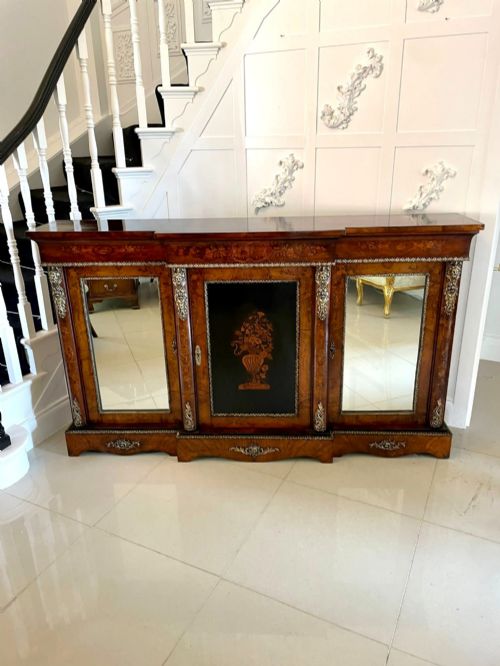
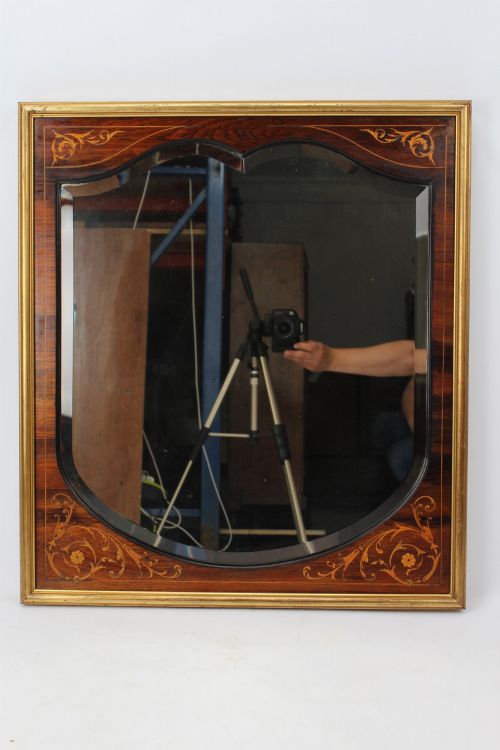


Floral Marquetry Mirror
A floral marquetry mirror brings warmth and intricate botanical detail to a room, offering a functional glass framed in meticulous wood inlay.
Floral Marquetry Mirror
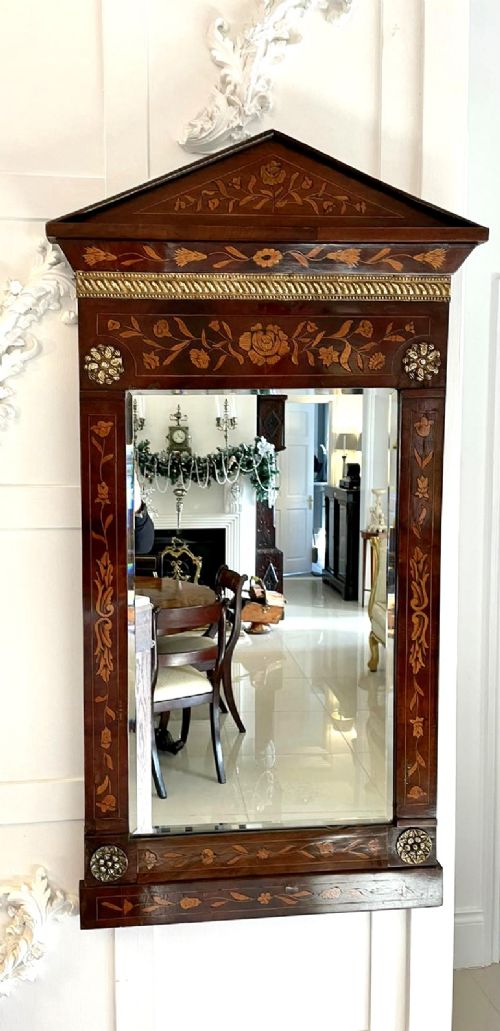
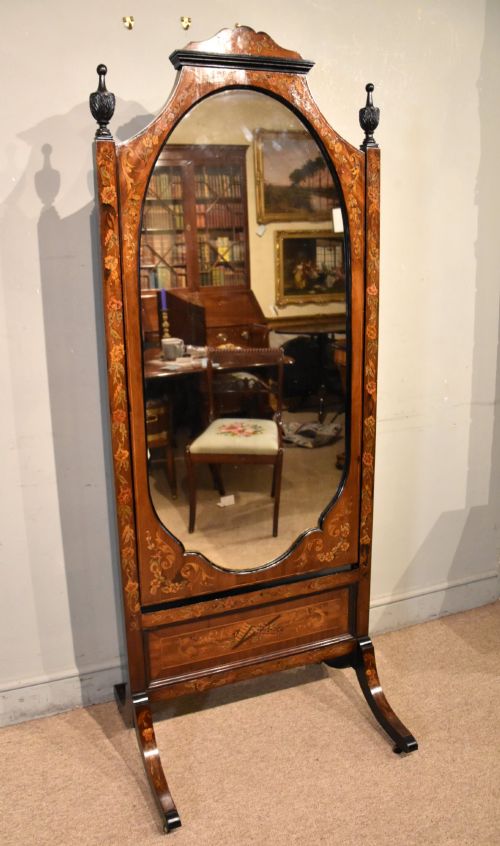
A floral marquetry mirror is a framed looking glass decorated with patterned wood veneers arranged to depict flowers and foliage. Buyers seek these pieces for their rich visual texture and historical charm.
On this page, the most common forms you will encounter are toilet mirrors, dressing table swing mirrors, and hanging wall mirrors. These pieces span several distinct periods including the seventeenth, eighteenth, and nineteenth centuries.
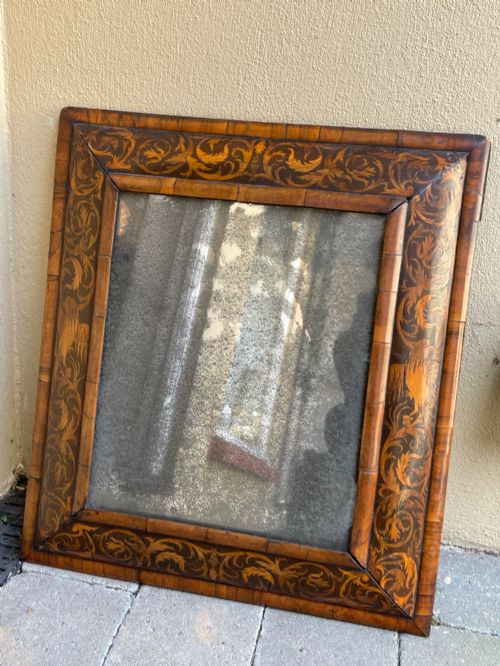
The selection ranges from William and Mary cushion frames to Victorian mahogany and Dutch walnut creations. Each style brings a different proportion and framing technique to the floral inlay work.
Materials and construction
Maker artisans built these frames using foundational woods such as mahogany, walnut, beech, and rosewood. Onto these solid bases, they applied fine veneers of boxwood, fruitwood, and various contrasting timbers.
The floral decoration relies on marquetry inlay, where different tinted woods are carefully cut and fitted together to form intricate botanical motifs. Brass and glass components complete the construction, alongside carved corner spandrels in specific examples.
Floral Marquetry Mirror Retail Price Guide 2026
Typical asking prices for floral marquetry mirror among the pieces listed under this phrase on Sellingantiques today, from the lower quarter to the upper quarter. They describe what is for sale here now, not the wider market.
Some floral marquetry mirror frames feature botanical inlay so detailed you can practically smell the seventeenth-century Dutch tulips blooming from the wall.
Factors that define quality
Quality in a floral marquetry mirror rests upon the precision of the wood cutting and the subtlety of the botanical shading. Finer examples display tight joints in the inlay and a harmonious balance of contrasting timbers across the frame.
The depth and architecture of the wooden frame also separate standard pieces from exceptional ones. Cushion mirrors and frames with carved spandrels demand greater joinery skill than simple flat mouldings.
The Floral Marquetry Mirror Glossary
- Marquetry inlay
- The art of applying small pieces of veneer to a structural panel to form decorative patterns. This technique creates the floral designs seen on these mirror frames.
- Cushion mirror
- A frame with a rounded, convex profile that swells outwards towards the outer edge. This bulbous shape was particularly popular during the William and Mary period.
- Toilet mirror
- A smaller looking glass designed to sit upon a chest of drawers or a dressing table. These often feature a swing mechanism supported by upright arms.
- Spandrels
- The triangular spaces situated between the corners of a rectangular frame and the curve of an inner opening. Carved versions add significant architectural detail.
- Veneer
- A thin slice of fine wood applied to a secondary timber base. This method allows craftsmen to utilise striking grains and colours economically.
Floral Marquetry Mirror: Frequently Asked Questions
Where should I hang a floral marquetry mirror?
These mirrors suit spaces where natural light can illuminate the fine wood grain and floral details. A hallway, living room, or above a suitable sideboard allows the inlaid work to be appreciated.
Ensure the room humidity remains relatively stable to protect the delicate veneers and old wood from excessive movement.
How do I clean the wooden frame?
Dust the frame gently with a dry, soft cloth to remove everyday particles. Avoid using modern chemical polishes or water on antique marquetry surfaces.
Applying a traditional beeswax occasionally helps nourish the wood and maintain a soft, protective sheen without harming the inlay.
Are toilet mirrors freestanding?
Toilet mirrors typically consist of a swinging glass plate mounted within a frame, supported by upright posts attached to a small base or box. They were designed to sit securely on top of a dressing table.
The base units sometimes incorporate small drawers for storing personal items.
What defines a Dutch marquetry style?
Dutch marquetry mirrors often feature exuberant floral and foliage designs executed in lighter woods against a darker walnut or mahogany background. The patterns cover the entire visible surface of the frame.
This style frequently includes tulip and floral groupings that reflect historical Dutch cabinet-making traditions.