
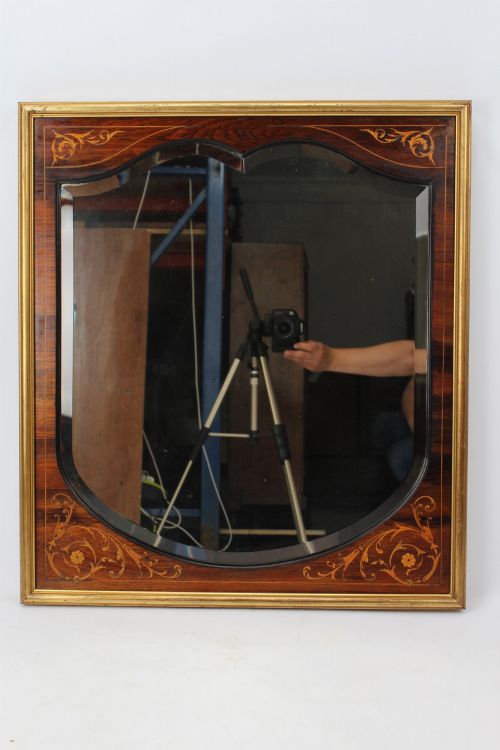


Marquetry Wall Mirror
A marquetry wall mirror brings warmth and intricate geometric or floral patterns into a room through contrasting wood veneers.
Identifying marquetry wall mirrors
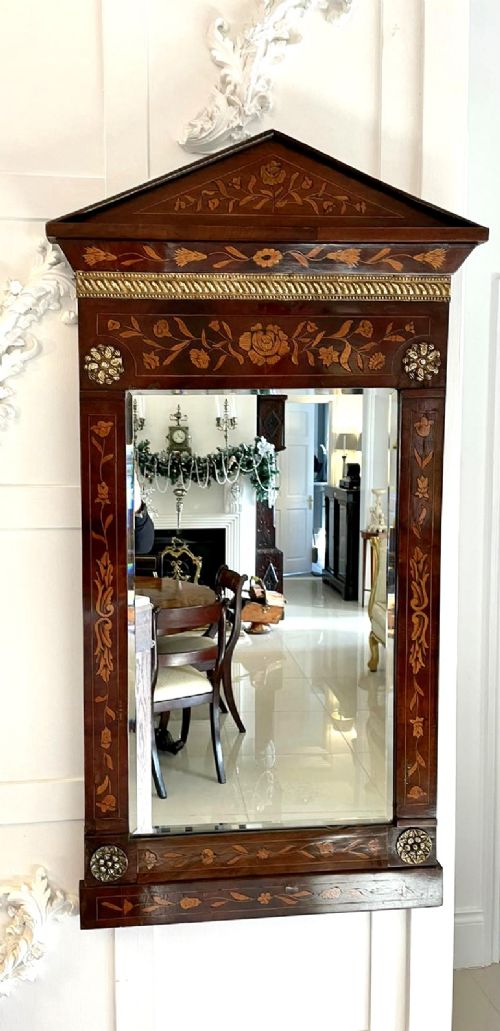
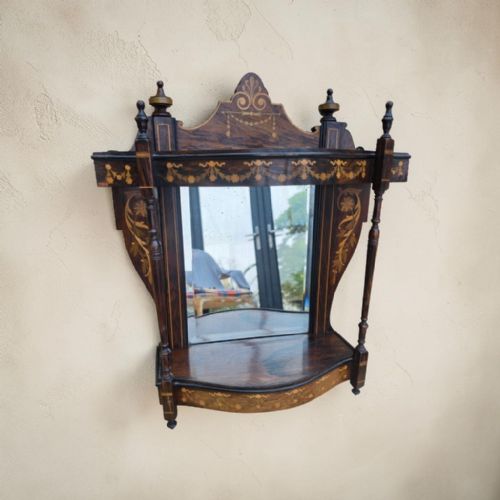
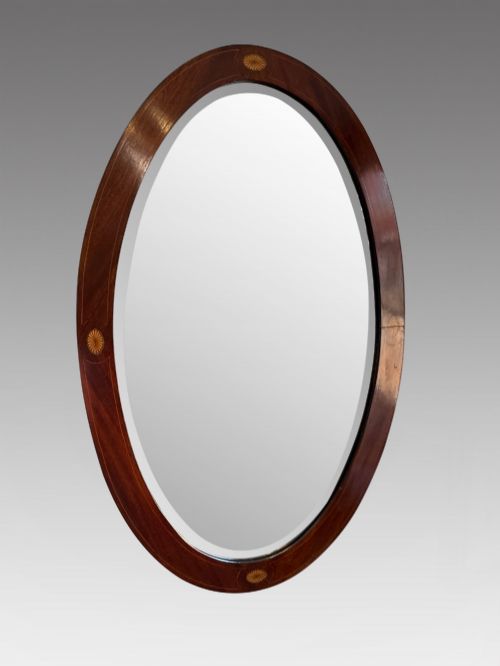
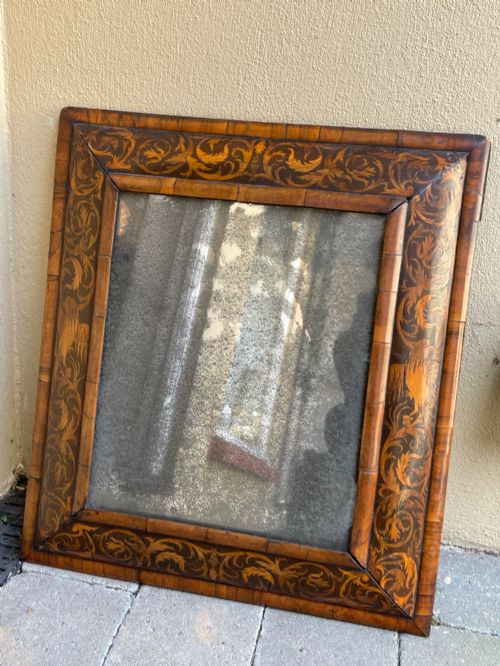
A marquetry wall mirror displays patterned wood inlay across its wooden frame, combining decorative craftsmanship with a functional looking glass. These wall mirrors appear in rectangular, oval, cushion and convex formats across several historic periods.
The pieces on this page lean heavily towards Dutch and English craftsmanship, with notable examples spanning the seventeenth century through to the Edwardian Sheraton Revival and Art Nouveau periods. Walnut, mahogany and rosewood frequently serve as the primary woods for these frames.
Earlier interpretations include cushion mirrors from around seventeen hundred, whilst nineteenth-century examples often feature Dutch floral inlay. Edwardian pieces demonstrate a lighter aesthetic using satinwood and boxwood alongside rosewood.
Materials and construction
Cabinetmakers constructed these frames using solid timbers such as mahogany, walnut and rosewood as a structural base. Artisans then applied fine veneers of contrasting woods, including boxwood and satinwood, to create detailed pictorial or geometric designs.
Wood inlay techniques involved cutting thin sheets of veneer together so that different coloured timbers fitted precisely into carved recesses within the background wood. Brass elements occasionally augmented the wooden decoration on specific frames.
Retail Price Guide 2026
Typical UK retail prices for marquetry wall mirror, calculated from the Sellingantiques database of over a million retail prices indexed since 2003. This retail price guide relies exclusively on Sellingantiques data; no external sources or auction records are used, so the figures do not describe the wider market.
Listings for this phrase encompass walnut, mahogany, rosewood and satinwood as primary woods, complemented by brass and boxwood inlay details.
Evaluating the craftsmanship
The distinction between standard and exceptional pieces lies in the precision of the veneer cutting and the complexity of the botanical or geometric motifs. Finer examples exhibit tight joints between contrasting timbers without visible filler or crude gaps.
Depth of colour and the preservation of the original polished surface significantly influence the character of a frame. Richness in the walnut or mahogany grain elevates the visual impact of the surrounding inlay work.
Rowley Gallery·W A Chase·A J Rowley
The Marquetry Wall Mirror Glossary
- Marquetry
- The art of applying decorative pieces of veneer to a structural structure to form intricate patterns or pictures. This technique distinguishes these wall mirrors from plain wood frames.
- Veneer
- A thin slice of fine timber applied to a coarser wood base. Makers utilised contrasting veneers to achieve distinct colour variations in the design.
- Cushion mirror
- A mirror frame shaped with a rounded, sloping profile resembling a cushion. This form is particularly associated with late seventeenth-century English pieces.
- Boxwood
- A dense, pale yellowish wood frequently utilised for fine inlay work. It provides sharp contrast against darker woods like walnut and mahogany.
- Convex mirror
- A round mirror glass curved outward to reflect a wider field of view. These often feature decorative circular frames with detailed inlay.
Frequently Asked Questions
How do I date a marquetry wall mirror?
Dating relies heavily on the underlying timber, the framing style, and the nature of the inlay work. Seventeenth-century pieces often feature cushion profiles, whilst Edwardian examples tend toward lighter satinwood integration.
Examining the construction of the backboards and the type of mirror glass provides further clues to the period of origin. Older glass frequently exhibits slight distortions or bevels characteristic of historical manufacturing techniques.
Where should I hang a marquetry mirror?
These decorative frames suit reception rooms, hallways, or above a mantelpiece where adequate light highlights the detailed wood grain and inlay. Placing them away from direct, harsh sunlight preserves the natural tones of the rosewood or walnut veneers.
Ensure the wall fixings match the substantial weight of these wooden frames, particularly for larger mahogany or walnut examples. Secure hanging prevents strain on the historical structure of the mirror.
Are Dutch marquetry mirrors different from English ones?
Dutch marquetry mirrors typically display exuberant floral and bird motifs executed in various contrasting woods across broad frames. English pieces from periods like the William and Mary era often favour more restrained geometric or seaweed marquetry patterns.
Both traditions utilise high-quality timber bases such as walnut and mahogany, but the decorative vocabulary on the surface reveals the regional workshop origin.
How do I care for antique wood inlay?
Maintenance involves dusting gently with a dry, soft cloth to prevent particulate accumulation on the veneer surface. Avoid using liquid polishes or chemical cleaners that might penetrate the historic joints and lift the delicate inlay.
Maintaining a stable room temperature and humidity level protects the wood and veneer from expanding or contracting excessively. This environmental care prevents the small pieces of boxwood and satinwood from loosening.