

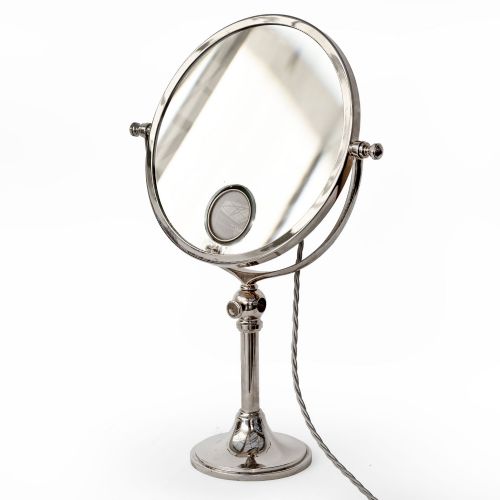
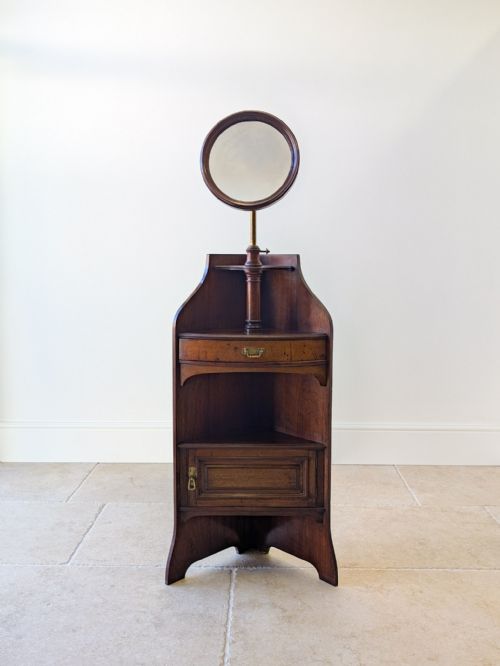
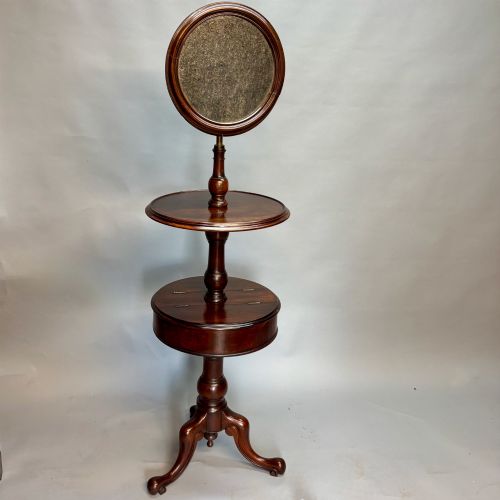
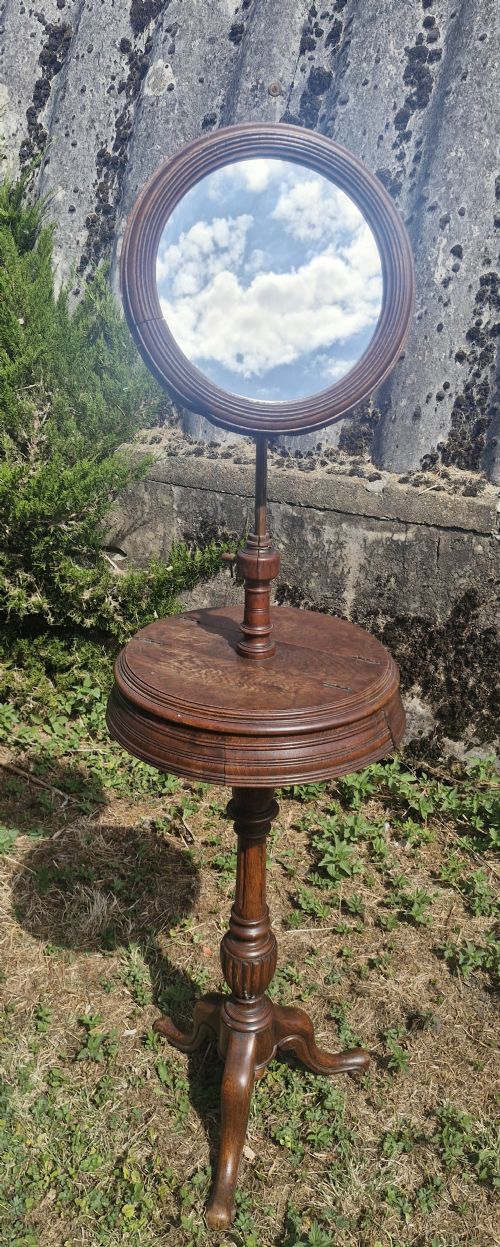
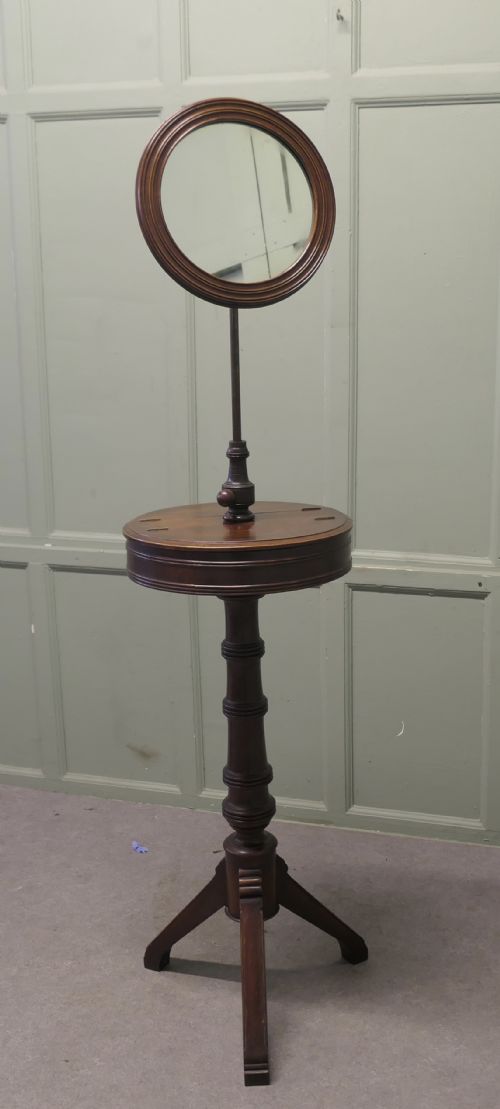
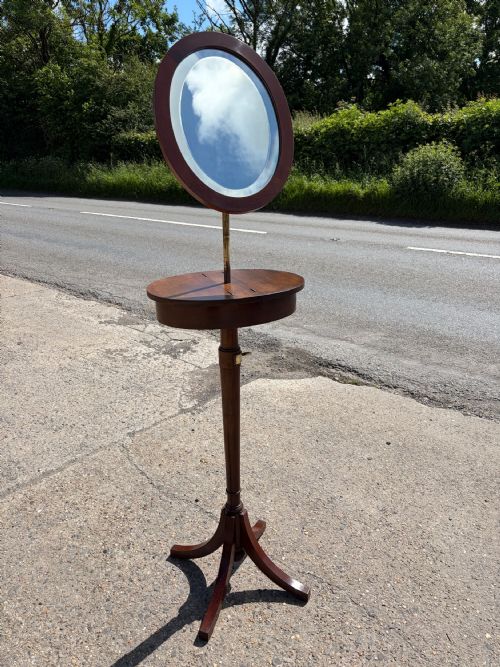


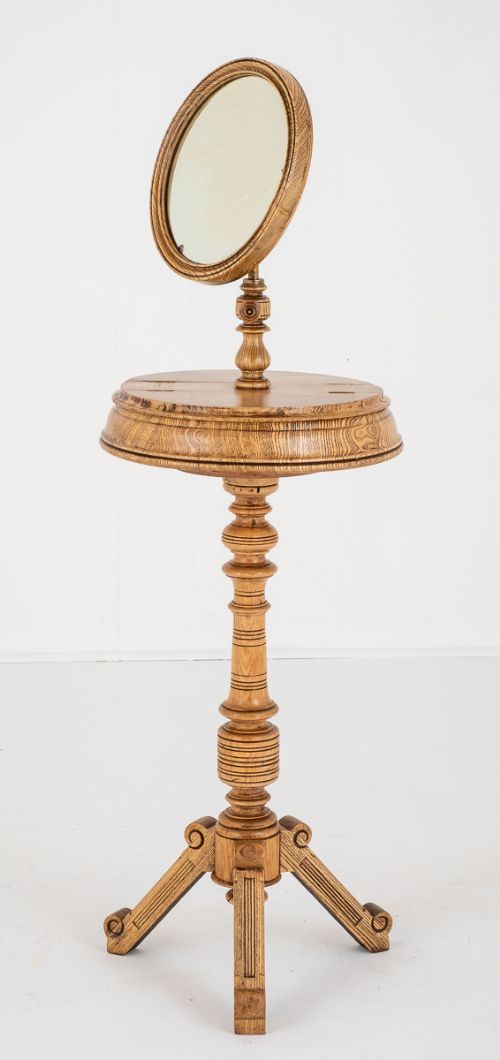


Freestanding Shaving Mirror
A freestanding shaving mirror offers practical morning routine utility while anchoring a period interior with traditional craftsmanship.
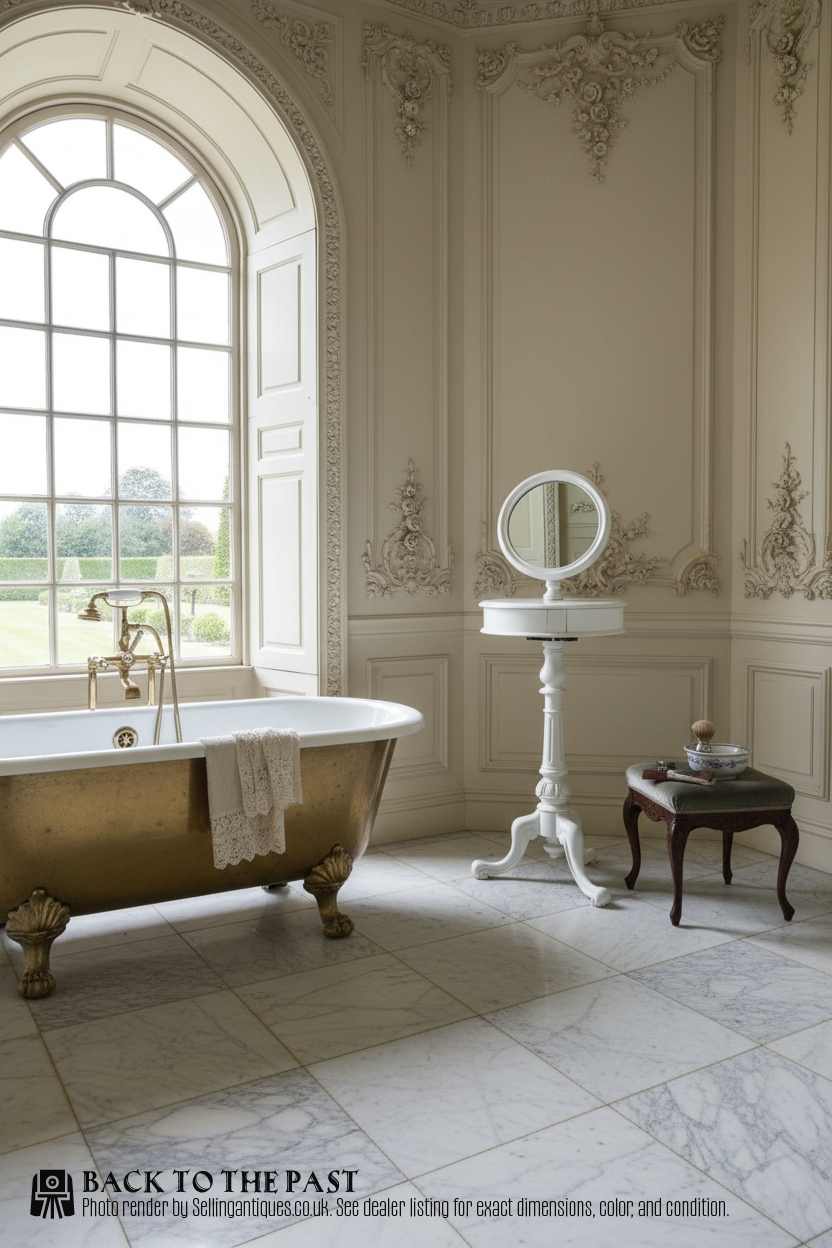
Freestanding Shaving Mirror
A freestanding shaving mirror provides a portable reflective surface designed specifically for grooming tasks in bedrooms or dressing rooms. These pieces appear frequently from the Victorian and Edwardian eras, spanning mahogany, walnut, oak, and ash timbers alongside brass and chrome fixtures.
Most examples feature adjustable mechanisms allowing the glass to tilt or extend on telescopic stands and tripod bases. Formats range from compact vanity mirrors to taller shaving stands that incorporate dedicated upright supports.
The selection on this page draws heavily from nineteenth-century workshops, showcasing cabinet-making traditions that prioritise both functional utility and polished aesthetic presentation. Buyers encounter diverse regional interpretations, from classic tripod designs to inlaid Edwardian dressing stands.
How they were made
Cabinet makers utilised dense hardwoods such as mahogany, walnut, and oak to construct the sturdy frames and bases required to support pivoting glass panels. These timbers were frequently turned, carved, or inlaid to suit prevailing aesthetic tastes.
Metal components including brass and chrome provide the adjustable mechanisms, hinges, and telescopic columns that allow users to alter height and angle. Glass mirrors were securely fitted into wooden surrounds, occasionally backed by protective fabric panels.
Freestanding Shaving Mirror Retail Price Guide 2026
Typical asking prices for freestanding shaving mirror among the pieces listed under this phrase on Sellingantiques today, from the lower quarter to the upper quarter. They describe what is for sale here now, not the wider market.
Listings feature woods including mahogany, walnut, oak, and ash, paired with glass, brass, painted metal, and fabric.
What varies in quality
The refinement of the turning work on tripod bases and upright columns distinguishes standard production from superior examples. Cabinet makers who invested time in precise joinery and balanced proportions produced pieces that remain stable and visually cohesive.
The complexity of the adjustment mechanism also indicates grade, where smoothly operating brass telescopic rods and friction hinges demonstrate careful engineering. Timber selection further defines the piece, with richly figured grain patterns commanding greater visual presence.
The Freestanding Shaving Mirror Glossary
- Telescopic
- A construction method allowing a vertical rod to extend upwards and lock into position, altering the overall height of the mirror.
- Tripod base
- A three-legged support structure designed to provide stable equilibrium for a tall central column or mirror frame.
- Cheval mirror
- A full-length or large dressing mirror hung within a vertical frame, allowing it to swing freely at any angle.
- Adjustable mirror
- A reflective glass panel mounted on pivots or joints that let the user tilt the viewing angle up or down.
Freestanding Shaving Mirror: Frequently Asked Questions
Where were freestanding shaving mirrors placed?
These mirrors typically stood on dressing tables, washstands, or directly on the floor depending on the specific height of the model.
Their portable nature allowed users to position them near windows to capture optimal morning light during daily grooming.
How do I adjust a telescopic mirror?
Telescopic models usually feature a thumbscrew or friction collar on the central column that secures the inner shaft at the desired height.
Loosening this fastener gently lets you raise or lower the glass before tightening it again to hold the position.
What woods were used for shaving stands?
Cabinet makers predominantly selected durable hardwoods such as mahogany and walnut for their rich colour and resistance to warping.
Lighter timbers like oak and ash also appear frequently, particularly in regional pieces and Edwardian designs.
How do I date a Victorian shaving mirror?
Dating relies on examining the timber species, turnery style, and the construction methods used for the frame and drawer joints.
Mid-nineteenth-century examples often favour heavy mahogany with tripod bases, whilst later Victorian and Edwardian pieces introduce inlaid details and alternative woods.