



Victorian Shaving Mirror
A victorian shaving mirror brings adjustable reflection and fine timber framing directly to the dressing table or washstand.

Victorian Shaving Mirror
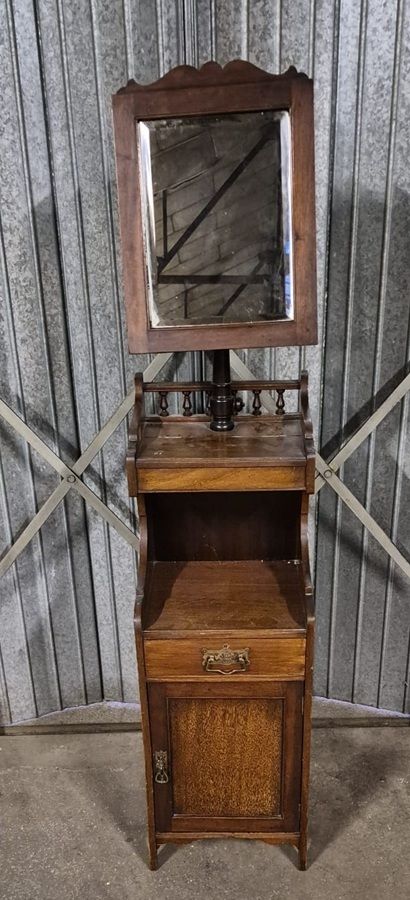
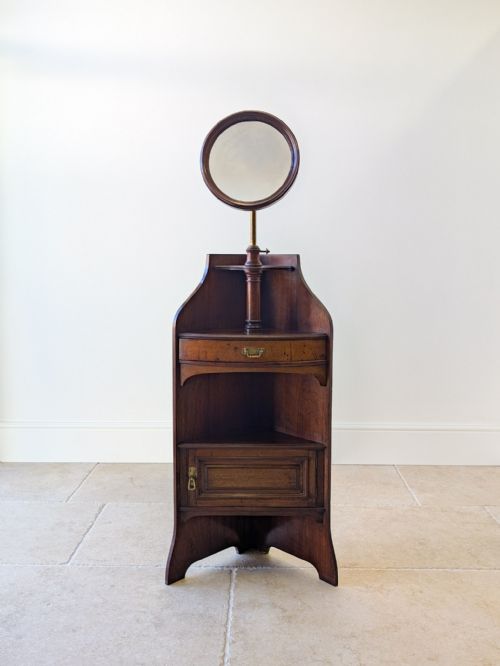
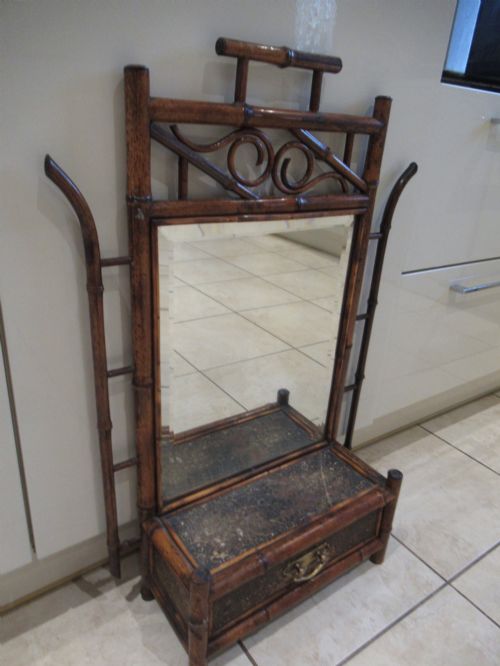
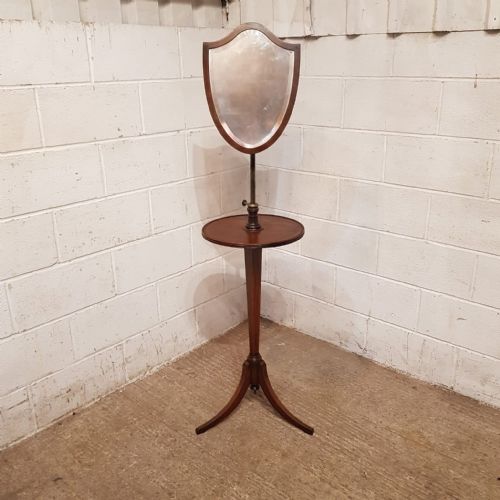
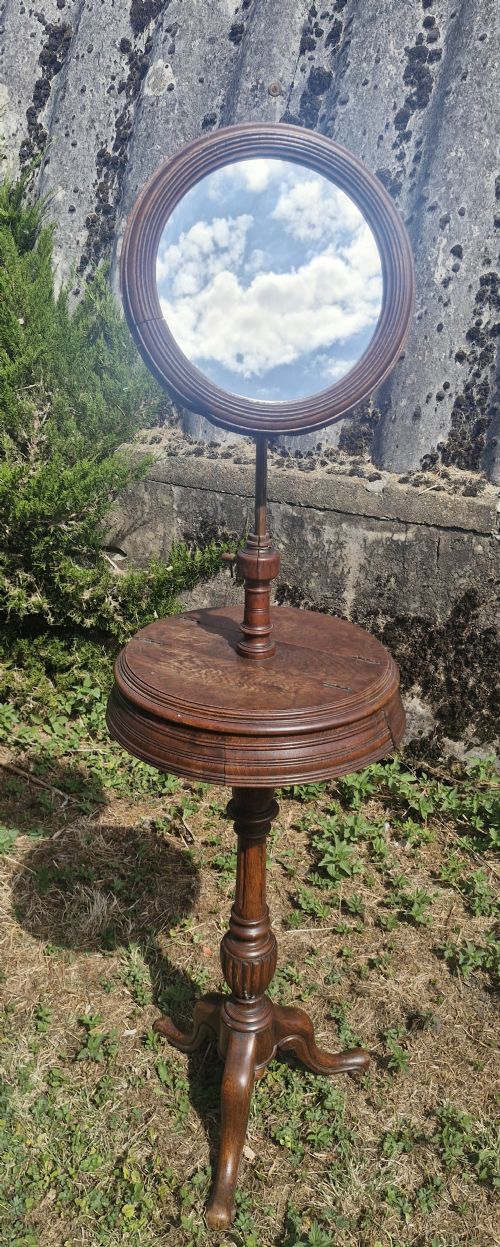
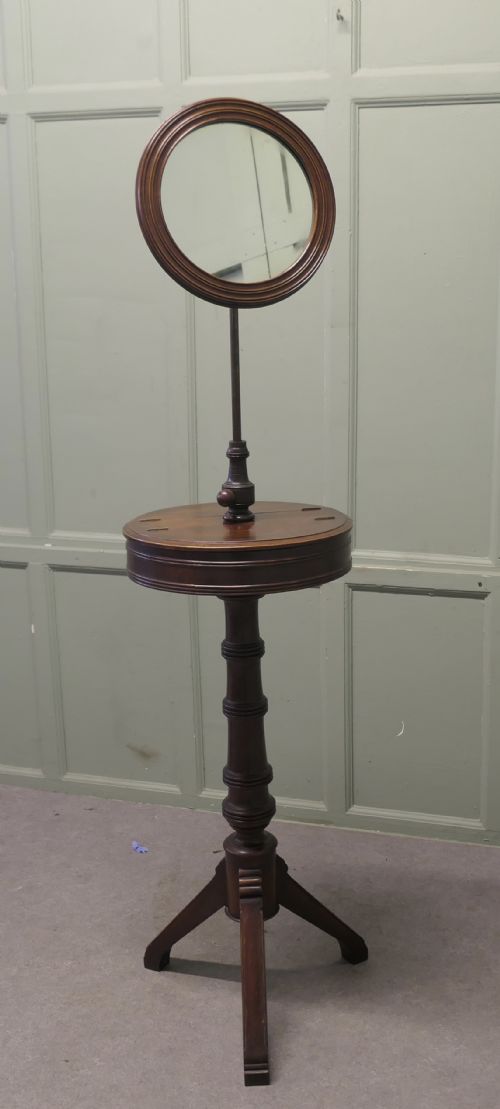
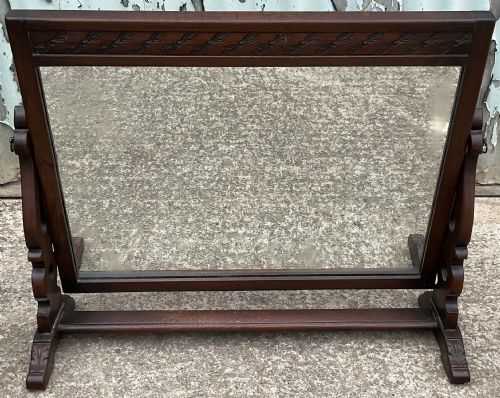
A victorian shaving mirror comprises table mirrors, standing mirrors, and dedicated shaving stands designed for daily grooming routines. These pieces originate predominantly from the nineteenth century, spanning early, late, and standard Victorian periods alongside occasional Regency examples.
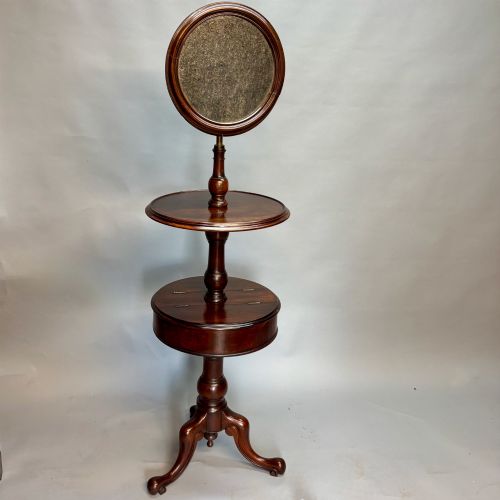
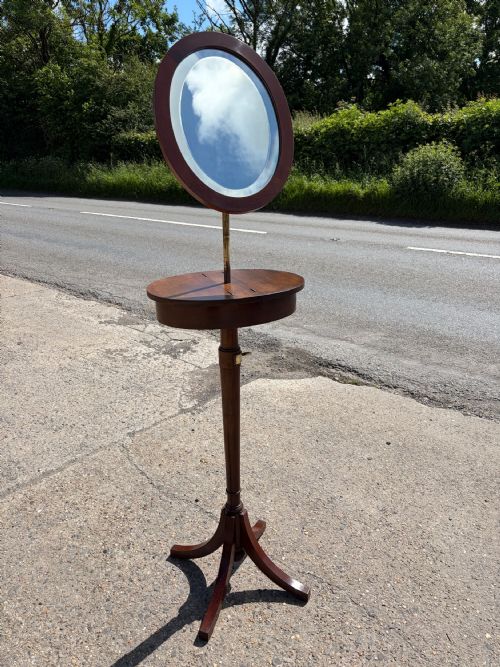
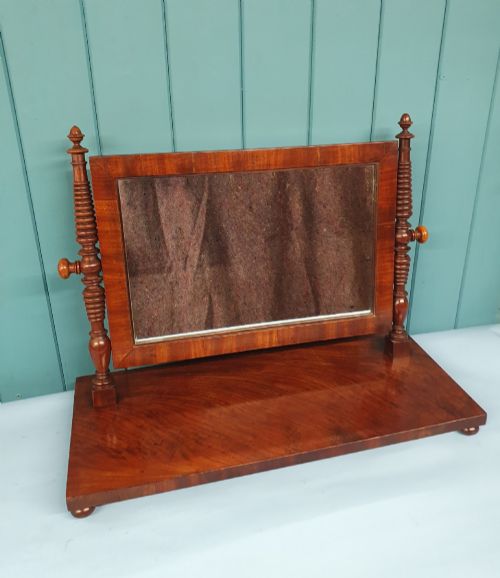
Buyers frequently encounter freestanding tripod bases, adjustable table plates, and telescopic mechanisms intended for height variation. Mahogany and walnut dominate the construction, accompanied by occasional satin birch and brass formats.
Object forms include shaving stands, dressing stands, and portable campaign kits equipped with mirror glass. The configuration ranges from compact desk items to tall floor-standing gentlemen's pieces.
Materials and Construction
Cabinetmakers utilised dense hardwoods such as mahogany and walnut, frequently selecting figured veneers for the main frames and tripod bases. Satin birch also appears among the timber choices for specific gentleman's stands.
Metal components including brass and cast iron provide the adjustable framework, telescopic stems, and mounting screws necessary for tilting the glass. Painted metal finishes surface on particular variants alongside standard mirror glass plates.
Victorian Shaving Mirror Retail Price Guide 2026
Typical asking prices for victorian shaving mirror among the pieces listed under this phrase on Sellingantiques today, from the lower quarter to the upper quarter. They describe what is for sale here now, not the wider market.
Mahogany and walnut appear consistently across both current listings and the archive for this phrase.
Evaluating the Pieces
The sophistication of the mechanical adjustment mechanism dictates the upper tier of quality, seen in smooth telescopic rods and stable brass joints. Heavier timber turnings and substantial tripod bases separate robust examples from simpler constructions.
The integration of carved detailing on mahogany or walnut frames elevates a piece beyond plain utility. Preserved original mirror glass and well-figured wood grains enhance the overall visual balance of the stand.
Thomas Rubergall
The Victorian Shaving Mirror Glossary
- Telescopic
- An adjustable stem allowing the mirror height to raise or lower through an inner sliding rod.
- Tripod Base
- A three-legged support providing stability for freestanding shaving stands and mirrors.
- Campaign Kit
- Portable furniture designed for travel, featuring compact folding elements for easy transport.
- Dressing Stand
- A low furniture piece combining a surface with an adjustable mirror for grooming.
- Satin Birch
- A pale, figured hardwood utilised for cabinetwork and decorative veneer finishes.
Victorian Shaving Mirror: Frequently Asked Questions
How do you adjust the height?
Many examples utilise a brass telescopic stem that slides vertically to position the mirror glass at eye level.
Other formats rely on pivot screws on the frame sides to tilt the angle of the glass while resting on a fixed stand.
What woods were used?
Makers predominantly employed mahogany and walnut for the frames, stands, and tripod bases of these grooming pieces.
Satin birch also appears in certain examples alongside metal components like brass and cast iron.
Where were they placed?
These mirrors sat upon dressing tables, washstands, or directly on the floor as dedicated freestanding gentlemen's stands.
Portable variants were also designed for travel use within campaign kits.