

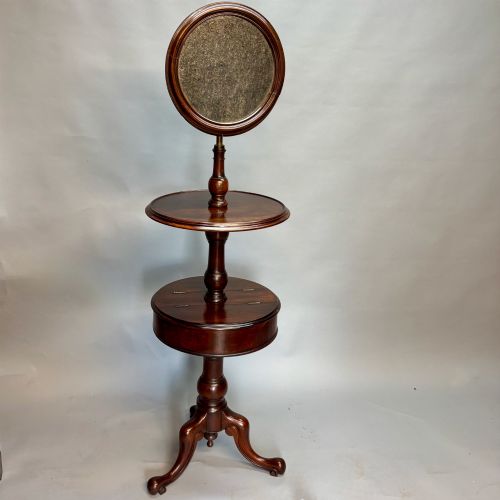
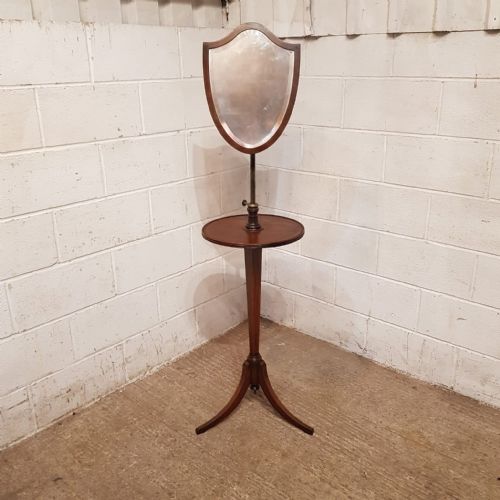
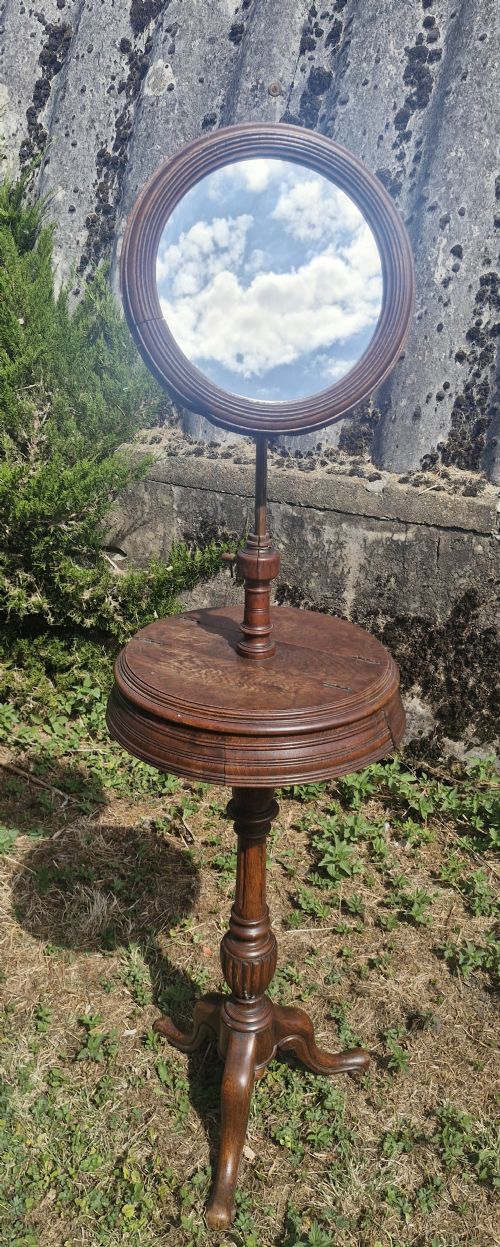
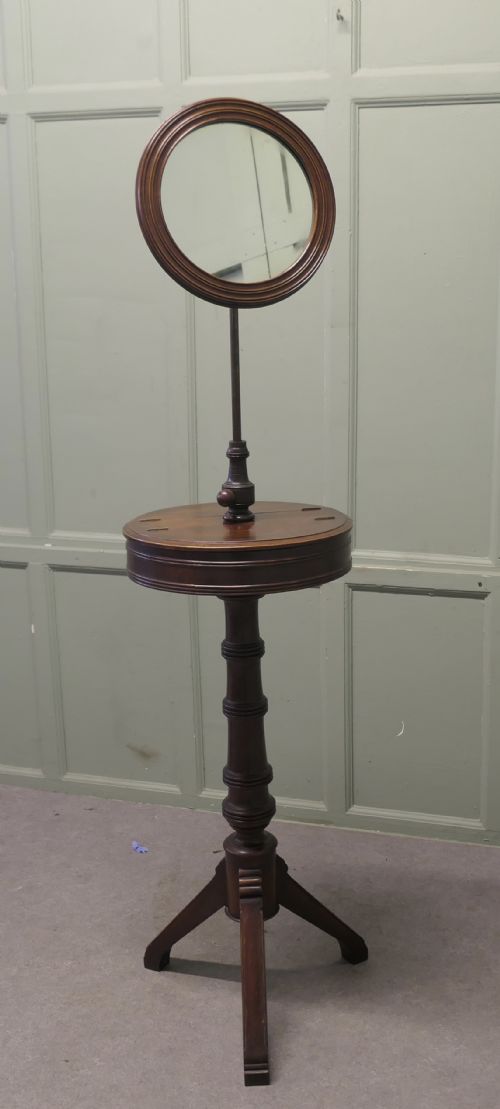
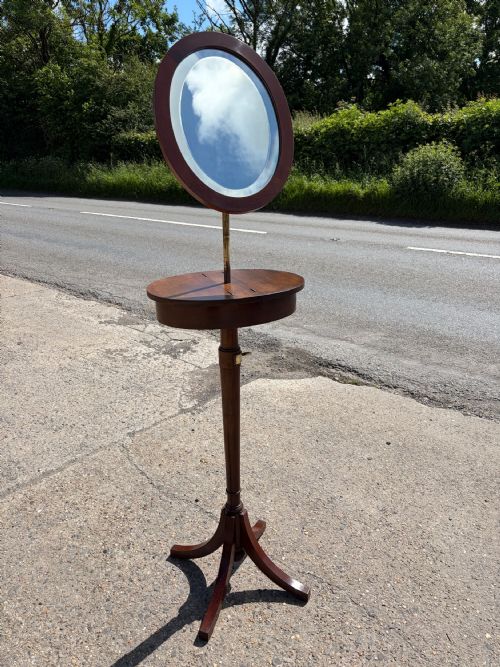


Tripod Shaving Stand
These tripod shaving stand examples offer adjustable height and tilting mirrors, serving as practical Victorian grooming stations that anchor a room with antique timber character.

Tripod Shaving Stand
A tripod shaving stand brings together a slender three-legged base and an adjustable pivoting mirror designed for morning grooming routines. These pieces surface most frequently from the Victorian and Edwardian eras, spanning the nineteenth century up to nineteen hundred.
Makers constructed these stands primarily in rich timbers such as mahogany and walnut, occasionally utilising oak, satin birch, or painted metal. The forms vary from dedicated standing mirrors with small tripods to more comprehensive dressing stands and washstands equipped with mirror glass and brass fittings.
How They Were Made
Cabinet makers relied on solid mahogany, walnut, and oak to build the three-legged bases and upright stems. These timbers provided the necessary weight and stability for supporting adjustable framing without tipping.
Makers integrated brass mechanisms to allow the mirror glass to tilt and the central column to telescope upwards. Fabric and inlaid details sometimes appear on Edwardian variations, while painted metal surfaces reflect mid-nineteenth-century industrial choices.
Tripod Shaving Stand Retail Price Guide 2026
Typical asking prices for tripod shaving stand among the pieces listed under this phrase on Sellingantiques today, from the lower quarter to the upper quarter. They describe what is for sale here now, not the wider market.
The listed pieces span the Victorian, Edwardian, and George III periods, utilising mahogany, walnut, oak, and brass.
What Varies in Quality
The refinement of the timber turning and the stability of the tripod base separate standard examples from finer pieces. Superior items display crisp joinery and well-figured mahogany or walnut grain that has aged gracefully over decades.
The integrity of the brass adjustment mechanisms dictates the functional superiority of a stand. Original mirror glass and smoothly operating telescopic stems indicate higher workshop standards during production.
The Tripod Shaving Stand Glossary
- Telescopic
- An adjustable vertical stem that allows the height of the mirror to be raised or lowered. This mechanism relies on internal sliding brass or wooden components secured with a thumb screw.
- Tripod base
- A three-legged support structure providing balance on uneven floors. These bases typically feature splayed legs ending in pad feet or scroll details.
- Adjustable mirror
- A looking glass mounted on pivots that tilts to various angles. It enables the user to alter the reflection for seated or standing grooming.
- Gentleman's shaving stand
- A specialist furniture form created for morning personal care routines. They frequently incorporate ledges, small platforms, or tilting mirror frames.
Tripod Shaving Stand: Frequently Asked Questions
What is a tripod shaving stand?
A tripod shaving stand is a nineteenth-century grooming accessory featuring a three-legged base and an adjustable mirror. These pieces allowed individuals to adjust height and angle during daily shaving and washing routines.
They appear in various timbers such as mahogany, walnut, and oak. Many incorporate brass fittings and telescopic columns for practical utility.
How do you adjust the mirror?
The mirrors sit on brass pivot screws or pins that permit tilting to the desired angle. Users simply loosen the thumbscrews slightly, position the glass, and tighten them again.
Telescopic versions feature a central shaft that slides upward. A collar or screw mechanism locks the vertical height in place.
What woods were used?
Mahogany and walnut predominate among the surviving examples from the nineteenth century. Cabinet makers also utilised oak and satin birch for alternative finishes.
Some Edwardian pieces feature decorative inlay work on the timber frames. Painted metal surfaces also occur on specific mid-Victorian variants.
Where were they placed?
Victorian households positioned these stands in bedrooms or dressing rooms near light sources. Their compact tripod footprint made them easy to move across floorboards.
They served personal grooming needs before fitted bathroom vanities became standard in domestic architecture.