



Mahogany Shaving Stand
A mahogany shaving stand brings a polished Georgian or Victorian utility into daily grooming spaces with adjustable mirrors and rich timber.

Mahogany Shaving Stand
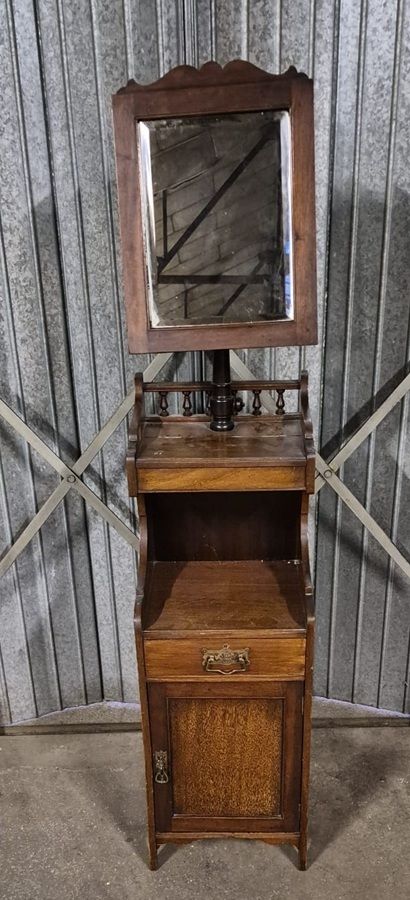
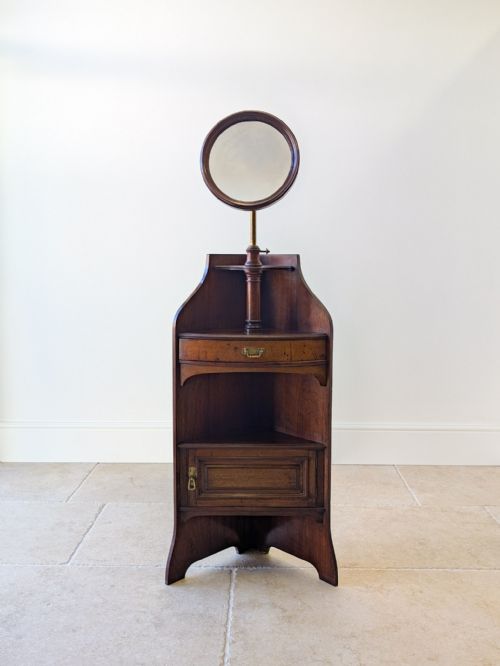
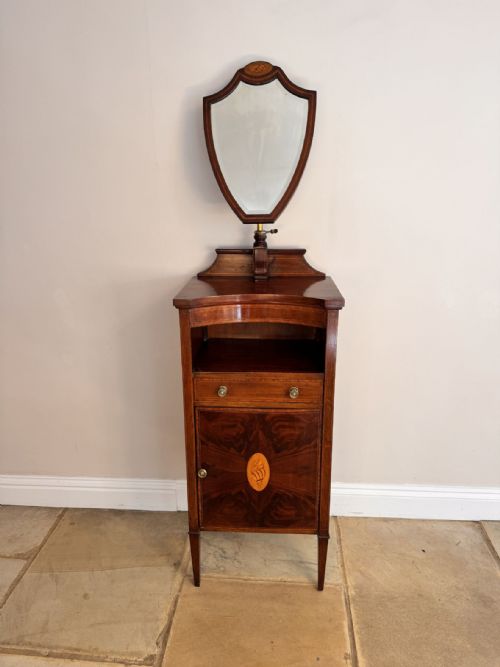
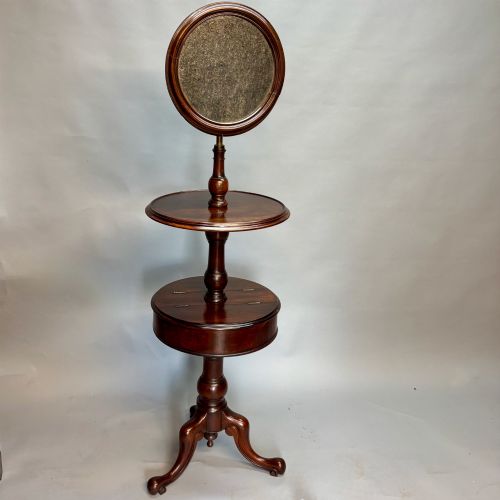
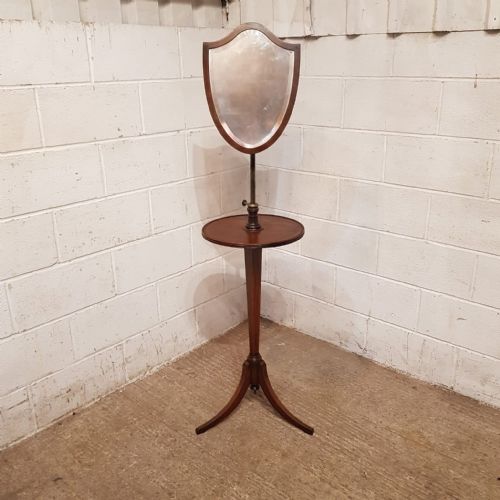
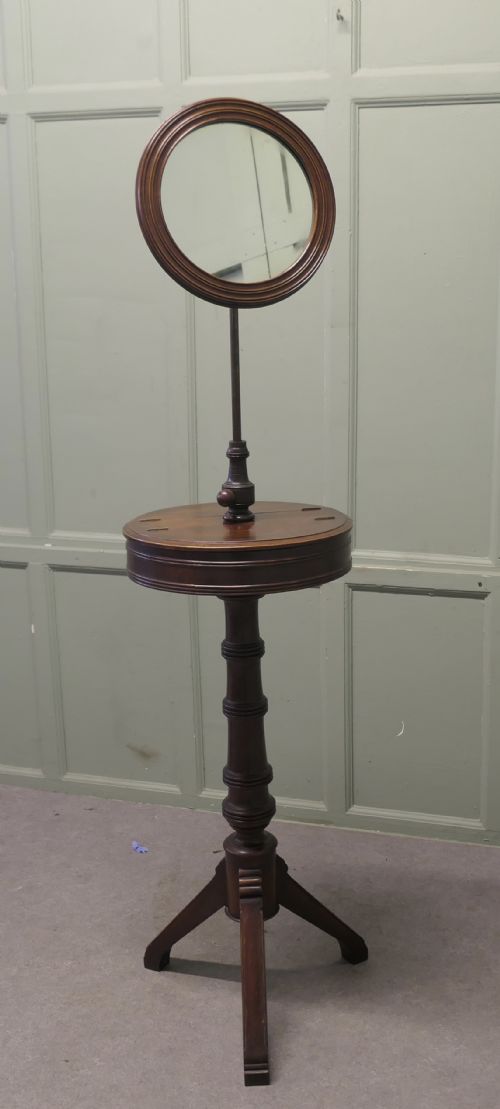
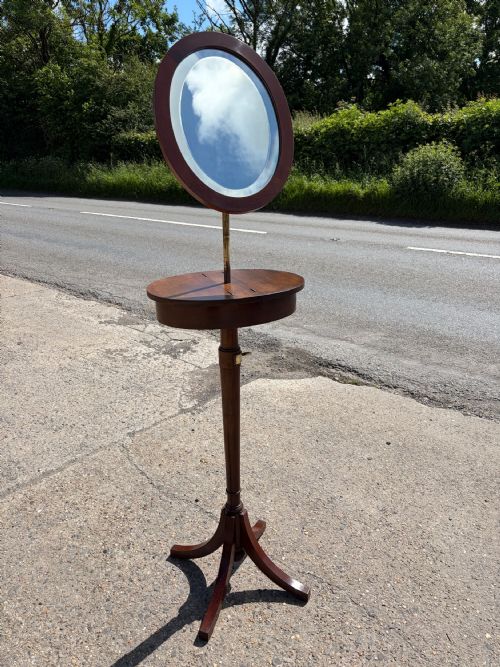
A mahogany shaving stand provides a dedicated surface and mirror for morning routines, drawing on Georgian, Victorian, and Edwardian cabinet-making traditions. The versions met most often on this page span the nineteenth century, taking the form of tripod mirrors, tripod stands, and small cabinets with integrated glass.
Makers designed these pieces with specific mechanisms for height and tilt adjustment, allowing the user to angle the glass precisely. Alongside mirrors, surviving examples incorporate small cupboards, drawers, or tripod bases intended to hold grooming paraphernalia.
The materials recorded across these pieces centre on mahogany timber paired with mirror glass, alongside brass adjustments and occasional marble tops. Pieces range from simple utilitarian tripod designs to inlaid Edwardian examples and scientific optical mirrors.

How they were made
Cabinet makers built these pieces using solid mahogany and mahogany veneers, often incorporating brass for adjustable fittings, hinges, and telescopic mechanisms. Glass provides the reflective surface, frequently mounted within pivoting wooden frames supported by uprights or tripod legs.
Joinery techniques involve precision turning for columns and tripod bases, alongside dovetail construction for small drawers and cupboards. Inlaid examples demonstrate the integration of lighter decorative woods into the primary mahogany ground during the Edwardian and late Victorian periods.
Mahogany Shaving Stand Retail Price Guide 2026
Typical asking prices for mahogany shaving stand among the pieces listed under this phrase on Sellingantiques today, from the lower quarter to the upper quarter. They describe what is for sale here now, not the wider market.
One recorded barbershop collection paired its mahogany stand with thirty-six American shaving mugs.
What varies in quality
Quality rests in the precision of the adjustable mechanism and the stability of the support, whether a tripod base or a cabinet frame. Pieces with smooth-operating brass screws, tight joinery, and well-balanced mirror frames represent the upper tier of execution.
The selection of the mahogany timber and the crispness of any inlaid decoration dictate the visual refinement of the piece. Superior examples exhibit balanced proportions and original glass components that integrate seamlessly with the wooden structure.
Thomas Rubergall·J Shoolbred·Waring and Gillow
The Mahogany Shaving Stand Glossary
- Telescopic
- An adjustable mechanism allowing vertical height extension through sliding inner and outer shafts. This allows the mirror to be raised or lowered relative to the user.
- Tripod Base
- A three-legged support providing stability on uneven floors. These bases typically feature splayed legs ending in pad or scroll feet.
- Toilet Mirror
- A smaller mirror designed to sit upon a dressing table or chest. Many examples share forms with freestanding shaving stands.
- Inlay
- The technique of embedding pieces of contrasting wood into the mahogany surface to form decorative patterns. This is commonly seen on Edwardian and Sheraton revival pieces.
- Serpentine
- A gently undulating curved front line found on drawers and tabletops. It adds visual movement to cabinet work.
Mahogany Shaving Stand: Frequently Asked Questions
How do I adjust the mirror height?
Telescopic stands utilise a sliding brass or wooden collar that secures the upright shaft at the desired elevation. Tightening the thumbscrew locks the inner rod in place.
Pivoting frames use side thumbscrews or trunnions to alter the tilt of the glass itself, letting you direct the angle for comfortable use.
Where were these placed in a home?
Gentlemen positioned these stands in bedrooms, dressing rooms, or private studies where morning ablutions took place. The compact footprint suited spaces near windows offering natural light.
Today, they function effectively in modern bathrooms or dressing areas as practical mirrors with surface space for daily items.
How do I distinguish Georgian from Victorian examples?
Georgian pieces, particularly those from the George III period, favour restrained classical proportions with clean lines and subtle mahogany figuring. Tripod bases often feature slender stems and delicate feet.
Victorian and Edwardian iterations tend toward heavier structural elements, more complex telescopic machinery, and occasional brass fittings or string inlay.
Can I use the original mirror glass?
Original mirror glass frequently shows mild foxing, light oxidation, or grey speckling reflecting its age. Many collectors prefer this authentic surface for historical character.
If the silvering has deteriorated to the point where reflection is compromised, the glass can be replaced while retaining the original wooden frame.