

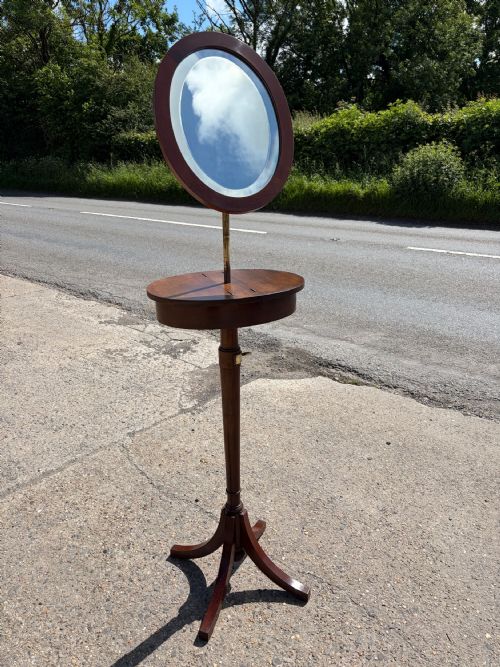


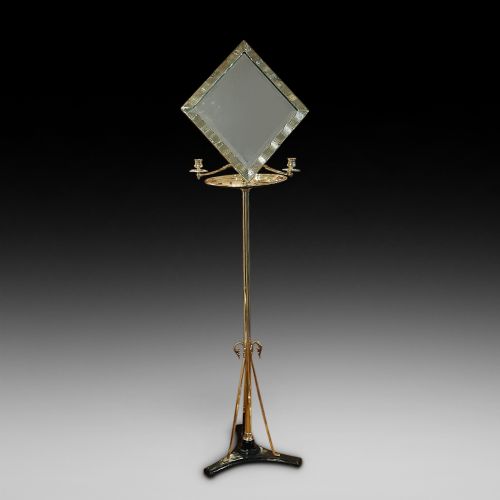


Victorian Shaving Stand
A victorian shaving stand offers a practical pedestal for morning grooming, combining adjustable mirrors and sturdy timber frames for daily use.

Victorian Shaving Stand
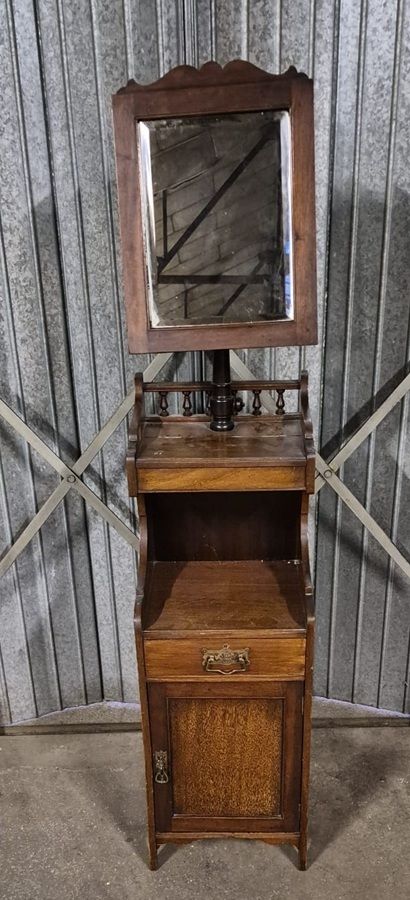
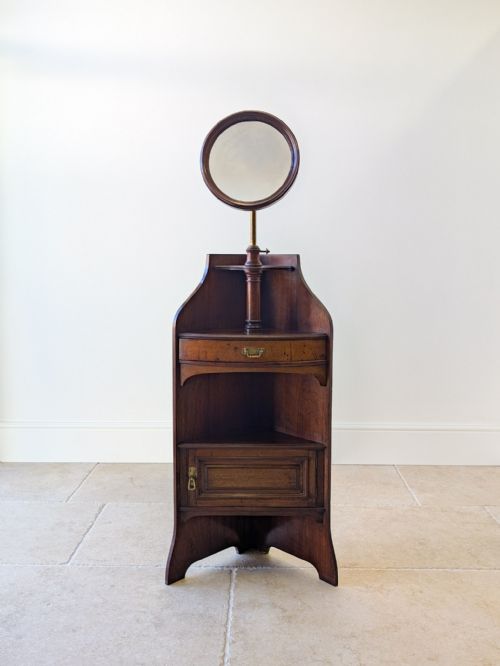
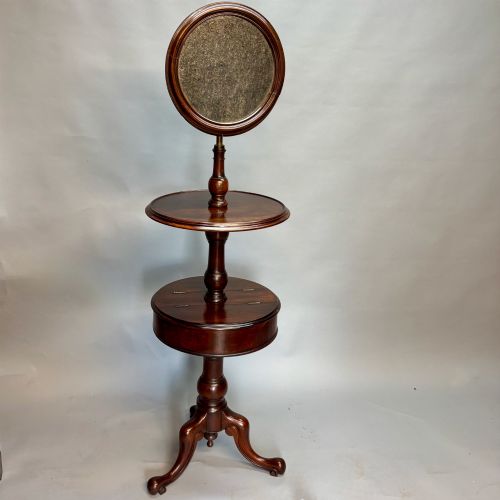
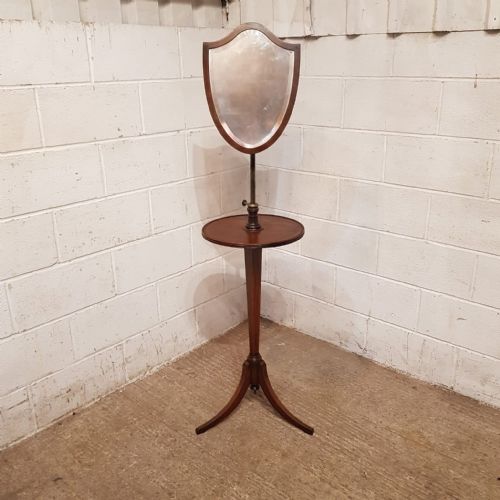
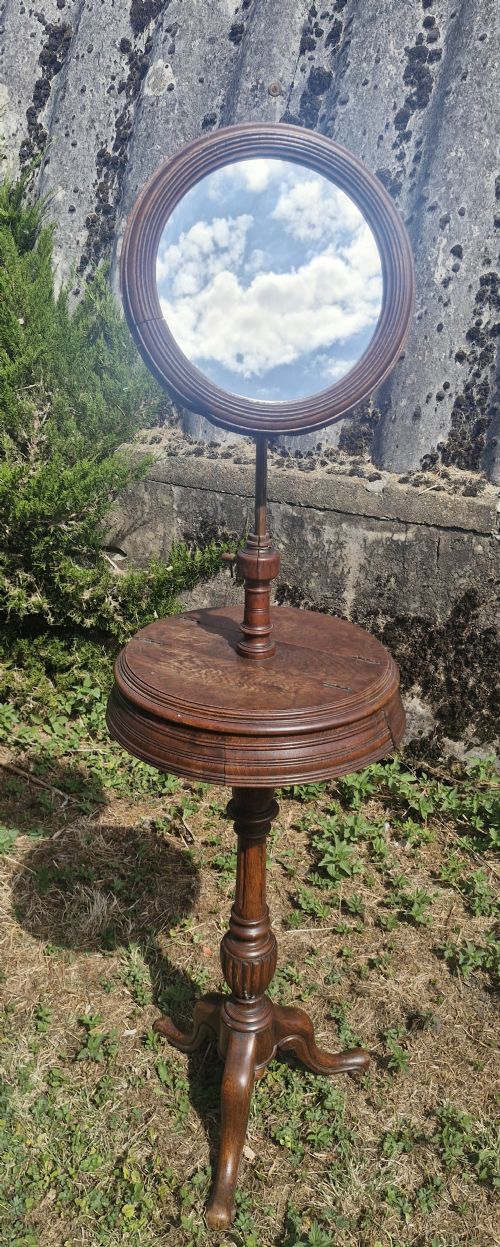
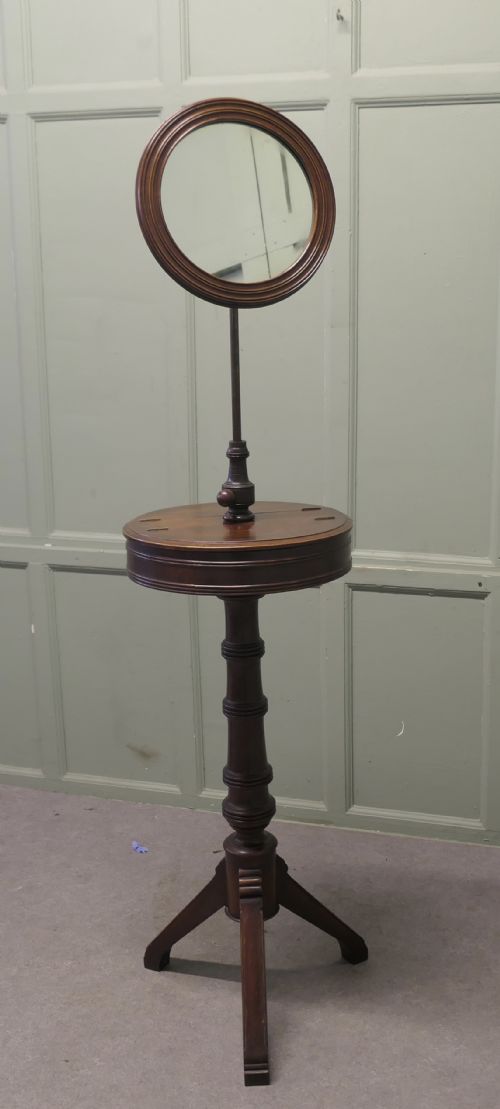
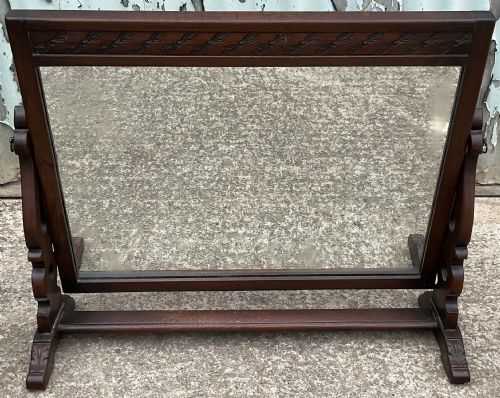
A victorian shaving stand is typically a dedicated grooming piece designed for the gentleman's morning routine, frequently incorporating adjustable mirrors and compact storage surfaces. The pieces seen most often on this page take the form of telescopic mirrors on tripod bases, standing washstands with basins, or freestanding cabinets with pivoting glasses.
Most examples date from the nineteenth century, spanning early, mid, and late Victorian periods, alongside occasional Edwardian variants. Materials range widely across these forms, pairing rich timbers like mahogany, walnut, and oak with brass fittings and mirrored glass.
Materials and Technique
Cabinetmakers utilised dense hardwoods such as mahogany, oak, and walnut to construct the main frames and tripod bases, ensuring stability for the pivoting mirrors above. Brass mechanisms were frequently integrated to provide telescopic adjustment for height and angle during daily grooming.
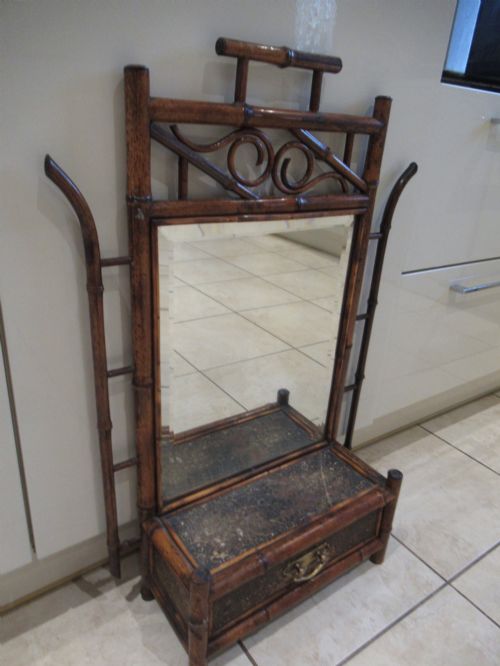
Mirrors relied on glass plate, sometimes held within adjustable frames or supported by bentwood and turned timber pillars. Secondary woods or painted metal appear on utilitarian pieces, while specific examples incorporate ceramic jugs and bowls for washing.
Victorian Shaving Stand Retail Price Guide 2026
Typical asking prices for victorian shaving stand among the pieces listed under this phrase on Sellingantiques today, from the lower quarter to the upper quarter. They describe what is for sale here now, not the wider market.
Distinctions in Standard
The standard of a victorian shaving stand rests on the solidity of its timber and the precision of its mechanical joints. Superior examples feature heavy, well-turned tripod bases and smooth brass telescopic actions that hold position without slipping.
Refinement in carving, the weight of the mirror glass, and the presence of makers' stamps or integrated storage drawers further separate standard utility pieces from more ambitious workshop productions.
Thomas Rubergall·J. Shoolbred
The Victorian Shaving Stand Glossary
- Telescopic
- Descriptive of a vertical shaft that extends or retracts to alter the height of an attached mirror. This mechanism often uses a brass collar or thumb screw to secure the adjustment.
- Tripod base
- A three-legged support structure commonly found beneath standing mirrors. It provides stability on uneven floor surfaces.
- Gentleman's shaving stand
- A specialised furniture form dedicated to morning grooming. It typically includes an adjustable mirror combined with small shelves, drawers, or wash basins.
- Bevel mirror
- A mirror glass featuring an angled edge cut around the perimeter. This treatment adds a decorative finish to the reflective surface.
- Washstand
- A piece of furniture designed to hold a washing bowl and jug. Some variants combine this function with shaving mirrors and storage cupboards.
Victorian Shaving Stand: Frequently Asked Questions
How do you adjust the mirror?
Many examples utilise a brass telescopic rod that slides up and down within a central wooden or metal column. A thumbscrew or collar secures the glass at the desired height.
Other versions employ pivoting side pins that allow the mirror frame to tilt forward or backward independently of the stand.
What woods were commonly used?
Mahogany remains the predominant timber across the surviving examples, followed closely by walnut and oak. These dense hardwoods provided the necessary weight for stable tripod bases.
Satin birch, ash, and bentwood also appear in select late nineteenth and early twentieth century variations.
Where were they placed?
These pieces were kept in bedrooms, dressing rooms, or private studies where gentlemen performed their morning routines. Their compact footprints suited spaces near windows with good natural light.
Some variants combined the mirror with a washbasin and jug for complete chamber washing.
Are the mirrors original?
Many pieces retain their original glass, often identifiable by minor age spots or light foxing within the silvering. Replacements do occur due to the fragile nature of old mirror plate.
Examining the backing boards and the fit within the frame helps determine whether the glass has been updated.