

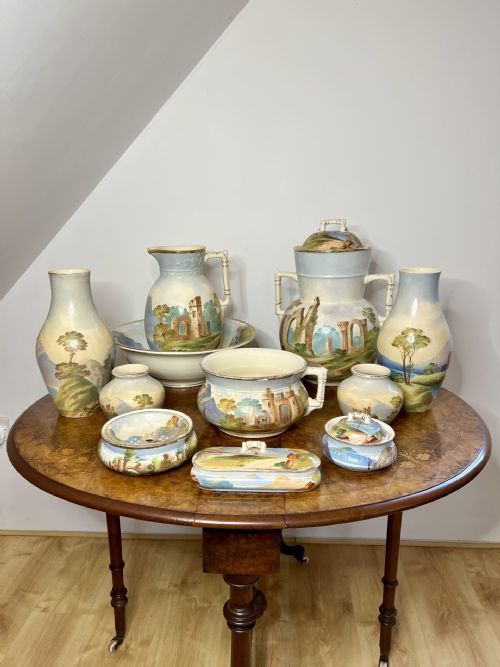


Ceramic Jug and Bowl
Ceramic jug and bowl sets are practical washstand vessels from the nineteenth and early twentieth centuries that transform a bedroom basin into a decorative display.

Ceramic Jug and Bowl
A ceramic jug and bowl is typically encountered as a matched pair designed for personal washing before plumbed bathrooms became common in homes. These sets survive from periods spanning the Victorian era through the Edwardian years and into the early twentieth century.
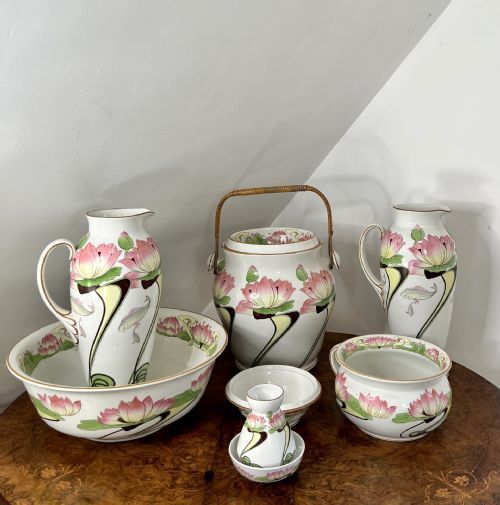
Most examples function as complete washstand sets or bathroom sets, often accompanied by smaller matching accessories for daily grooming. The forms range from robust earthenware basins to refined porcelain pitchers intended for display on wooden washstands.
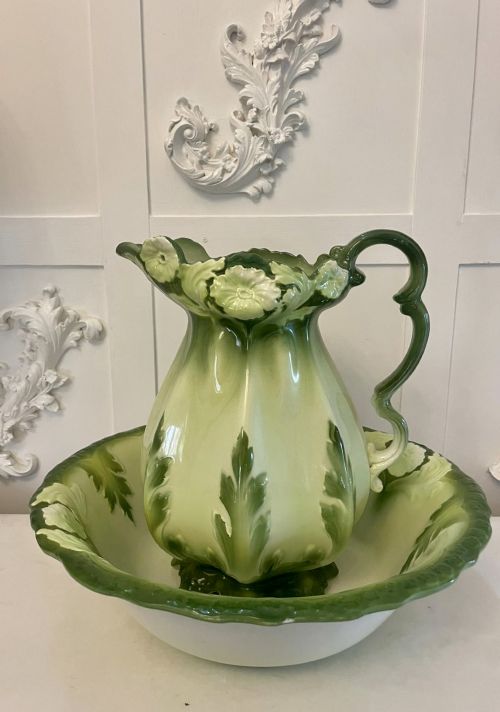
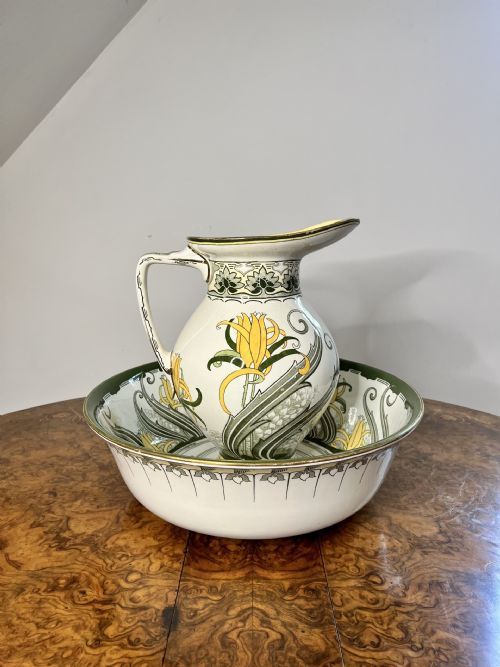
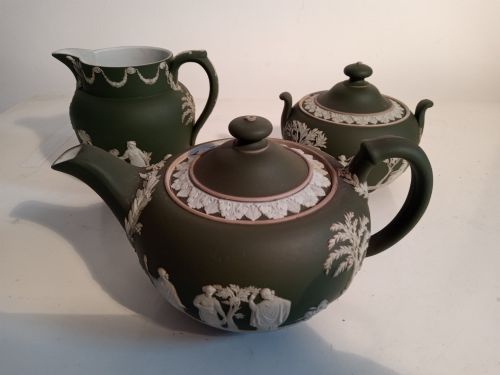
Makers from Staffordshire potteries and major factories produced these domestic items in considerable variety, utilising styles from flow blue transfer printing to Art Nouveau curves.
Materials and Manufacture
Potters shaped these vessels from earthenware, ironstone, and porcelain, applying lead or tin glazes to seal the porous clay bodies. Ironstone provided a heavy, durable fabric suited to daily ablutions, while porcelain allowed for thinner walls and delicate translucency.
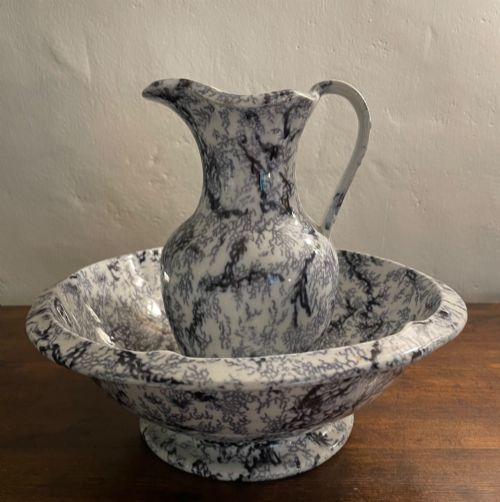
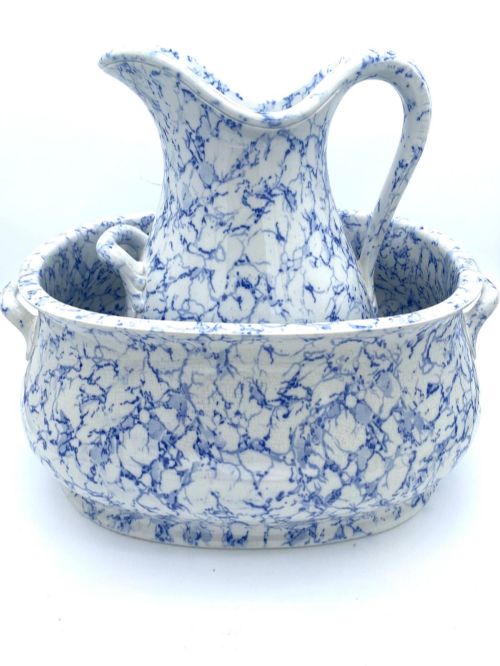
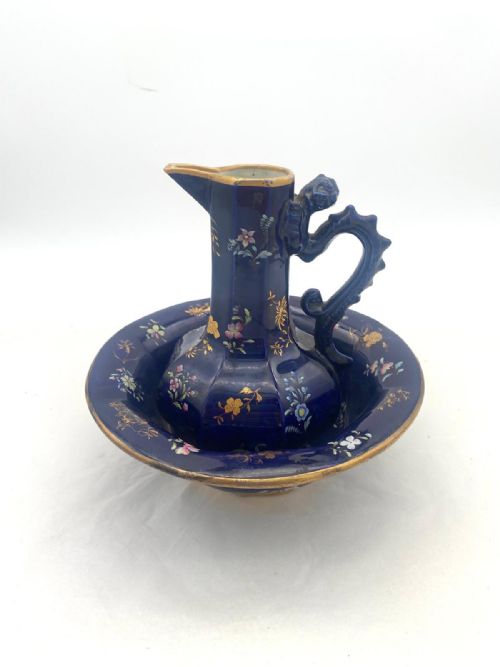
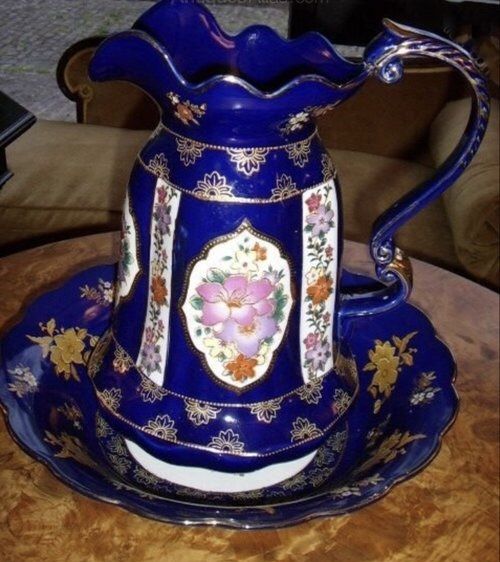
Decoration relied heavily on underglaze blue transfer printing, exemplified by flow blue techniques where cobalt bled softly into the surrounding white glaze. Artisans also applied gold leaf, gilt accents, and hand-painted floral motifs over the fired glaze for added elegance.
Ceramic Jug and Bowl Retail Price Guide 2026
Typical asking prices for ceramic jug and bowl among the pieces listed under this phrase on Sellingantiques today, from the lower quarter to the upper quarter. They describe what is for sale here now, not the wider market.
Miniature Victorian jug and bowl sets survive to prove that dollhouse owners demanded the exact same morning wash routine as adults.
Distinctions in Quality
The distinction between standard utility wares and superior pieces rests upon the crispness of the transfer print and the control of the cobalt bleed during firing. Finer sets display a balanced weight in the hand and precise alignment between the pouring lip and the handle.
Painted embellishments, particularly hand-applied gilt and gold leaf details, separate basic production from exceptional factory outputs. The integration of sculptural Art Nouveau handles or unusual octagonal moulding indicates a higher grade of design ambition.
Minton·Masons Ironstone·Wedgwood·Royal Davenport·Doulton Burslem
The Ceramic Jug and Bowl Glossary
- Earthenware
- Porous ceramic fired at a relatively low temperature and coated with a glaze to ensure it holds water. This material forms the sturdy base of many nineteenth-century domestic wash sets.
- Flow blue
- Transfer printing style where cobalt oxide deliberately blurs into the white glaze during firing. This chemical reaction creates a soft, hazy outline that collectors prize for its depth.
- Ironstone
- Dense, vitreous earthenware patented in the early nineteenth century to mimic porcelain. It offers exceptional durability for heavy basins and large jugs.
- Transfer printing
- Method of applying a decorative pattern to ceramic by pressing a paper sheet printed from a copper plate onto the bisque body. It allowed potteries to produce intricate blue and white designs efficiently.
- Washstand
- Wooden piece of furniture built to hold a ceramic jug and bowl for morning washing. These stands often included towel rails and marble tops to protect against splashes.
Ceramic Jug and Bowl: Frequently Asked Questions
How were ceramic jugs and bowls used?
These sets served as the primary washing apparatus in bedrooms before running water was installed. Water was poured from the large jug into the deep basin for morning face and hands washing.
Additional vessels on the washstand often held soap, toothbrushes, or slops, forming a coordinated suite of ceramic furniture for personal hygiene.
How do I date a jug and bowl set?
Dating relies on the ceramic body, maker stamps on the base, and stylistic cues such as Victorian transfer patterns or Edwardian floral borders. Heavy ironstone and flow blue decoration typically point to the early or mid nineteenth century.
Lighter porcelain bodies and whiter glazes, alongside flowing Art Nouveau handles, generally indicate production near the turn of the twentieth century.
Can I use antique wash sets daily?
While these ceramics remain physically robust, antique glazes can crack or stain with modern use, and older ironstone may absorb coloured liquids over time. Gentle handling preserves the original surfaces and any delicate gilt details.
Most owners prefer to display these sets in bathrooms or hallways as decorative statements rather than putting them back into active service.
What styles are common in these sets?
Victorian blue and white transfer printing dominates many surviving examples, often featuring botanical or scenic motifs. Flow blue patterns with deep, soft-edged cobalt are particularly characteristic of the mid nineteenth century.
Later Edwardian sets introduce pastel floral designs, while pieces from the end of the period incorporate organic Art Nouveau shapes and handles.