




Edwardian Washstand Set
An edwardian washstand set brings domestic history to life with practical ceramic jugs and bowls designed for the bedroom before plumbed bathrooms.

Edwardian Washstand Set
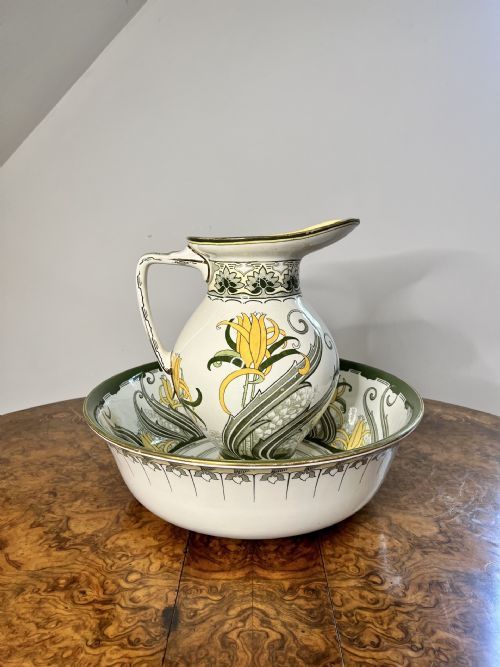
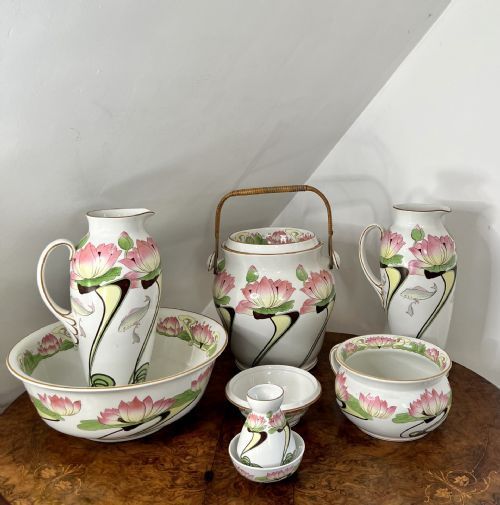
When you search for an edwardian washstand set, you encounter complete ceramic sets comprising large ewers and matching basins intended for morning ablutions. These pieces date principally from the Edwardian era alongside late nineteenth century Victorian examples, stretching into the nineteen twenties.
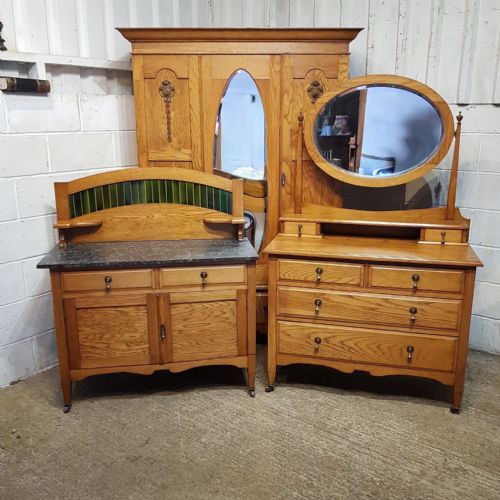
The assortment on this page includes jug and bowl sets, bathroom sets, and wash sets, frequently paired with larger bedroom furniture suites, ash or oak washstands, and bentwood shaving stands. Forms span simple utilitarian earthenware to decorative artistic suites reflecting the domestic routines of the period.
Stylistically, these collections cross several distinct design movements, incorporating traditional Edwardian aesthetics, flowing Art Nouveau lines, Aesthetic movement motifs, and sturdy Arts and Crafts principles. Victorian Chinoiserie and standard Victorian pieces also appear among the selections, showing the breadth of domestic taste at the turn of the century.
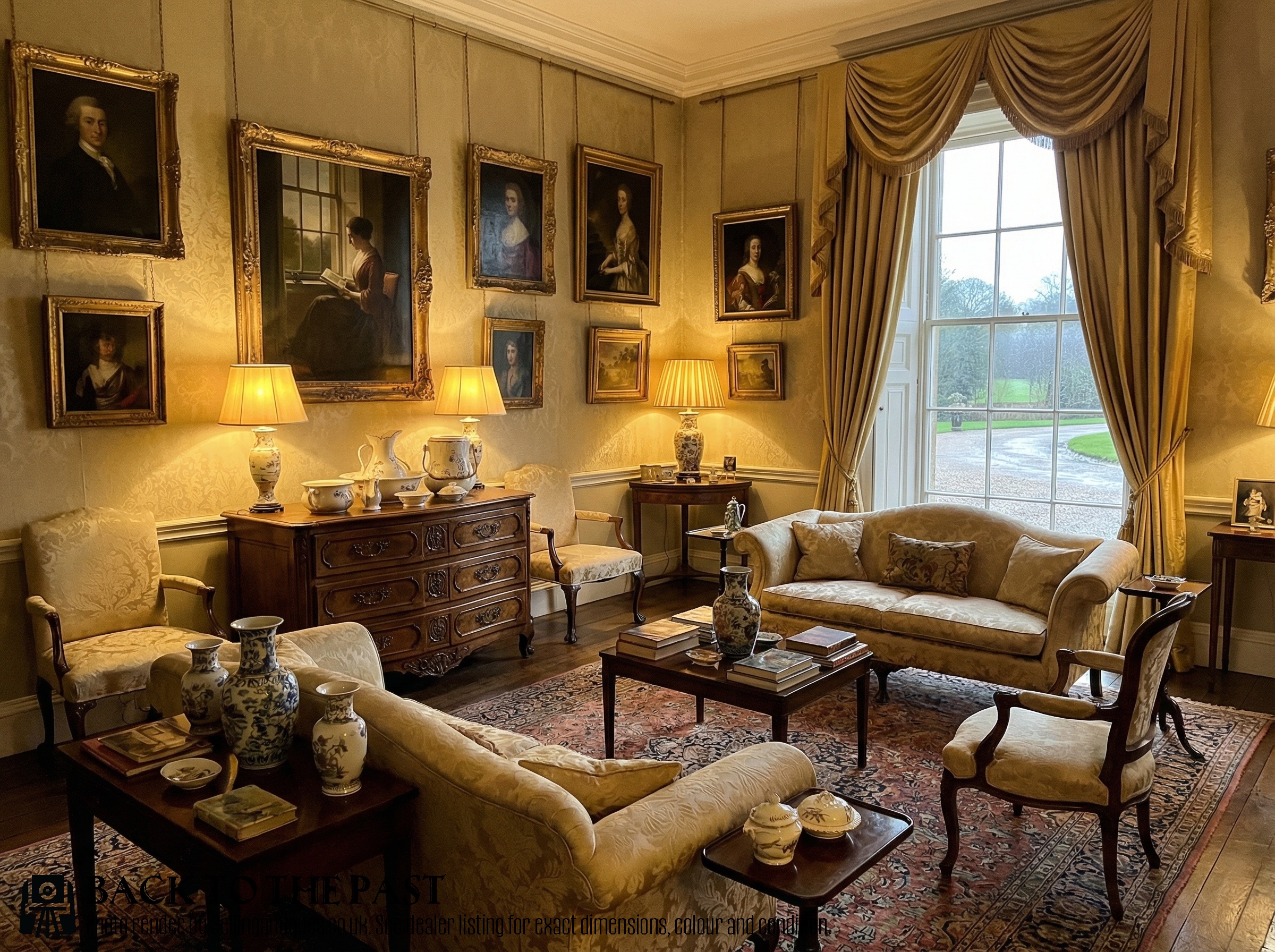
Materials and Manufacture
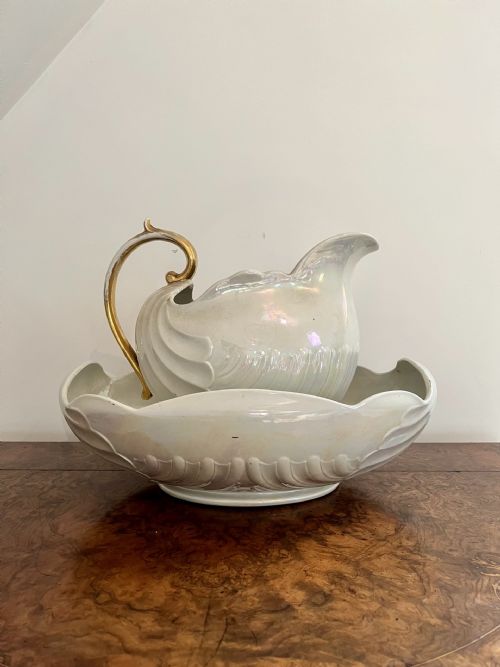
Potters relied upon ceramic, earthenware, porcelain, and glass to shape the functional ewers and basins, applying durable glaze and occasional gilt accents for surface finish. Enamel surfaces and marble tops appear on related furniture elements to withstand daily exposure to water.
Cabinetmakers utilised sturdy timbers such as oak and ash alongside bentwood techniques to construct the washstands and bedroom suites that housed the ceramic ware. These materials were chosen for both their structural resilience in damp bedroom environments and their decorative grain.
Styles represented include Edwardian, Art Nouveau, Aesthetic Movement, Arts and Crafts, and Victorian Chinoiserie.
Assessing Quality and Execution
The distinction between standard utility ware and finer pieces rests upon the crispness of the ceramic moulding, the depth of the glaze, and the artistic ambition of the applied decoration. Pieces bearing specific pottery marks or demonstrating deliberate Art Nouveau and Aesthetic movement styling command closer attention from collectors.
Construction standards in the accompanying woodwork, from solid oak and ash frames to the integration of marble inserts, determine the overall integrity of the washstand furniture. Superior execution shows in the careful matching of timber and the refined application of enamel and gilt details.
Doulon Burslem·Medway·mark Jones & Sons·Shelley
The Edwardian Washstand Set Glossary
- Ewer
- A large jug with a wide spout and looped handle, designed specifically for holding washing water and paired with a matching basin.
- Washstand
- A dedicated piece of bedroom furniture built to support the basin and ewer, often featuring a marble top and a tiled splashback.
- Art Nouveau
- A decorative style characterised by organic, flowing lines and asymmetrical plant motifs, popular during the Edwardian period.
- Aesthetic Movement
- A nineteenth-century design approach emphasising visual beauty and artistic expression over strict utility in household objects.
Edwardian Washstand Set: Frequently Asked Questions
What is an edwardian washstand set used for?
These sets provided the primary means for washing and grooming in bedrooms before running water became standard in homes. The large jug held fresh water while the deep bowl caught it during morning routines.
Today, collectors utilise these sets for decorative display in period interiors, using the basins for floral arrangements or botanical displays.
How do I clean an antique ceramic wash set?
Wash the ceramic surfaces gently using warm water and a mild detergent, avoiding harsh abrasives that might damage the historic glaze or gilt highlights. Care must be taken around any hairline cracks or crazing inherent in nineteenth-century earthenware.
Dry the pieces thoroughly with a soft cloth to prevent moisture ingress into any vulnerable areas of the ceramic body.
How do I distinguish Edwardian sets from Victorian ones?
Edwardian sets typically exhibit lighter colour palettes, simpler forms, and cleaner lines influenced by early twentieth-century taste. They frequently incorporate softer floral patterns or subtle Art Nouveau curves.
Victorian predecessors often display heavier proportions, darker woods in associated furniture, and more ornate or densely patterned Chinoiserie and floral ceramic designs.
Can I use the wooden washstands with water today?
While original washstands were built to handle daily splashes, modern use requires caution to protect historic timber finishes and marble surfaces from prolonged moisture exposure. Using waterproof liners inside washstand wells helps preserve the wood.
Regular waxing maintains the oak, ash, and bentwood frames against humidity changes in contemporary homes.