
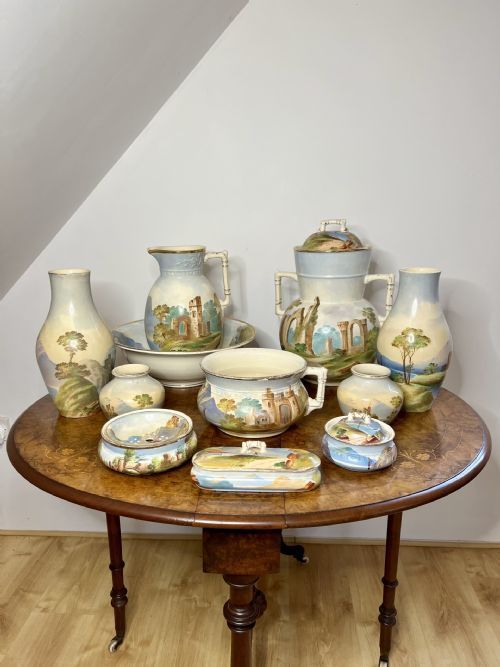


Edwardian Jug and Bowl
Edwardian jug and bowl sets bring practical washstand pottery and gleaming silver-plated tea service pieces together for daily use and display.
Edwardian Jug and Bowl
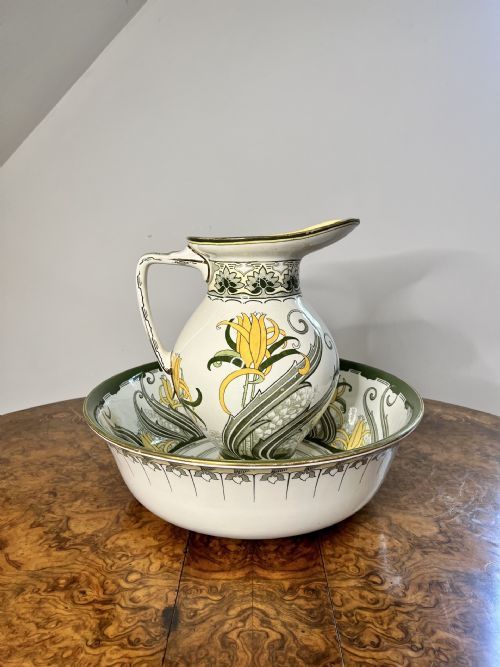
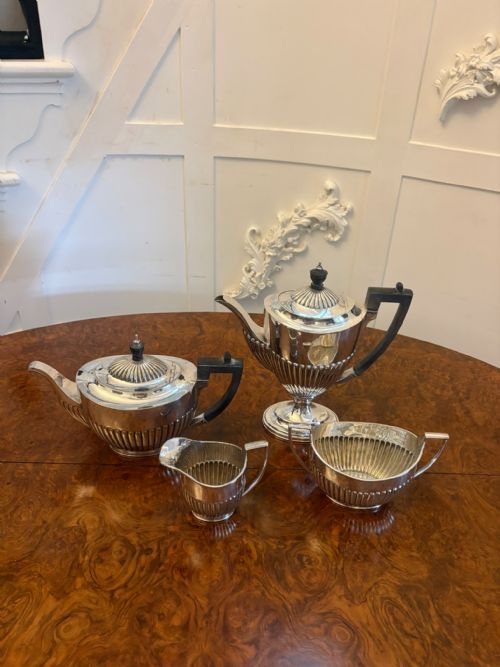
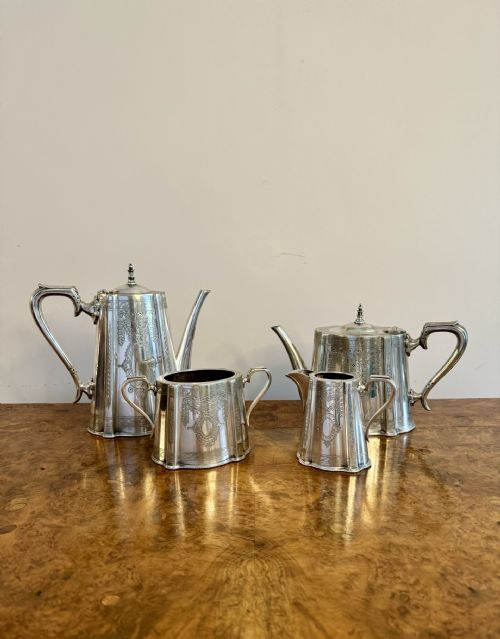
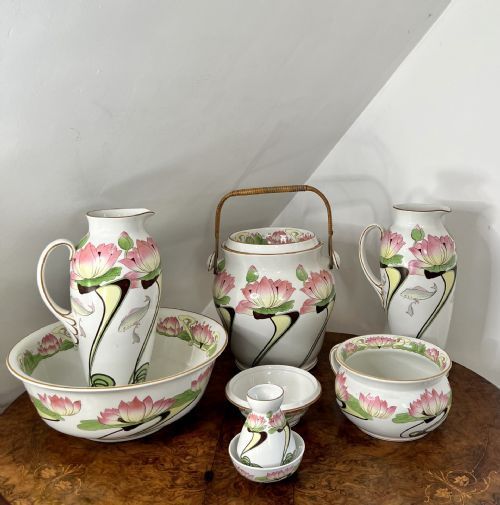
An edwardian jug and bowl search reveals two distinct categories: ceramic wash sets intended for the bedroom and silver-plated tea and coffee sets designed for the parlour. The ceramic examples typically appear as large basins paired with matching water pitchers, sometimes referenced as bathroom or washstand sets. These pieces reflect the domestic routines of the early twentieth century, spanning the period from eighteen ninety through to nineteen twenty.
Makers such as Doulton Burslem, Doulton Lambeth, Shelley, and Mark Jones and Sons produced earthenware and porcelain versions, alongside pieces bearing Art Nouveau or blue and white decoration. The silver-plated counterparts include three, four, five, and six-piece tea and coffee services, occasionally featuring ornate grapevine detailing or stands with cut glass bowls. Workshops like Walker and Hall and Harry Atkin dominate the metalware selections, representing both electroplated nickel silver and sterling silver.
Buyers frequently encounter variations that incorporate ebonised wood or bentwood wash and shaving stands alongside the ceramic vessels. The aesthetic ranges from plain utilitarian earthenware to ornate Edwardian Rococo Revival and Victorian Chinoiserie influences. Each format serves a specific historical function, whether for morning ablutions or formal afternoon hospitality.
Materials and construction
Potters utilised ceramic, earthenware, and porcelain bodies, applying hand-painted designs, blue and white transfers, or glazes before firing. Stoneware variants also appear, particularly in pieces originating from earlier decades.
Metalware services relied upon silver plate, electroplated nickel silver, and sterling silver, sometimes enhanced with gold leaf accents or cut glass elements. Craftsmen shaped these metals through smithing and casting, often adding detailed grapevine motifs and fitted wooden presentation cases.
Listings feature ceramic jug and bowl sets alongside silver-plated tea services spanning nineteen hundred to nineteen twenty.
Assessing quality
The distinction between standard domestic wares and superior examples rests upon the execution of the surface decoration and the weight of the metal. Hand-painted ceramic pieces and those bearing identifiable pottery marks command attention through artistic execution rather than simple utility.
In metalware, quality is evident in the thickness of the silver plating over the nickel silver base, the crispness of chased or embossed details like grapevine ornamentation, and the completeness of matched sets. Fitted wooden cases and maker attribution from prominent workshops further elevate the standing of individual services.
Walker and Hall·Doulton Burslem·Doulton Lambeth·Shelley·Mark Jones and Sons·Harry Atkin
The Edwardian Jug and Bowl Glossary
- Wash set
- A matching basin and large water pitcher used for personal hygiene in bedrooms before plumbed bathrooms became standard. These sets frequently included soap dishes and chamber pots.
- Silver plate
- A layer of silver applied to a base metal, commonly electroplated nickel silver in Edwardian manufacturing. This technique allowed households to own substantial tea services at a lower cost than solid silver.
- Earthenware
- A porous ceramic body fired at lower temperatures, requiring a glaze to achieve impermeability. Most everyday Edwardian wash jugs and basins utilised this material.
- Art Nouveau
- A decorative style characterised by organic, flowing lines and plant-inspired motifs. It appears frequently on ceramic and metal pieces from the turn of the twentieth century.
- Stoneware
- A dense, vitrified pottery fired at high temperatures until non-porous. Doulton Lambeth pieces in this material offer exceptional durability and distinct salt-glazed surfaces.
Edwardian Jug and Bowl: Frequently Asked Questions
How were edwardian wash sets used?
These ceramic sets provided water for washing hands and faces in bedrooms before running indoor plumbing became common. The large bowl caught the water poured from the matching jug during morning ablutions.
Servants filled the pitchers from kitchen or bathroom boilers and carried them upstairs. The complete assembly formed the centrepiece of the washstand furniture.
What is electroplated nickel silver?
This material consists of a base metal alloy composed of copper, nickel, and zinc coated with a thin layer of pure silver through electrolysis. It provided the gleaming appearance of solid silver without the prohibitive expense.
Manufacturers stamped their wares to indicate this plating process. The technique enabled mass production of ornate tea services for Edwardian dining rooms.
How do I clean silver plated tea sets?
Maintenance requires gentle washing with warm soapy water and a soft cloth to protect the underlying plating from abrasive wear. Specialised silver polishes should be used sparingly to avoid removing the precious metal layer.
Storing pieces in dry environments prevents tarnishing. Proper care preserves the original lustre and engraved details of tea pots and cream jugs.
Are jug and bowl sets waterproof?
Ceramic jugs and basins remain fully functional for holding water after more than a century since manufacture. The internal glaze seals the porous earthenware beneath.
Users should check for hairline cracks caused by historical thermal shock before filling them. Gentle handling ensures safe deployment for modern floral displays or traditional decoration.