




Edwardian Ceramic Wash Bowl
An edwardian ceramic wash bowl brings practical domestic history into a modern room, offering generous proportions and patterned earthenware designed for daily toilette.
Edwardian Ceramic Wash Bowl
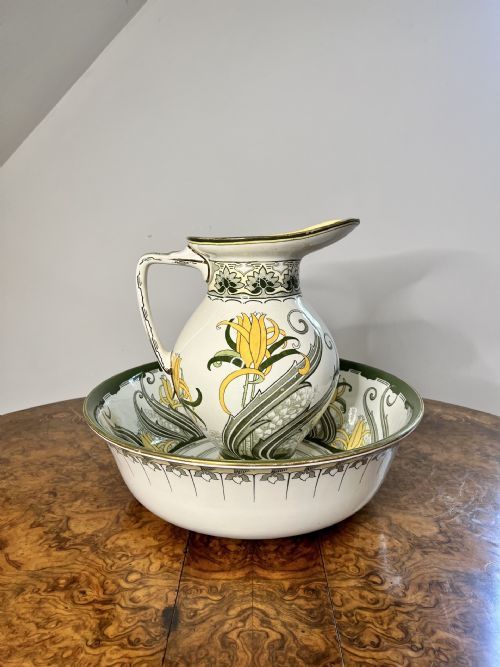
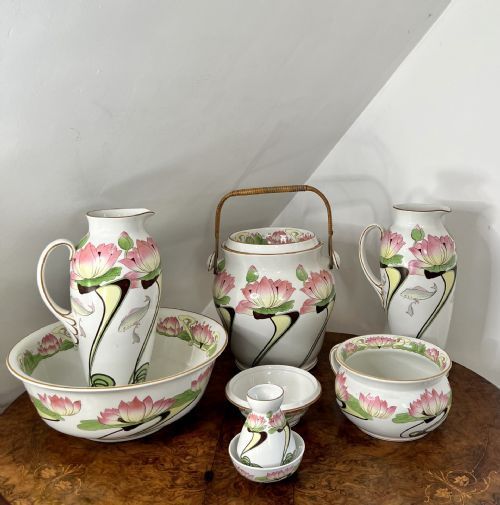
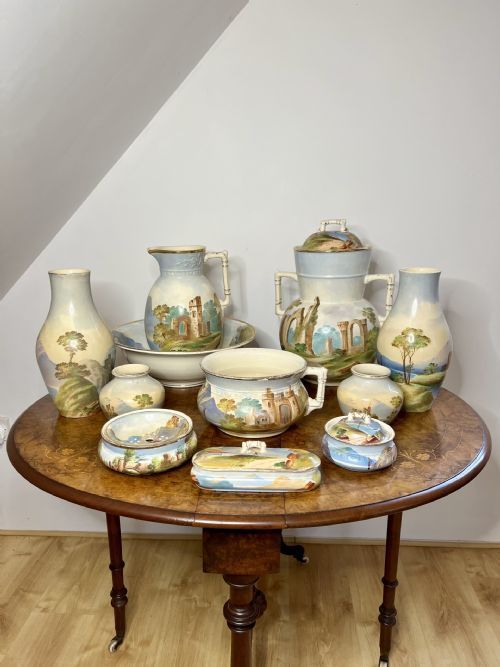
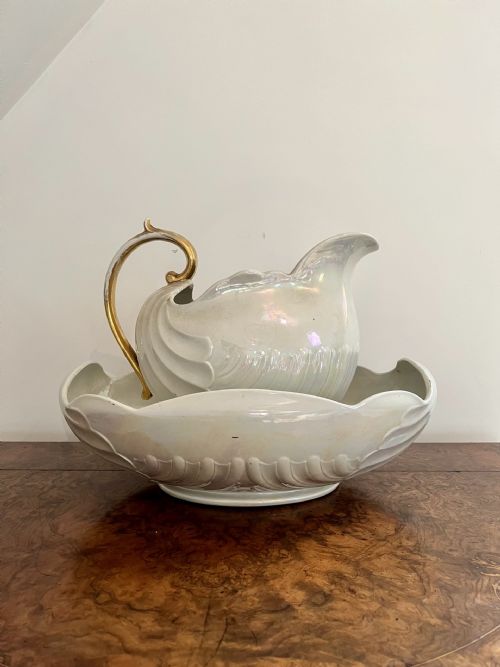
An edwardian ceramic wash bowl forms part of a traditional bedroom washing set, paired with a matching jug for morning routines before indoor plumbing became universal. These vessels appear frequently alongside larger washstand sets and complete bathroom sets dating from the early twentieth century.
Most examples originate from the Edwardian period, though variations span from Victorian styles through to nineteen twenty porcelain. Forms range from standalone basins to pieces integrated within bentwood washstands or complete jug and bowl sets.
The aesthetic reflects prevailing early twentieth century tastes, incorporating blue and white transfers, Chinoiserie motifs, and Art Nouveau floral patterns. Buyers encounter everything from creamware basins to gilded porcelain bowls.
How they were made
Potters shaped these vessels using earthenware and porcelain, applying lead or tin glazes to create impermeable surfaces suitable for holding water. Many pieces utilise transfer printing for intricate blue and white patterns.
Higher decorative schemes incorporate enamel painting and gold leaf or gilt highlights applied over the glaze. Kiln firing fixed these colours permanently, creating durable domestic wares designed to withstand regular washing.
Some wash bowls shared quarters with shaving stands, proving that early twentieth century gentlemen took their grooming very seriously indeed.
What varies in quality
Quality separates standard utilitarian earthenware from finer porcelain bodies produced by notable makers such as Doulton Burslem or Shelley. Weight, resonance, and the crispness of the transfer print indicate the level of craftsmanship involved.
The complexity of the decorative scheme influences the grade of the piece, with hand-painted enamel and gold leaf detailing marking out superior examples. Aesthetic styles like Art Nouveau or Chinoiserie often display more ambitious moulding than simple domestic basins.
mark Jones & Sons·Shelley·Doulon Burslem
The Edwardian Ceramic Wash Bowl Glossary
- Earthenware
- A porous pottery body fired at lower temperatures, requiring an impermeable glaze to hold liquids. It represents the standard material for most domestic wash bowls.
- Creamware
- A refined earthenware with a pale yellowish straw-coloured glaze, developed in the eighteenth century and continued into the Edwardian era. It provides a warm, smooth background for transfer-printed designs.
- Transfer printing
- A decoration technique where an engraved copper plate transfers a design onto tissue paper, which is then rubbed onto the ceramic surface before glazing. This allowed factories to produce uniform patterned washware rapidly.
- Gilt
- A thin layer of gold applied to the ceramic rim or handle for decorative effect. It indicates a higher grade of manufacture intended for guest bedrooms rather than servant quarters.
Edwardian Ceramic Wash Bowl: Frequently Asked Questions
How were wash bowls used originally?
These bowls sat atop wooden washstands alongside a matching jug filled with warm water for morning washing and shaving. They served as the central basin for personal hygiene before plumbed bathrooms became standard in homes.
Servants would empty and refill the sets daily, keeping the bedroom supplied with fresh water. The deep sides of the bowl prevented splashing during use.
How do I style a wash bowl today?
Many people place these large bowls on tables or bathroom counters as statement decorative pieces. They also function well holding rolled towels or dried botanicals.
Pairing the bowl with its original jug completes the historic aesthetic. The generous proportions make them striking centrepieces in a room.
How can I tell an Edwardian bowl from Victorian?
Edwardian bowls often feature lighter pastel palettes, simpler floral arrangements, and flowing Art Nouveau lines compared to earlier Victorian designs. Victorian examples frequently display heavier geometric borders or darker transfer prints.
Makers' marks on the base provide the most reliable guide to dating the piece accurately.
What materials are these bowls made from?
The listings show pieces constructed primarily from earthenware and ceramic, finished with protective glazes. Finer examples utilise porcelain bodies.
Surface decoration often includes enamel colours, gold leaf, and gilt trim. Creamware variants offer a distinct warm tone.