

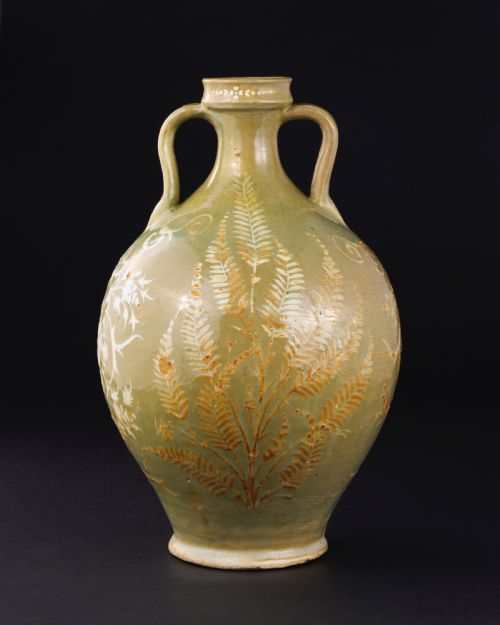





Green Glazed Ceramic Jug
A green glazed ceramic jug brings tactile warmth to a room, offering rich surface texture and deep colour through historical earthenware and stoneware.
Green Glazed Ceramic Jug
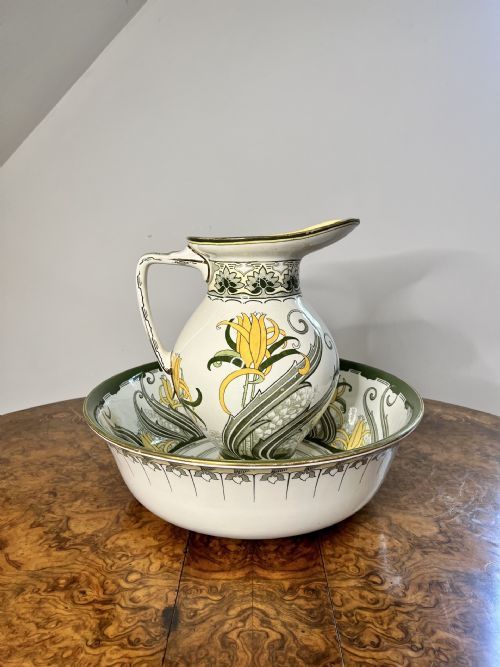
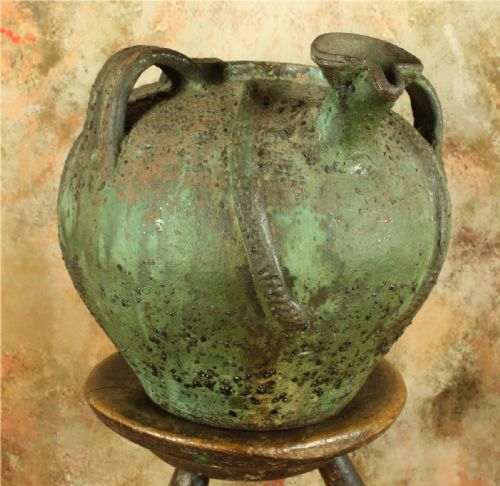
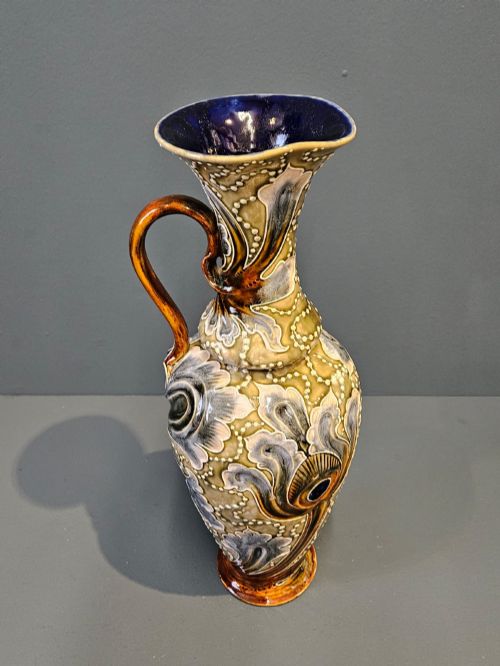
A green glazed ceramic jug encompasses utilitarian vessels and decorative objects spanning multiple centuries, from English salt-glazed saltware to French country oil pots. The selection on this page leans heavily towards Victorian and early twentieth-century examples, including Majolica water vessels and Arts and Crafts studio pottery.
Forms range from large multi-handled storage pitchers and ewers to delicate cream jugs and complete jug and bowl sets. Buyers encounter regional variations such as Turkish water pots, Persian vessels, and Staffordshire figures alongside domestic Doulton Lambeth productions.
Materials and construction
Potters shaped these pieces primarily from earthenware, terracotta, and stoneware using local clay bodies before applying distinctive lead or tin-based metallic glazes. These liquid coatings pool in the recessed details and run thinly over high points during firing, creating natural tonal variations across the surface.
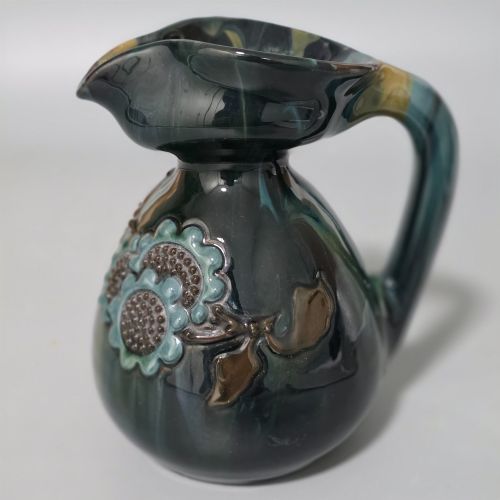
Studio potters and factory artisans utilised wheel-throwing, moulding, and slip-casting techniques to form the bodies, often embellishing them with applied botanical motifs like sunflower heads or bullrushes before kiln firing.
Among the historical vessels are hobbled cow creamers, reminding us that past dining tables occasionally welcomed milk poured directly from a ceramic bovine.
Factors that distinguish individual pieces
Quality rests in the crispness of the moulded or hand-modelled relief work and the richness of the glaze application. Pieces where the green glaze settles evenly without obscuring underlying botanical or figurative detail demonstrate superior workshop control.
Artistic provenance and studio attribution elevate specific examples, particularly signed works from notable makers and identified potteries. The vitality of the modelled decoration, from Staffordshire animals to Art Nouveau tendrils, dictates the visual impact of each vessel.
Doulon Burslem·Doulton Lambeth Ware·Sir Edmund Elton·Minton·George Jones
The Green Glazed Ceramic Jug Glossary
- Majolica
- A type of earthenware decorated with opaque coloured lead glazes over a white tin-glaze ground, popular during the Victorian era for bright botanical designs.
- Earthenware
- Porous pottery fired at lower temperatures, requiring a vitreous glaze layer to render the vessel watertight.
- Stoneware
- A dense, hard pottery material fired at high temperatures until the clay body vitrifies, making it naturally impermeable without glaze.
- Ewer
- A large ornamental jug with a flared spout and curved handle, historically used for pouring water.
- Slip
- A liquid mixture of clay and water applied to pottery surfaces for decoration or coating before firing.
Green Glazed Ceramic Jug: Frequently Asked Questions
How were these jugs used originally?
These vessels served practical daily functions such as holding water, cream, or olive oil, alongside decorative display roles within domestic interiors.
Larger handled jars managed storage tasks, while smaller pitchers and ewers functioned at dining tables or washstands.
Can I use an antique jug for serving food?
Most older earthenware and Majolica pieces feature porous bodies and lead-containing glazes that make them unsuitable for modern culinary use.
Display these vessels as decorative items or dry flower holders rather than putting them into service for daily food and drink.
How do I date a green glazed ceramic piece?
Dating relies on identifying stylistic markers, manufacturing techniques, and factory stamps or signatures embedded in the clay base.
Victorian pieces often display moulded botanical relief, while Arts and Crafts examples show individual studio signatures and naturalistic forms.
What is the difference between earthenware and stoneware?
Earthenware is fired at lower temperatures, leaving the underlying clay porous and requiring a complete glaze layer to hold liquids.
Stoneware reaches higher kiln temperatures that vitrify the clay body itself, resulting in a denser and completely waterproof material.