
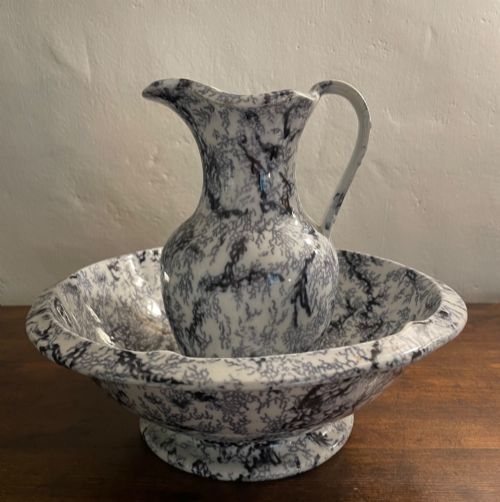
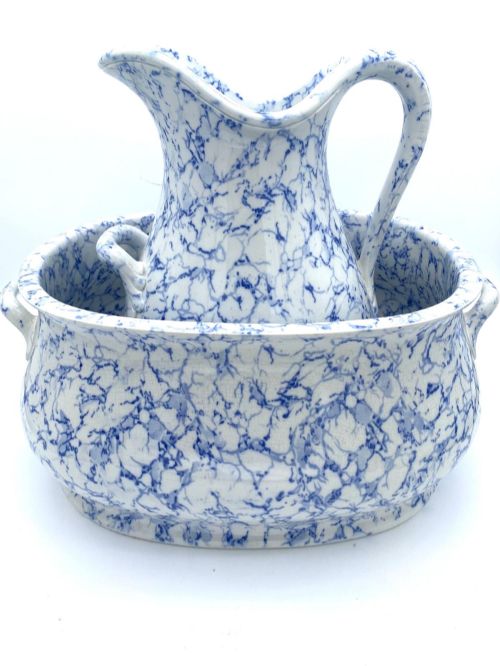
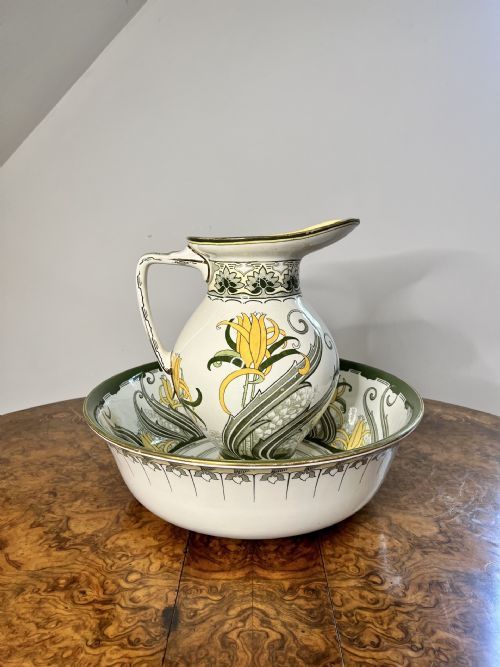
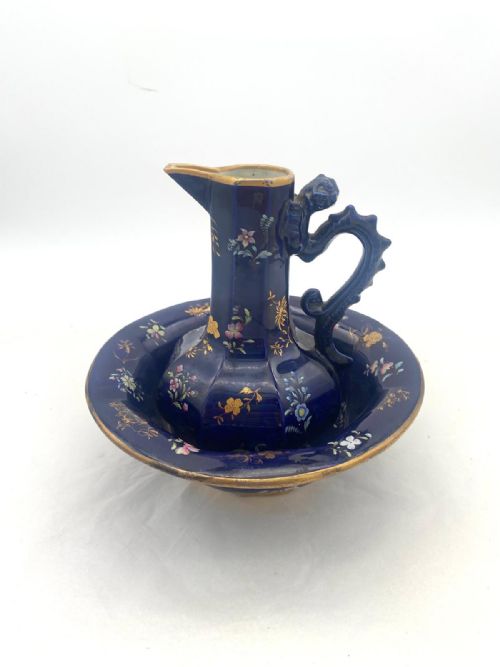
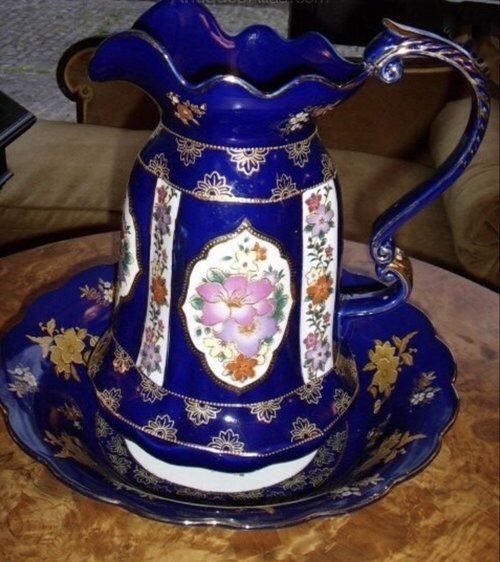
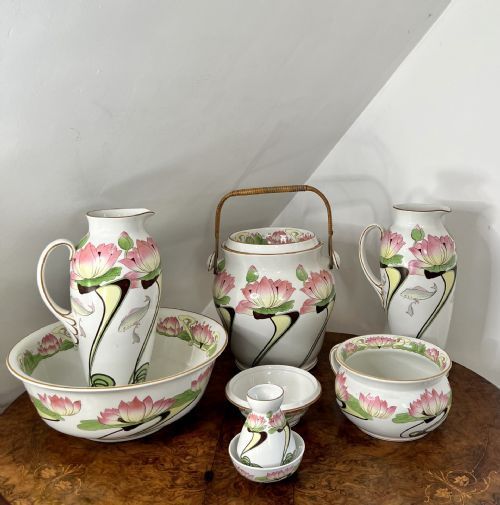
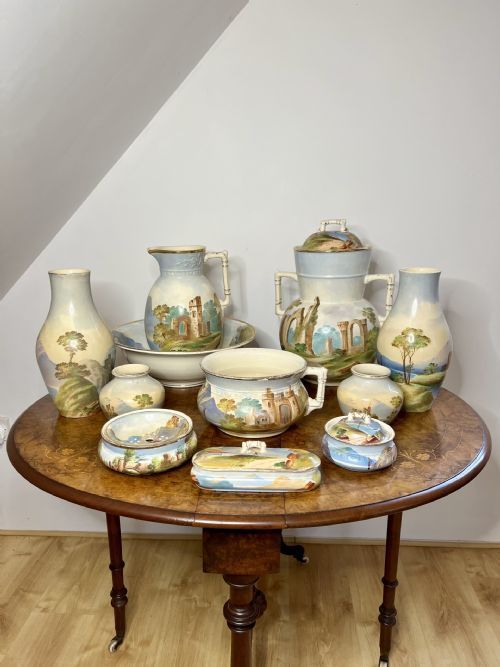


Pitcher and Basin Set
A pitcher and basin set brings domestic history to life, offering ceramic and glass vessels designed for the bedroom washstand.
Pitcher and Basin Set
A pitcher and basin set comprises matched vessels intended for personal ablutions before indoor plumbing reached every bedroom. These utilitarian items served everyday hygiene needs across the nineteenth and early twentieth centuries.
Buyers searching for a pitcher and basin set encounter various forms including wash sets, jug and bowl sets, and larger bathroom sets. Edwardian examples and Victorian pieces dominate the current selection, alongside earlier nineteenth century designs.
Ceramic and earthenware pieces appear frequently, shaped to hold water for morning washing routines. The grouping includes large basins paired with substantial jugs, plus occasional miniature sets.
Judging quality in wash sets
Quality rests upon the crispness of the ceramic moulding and the precision of the glaze application. Finer sets display carefully registered transfer prints or hand painted motifs without blurring.
The weight and resonance of the earthenware or ironstone indicate the density of the paste used by the pottery. Heavier, well balanced pieces demonstrate superior manufacturing standards from prominent makers.
Listings feature pieces spanning from the early nineteenth century through the Edwardian period, utilising earthenware, porcelain, and glass.
Doulton Burslem·Masons Ironstone·Minton·Royal Worcester·Shelley·Christofle·Doulton Lambeth·Mark Jones and Sons·Robert Hennel
The Pitcher and Basin Set Glossary
- Flow blue
- A nineteenth century transfer printing method where cobalt blue colour bled slightly into the surrounding white glaze during firing.
- Ironstone
- A dense, durable type of earthenware patented to resist chipping and heavy domestic wear.
- Transfer printing
- A technique for applying intricate patterns to ceramics by pressing paper from an engraved copper plate onto the clay body.
- Earthenware
- Porous ceramic fired at lower temperatures, requiring a vitreous glaze to hold liquids securely.
- Art Nouveau
- A decorative style characterised by flowing, organic lines and floral motifs popular around nineteen hundred.
Pitcher and Basin Set: Frequently Asked Questions
How were wash sets used?
These sets sat upon wooden washstands in bedrooms before plumbed bathrooms became standard. Water was poured from the large jug into the basin for morning washing and grooming routines.
Servants filled the pitchers daily from hot water supplies downstairs. The matching bowls caught the used water, which was then emptied out through slop pails.
How do I date a set?
Dating relies on maker marks stamped or printed on the base of the ceramic pieces. Stylistic clues like Art Nouveau curves or Victorian floral transfers also point to specific decades.
Heavier ironstone bodies typically indicate earlier nineteenth century production. Finer, lighter porcelain or earthenware often points toward the Edwardian era.
Where can I display a set?
Large basins and jugs suit placement on sturdy sideboards, large tables, or traditional washstands. Their substantial size makes them effective decorative focal points in hallways or bedrooms.
Maller miniature sets fit comfortably on shelves or mantelpieces. Glass or earthenware pieces require stable surfaces away from heavy foot traffic.
Can I use them for washing?
Antique ceramics tolerate gentle hand washing with mild soap and warm water. Avoid harsh scrubbing or dishwashers to protect historic glazes and gilt details.
Internal hairline cracks or crazing mean older earthenware should not hold drinking water. Reserve functional daily use for robust ironstone or glazed porcelain pieces.