
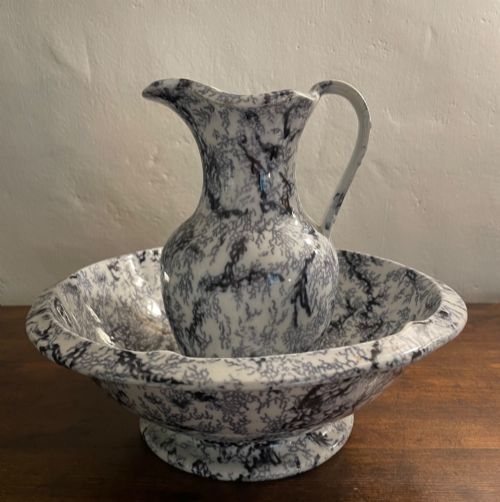
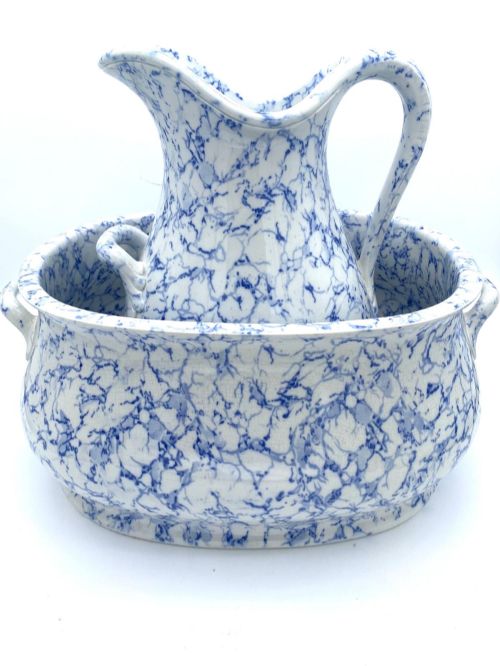
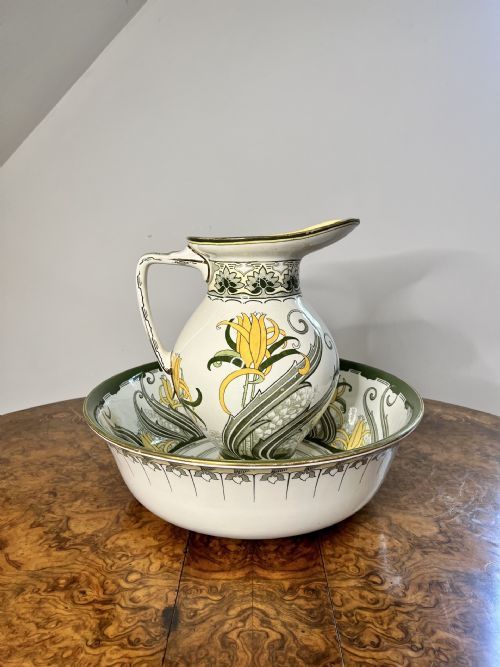
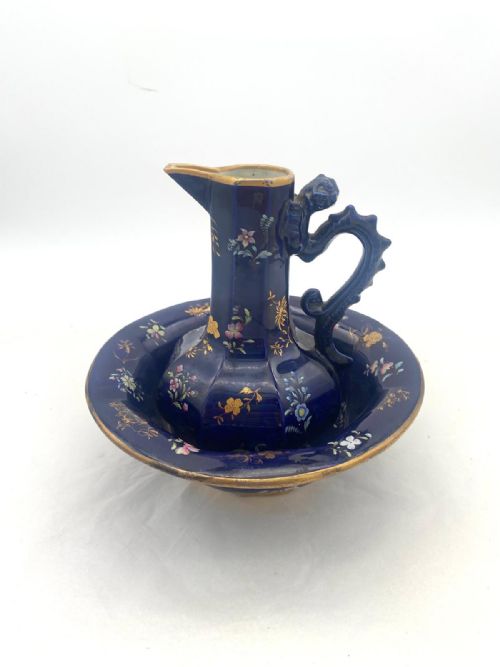
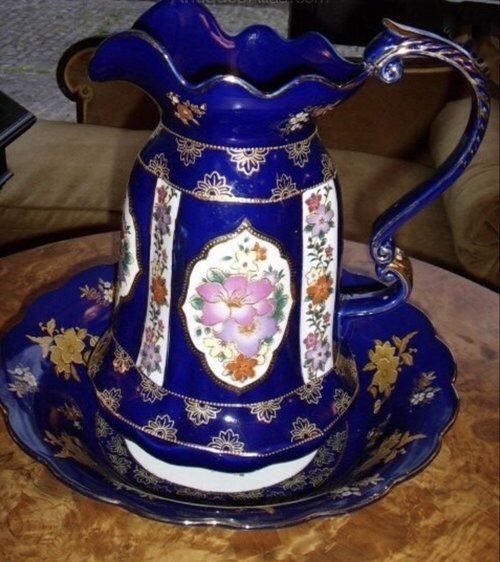
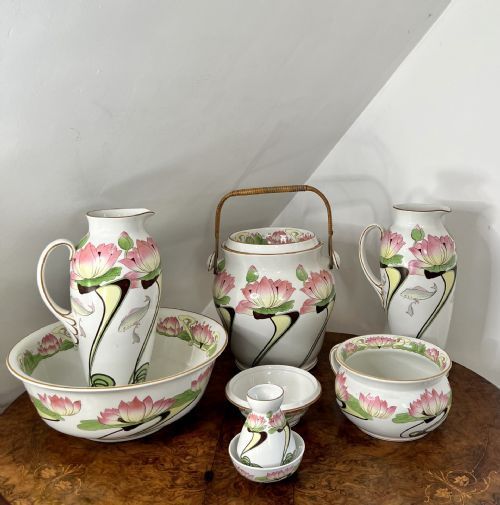
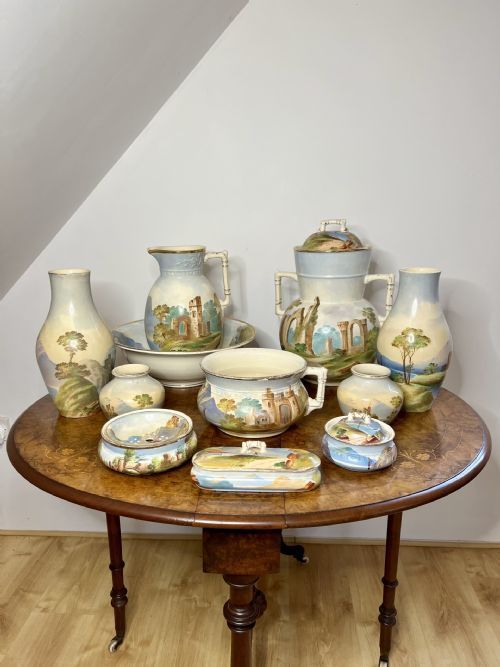


Antique Ceramic Wash Set
These antique ceramic wash set pieces bring washstand utility and late nineteenth century ceramic artistry directly into modern interiors.
Defining the antique ceramic wash set
An antique ceramic wash set provides the large basin and matching jug once essential for bedroom ablutions before plumbed bathrooms became standard. Buyers seeking an antique ceramic wash set encounter substantial sets designed for washstands, featuring matching ewers and deep bowls.
The selections span the Victorian and Edwardian eras, with dates stretching from the mid nineteenth century through to nineteen hundred. Forms include jug and basin sets, footbaths, and complete bathroom sets suited to period interiors.
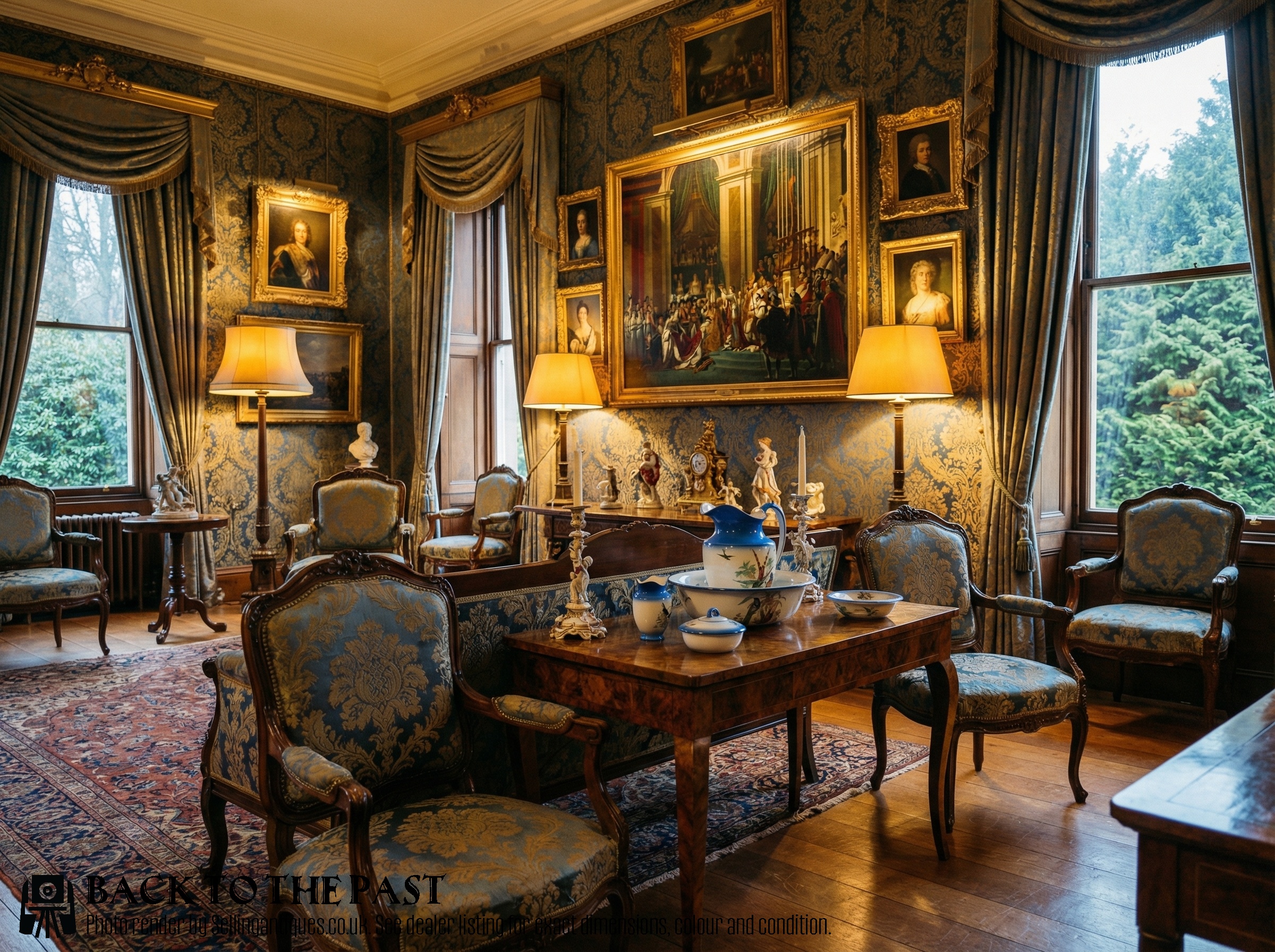
Materials and manufacture
Potters utilised robust earthenware and ironstone to form the heavy basins and pitchers required for daily washing. These ceramic bodies received protective glazes, sometimes enhanced with gilt or blue transfer printing.
Makers applied specialised decorative techniques, visible in pieces displaying flow blue patterns and Chinoiserie motifs. The resulting glazed ceramic surfaces combined durability with ornate nineteenth century visual appeal.
Retail Price Guide 2026
Typical UK retail prices for ceramic wash set, calculated from the Sellingantiques database of over a million retail prices indexed since 2003. This retail price guide relies exclusively on Sellingantiques data; no external sources or auction records are used, so the figures do not describe the wider market.
Listings span the Victorian and Edwardian periods, featuring earthenware and ironstone materials.
Assessing quality
Quality reveals itself in the crispness of the transfer printing and the weight of the ironstone body. Superior examples demonstrate refined proportions in the jug handle and symmetry in the deep basin rim.
Maker attribution elevates certain sets, particularly when firms like Masons or Minton produced the earthenware. Finer pieces show careful control during the glazing process, maintaining clarity across complex patterns.
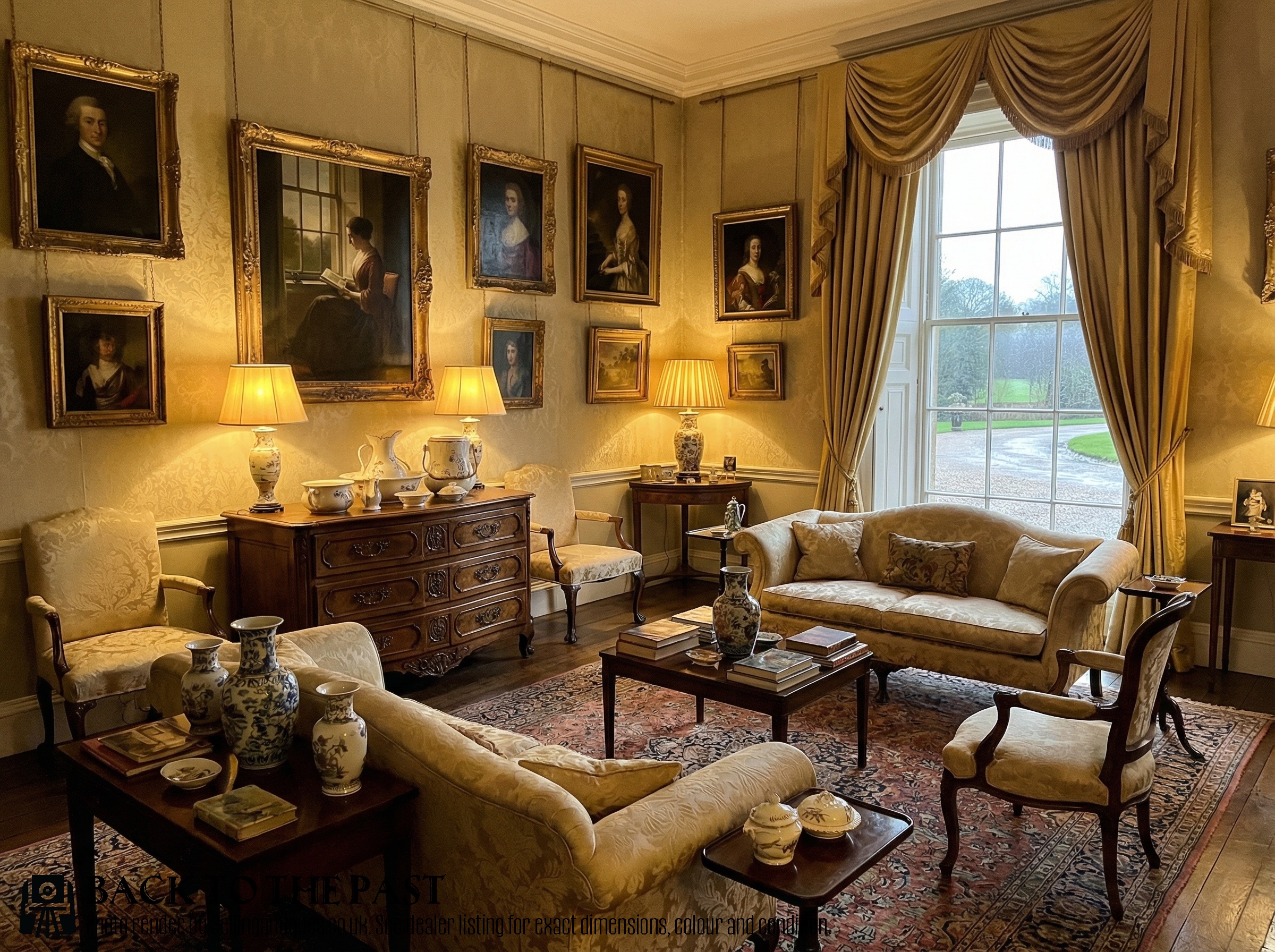
Minton·Masons Ironstone·Mark Jones & Sons
The Antique Ceramic Wash Set Glossary
- Earthenware
- A porous type of pottery fired at lower temperatures, commonly used for heavy domestic vessels. It requires a vitreous glaze to hold water effectively.
- Ironstone
- A heavy, durable type of earthenware patented in the nineteenth century. It resists chipping far better than standard pottery.
- Flow blue
- A cobalt blue transfer printing style where the colour blurred slightly into the glaze during firing. This technique created a hazy, atmospheric effect on white ceramic surfaces.
- Basin
- A large, open bowl designed to hold water for washing hands and face. In a wash set, it pairs directly with a matching tall pitcher.
- Footbath
- A deep, wide vessel shaped like a small tub, utilised for soaking feet before the era of fitted bathroom plumbing. These substantial pieces match the ceramic style of the bedside wash jug.
Frequently Asked Questions
What is an antique ceramic wash set?
An antique ceramic wash set is a matching group of vessels, typically a large jug and deep basin, used for personal hygiene in bedrooms before running water.
These sets sat upon wooden washstands and formed a standard part of nineteenth century household furnishings.
How were wash sets used historically?
Households filled the tall pitcher with water from a kitchen or pump, pouring it into the basin for morning and evening washing.
Chamber pots, soap dishes, and toothbrush holders often accompanied the jug and bowl to complete the bedroom toilet routine.
How do I date an Edwardian wash set?
Edwardian wash sets usually date around nineteen hundred, reflecting simpler decorative tastes compared to earlier Victorian designs.
These later sets often feature lighter earthenware bodies and cleaner floral or geometric transfer prints.
Can I use these sets for display?
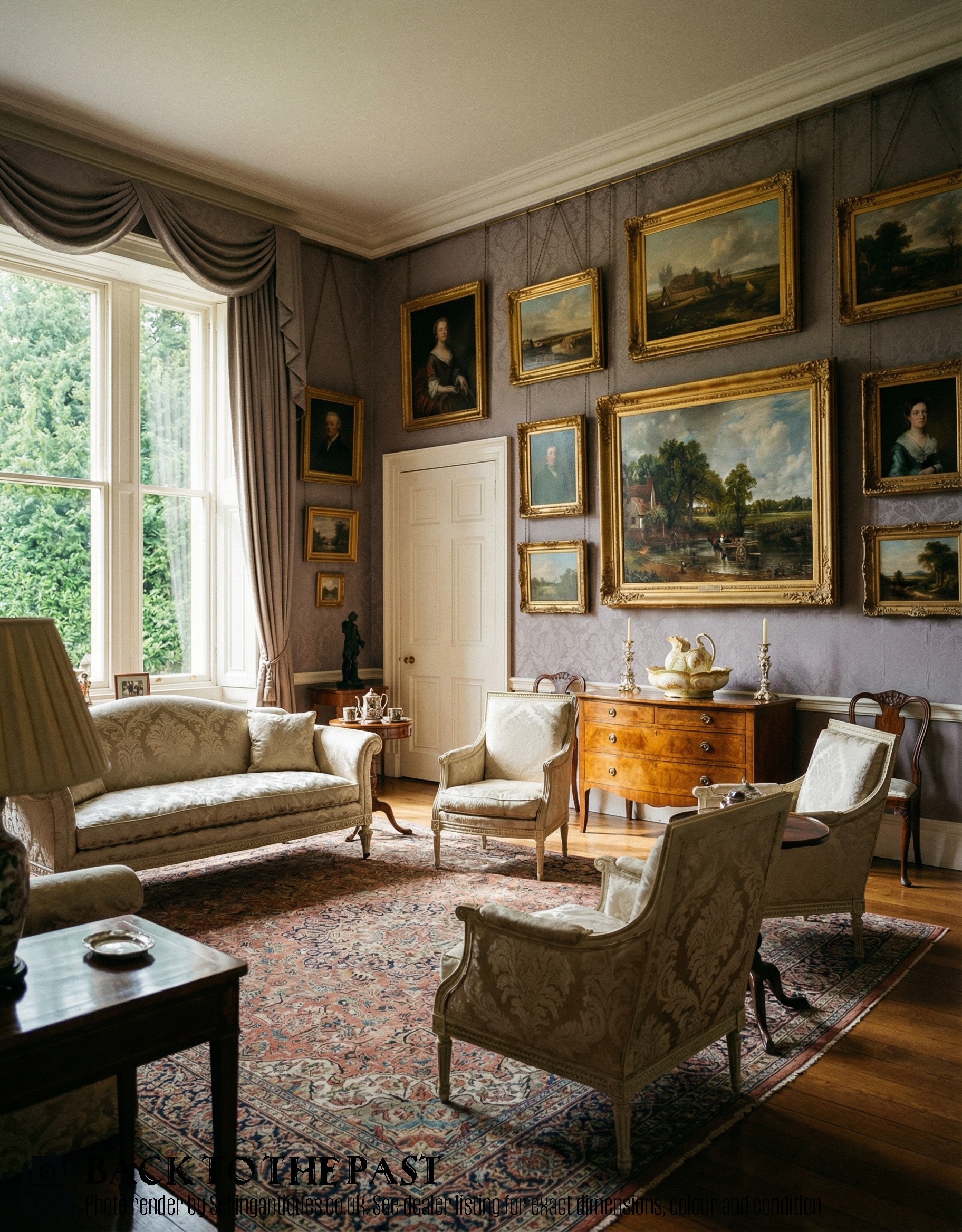
These ceramic pieces function well as decorative focal points in modern bathrooms, hallways, or living spaces.
Their substantial size and ornate nineteenth century patterns make them suitable for holding dried florals or standing alone as statement items.