


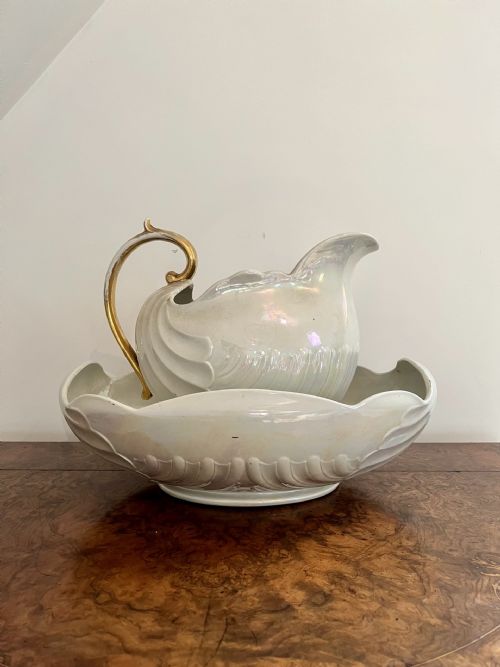

Antique Ewer and Basin
These antique ewer and basin sets are wash vessels designed for the bedroom, combining practical pouring pitchers with matching bowls.
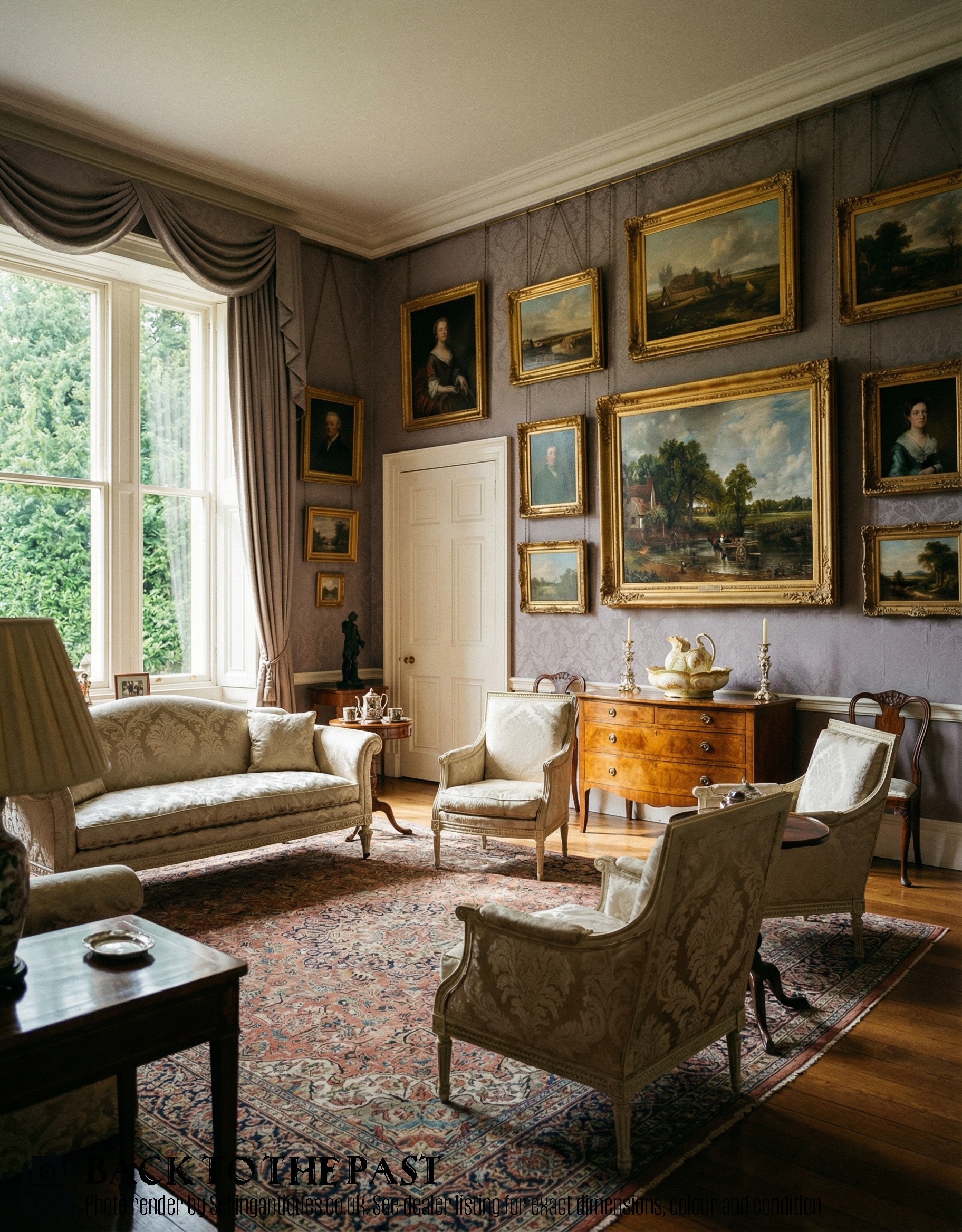
Antique Ewer and Basin
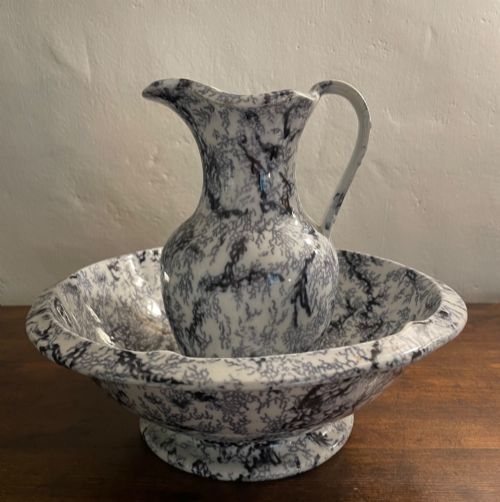
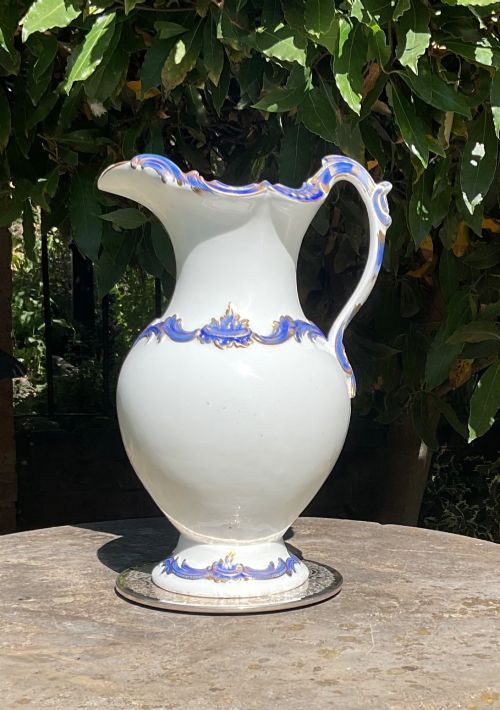
An antique ewer and basin comprises a water pitcher paired with a matching bowl, historically used for personal washing before plumbed bathrooms became common. The selections here span the nineteenth century and the early twentieth century, taking forms such as wash sets, bathroom sets, and individual jugs with bowls.
Most examples date from the Victorian and Edwardian eras, alongside pieces from the Regency period and the Art Nouveau style. Buyers encounter earthenware, porcelain, ironstone, and glass, sometimes decorated with gilt, gold leaf, enamel, or flow blue transfer printing.
Assessing quality in wash sets
Quality rests on the crispness of the ceramic moulding and the precision of the transfer printing or hand-painted details. Finer pieces display well-defined handles, balanced pouring spouts, and evenly applied glazes without firing blemishes.
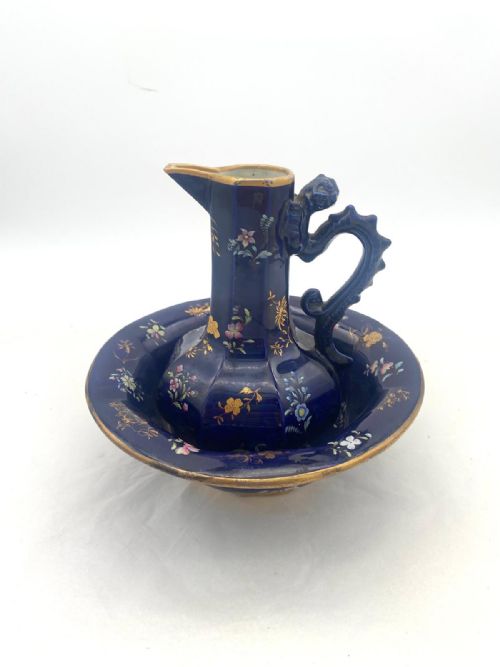
The sophistication of the design differentiates standard utility ware from superior decorative items. Elaborate forms, such as octagonal Mazarine shapes or specialised glass work with matching goblets, indicate higher workshop standards.
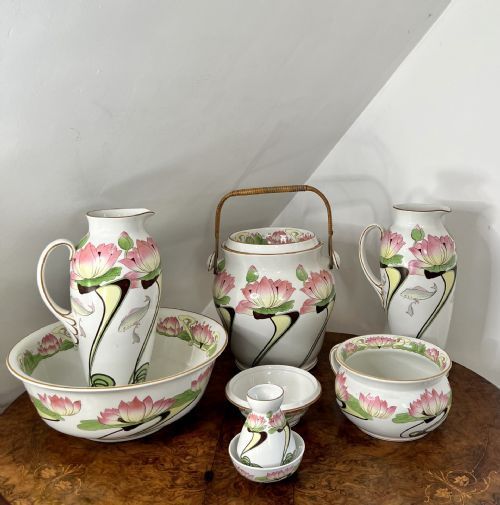
Completeness adds to the standing of a set, where the ewer and basin retain their original matching character and supplementary components such as soap dishes or slop buckets.
Listings feature 19th-century and early 20th-century items, spanning Victorian, Edwardian, and Art Nouveau periods in ceramic, glass, and silver plate.
Mason's·Minton·Doulton Burslem·Christofle·Shelley
The Antique Ewer and Basin Glossary
- Ewer
- A large pitcher with a flared spout and a shaped handle, designed specifically for holding and pouring water.
- Ironstone
- A heavy, durable type of earthenware patented in the nineteenth century that resists chipping better than standard porcelain.
- Flow blue
- A cobalt blue transfer printing style on white earthenware where the pigment intentionally bled slightly into the glaze during firing.
- Latticino
- A type of glass embedded with opaque white or coloured glass threads arranged in net or spiral patterns.
- Gaudy Welsh
- A style of colourful, hand-painted earthenware featuring cobalt blue, copper lustre, and iron-red highlights.
Antique Ewer and Basin: Frequently Asked Questions
What was an ewer and basin used for?
These sets served as the primary washing apparatus in bedrooms before running water and indoor plumbing became standard. Users poured water from the ewer into the basin for morning washing and grooming.
Over time, they evolved from functional washstand accessories into decorative items displayed in hallways and bedrooms.
How do I date a ceramic wash set?
Dating relies on observing the ceramic body, the manufacturing style, and any registration marks or maker stamps underneath the base. Earlier nineteenth-century pieces often feature heavier ironstone bodies and rich flow blue patterns, while later Edwardian sets show lighter forms.
Stylistic cues also help narrow the period, as Art Nouveau pieces display characteristic organic curves and flowing floral motifs.
Are these sets waterproof and usable?
Most ceramic and glass pieces remain structurally sound and capable of holding water safely for everyday display or functional use. However, antique glazes and enamels benefit from gentle hand washing rather than abrasive cleaning.
Sudden temperature changes should be avoided to protect the aged ceramic body and any delicate gilt or enamel decoration.
What is the difference between ironstone and porcelain?
Ironstone is a thick, opaque vitreous earthenware developed for strength and durability, making it heavier and less translucent than porcelain. Porcelain is a finer, fired ceramic material that is thinner, lighter, and naturally translucent when held to the light.
Both materials were widely used for wash sets, with ironstone favoured for everyday robustness and porcelain chosen for finer decorative finishes.