



Antique Earthenware Pitcher Basin
These antique earthenware pitcher basin sets bring practical washstand vessels from the nineteenth and early twentieth centuries into modern homes.
Antique Earthenware Pitcher Basin
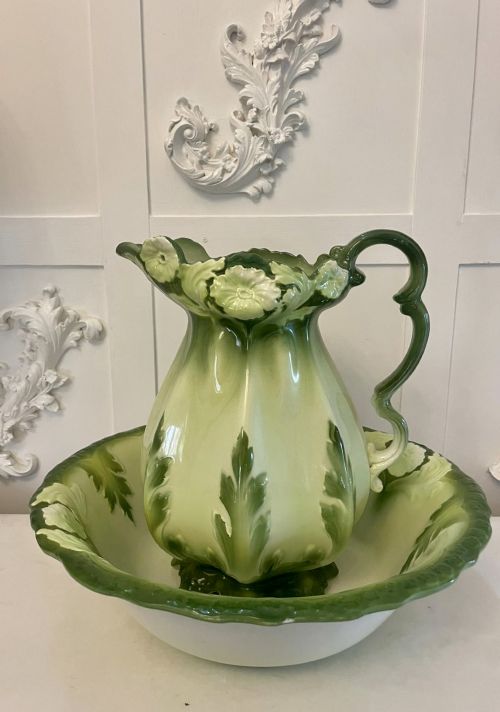
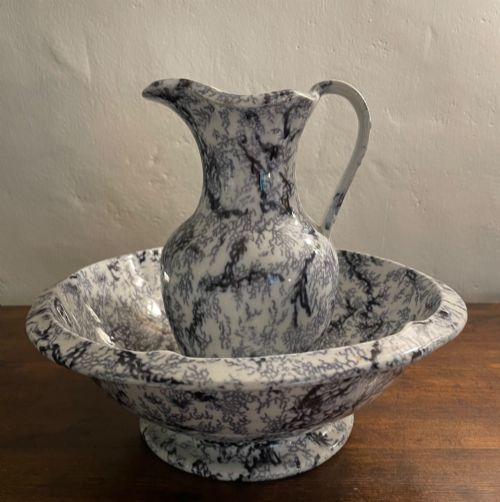
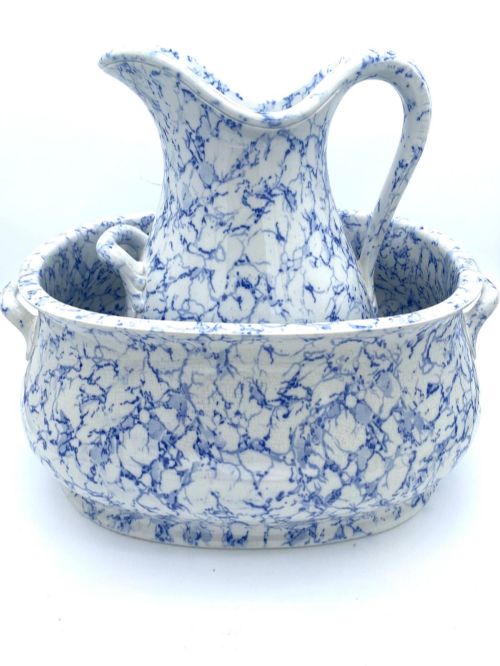
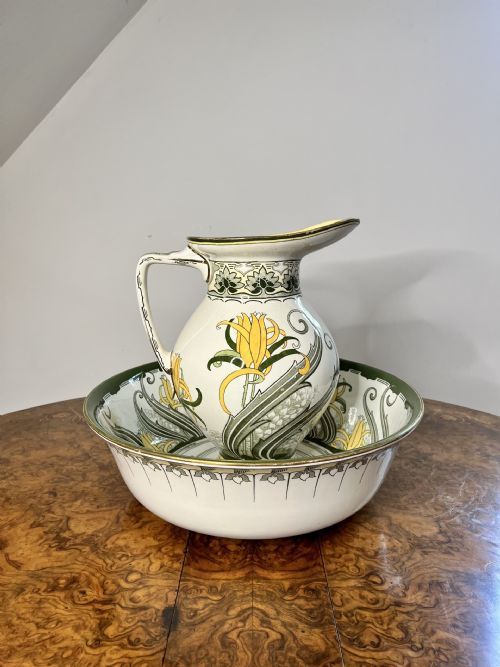
When you search for an antique earthenware pitcher basin, you encounter wash sets, jug and bowl sets, and bathroom sets designed for personal hygiene before modern indoor plumbing. These groupings typically comprise a large water jug paired with a deep washing bowl, intended for use on a bedroom washstand.
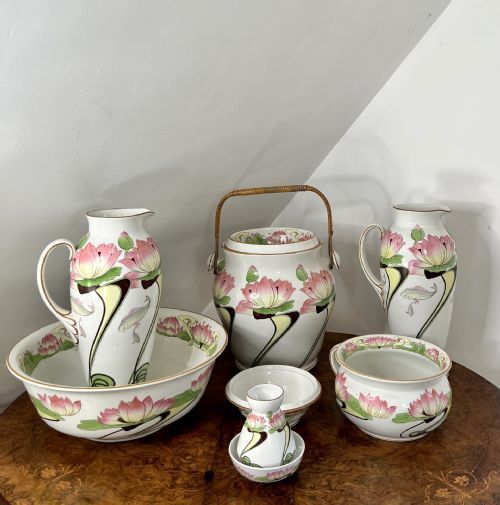
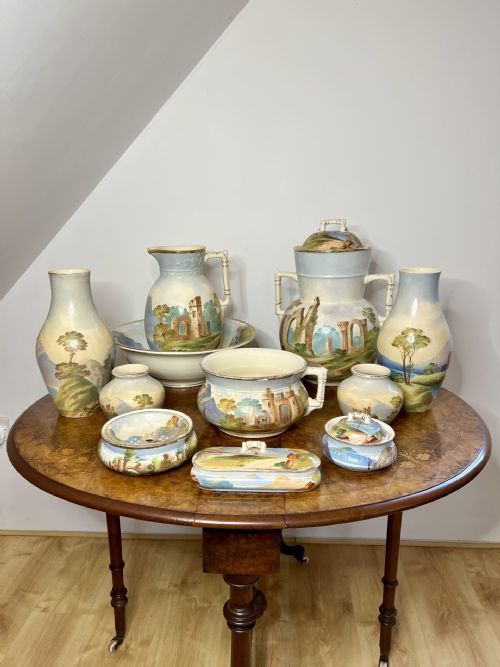
The pieces on this page span the nineteenth century and the Edwardian era, featuring Victorian, Edwardian, and Art Nouveau styles. You find blue and white decoration, flow blue transferware, and marble patterns spanning periods from eighteen hundred through the early twentieth century.
How they were made
Potters shaped these vessels from ceramic earthenware, applying glazes to seal the porous clay bodies and provide smooth interior and exterior surfaces. Many examples utilise flow blue transfer printing techniques, where the cobalt colour bleurs slightly during firing to create a soft, atmospheric effect.
Makers finished certain decorative pieces with gold leaf and enamel details over the glaze, adding richness to the ceramic surface. Some sets also incorporate non-ceramic elements such as cane and wicker for associated storage or carrying baskets.
Antique Earthenware Pitcher Basin Retail Price Guide 2026
Typical asking prices for earthenware pitcher basin among the pieces listed under this phrase on Sellingantiques today, from the lower quarter to the upper quarter. They describe what is for sale here now, not the wider market.
Victorian wash pitchers occasionally retain tiny built-in soap ledges inside the rim to keep slippery bars from sliding into the basin.
What varies in quality
Quality in these earthenware pitcher basin sets rests upon the crispness of the transfer printing and the complexity of the ceramic pattern. Works attributed to named factories like Minton or Doulton Burslem display superior control over the glaze and transfer application compared to unmarked production.
The ambition of the form also distinguishes standard bathroom sets from more elaborate outputs. Art Nouveau contours, intricate marble patterns, and well-executed flow blue designs indicate higher artistic input from the pottery workshops.
Minton·Doulon Burslem·mark Jones & Sons
The Antique Earthenware Pitcher Basin Glossary
- Earthenware
- A porous type of pottery fired at lower temperatures, requiring a vitreous glaze to hold water effectively. This material forms the solid foundation for nearly all nineteenth-century wash sets.
- Flow blue
- A cobalt printing style where lime or ammonia chloride was introduced into the kiln during firing to intentionally blur the transfer pattern. The resulting hazy outline became a defining aesthetic of Victorian ceramics.
- Transferware
- Ceramic decorated by applying a printed design from an engraved copper plate onto tissue paper, which was then transferred onto the biscuity clay body before glazing. It allowed complex pictorial scenes to be produced consistently.
- Wash set
- A coordinated collection of vessels for personal ablutions, typically including a large jug and basin accompanied by smaller accessories. These sets sat atop dedicated bedroom washstands.
Antique Earthenware Pitcher Basin: Frequently Asked Questions
How were pitcher basin sets used?
These sets served as the primary washing apparatus in bedrooms before running water became common in homes. The pitcher held clean water for pouring into the deep basin, allowing for morning and evening freshening.
Servants would fill the pitchers daily from larger water cans, and the matching basins caught the used water before it was emptied. The ensembles combined utility with decorative display on wooden washstands.
How do I clean an antique earthenware basin?
Wash these ceramic pieces gently using warm water and a mild, non-abrasive soap. Avoid harsh chemical cleaners or abrasive scouring pads that can damage the historical glaze or wear away delicate enamel and gold leaf details.
Dry the pieces thoroughly with a soft cloth after washing. Because nineteenth-century earthenware can be prone to crazing, immersion in water for extended periods should be avoided.
Where did people keep wash sets?
Households placed these sets in bedrooms upon dedicated wooden furniture known as washstands or washstands with marble tops. The washstand often featured a splashback of tiles to protect the wall behind the basin.
Guest rooms frequently maintained complete jug and bowl sets so visitors could freshen up in private. Secondary pieces like soap dishes and chamber pots often completed the bedroom arrangement.
How can I date an earthenware wash set?
Dating relies on stylistic clues, manufacturer marks stamped or printed on the base, and the specific glazing techniques used. Victorian pieces often feature heavier floral transfer prints, while Edwardian examples lean towards lighter aesthetics.
Art Nouveau sets display characteristic organic, flowing lines introduced around the turn of the twentieth century. Maker marks help narrow production windows to specific decades of operation.