





Gilded Ceramic Jug Bowl
These gilded ceramic jug bowl pieces bring utility and ornament together in traditional settings, offering a decorative surface that catches the light.

Gilded Ceramic Jug Bowl
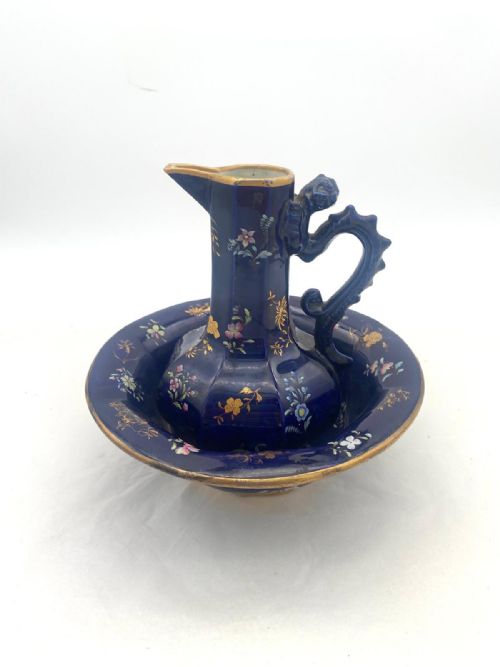
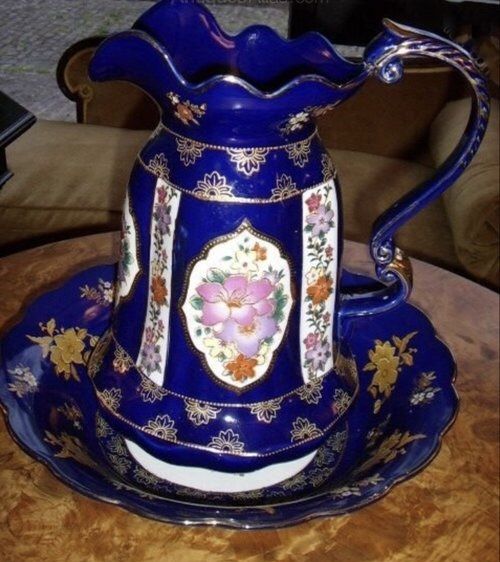
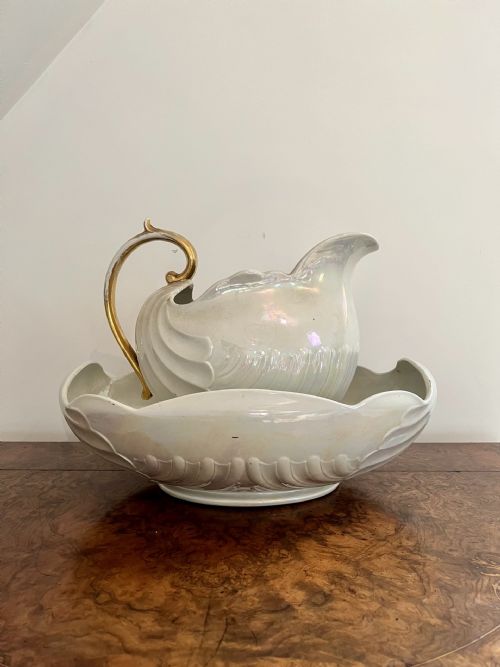
A gilded ceramic jug bowl combines functional vessel forms with metallic enrichment, typically appearing in washstand sets and tea sets across the nineteenth and twentieth centuries. These pieces serve domestic display or ablution purposes, featuring matched sets of pouring jugs and deep basins.
Buyers encounter Victorian and Edwardian examples most frequently on this page, alongside occasional Art Deco and mid twentieth century items. The selection spans earthenware, ironstone, and porcelain bodies, often finished with cobalt blue glazes or floral motifs.
Makers such as Masons, Royal Davenport, Doulton Burslem, and Shelley represent the manufacturing origins found in these listings. Forms range from miniature sets to full octagonal washware and traditional tea services.
How they were made
Potters shaped these vessels using earthenware, ironstone, or porcelain bodies, applying liquid glazes before firing the ceramic in kilns. Cobalt blue and multi-coloured flower designs were painted onto the surface either under or over the glaze.
Gold leaf and gilt accents were applied by hand to rims, handles, and borders, bonding precious metal to the fired ceramic surface. Craftspeople then used low temperature kilns to fix the metallic gilding permanently to the glaze.
Gilded Ceramic Jug Bowl Retail Price Guide 2026
Typical asking prices for gilded ceramic jug bowl among the pieces listed under this phrase on Sellingantiques today, from the lower quarter to the upper quarter. They describe what is for sale here now, not the wider market.
Even oil paintings occasionally join the pottery here, capturing blue and white jugs in still life fruit portraits.
What varies in quality
The crispness of the painted floral decoration and the precision of the hand applied gilding determine the refinement of an individual piece. Heavier ironstone and fine porcelain bodies show different degrees of potting skill and wall thickness.
Completeness dictates the standing of a set, separating matching multi-piece ensembles from solitary items. The clarity of the glaze and the preservation of the gold leaf over decades of use define the condition at the upper end.
Masons Ironstone·Royal Davenport·Doulton Burslem·Shelley
The Gilded Ceramic Jug Bowl Glossary
- Earthenware
- A porous ceramic body fired at lower temperatures, requiring an impermeable glaze to hold liquids. It forms the foundation of many traditional washstand items.
- Ironstone
- A durable type of semi-vitrified earthenware developed in the nineteenth century for heavy domestic use. It resists chipping better than standard pottery.
- Porcelain
- A fine, vitrified ceramic made from kaolin and petuntse, fired at high temperatures until non-porous. It rings when struck and appears translucent in thin sections.
- Gilt
- A thin layer of gold or gold-coloured material applied to the surface of ceramics for ornamentation. It catches the light and highlights handles and rims.
- Washware
- Ceramic vessels designed for personal washing and ablutions before indoor plumbing became universal. These sets include a large basin and a matching pouring jug.
Gilded Ceramic Jug Bowl: Frequently Asked Questions
What is a gilded ceramic jug bowl?
A gilded ceramic jug bowl is a decorative vessel set, often used for washing or serving, featuring metallic gold leaf or gilt highlights on a glazed ceramic body.
These pieces range from Victorian ironstone washware to Edwardian porcelain tea services.
How were these sets used originally?
Washstand sets were placed in bedrooms for morning ablutions before the widespread adoption of permanent indoor plumbing and running water.
Other configurations functioned as tea or coffee sets for formal entertaining in nineteenth and twentieth century homes.
How do I date a jug and bowl set?
Dating relies on maker marks, ceramic bodies, and stylistic indicators such as Victorian moulding or Edwardian floral patterns.
Comparing the weight of the ironstone or porcelain alongside the glaze characteristics helps place pieces between the nineteenth and mid twentieth centuries.
How should I clean gilded ceramics?
Cleaning requires warm water and mild soap applied gently with a soft cloth to protect the delicate gold leaf and overglaze enamel.
Harsh abrasives and soaking must be avoided to prevent the metallic gilding and painted designs from wearing away.