


Cobalt Blue Ceramic Ewer
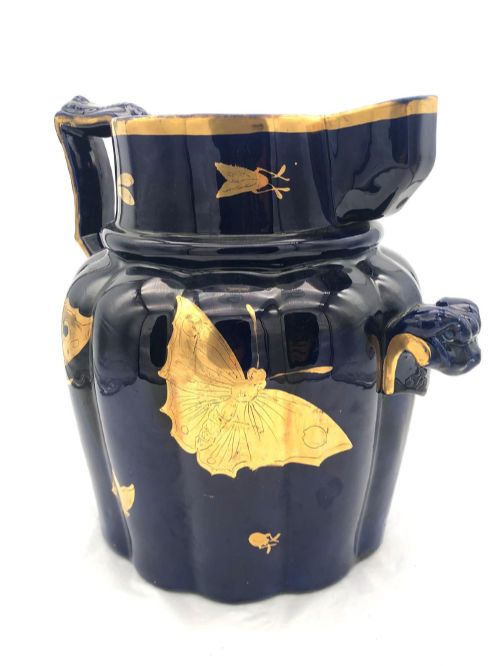
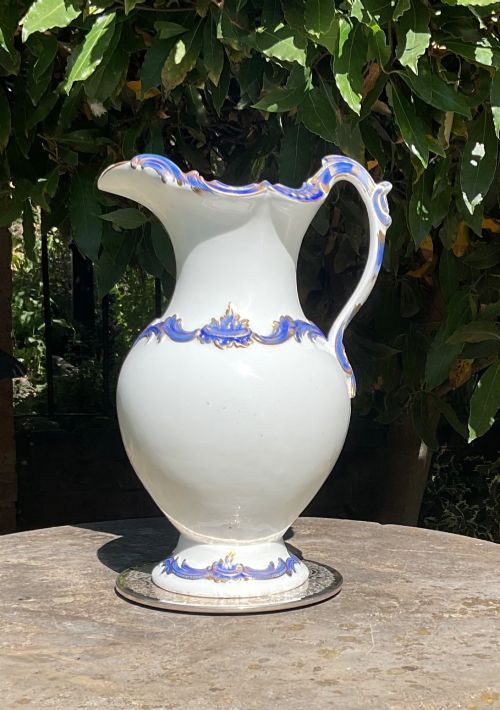
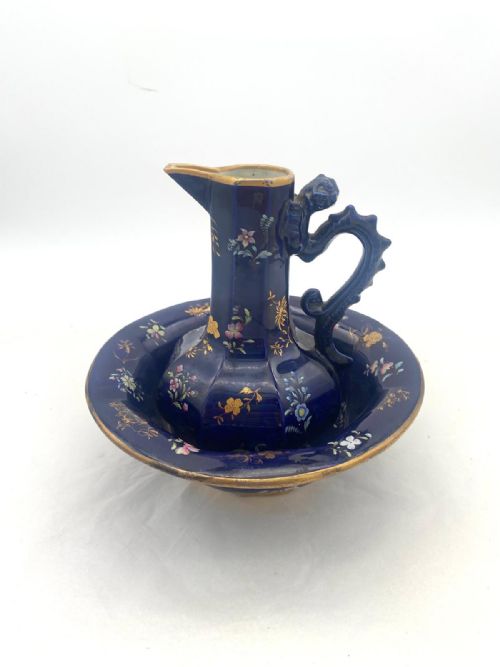
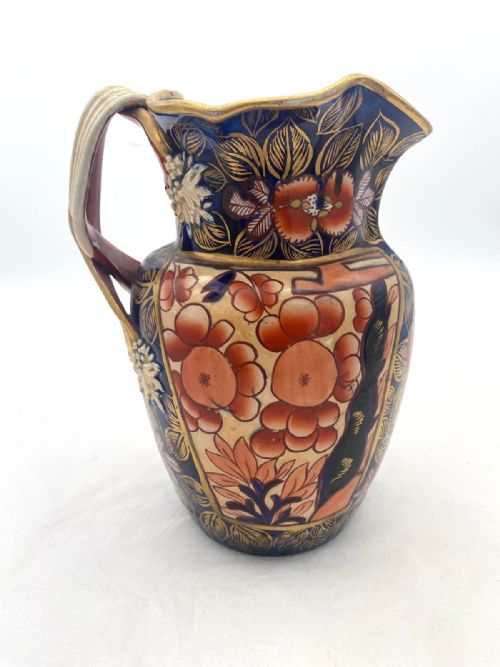
These cobalt blue ceramic ewer pieces are striking pouring vessels that bring bold pigment and sculptural form to any display.
Cobalt Blue Ceramic Ewer
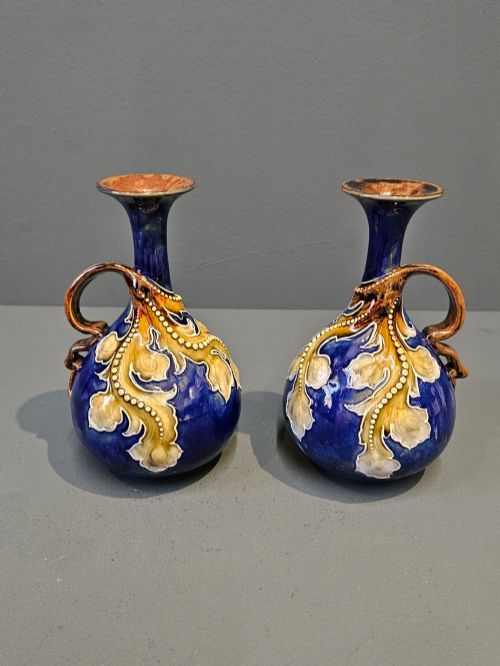
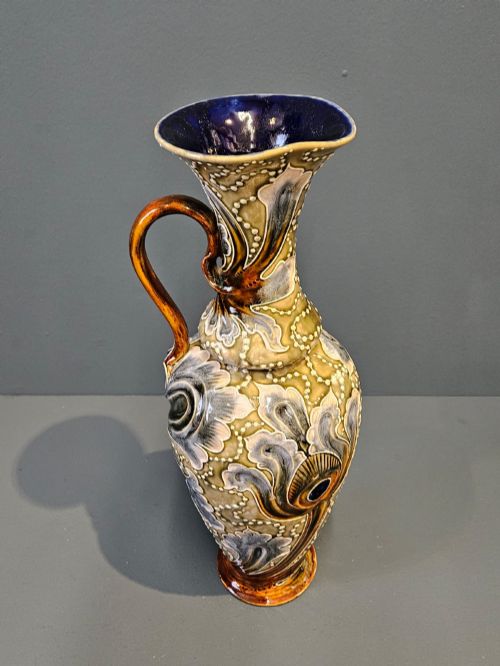
A cobalt blue ceramic ewer is a pouring vessel defined by deep blue pigment fired onto a ceramic body, taking forms from decorative ewers to large water jugs. When searching for a cobalt blue ceramic ewer, buyers encounter pieces originating from the nineteenth and early twentieth centuries, spanning Victorian, Regency, and early twentieth-century periods.
The selections on this page encompass various utilitarian and decorative iterations, including Mason's ironstone patterns, Doulton Lambeth ware, and Chinese export styles. Many examples feature substantial proportions, often accompanied by matching basins or paired with complementary pitchers.
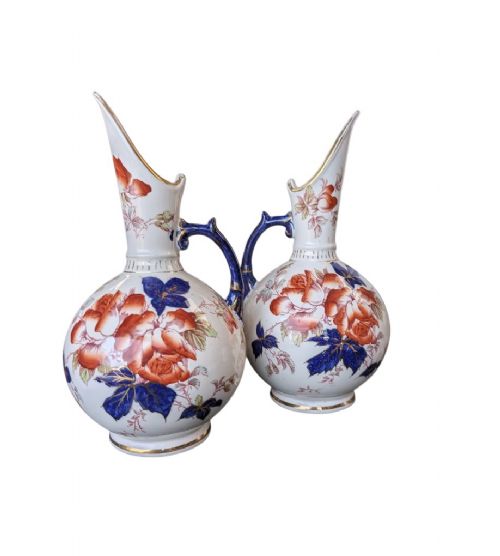
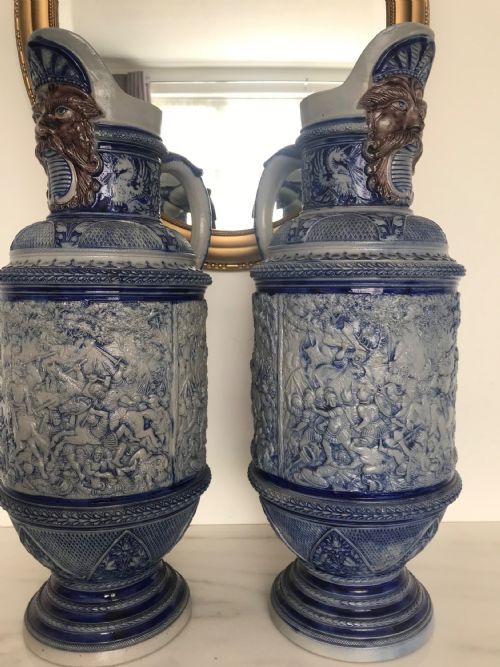
Makers and potteries utilised distinct decorative schemes ranging from Japanese Imari and Chinoiserie motifs to German salt-glazed stonewares with historical battle scenes. These pieces serve primarily as decorative focal points, reflecting the shifting tastes of Victorian and later ceramic design.
What varies in quality
Quality rests upon the crispness of the moulded relief and the depth of the cobalt blue ground, where richer, more uniform saturation distinguishes superior examples. The finesse of hand-painted detailing, particularly in intricate Chinoiserie or historical battle scenes, separates standard production wares from masterworks.
The integrity of applied elements, such as grotesque handles and gilt or enamel highlights, dictates overall refinement. Balance in proportion between the body, spout, and handle indicates greater skill in the original pottery.
Some nineteenth-century potters gave their utilitarian jugs wonderfully grotesque handles that seem to glare back at you from the washstand.
Mason's Ironstone·Doulton Lambeth Ware·Simon Peter Gerz·Coalport
The Cobalt Blue Ceramic Ewer Glossary
- Ewer
- A large jug with a wide spout and handled body, traditionally used for holding water or serving liquids. Many antique examples functioned purely as decorative display pieces.
- Ironstone
- A heavy, durable type of earthenware patented in the nineteenth century to rival true porcelain. It accepted cobalt blue transfer printing and enamel decoration exceptionally well.
- Salt Glaze
- A vitreous coating formed by throwing common salt into the kiln during high-temperature firing. This technique produces a characteristic textured surface resembling orange peel on stoneware.
- Chinoiserie
- A European artistic style reflecting Chinese motifs and decorative techniques. It frequently appears in cobalt blue on nineteenth-century ceramic jugs and ewers.
- Imari
- A Japanese style of porcelain decoration featuring underglaze cobalt blue combined with iron red and gilt. European potteries frequently borrowed these palettes for decorative ewers and pitchers.
Cobalt Blue Ceramic Ewer: Frequently Asked Questions
What were cobalt blue ceramic ewers used for?
These vessels originally served practical functions as water pitchers, washstand jugs, or serving vessels within nineteenth-century households. Over time, many transitioned into purely decorative objects prized for their striking blue and white colour schemes.
Larger forms often accompanied basins for personal washing, while smaller decorative ewers stood on sideboards or mantelpieces to display floral arrangements or simply showcase ceramic artistry.
How do I display a cobalt blue ewer?
Placing a cobalt blue ewer on a neutral wooden surface or within a well-lit cabinet allows the deep blue glaze to stand out against its surroundings. Pairing an ewer with matching basins or companion pitchers creates a balanced historical arrangement.
Because these vessels feature bold sculptural handles and rich pigments, they work effectively as standalone centrepieces on side tables or deep windowsills where natural light highlights the glaze.
How do I identify Victorian pieces?
Victorian examples often display characteristic dense ironstone bodies, robust handles, and decorative styles ranging from Gothic revival to Japanese Imari influences. Makers frequently applied deep cobalt grounds paired with gilt or enamel details.
Examining the base for impressed factory marks, registration diamonds, or specific pottery names helps confirm nineteenth-century origin and manufacturing provenance.
What is salt-glazed stoneware?
Salt-glazed stoneware is a sturdy ceramic material fired at extremely high temperatures where salt introduced into the kiln vaporises to form a glassy coating. This technique creates a distinctive pitted texture on the surface of German pitcher jugs.
The resulting glaze protects the porous clay body underneath while providing a durable background for cobalt blue decoration and moulded historical scenes.