


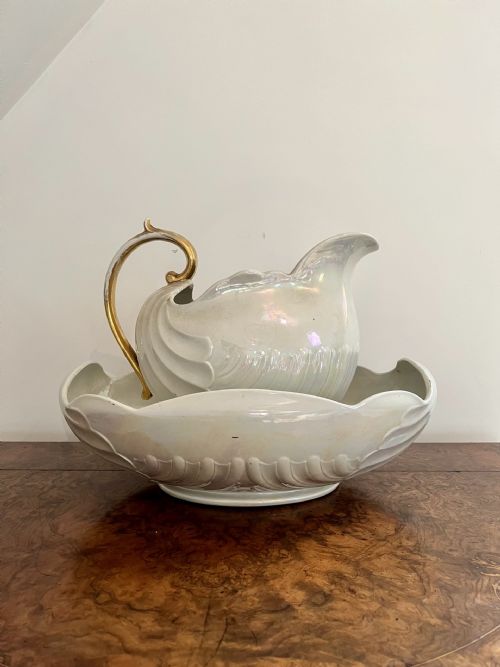


Ceramic Ewer and Basin
These ceramic ewer and basin sets bring period washing vessels to modern interiors, combining functional utility with decorative display.

Ceramic Ewer and Basin
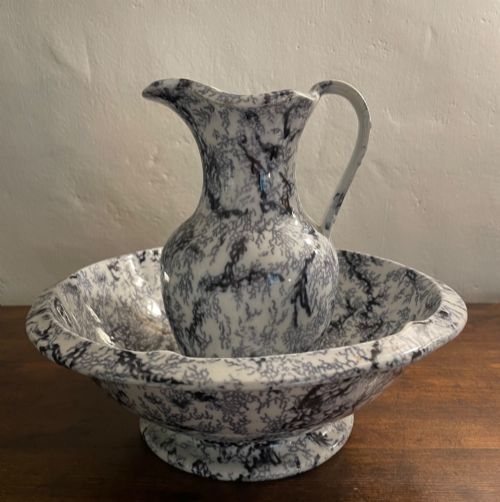
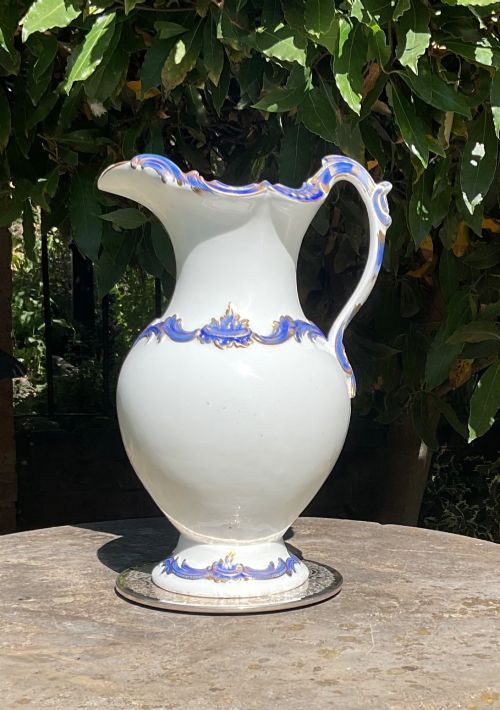
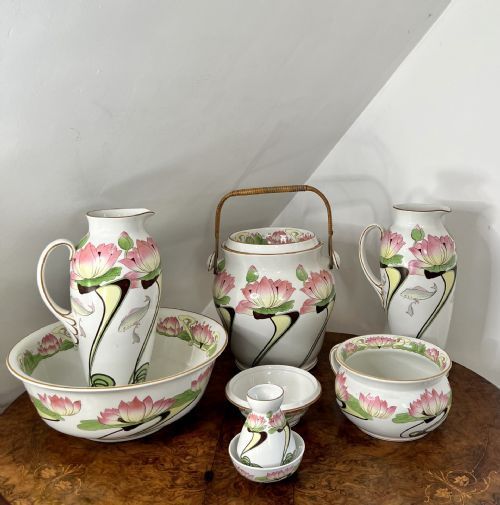
When you search for a ceramic ewer and basin, you encounter wash sets designed for the bedroom before plumbed bathrooms became standard. These pieces appear under various descriptions including jug and basin sets, washstand sets, and bathroom sets.
The selections available span from the early nineteenth century through the Edwardian period. You will find earthenware, porcelain, and ironstone vessels reflecting Victorian, Edwardian, Art Nouveau, and Regency styles.
Makers such as Mason's, Minton, Doulton Burslem, and Shelley produced these utilitarian vessels. They range from plain white or marble effects to flow blue, Chinoiserie decoration, and gold leaf highlights.
Materials and construction
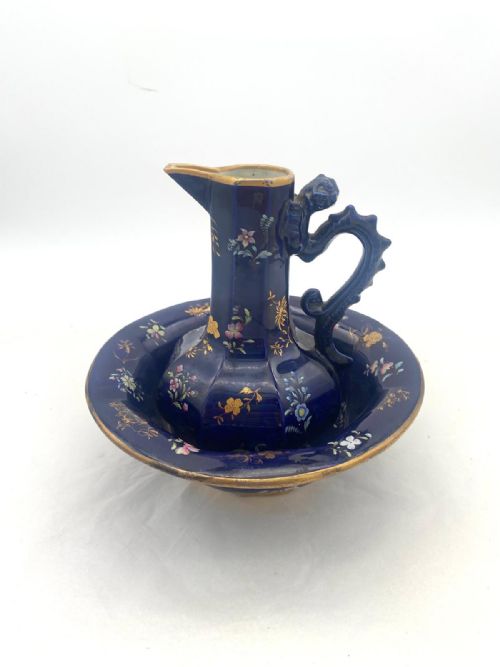
Potters utilised earthenware, heavy ironstone, and fine porcelain to form the jugs and basins. These bodies were shaped into octagonal or rounded pitchers alongside deep washing bowls.
Surfaces received glaze, enamel colours, and sometimes gilt or gold leaf detailing. Transfer printing techniques like flow blue and Chinoiserie patterns decorate many of the domestic sets.
Listings incorporate nineteenth-century and early twentieth-century periods, utilising earthenware, porcelain, ironstone, and gold leaf.
Distinguishing quality in sets
Quality rests in the crispness of the transfer printing or the hand-painted enamel work applied to the ceramic body. Heavier ironstone and fine porcelain demonstrate superior durability compared to standard earthenware.
The sophistication of the form, such as octagonal moulding or integrated gilt highlights, separates standard utility items from more ambitious parlour and bedroom services.
Mason's Ironstone·Minton·Doulton Burslem·Shelley
The Ceramic Ewer and Basin Glossary
- Ewer
- A large pitcher with a wide spout designed for holding water during washing. It pairs directly with a matching basin.
- Ironstone
- A dense, durable type of earthenware patented in the nineteenth century. It resists chipping better than standard pottery.
- Flow blue
- A cobalt blue transfer printing technique that intentionally blurred during firing. This created a soft, misty effect across the white ceramic surface.
- Chinoiserie
- European decorative style reflecting Chinese artistic motifs. It appears on nineteenth-century ceramic sets in painted or printed designs.
Ceramic Ewer and Basin: Frequently Asked Questions
What is a ceramic ewer and basin used for?
These sets served personal hygiene needs in bedrooms before running water and indoor plumbing became common in houses.
Today, collectors use them as decorative plant containers, umbrella stands, or standalone display pieces in hallways and bathrooms.
How do I date a ceramic ewer and basin?
Dating relies on identifying the material, potter's marks stamped on the base, and stylistic traits like Art Nouveau curves or Regency shapes.
Earlier nineteenth-century pieces often feature ironstone or flow blue transfer prints, while Edwardian examples lean towards lighter earthenware and floral patterns.
Are jug and basin sets dishwasher safe?
Original antique sets feature historic glazes, enamel decorations, and delicate gold leaf that modern detergents and machine washing will damage.
Cleaning requires gentle hand washing with warm water and a soft cloth to preserve the surface finish.
Can I display these sets outdoors?
Historic earthenware and porcelain are porous and susceptible to frost damage if exposed to freezing winter temperatures.
Displaying them indoors protects the glaze from thermal shock and prevents moisture from cracking the antique ceramic body.