


Antique Toilet Set Ceramic
These antique toilet set ceramic pieces bring Victorian and Edwardian washstands to life with practical utility and decorative charm.
Antique Toilet Set Ceramic
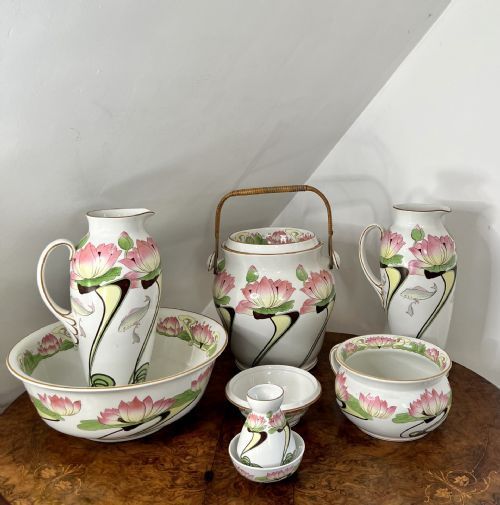
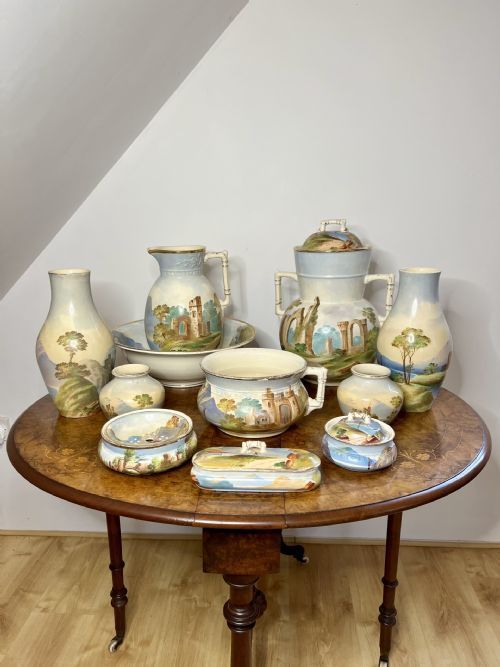
An antique toilet set ceramic assembly typically comprises matching basins, jugs, and dressing table accessories designed for personal grooming before indoor plumbing became universal in bedrooms. Buyers searching for this phrase encounter substantial earthenware and ceramic sets spanning the Victorian and Edwardian periods alongside the nineteenth century.
The forms vary from simple washstand sets and wash basin sets to elaborate four piece jug and basin configurations and dressing table sets. Most examples on this page date from the Edwardian era around nineteen hundred or the Victorian period across eighteen eighty and eighteen sixty, reflecting the domestic habits of those eras.
Stylistic influences range from classic Victorian designs through Aesthetic Movement sensibilities to flowing Art Nouveau curves. Collectors utilise these sets to recreate period aesthetics in guest rooms or bathrooms, appreciating the complete matching groupings that survive intact.
Materials and production methods
Potters shaped these ceramic and earthenware pieces using traditional moulding and throwing techniques before applying detailed enamel decoration and glaze. Makers often finished their wares with gold leaf or gilt accents, particularly on sets produced during the Victorian and Edwardian decades.
Ironstone and porcelain formed the robust body of these heavy vessels, designed to withstand daily use on wooden washstands. Firing processes fixed the vibrant coloured glazes and intricate patterns onto the ceramic surfaces, ensuring durability across decades of washing and grooming.
Some Edwardian jugs remain remarkably clean inside, suggesting they served more as decorative bedroom ornaments than actual wash vessels.
Judging quality in ceramic toilet sets
Quality in these wash sets depends upon the crispness of the moulding, the complexity of the transfer printing or hand painting, and the preservation of any gilt or enamel highlights. Sets bearing clear marks from established potteries generally display superior execution in both the ceramic body and the surface glaze.
The completeness of a multi piece set influences its desirability, especially when matching jugs, basins, and dressing table accessories survive together without replacement items. Finer examples maintain an unblemished glaze and sharp decorative details that distinguish standard utilitarian wares from superior artistic productions.
Doulton Burslem·Masons Ironstone·mark Jones & Sons
The Antique Toilet Set Ceramic Glossary
- Earthenware
- A porous type of pottery fired at lower temperatures, commonly used for nineteenth century wash sets before being glazed to hold water.
- Jug and bowl set
- The central pairing of a large water pitcher and matching basin used on bedroom washstands for morning ablutions.
- Gilt
- A thin layer of gold applied to ceramic surfaces and handles to provide decorative enrichment.
- Transfer printing
- A mechanical decoration technique where an engraved copper plate transfers a pattern onto tissue paper and then onto the ceramic body.
- Ironstone
- A heavy, durable type of earthenware patented in the nineteenth century that resists chipping better than standard pottery.
Antique Toilet Set Ceramic: Frequently Asked Questions
How were ceramic toilet sets used?
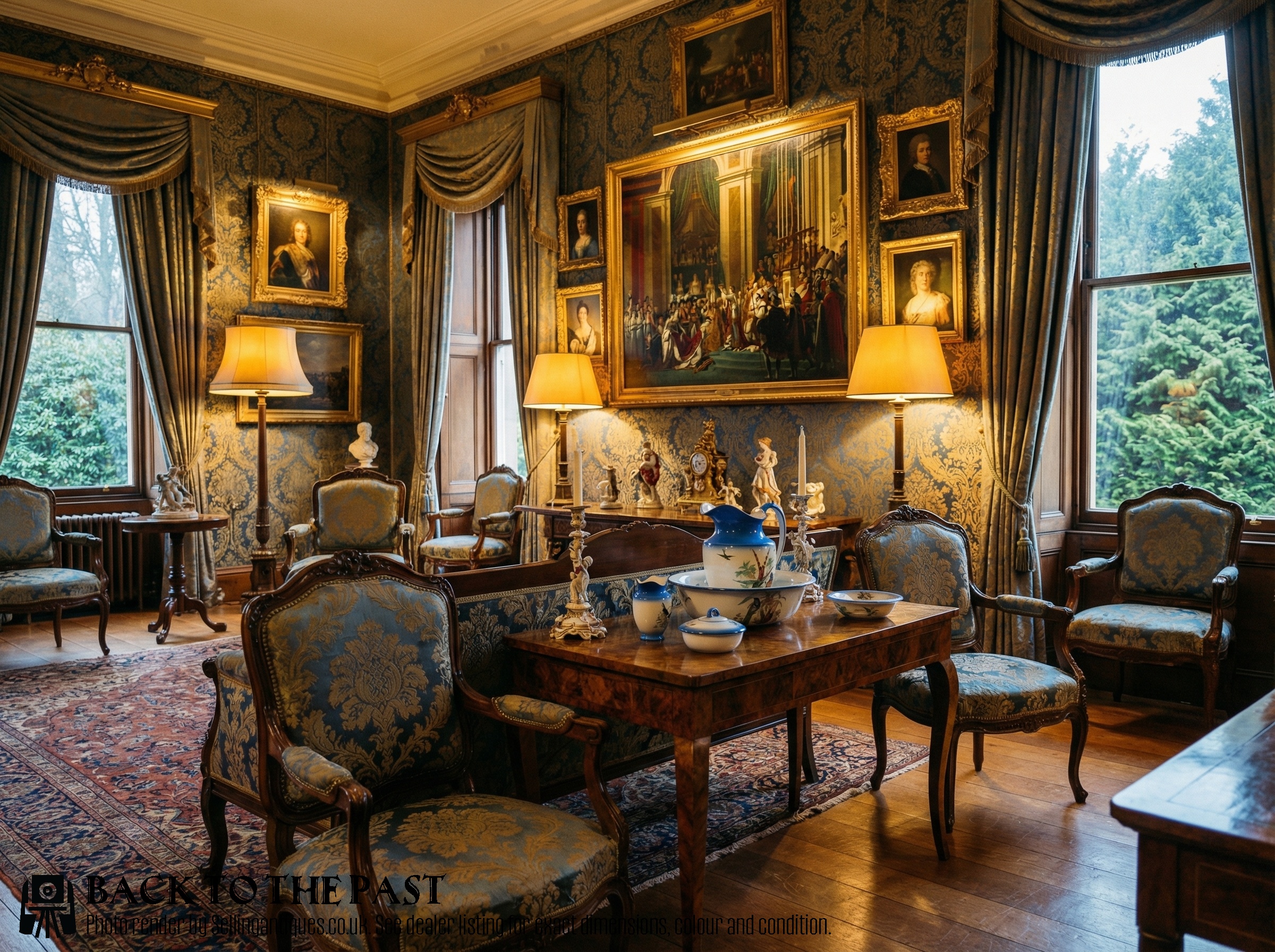
These sets sat upon bedroom washstands to hold water for washing hands, faces, and hair before plumbed bathrooms became common in homes. Jugs supplied fresh water into the matching basins while ancillary pieces held soap or dressing accessories.
Servants filled the pitchers daily from larger ewers or kitchen supplies. The complete grouping ensured a coordinated appearance in domestic bedchambers.
What periods do these sets cover?
The listings span the Victorian and Edwardian eras alongside nineteenth century production. Pieces from eighteen sixty and eighteen eighty typically display heavier Victorian proportions, while nineteen hundred pieces often reflect lighter Edwardian tastes.
Art Nouveau and Aesthetic Movement styles also influence the decoration across these decades. Dating relies on stylistic cues and pottery marks stamped into the ceramic base.
What distinguishes Victorian sets from Edwardian ones?
Victorian wash sets frequently feature bolder patterns, robust earthenware bodies, and heavier moulding suited to mid to late nineteenth century interiors. Edwardian examples often showcase lighter porcelain or refined ceramic forms with delicate floral or geometric motifs.
Art Nouveau curves and Aesthetic Movement influences also help separate the design vocabulary of eighteen eighty pieces from nineteen hundred productions. Maker marks further assist in identifying the exact period of manufacture.