




Antique Porcelain Wash Set
An antique porcelain wash set brings complete washstand utility and ceramic artistry to a room, offering jug and basin combinations that anchor a period interior.

Antique Porcelain Wash Set
An antique porcelain wash set comprises matched jugs and basins designed for personal ablutions before indoor plumbing reached every bedroom. These groupings appear across Victorian, Edwardian, and later twentieth-century periods, taking forms such as washstand sets, vanity sets, and four-piece configurations.
The pieces on this page emerge primarily from nineteenth and early twentieth-century workshops, spanning Victorian and Edwardian eras down to nineteen-thirty productions. Buyers encounter everything from miniature cabinet sets to large earthenware and ironstone washware arrays.
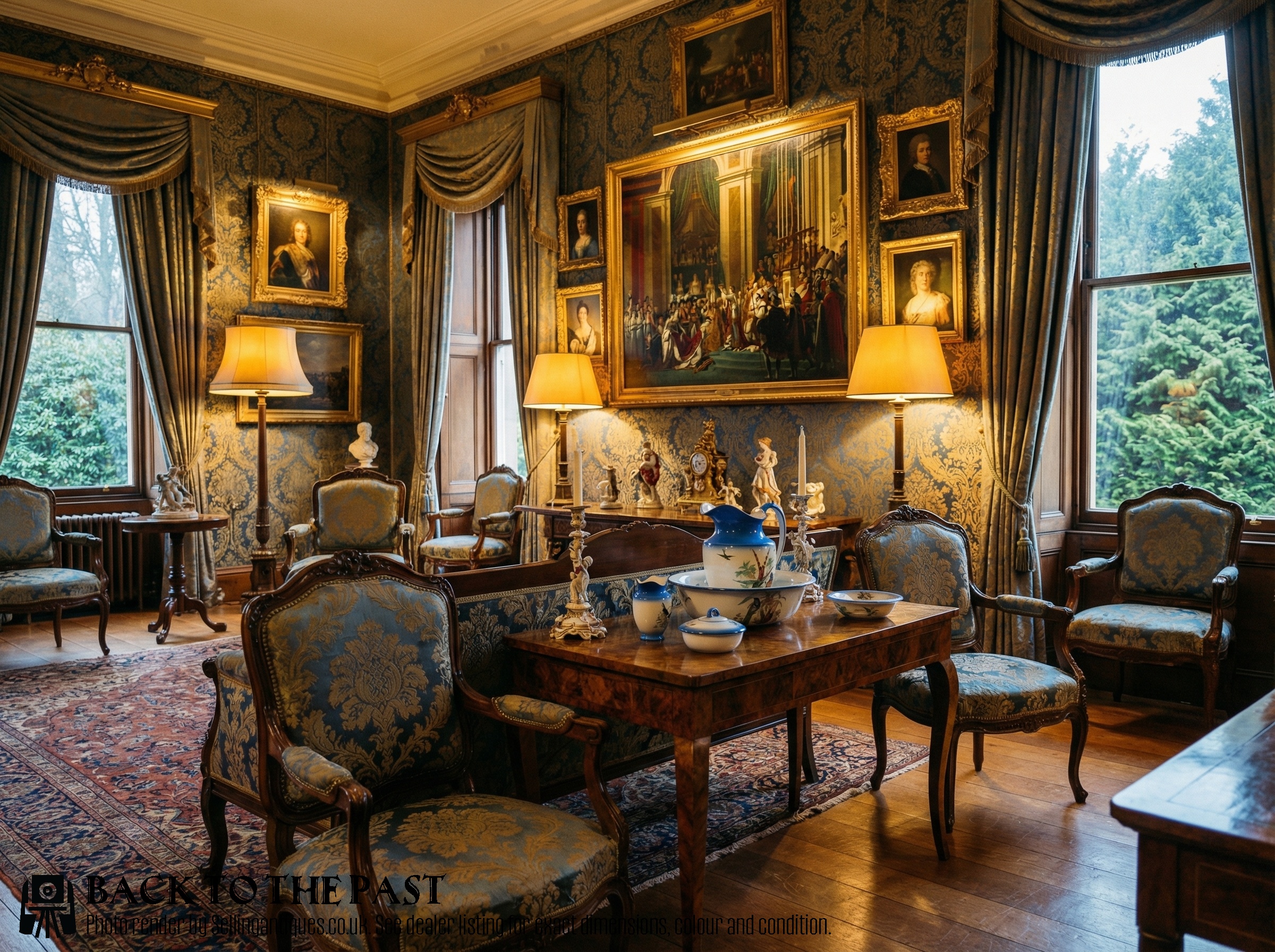
How they were made
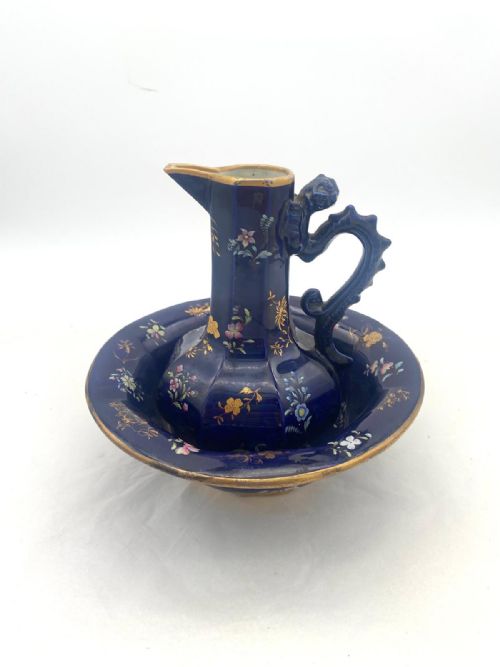
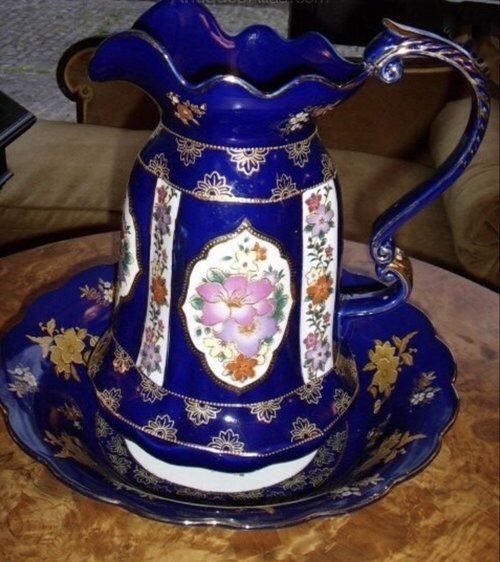
Potters shaped these sets from ceramic, earthenware, ironstone, and porcelain bodies, applying smooth glazes to seal the porous clay. Many examples incorporate cobalt blue decoration, flower designs, or delicate gold leaf and gilt highlights.
Manufacturing methods combined traditional throwing or moulding with transfer-printing and hand-painting techniques. Kiln firing fixed the underglaze colours and surface finishes before secondary gilding was applied.
Miniature Victorian sets prove that even miniature washing arrangements required a full set of tiny vessels.
What varies in quality
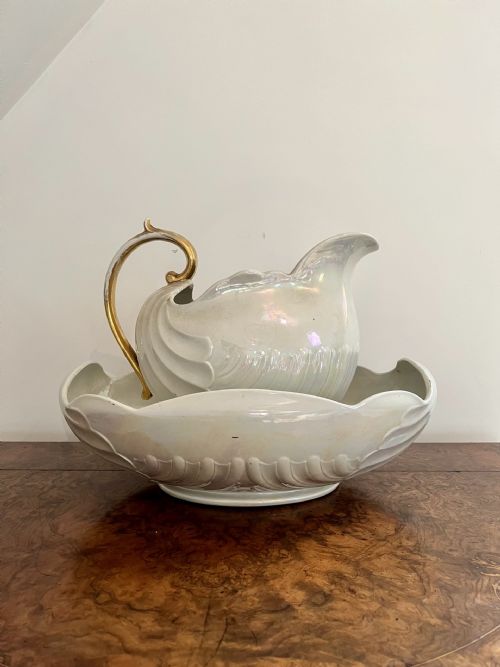
Quality separates standard utilitarian washware from finer decorative parlour sets through the crispness of the moulding and the weight of the ceramic body. Ironstone and porcelain examples generally exhibit greater density and durability than softer earthenware bodies.
The refinement of the glaze and the execution of surface ornamentation dictate the visual success of a set. Hand-painted floral motifs and precise cobalt blue applications elevate certain pieces above mass-produced transfer wares.
Masons Ironstone·Doulton Burslem·Shelley
The Antique Porcelain Wash Set Glossary
- Washstand
- A dedicated wooden piece of furniture built to hold a jug and basin set. These stands provided a stable surface for morning washing before plumbed bathrooms became standard.
- Ironstone
- A heavy, durable type of ceramic patented in the nineteenth century. It bridges the gap between earthenware and porcelain.
- Gilt
- A thin layer of gold or gold-coloured material applied to ceramic surfaces. It highlights rims, handles, and decorative borders.
- Cobalt blue
- A deep blue metallic pigment used under the glaze for durable decoration. It withstands high kiln temperatures without losing intensity.
- Basin
- A large bowl designed to hold washing water. It forms the primary vessel in any matching washware grouping.
Antique Porcelain Wash Set: Frequently Asked Questions
What pieces belong in a complete wash set?
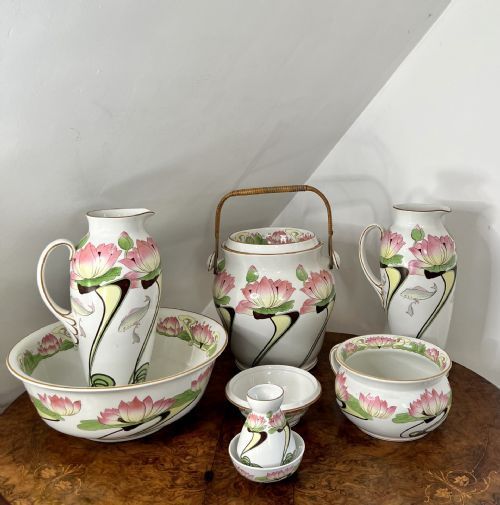
A standard set centres on a large water jug and a deep basin for washing. Many larger configurations also include soap dishes, chamber pots, and toothbrush holders.
These additional matching vessels completed the necessary equipment for a nineteenth-century bedroom washstand before running water arrived.
How do I date an Edwardian set?
Edwardian sets typically date from around nineteen hundred to the First World War. They often feature lighter floral patterns and more restrained ornamentation than heavier Victorian pieces.
Makers active during this reign adopted softer blue and white palettes alongside clean ceramic profiles.
Were these sets used daily?
These ceramic vessels served practical daily washing functions in bedrooms before modern bathrooms were common. Servants filled the jugs with warm water from the kitchen each morning.
Heavy ironstone and porcelain construction allowed the ware to withstand regular handling during routine ablutions.
Can I use these sets for flowers?
Large basins and jugs make striking receptacles for dried or fresh floral arrangements in contemporary rooms. The generous capacity of the bowl supports wide botanical displays.
Displaying the pieces away from washstands lets the decorative cobalt blue and floral transfer patterns stand out as interior focal points.